Every year reshuffles the deck of interior design — some ideas ascend, others fade. 2025 is no revolution; it’s a refinement. The dominant thread? Spaces that feel inhabited before they look curated. Here are the ten moves designers keep returning to.
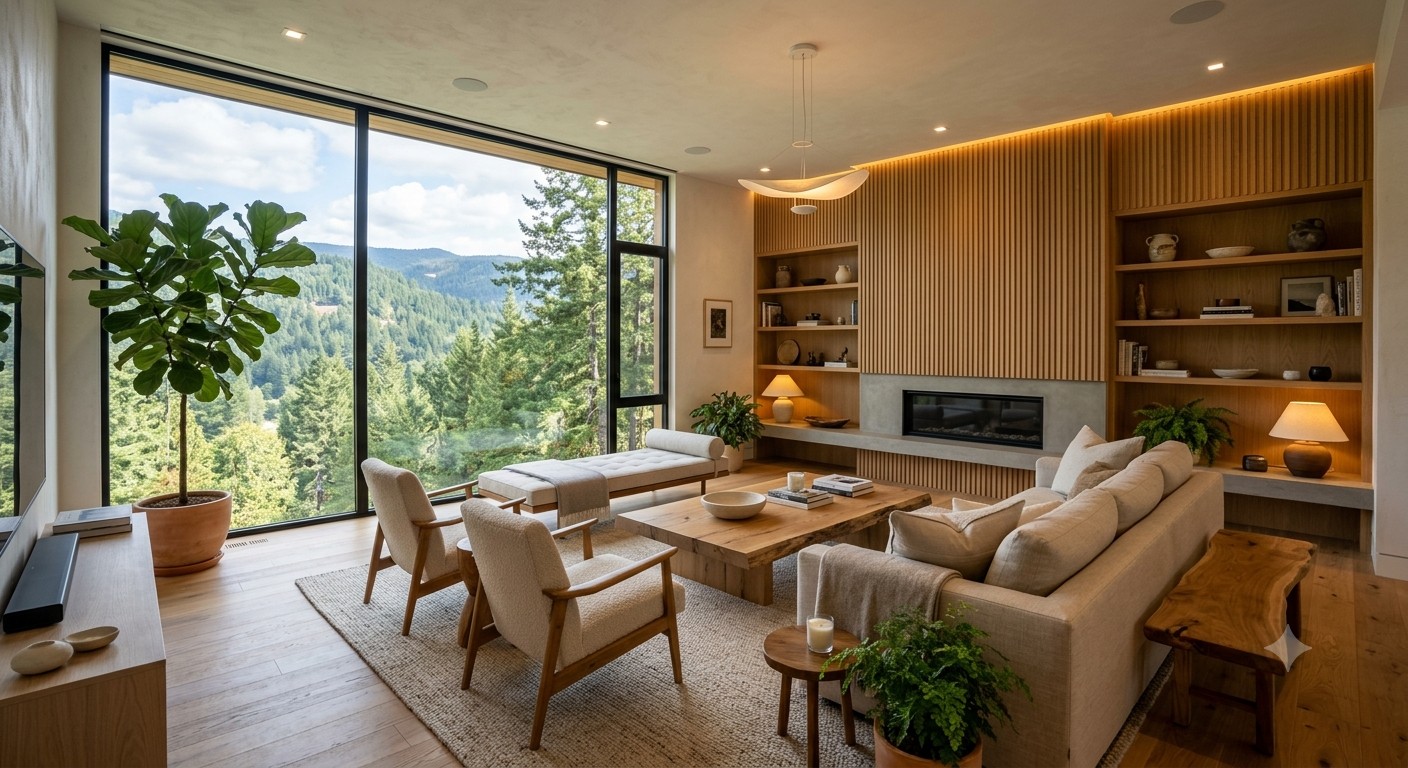
1. Biophilic Design — When Nature Moves In
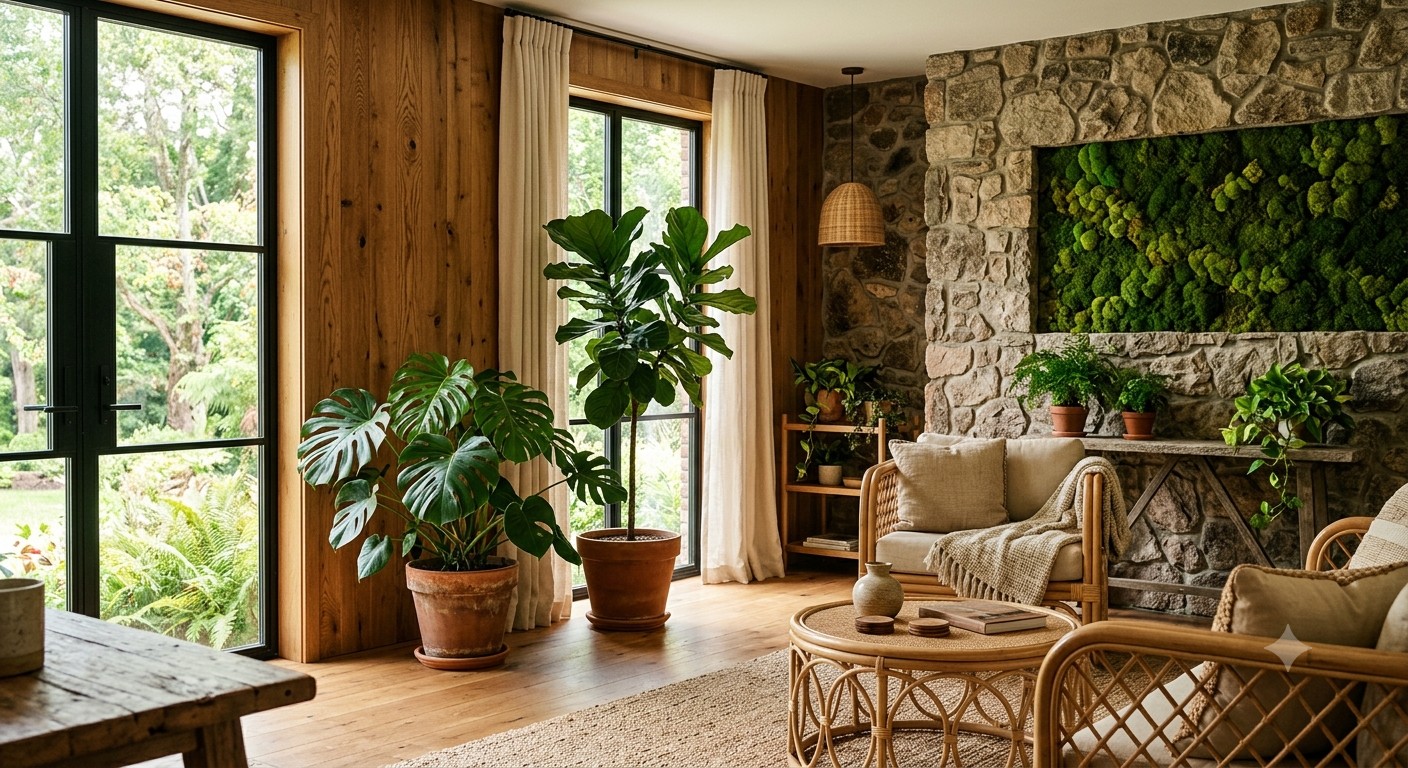
Biophilia isn’t a decorative whim — it’s a survival instinct wired into us. The premise: spaces that echo the natural world don’t just look better, they feel better. Heart rate drops, focus sharpens, the low hum of urban stress quiets down.
Natural materials as the foundation:
- Wood — not just floors, but wall cladding, ceiling slats, furniture bones
- Stone — raw or honed, on countertops, feature walls, bathroom vanities
- Rattan — light, tactile, impossible to fake
- Linen — curtains, upholstery, throws that breathe with the room
Living greenery as architecture:
- Potted trees (ficus, olive, monstera) occupying floor space like soft columns
- Wall-mounted moss panels — zero maintenance, maximum texture
- Trailing vines on open shelving, softening hard edges
Light as a material:
- Oversized windows that blur inside and outside
- Skylights pulling zenith light deep into floor plans
- Glass partitions transmitting daylight through the entire apartment
The biophilic room doesn’t add nature — it removes the barrier between you and it.
2. Textured Walls — Surfaces That Want to Be Touched
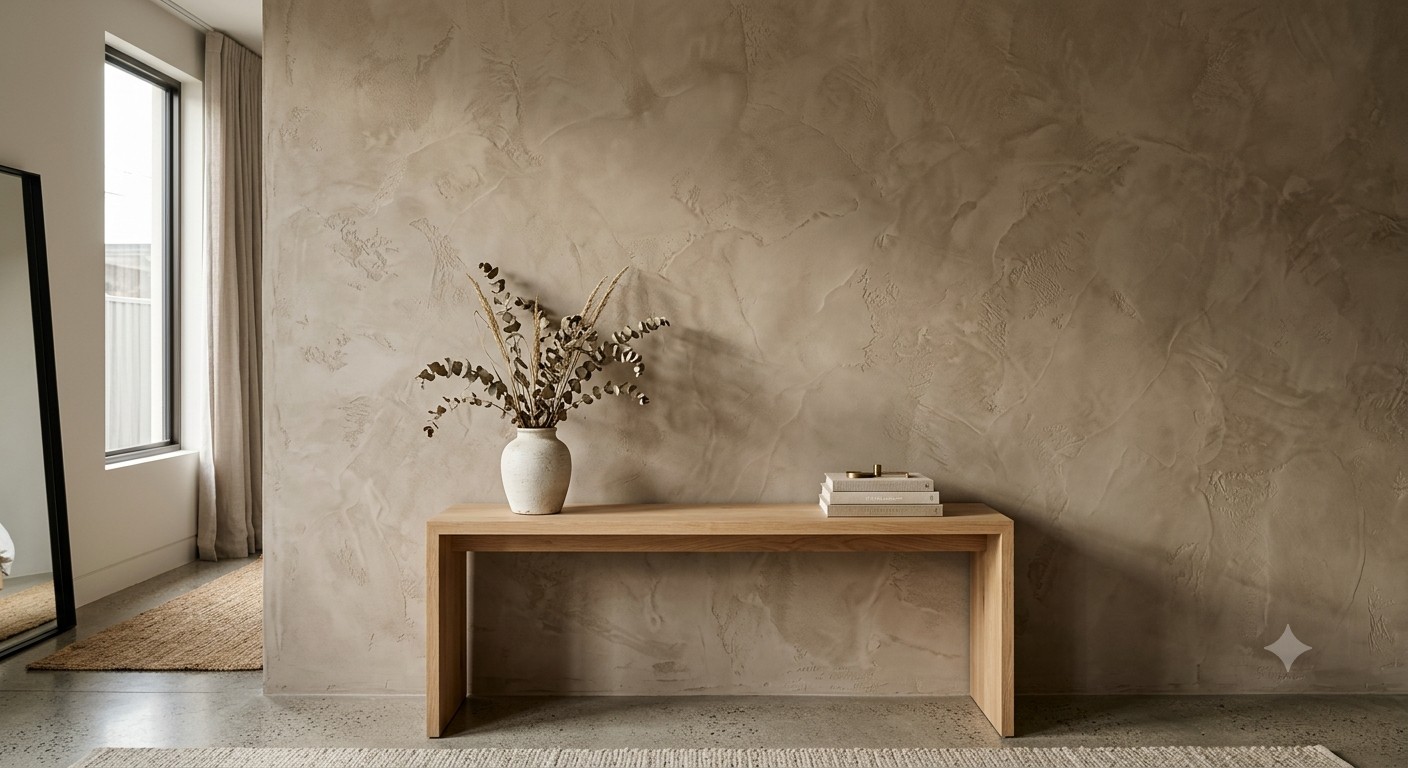
Flat paint is quietly exiting the conversation. In its place: walls that have something to say. Rough, ridged, pillowed, brushed — texture adds a dimension that color alone can’t reach.
The materials designers reach for:
- Microcement and Venetian plaster with concrete, sand, or velvet effects
- Wooden slats — vertical battens that give walls rhythm and warmth
- 3D decorative panels casting shadow patterns that shift with the light
- Tadelakt — Moroccan lime plaster that’s waterproof enough for bathrooms
How to make walls “breathe”:
Pair texture with lighting and they amplify each other. Perimeter LED strips grazing a ribbed surface turn a corridor into a cinematic moment. A single directional spot on microcement transforms a blank wall into topography.
The magic: these surfaces are imperfect by design. No two panels share the same light trace. That’s the charm — deliberate imperfection that feels organic instead of manufactured.
3. Matte Surfaces — The End of the Gloss Era
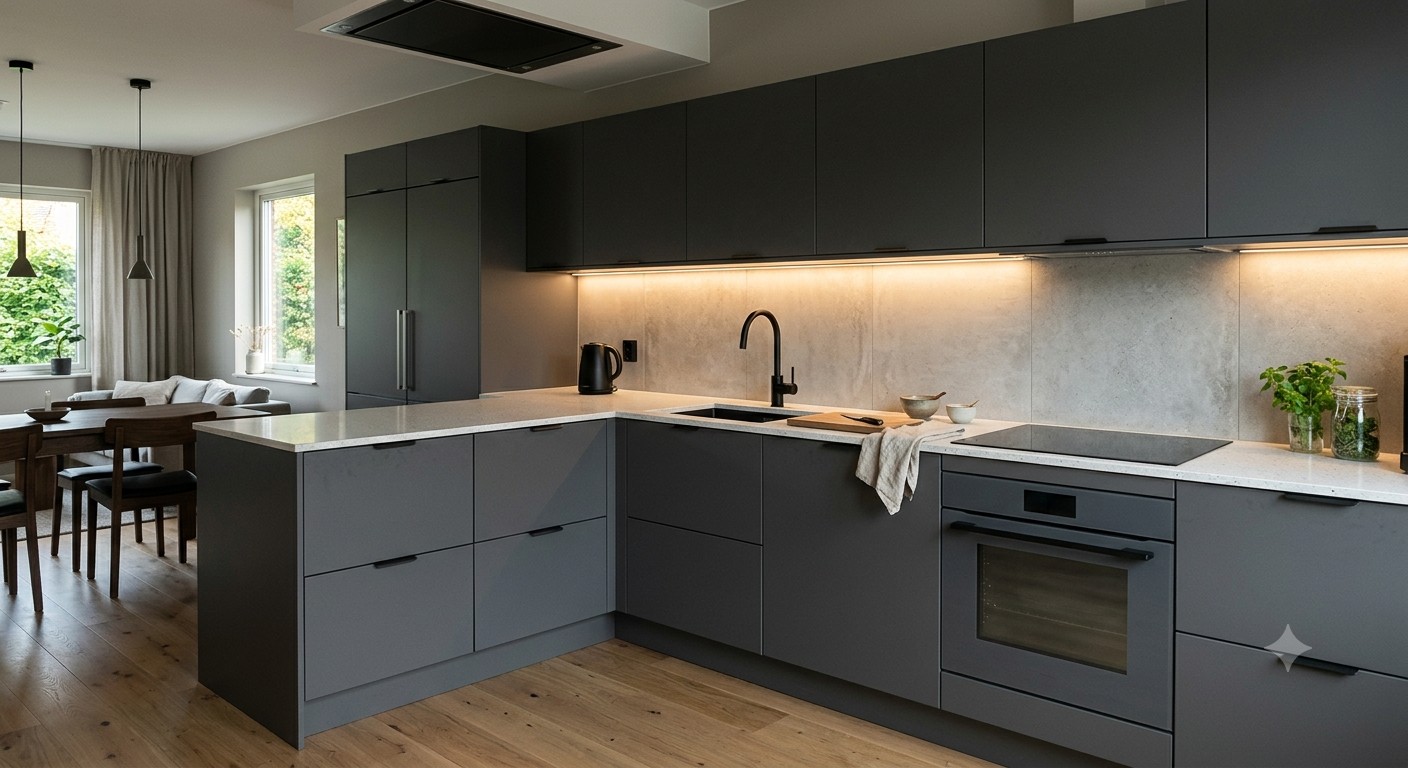
Glossy finishes had a long reign, but 2025 belongs to matte. Not because shine is wrong — but because matte speaks a different language. Quieter. More assured. Less “look at me,” more “stay a while.”
Where matte wins:
- Kitchen facades — no fingerprint halos, no smudge anxiety
- Bathroom vanities — soft, powder-like, impossible to scratch visibly
- Wall paint — matte pigments absorb light rather than bouncing it, giving rooms a cocoon-like depth
- Furniture lacquer — satin-dead finishes that feel like river stone under fingertips
The practical angle: Matte is forgiving. Fingerprints vanish. Micro-scratches disappear into the surface texture. The light it scatters is gentler — rooms feel calmer because nothing flares or spots.
Think of matte as the sartorial equivalent of breaking in a beautiful leather bag: it starts understated and only gets better.
4. Rounded Forms — The Geometry of Comfort
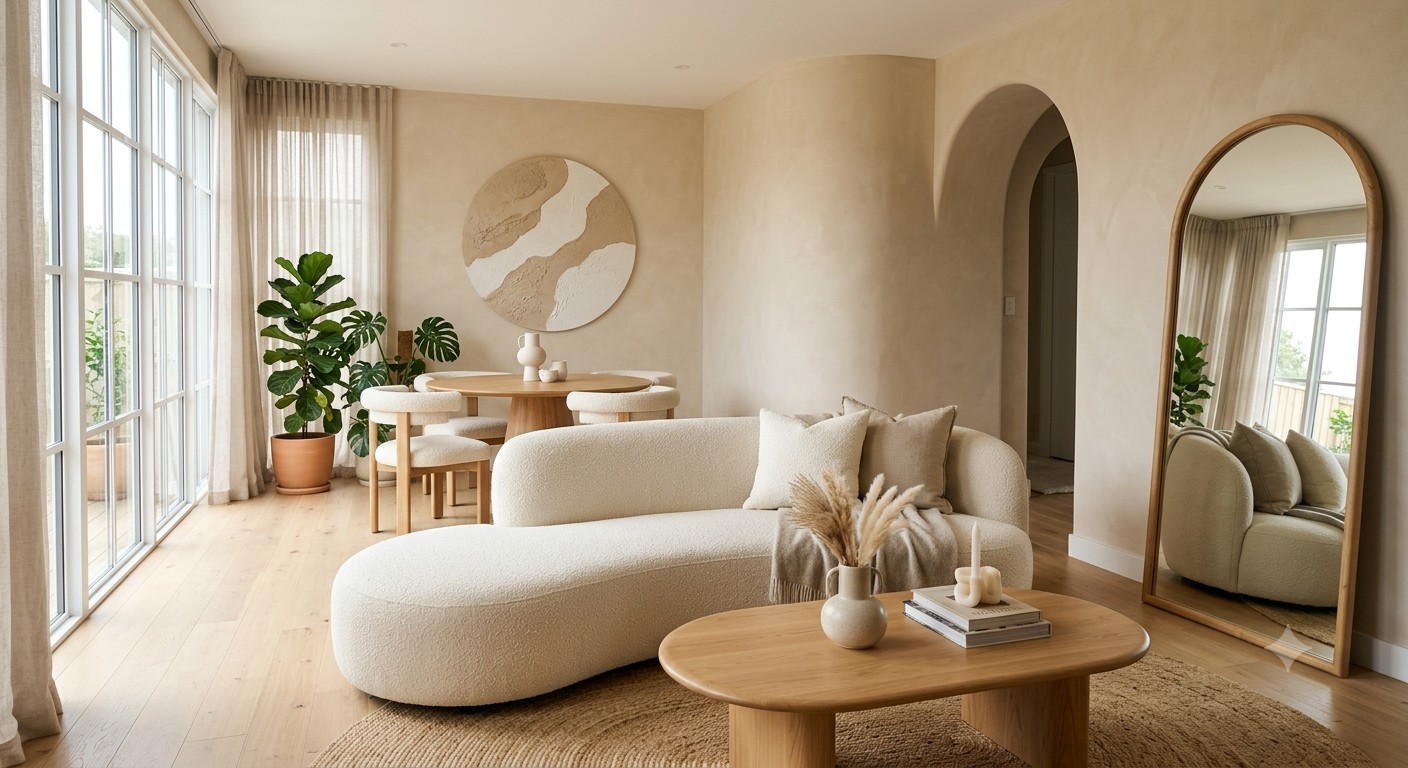
Sharp corners are retreating. 2025 interiors are sculpting space with curves: sofas with pillowed arms, dining tables shaped like river pebbles, mirrors that read as water droplets, arched niches carved into walls as if the building itself exhaled.
Why curves work:
- They redirect circulation — you walk around a curve, not into a corner
- They dissolve visual tension — a rounded edge reads as safe, inviting, human-scaled
- They photograph beautifully — every angle is the good angle
Arches as the signature move:
Not just doorway arches, but arched alcoves, rounded ceiling transitions, barrel-vaulted corridors. Arches add architectural gravitas without heaviness, sculpting light and shadow at every hour.
This isn’t a style — it’s a spatial instinct. Rooms with curves simply feel less hostile. Less diagram, more embrace.
5. Earth Tones — The Palette That Grounds You
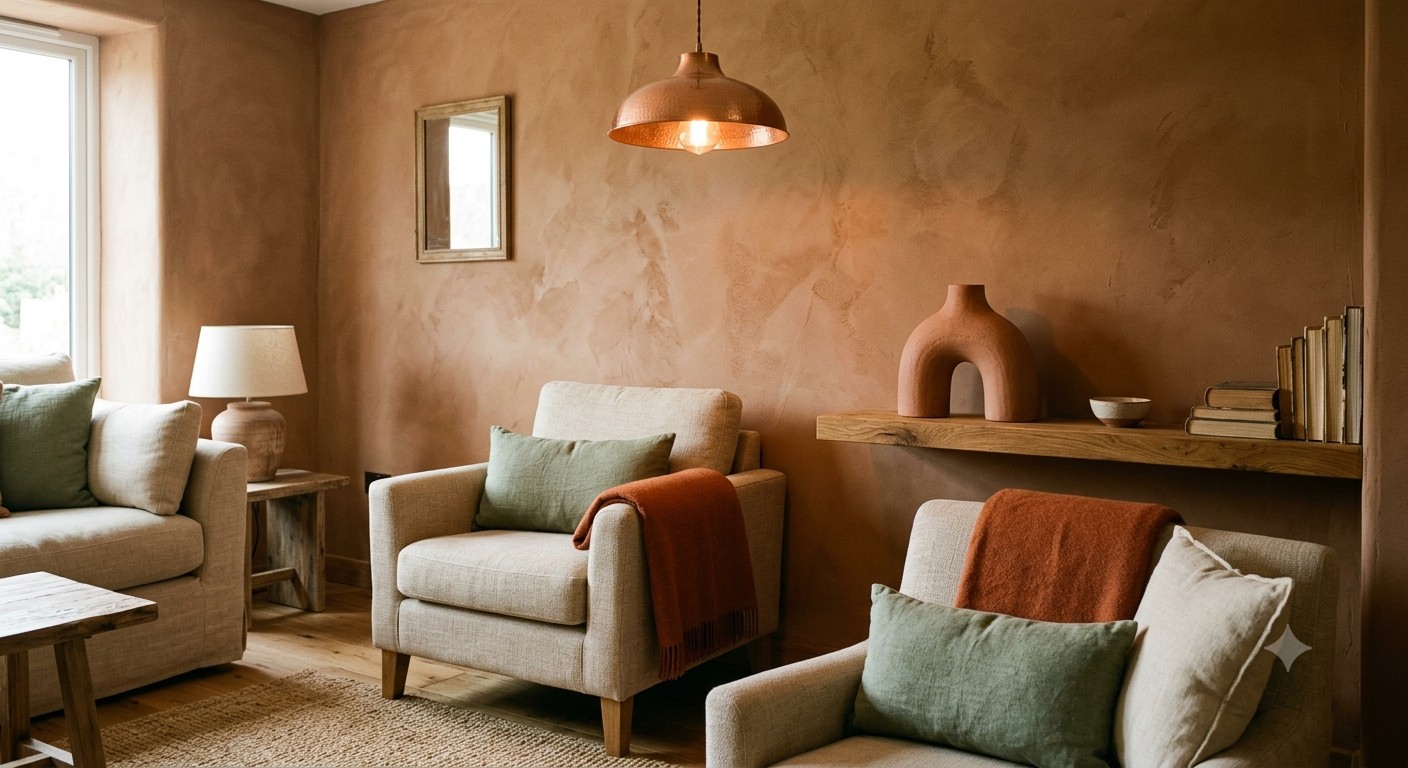
Color theory meets emotional intelligence: earth tones dominate 2025 because they regulate mood without trying. No caffeine-jolt reds, no anxious blues — just the slow warmth of terrain.
The key players:
- Warm sand — wraps a room in gentle sunlight, pairs effortlessly with wood grain. Ideal for bedrooms, guest rooms, any space meant for unwinding
- Saturated terracotta — depth and heritage in one stroke. Performs beautifully in living rooms and dining areas
- Olive green — calm, clean, slightly mineral. Works wonders in kitchens and entryways
The pastel flank:
- Dusty lavender — a whisper, not a shout. Perfect for nurseries and serene bedrooms
- Milky mint — refreshing without being juvenile; harmonizes with virtually anything
- Peachy nude — sun-warmed skin tone that makes raw wood glow
The through-line: every shade touches the ground somewhere. These are colors that have existed in clay, stone, and leaf for millennia. Bringing them inside isn’t trendy — it’s primordial.
6. Organic Eclectic — Freedom Within Framework
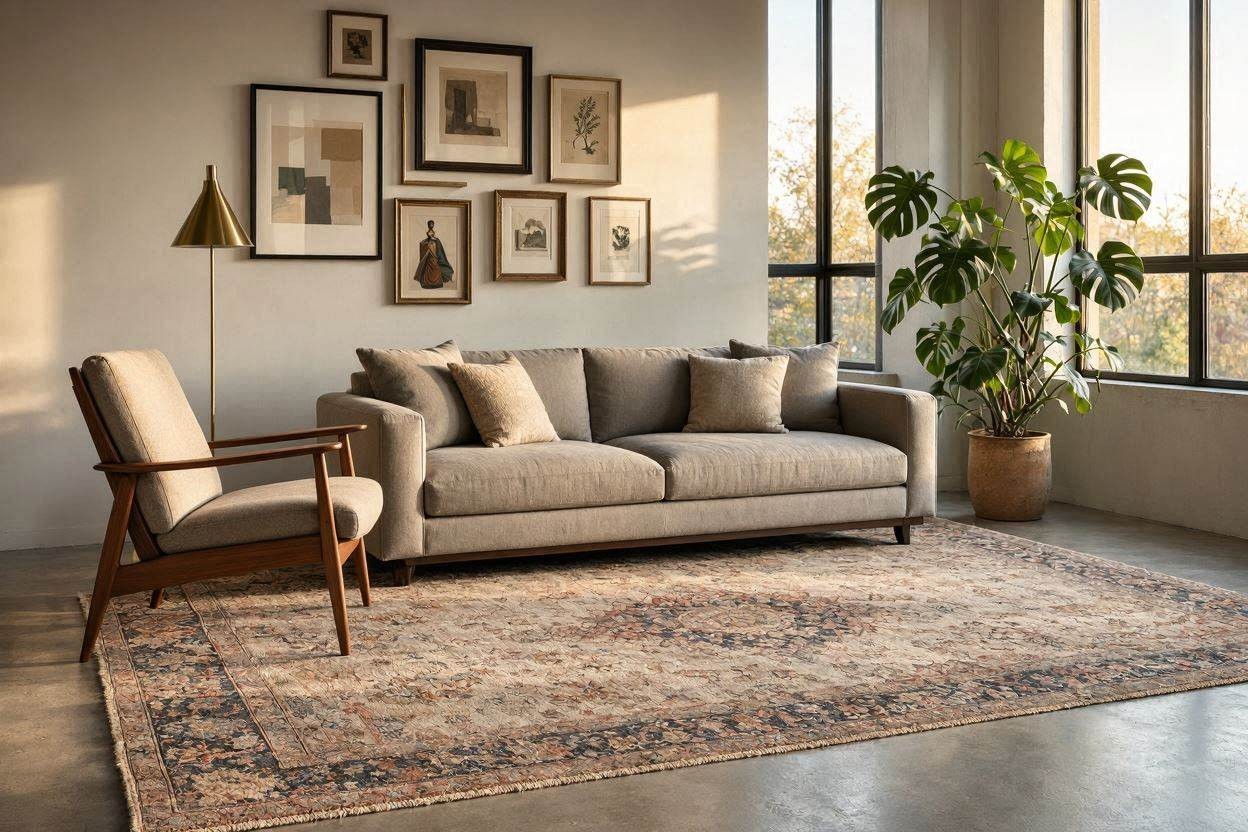
Eclecticism in 2025 isn’t “anything goes” — it’s “everything earns its place.” The formula: a restrained backdrop (neutral walls, clean-lined basics) punctuated with pieces that carry stories.
What works:
- An 18th-century armoire next to a low-slung modern sofa
- A Moroccan kilim layered over a concrete floor
- Industrial pendants above a farmhouse table
- African sculpture on a minimalist console
The guardrails:
- Restraint. Every object should survive the question “does this room need you here?”
- Neutral stage. Let walls and floors stay quiet so the conversation pieces actually converse
- Persistent editing. Remove one thing every time you add two
Think of eclectic as a curated gallery, not a flea market. The personality comes through in the selection, not the volume.
7. Smart Zoning — Rooms Within Rooms
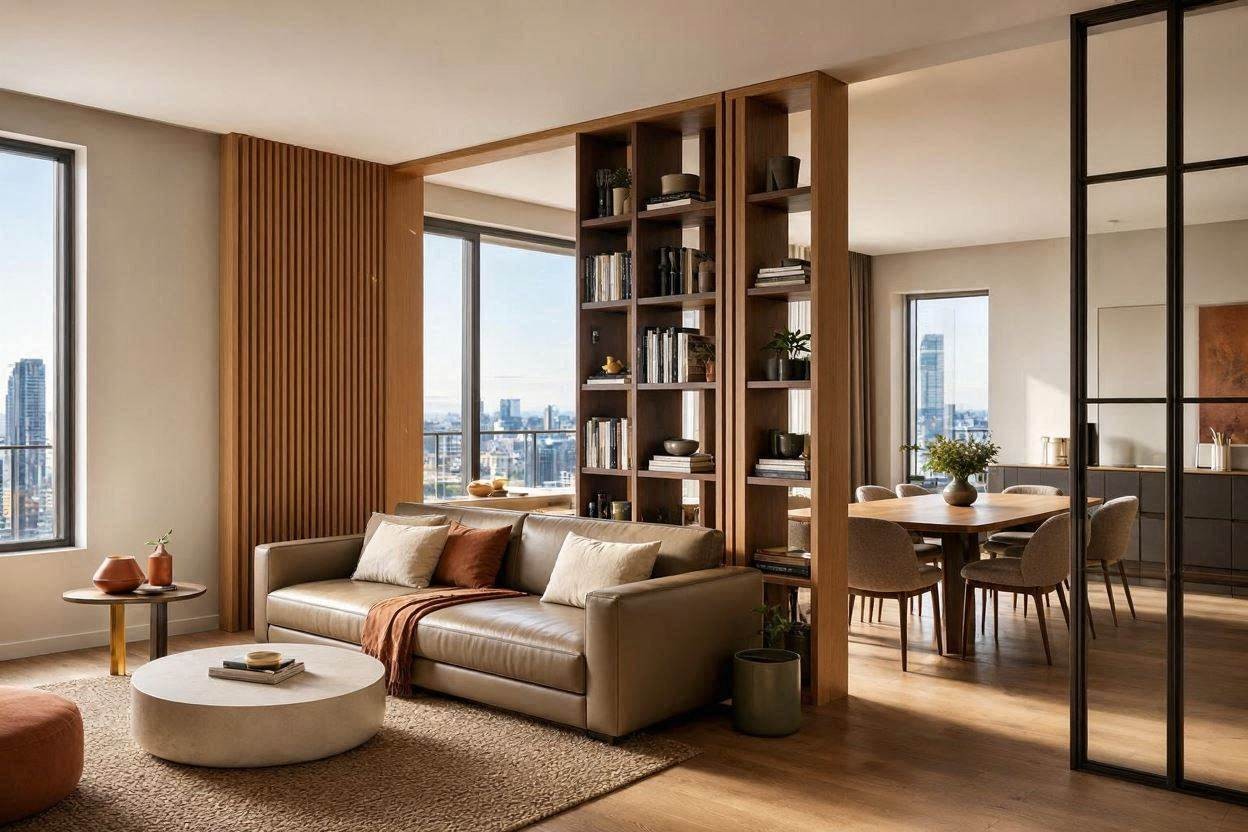
Open floor plans aren’t going away — but the delusion that one unbroken space serves every function is finally fading. The 2025 answer: zone without walling.
Zoning tools:
- Mobile screens and pivoting partitions — reconfigure at will
- Bar peninsulas separating kitchen from living without closing either off
- Floor-level material changes — tile meets wood at the functional boundary
- Ceiling coffers and dropped bulkheads defining territory from above
- Curtain tracks — the softest possible wall, open or closed in seconds
Visual expansion tricks: Glass surfaces, mirrors, and transparent furniture keep the feeling of openness while functionally separating activities. Light-colored ceiling niches and wall sconces draw the eye up, making rooms feel taller and larger than their floor plans suggest.
Zoning is about gravity: each area has its own center of pull, its own reason to exist.
8. Smart Home Technology — Invisible Intelligence
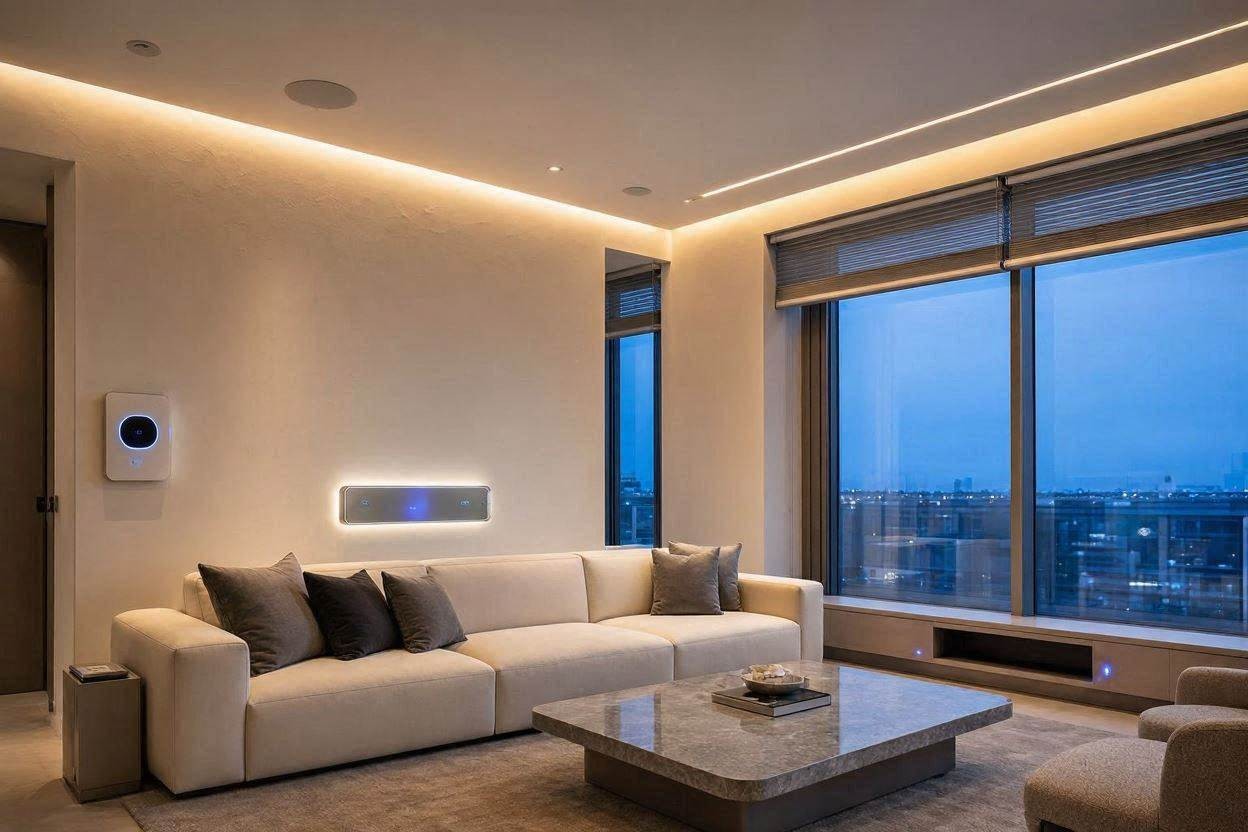
The smart home in 2025 isn’t a showcase — it’s a butler. Technology disappears into the architecture, automating routine without demanding attention.
The five pillars:
- Lighting. Voice-activated or app-controlled scenes. “Evening” dims to 20% warm white. “Cooking” floods the island. Lights that know your schedule before you do
- Climate. Smart thermostats tracking your circadian rhythm. Air purifiers that manage themselves. Set it once, forget it exists
- Security. Digital locks, video doorbells, and indoor cameras — check your home from the other side of the planet
- Entertainment. Multi-room audio that follows you from kitchen to bath. Smart TVs that double as art canvases when idle
- Kitchen. WiFi-enabled ovens you preheat from the commute. Fridges that track what’s running low
The hallmark of good smart tech: you never think about it. It simply makes the room warmer before you wake, the lights softer after sunset, the coffee ready when you walk downstairs.
9. Hidden Storage — Clutter’s Vanishing Act
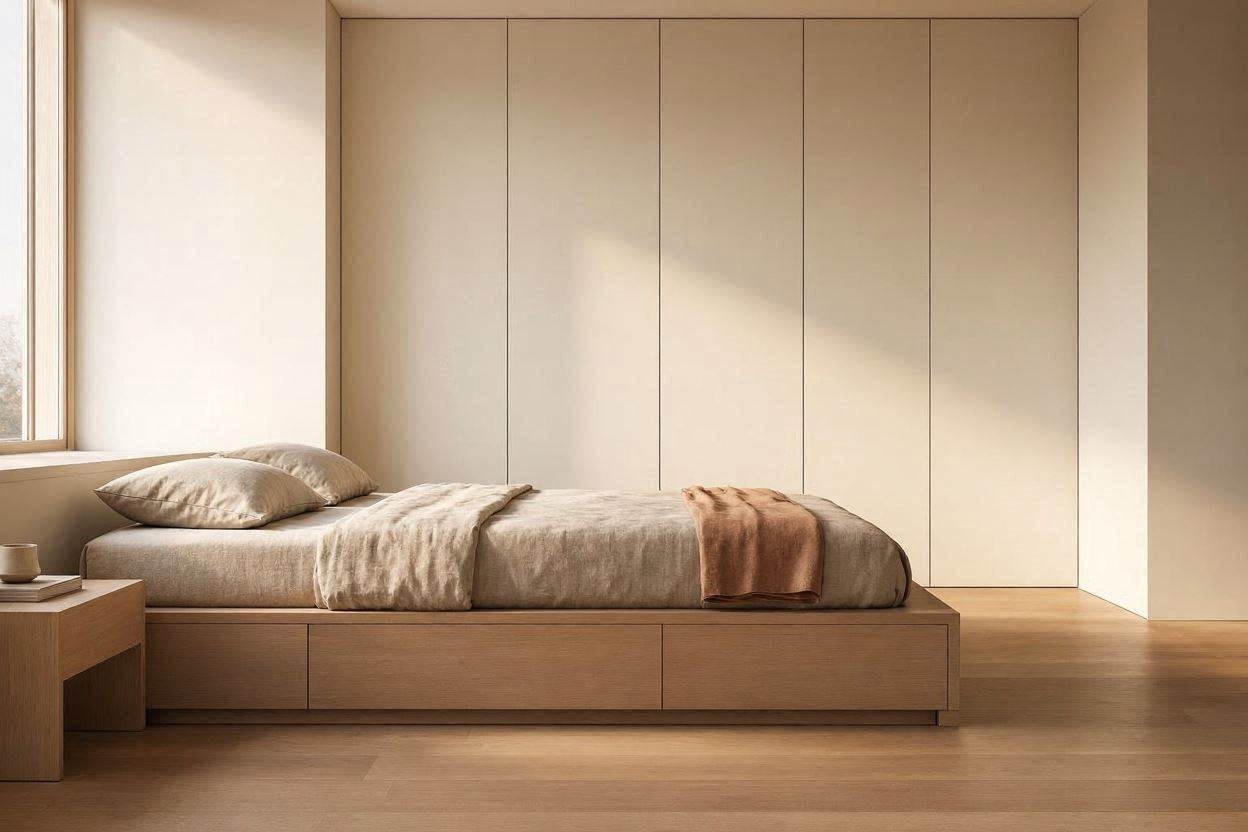
The most radical design decision of 2025 is what you don’t see. Built-in storage systems integrate into walls, flow under beds, and hide behind push-open doors finished to match the surrounding surface. The result: rooms that read as clean geometry, not as storage containers.
Key strategies:
- Push-open cabinetry with no visible handles — finger-touch release
- Under-bed drawers that disappear beneath platform frames
- Wall-integrated wardrobes painted or paneled to match the room
- Niche shelving recessed into wall depth rather than projecting into the room
- Full-height cabinetry that reads as an architectural surface, not furniture
Why it matters: Visual noise is stress. Every unmanaged object on an open shelf is a micro-decision your brain processes unconsciously. Hidden storage gives your eyes — and your nervous system — a break. Behind the seamless surface, life continues its chaos. In front of it, everything breathes.
10. Custom Furniture — Made for the Room, Not the Catalog
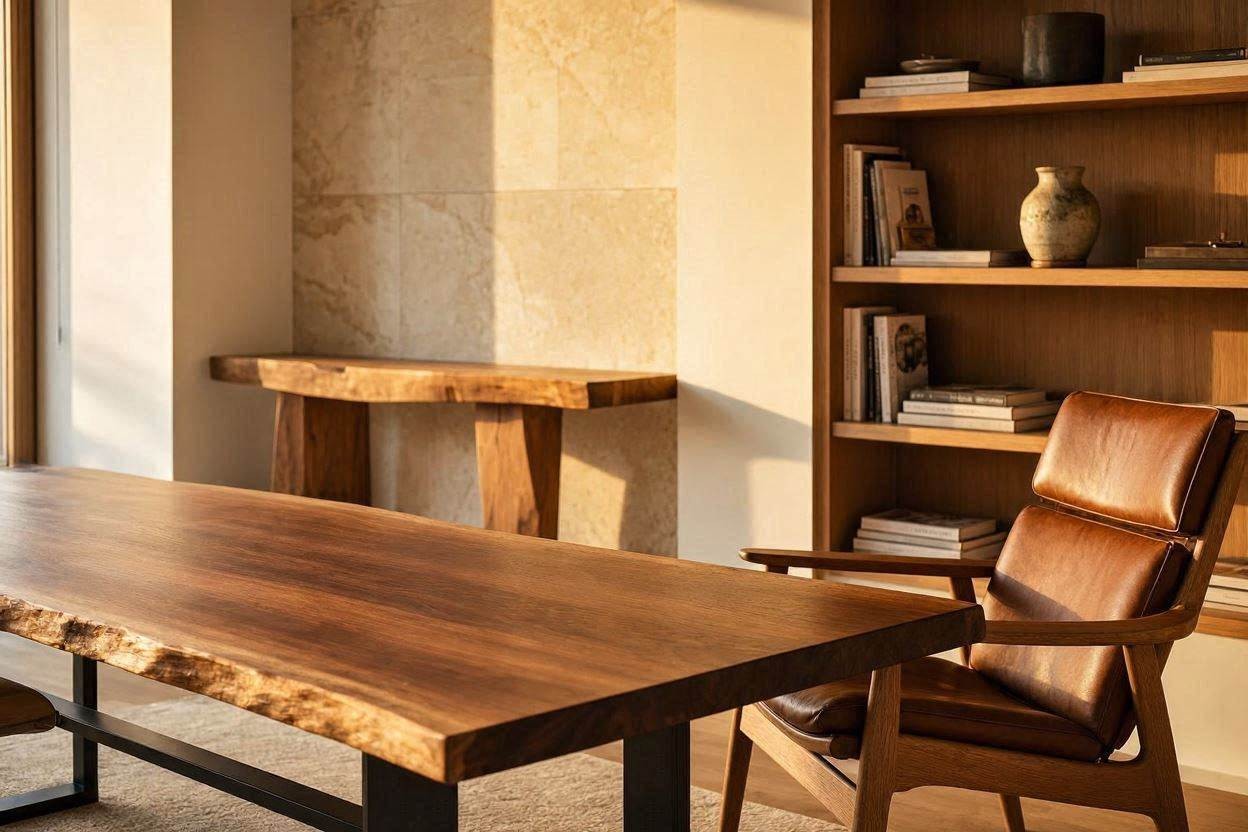
Mass production has limits: it assumes standard rooms, standard needs, standard taste. Custom furniture answers a different question — “what does this space actually need?”
Wood as the protagonist:
- Walnut — deep, figured, aristocratic
- Maple — light, even-grained, contemporary
- Red wood (mahogany, cherry) — warmth and gravitas in equal measure
Why bespoke wins:
- Every centimeter is accounted for — no wasted gaps, no awkward overhangs
- Your routines shape the design: a drawer where you reach, a shelf where you pause
- The piece becomes irreplaceable — you won’t find it in a landfill in five years
Custom furniture isn’t luxury — it’s logic. When a room’s dimensions are non-standard (and most are), off-the-shelf choices are inevitably compromise. Bespoke removes the compromise.
The Bigger Picture
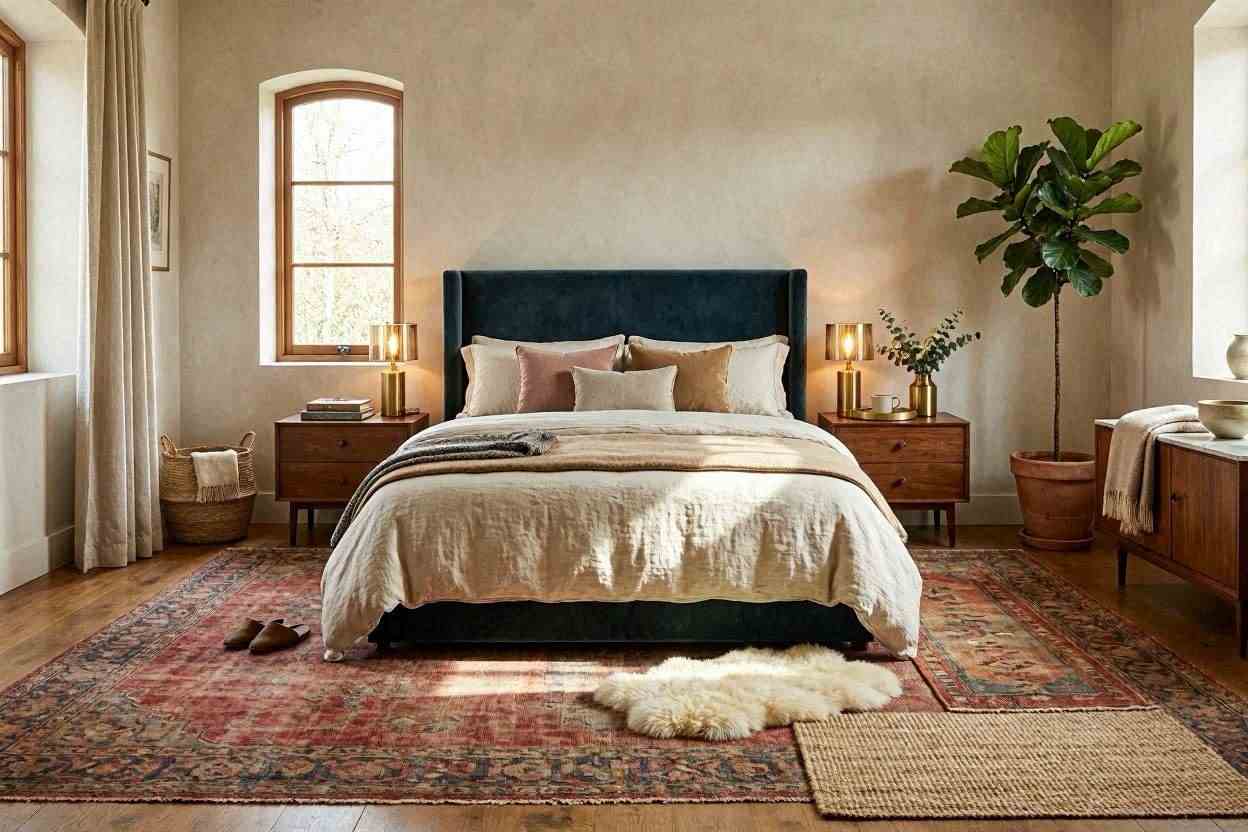 Trends are compass needles, not GPS routes. They point toward what’s resonating right now — but the rooms that actually make you exhale are the ones where every decision, trendy or not, was made with your life in mind.
Ask yourself: does visual silence calm you, or bore you? Do you want technology that anticipates, or spaces that slow you down? Are you drawn to raw textures and earth pigments, or does your eye crave contrast and surprise?
The “right” trends are the ones that answer those questions. Everything else is someone else’s living room.
Interior 2025 isn’t a template — it’s a conversation. Bring what resonates. Leave what doesn’t. The space will follow.