Reading time: 9 minutes
There is a particular feeling you get walking into certain homes — a quiet conviction that you would like to live there. It rarely comes from square footage or budget. It comes from someone who understands a handful of secrets that, in design, decide almost everything. This is a study of those secrets as they stand in 2026.
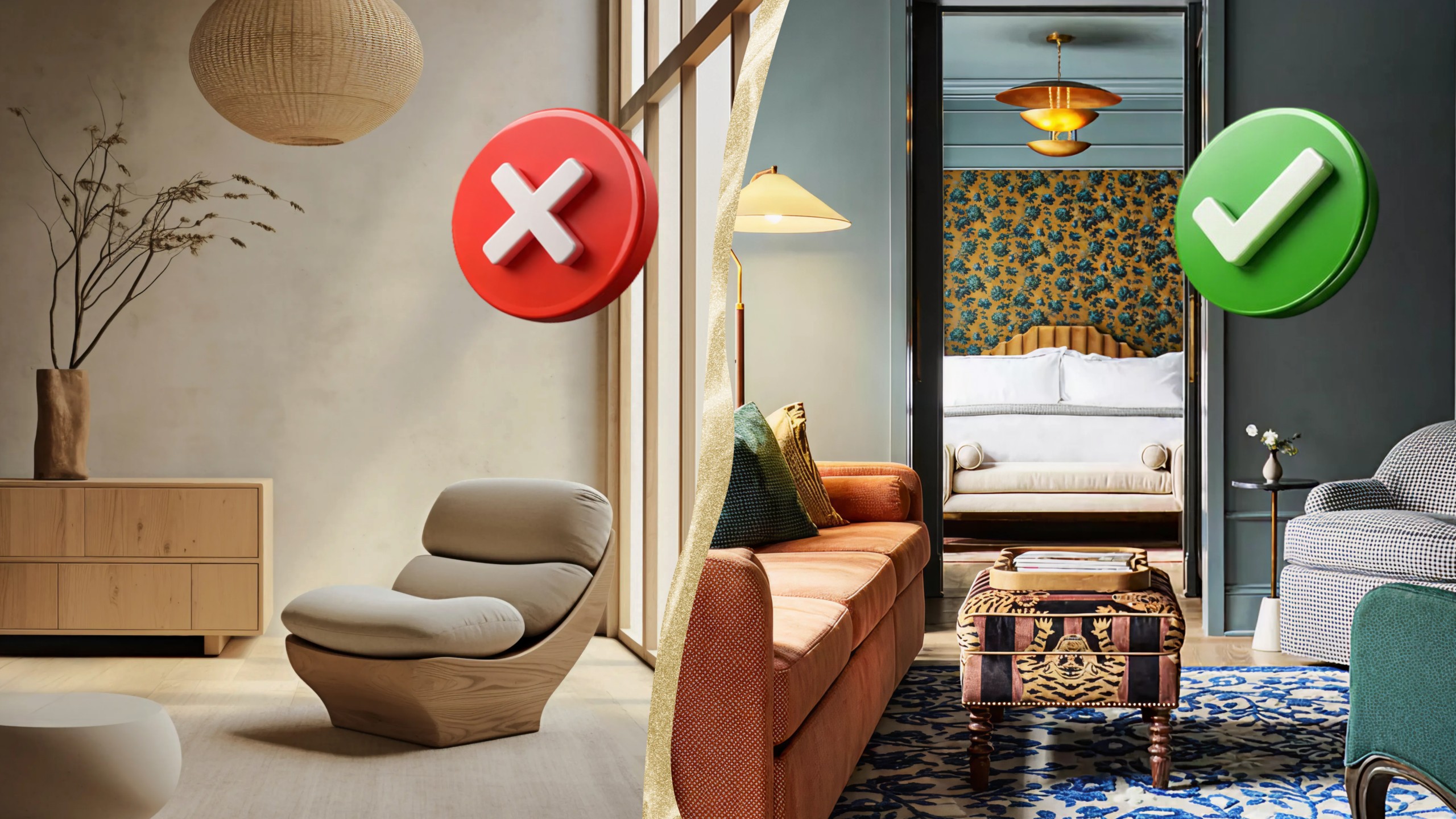
Scandinavian minimalism had a good decade-long run, and it earned its place. But somewhere along the way it devolved into an endless parade of identical flats with the same shelves, the same grey textiles, the airless perfection of a catalogue page. In 2026 the pendulum has swung the other way. Clients are tired of spaces that could belong to anyone. They want rooms that could belong only to them.
What follows is a field guide to how that desire is manifesting — in color, material, furniture, planning, and the quiet philosophy that ties it all together.
The Color Revolution: Earth, Depth, and the End of Grey
If 2026 had a rallying cry, it would be: enough with the grey. Cold neutrals that dominated interiors for a decade are yielding to shades with character and temperature.
The dominant palette draws from the ground:
- Chocolate brown — warm, enveloping, surprisingly versatile
- Terracotta — sun-baked clay brought indoors
- Olive — muted, grounded, alive
- Espresso — depth without darkness
- Deep forest green — the colour of会让你 feel you are in a forest clearing
These tones create a sense that a room is comfortable even when it is nearly empty. They work on walls, in textiles, in finishes — and they age well. Unlike, say, blush pink or mustard, they do not burn out of fashion within two seasons.
And what about white? It has not disappeared, but its role has changed. No longer the default backdrop, white now appears as a deliberate partner to saturated materials and textures. Pantone named Cloud Dancer — an airy, almost living white — as a foundational shade for 2026 precisely because it amplifies the materials around it rather than muting them.
The second major color movement comes in blue. Sikkens dedicated an entire block of shades called Rhythm of Blues — from deep indigo to muted grey-blue. These tones excel in bedrooms and studies, where they create a simultaneous sense of focus and calm.
And one unexpected accent: acid green. Not sage, not olive — sharp, near-lime. It is not a color for an entire room, but as a detail — a cushion, a vase, a picture frame — it reads as deliberate and chic.
Color Drenching: The Cocoon Effect
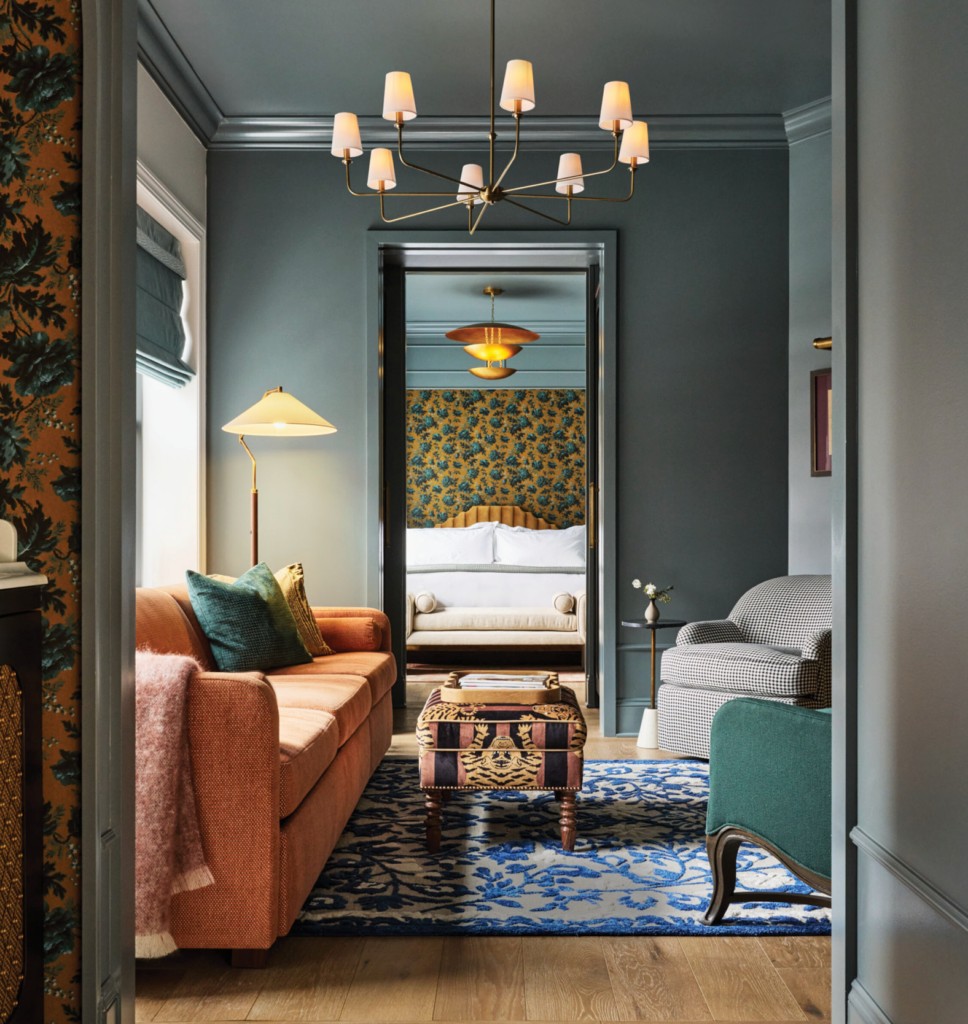
One of the most discussed techniques of the year. The idea is deceptively simple: take a single saturated shade and paint everything — walls, ceiling, baseboards, sometimes even the furniture. The result is not garish. It is cohesive and enveloping.
The technique works because the eye stops stumbling over boundaries between surfaces and reads the room as a single continuous space. It is particularly effective in small, enclosed rooms — a library, a guest bedroom, a study, a powder room — where it creates a jewel-box effect.
If you want to experiment without risk, start with a small enclosed space: a bathroom or a pantry. The cost of the experiment is minimal, and the effect is dramatic.
Materials With a Pulse
If the color story of 2026 is about warmth and character, the material story is the same — only more literally tactile. The defining demand is for surfaces with a history.
Wood
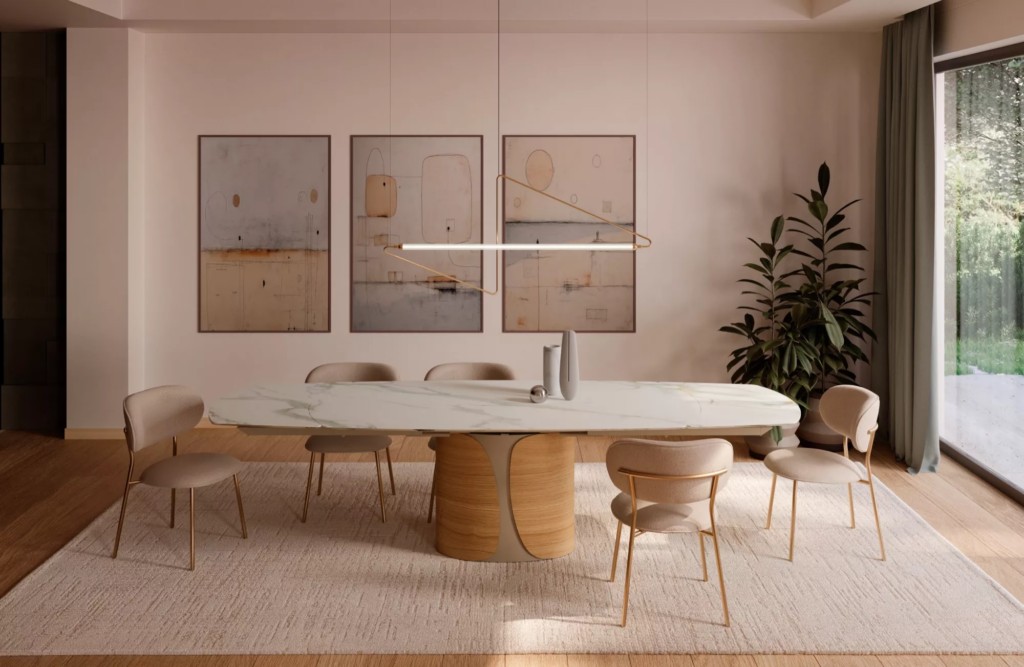
Wood remains essential, but it looks nothing like the last decade. Three key shifts:
- Dark species with presence. Burl wood with its swirling figuring, carved surfaces, fluted panels, hand-worked finishes. This is wood that tells a story.
- Mixed tones in one room. Designers once insisted that every wooden surface match. Now, light and dark species placed side by side is not just acceptable — it is interesting, when done with intention.
- Organic, slightly imperfect forms. Curved frames, consoles with flowing lines, tables where the silhouette follows the natural form of the material rather than a geometric template. Such pieces immediately soften a room and give it life.
Metals
Polished chrome and matte nickel are stepping aside. The metals of 2026 are those that age gracefully: unlacquered brass, bronze, copper. Their defining trait is that they change color over time, developing a patina that makes them more interesting, not less. It is a philosophy fundamentally different from everything must look new.
Stone and Glass
Stone now comes with visible pores, live veining, sometimes with the marks of the tools that shaped it. Terrazzo — especially large-aggregate — slate, travertine with open pores, are all at their peak.
Reeded (reeded/cane) glass continues as one of the most noticeable material trends. Its ribbed surfaces scatter light in a way that adds depth without weighing down the space. It appears in display cabinets, doors, light fixtures, and decorative panels.
The unifying principles: natural (from real materials, not imitations), tactile (pleasant to touch, not just to look at), durable (built for years), and imperfect (showing the hand of the maker).
Furniture as Sculpture
In previous years, furniture tried to be invisible — thin legs, clean lines, not a detail too many. In 2026, the opposite holds. Furniture wants to be noticed.
Rounded silhouettes, deep sofas, armchairs with not a sharp angle to be found, generous cushions. Beautiful furniture has finally become comfortable again — and that may be the most welcome shift of all.
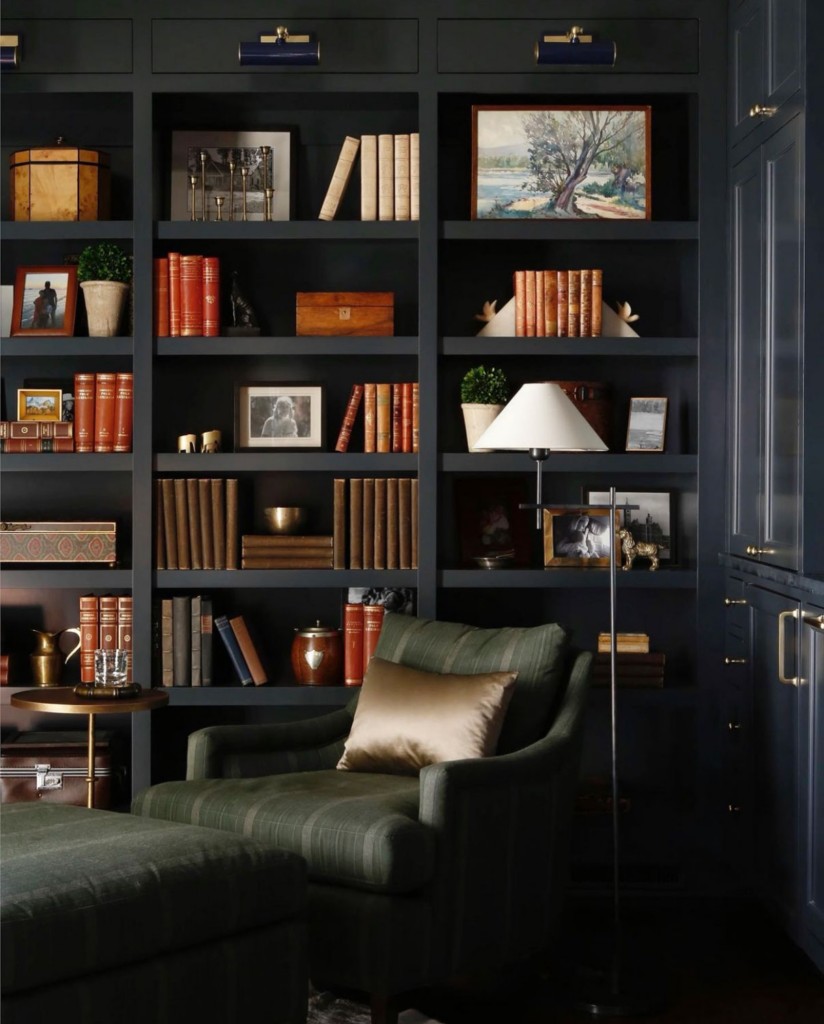
Sculptural Forms
Sculptural furniture means pieces with such expressive form that they become the visual anchor of a room by themselves. Not a painting on the wall, not a rug — but a console in dark wood with a sweeping curve, or a floor lamp shaped like an abstract flame.
This approach changes the logic of furnishing. You do not need a dozen small objects to fill a room. One or two strong pieces can carry the entire space — which, incidentally, is a remarkably economical strategy.
The Fifth Wall and the Checkerboard Floor
The ceiling — long the saddest surface in any flat — is now treated as a design element. Painted the same color as walls for a cocoon effect, or a contrasting shade to lower the ceiling and make a room feel intimate. Sometimes wallpapered. Always considered.
And checkerboard floors are back. The black-and-white classic known from old European kitchens and baths is experiencing a revival — but also in terracotta and cream, deep green and beige, grey and white. It instantly gives a room character and pairs with both classic and contemporary interiors.
The Philosophy: Home as Restoration
Beneath every trend of 2026 lies a single idea: people want a home that feels good to live in, not merely one that photographs well.
Nostalgia and Personal History
Interiors now proudly include vintage furniture, family heirlooms, flea-market finds, and objects brought home from travels. The adjacent movement — Modern Heritage — pairs historical details with contemporary materials: classical moldings with minimalist furniture; an antique sideboard beneath a modern pendant lamp; arched openings alongside a fully contemporary kitchen.
Ritual Restoration
The concept of designing for daily rituals — morning coffee, reading before sleep, working from home, a quiet evening without guests. Hence the rise of soft layered lighting, warm textiles, and functional zones that answer specific human needs rather than simply looking attractive.
The Return of Doors
Open-plan living — where the kitchen flows into the living room, which flows into the workspace — has been wildly popular for fifteen years. But it has a problem that anyone who started working from home understands: when everything is visible, it is very hard to switch contexts.
In 2026, designers report a growing demand for separate rooms with doors. A study you can close. A nursery set apart. A kitchen from which the living room is not visible during cooking. Privacy is the new luxury.
Technology: Quiet, Modular, Wellness-Oriented
A smart outlet or voice-controlled light is no longer novel. The deeper story is how technology is changing the profession itself and how people think about their homes.
Modular lighting systems assemble from individual modules that can be reconfigured: bright directional light for morning work, soft diffused light for evening relaxation — one kit, multiple scenes. Smart plumbing moves from expensive toy to sensible investment. And climate control with air purification is now part of the design from the planning stage, not a retrofit.
The wellness-design movement — threshold-free showers, well-placed grab rails, thoughtful lighting without harsh shadows — is becoming standard, not optional.
What’s Out: Anti-Trends of 2026
- All-white interiors and sterile minimalism. Designers are nearly unanimous: enough. Fully white spaces without texture, color, or detail have come to feel empty and anonymous.
- Interiors designed for photographs. Perfectly symmetrical shelves, installations that look stunning online but are impossible to live with.
- Farmhouse style. Wooden beams, wainscoting, woven baskets, and jute rugs in urban flats — the aesthetic currently reads as dated rather than rustic.
The principle beneath all these changes: a home should work for the person who lives in it, not for an abstract audience.
The threads are clear. Warmth over sterility. Character over conformity. Touch over surface. Privacy over exposure. History over novelty. In 2026, the most fashionable thing a room can be is yours.