Las Vegas doesn’t do subtlety — and that’s precisely its genius. Every other city on Earth attempts to seduce you with charm, history, or natural beauty. Vegas simply detonates across your senses and dares you to look away. A forty-foot volcano erupts on schedule. A five-hundred-foot observation wheel turns slowly against a neon sky. A seventeen-thousand-seat orb pulsates with imagery so vivid it rewrites what a building can be. This is a city that looked at the Mojave Desert and thought: what this needs is more chandeliers.
But strip away the obvious spectacles — and what remains is something far more compelling. Las Vegas is a city of reinvention, of architectural fantasy made concrete, of culinary ambition unconstrained by tradition, and of natural wonder so close that you can trade a casino floor for a canyon floor in under an hour. What follows is not a tourist checklist. It is an invitation to experience Las Vegas as it was always meant to be experienced: not as a place to gamble, but as a place to feel alive.
The Strip as Spectacle — Architecture as Dream
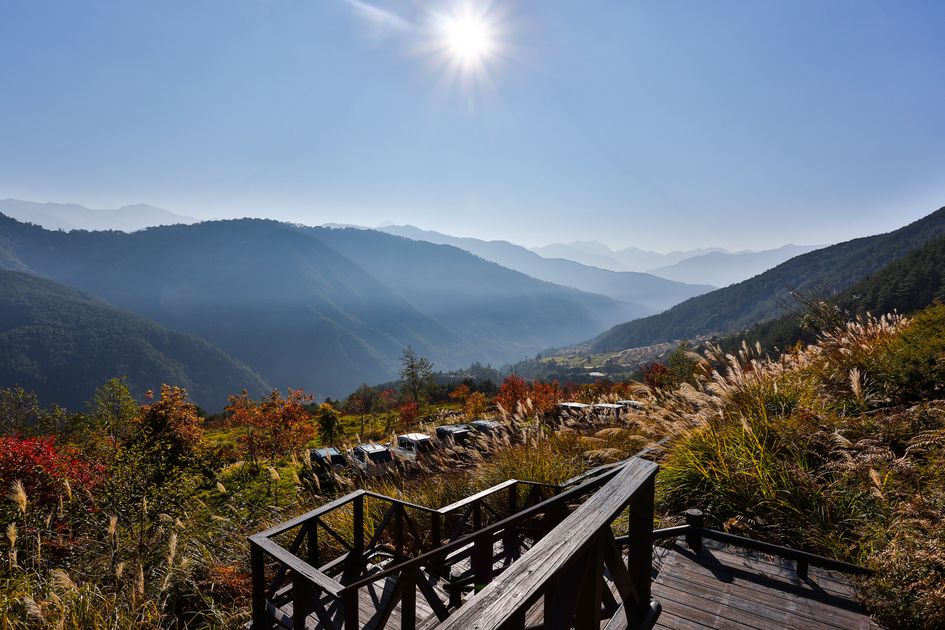
The Las Vegas Strip is not a street. It is a four-mile thesis on the power of imagination made physical. Where else can you walk from a Parisian boulevard complete with a half-scale Eiffel Tower into a Venetian palazzo where gondoliers serenade you beneath painted skies, then pass an Egyptian pyramid guarded by a sphinx — all without crossing a single time zone?
The Bellagio stands as the Strip’s most elegant statement. Its conservatory — redesigned five times annually in explosions of botanical artistry — transforms ten thousand flowers into immersive tableaux that rival any installation at any contemporary art museum on Earth. And then there are the fountains: 1,214 jets launching water up to 460 feet into the air, choreographed to music that ranges from Pavarotti to Pink Floyd. Stand at the edge of the lake as the water catches the desert light and you will understand something essential about Vegas — spectacle, when executed at this level of precision, transcends kitsch and becomes something approaching the sublime.
The Mirage’s volcano, though retired in its original form, remains woven into the city’s mythology. Its replacements carry the same DNA: the Flamingo’s wildlife habitat, where Chilean flamingos wade through waterfalls in the shadow of a casino; the LINQ’s promenade where the old Vegas meets the new. Each resort on the Strip is a self-contained universe, and crossing their thresholds is less like entering a hotel than crossing into a parallel dimension where the ordinary has been systematically eliminated.
The High Roller — The City from a Different Altitude
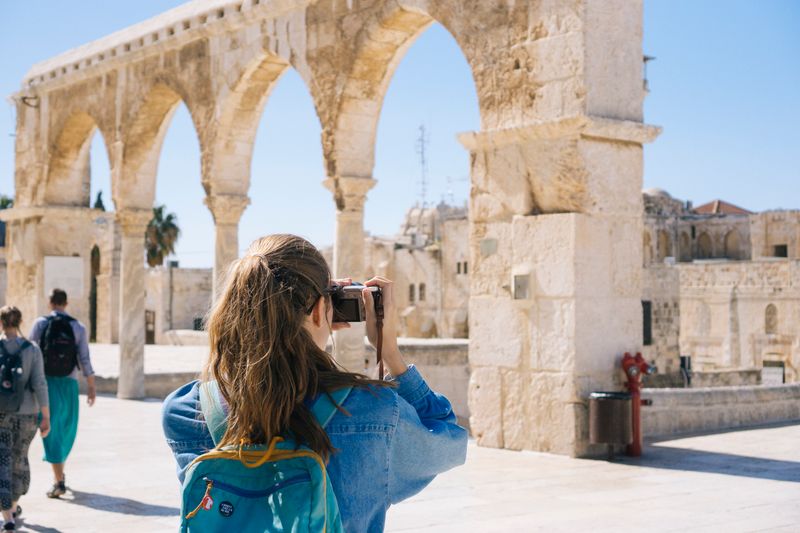
Rising 550 feet above the LINQ Promenade, the High Roller is the world’s largest observation wheel — and the most cinematic way to comprehend the scale of Vegas’ ambition. Each rotation takes thirty minutes, which is exactly enough time to watch the desert sky shift through its astonishing palette: the bleaching white of late afternoon, the bruised purples of sunset, the electric constellation of a Strip that refuses to acknowledge the existence of darkness.
The cabins are climate-controlled glass bubbles that hold up to forty people — or, for those who prefer their elevations with a cocktail, the “Happy Half Hour” pod serves drinks as you ascend. But the true luxury of the High Roller is temporal. In a city engineered to eliminate your awareness of time — no clocks on the casino floor, no windows in the gaming rooms — this wheel gives it back to you, one slow rotation at a time. You see the city’s geometry laid bare: the Strip as spine, the mountains as frame, the vast emptiness of desert that makes all this artificial light so defiant.
The Sphere — A New Chapter in the Las Vegas Skyline
When the MSG Sphere opened in 2023, it didn’t simply add another attraction to the Strip. It fundamentally altered what a building could be. Standing 366 feet tall and 516 feet wide, wrapped in 580,000 square feet of LED panels, the Sphere transforms its exterior into a living canvas visible from aircraft descending into Harry Reid International Airport — a glowing basketball, a looming eye, a coral reef blooming in the desert night.
Inside, the 17,500-seat auditorium deploys a 160,000-square-foot LED screen that wraps around two-thirds of the audience, combined with haptic seats, atmospheric effects, and spatial audio so precise it can make a single voice emerge from a specific point in the room. Darren Aronofsky’s “Postcard from Earth” — the venue’s signature production — uses this technology not as gimmickry but as a new grammar of experience. This is immersive entertainment in its most realized form: you do not watch the Sphere. The Sphere happens to you. And in a city that has always defined itself by the next impossible thing, the Sphere is Vegas’ most convincing argument that the impossible has a very generous ceiling.
Cirque du Soleil — Vegas as the World Capital of Wonder
Las Vegas is the only city on Earth where Cirque du Soleil maintains not one but multiple resident productions, and each is a world unto itself. “O” at the Bellagio — the aquatic masterpiece where synchronized swimmers emerge from a 1.5-million-gallon pool as acrobats dive from impossible heights — remains the most technically ambitious show on the Strip, a meditation on the beauty of water and the folly of gravity. “Mystère” at Treasure Island, the original Vegas Cirque production, is primal and raucous and joyful in a way that feels almost impossible in an era of image management. “Kà” at the MGM Grand stages its acrobatics against a vertical wall that rotates through the full range of theatrical possibility — battlefield, ocean, cliff face, void.
What makes Cirque’s Vegas residencies extraordinary is their symbiosis with the city itself. Vegas demands that its spectacles be larger than anywhere else, and Cirque obliges with productions that could not physically exist in any other setting. These are not touring shows condensed for a casino stage. They are site-specific works of art built for rooms that were designed around them, employing technologies that exist nowhere else in the company’s global repertoire. To see Cirque in Las Vegas is to see the art form in its most ambitious, most expensive, most uncompromising incarnation.
Beyond the Strip — The Desert Has Its Own Cathedral
Here is the secret that Las Vegas’ neon facade conceals: thirty minutes west, the earth itself stages a spectacle that no amount of money or engineering could improve upon. Red Rock Canyon National Conservation Area rises from the Mojave in towering formations of Aztec sandstone — crimson, rust, and vermillion strata laid down 190 million years ago, then carved by wind and water into forms that look like architecture designed by a deity with a taste for the dramatic.
The thirteen-mile scenic drive carries you through a gallery of geological masterworks: the Calico Hills’ tsunami of red stone, the dramatic vertical walls of Willow Springs, the petroglyphs at White Rock where ancient artists left their mark on stone that was already ancient when they arrived. Hikers will find trails ranging from the accessible Calico Tanks to the lung-testing summit of Turtlehead Peak. There is a particular moment in Red Rock — standing in a crack between two sandstone walls while the sun casts a blade of light across the canyon floor — when all of Las Vegas’ engineered spectacle feels almost modest by comparison.
An hour north, Valley of Fire State Park pushes the drama even further. This is Nevada’s oldest and largest state park: 40,000 acres of Jurassic-era sandstone in colors that seem to belong to another planet — fire red, electric orange, deep magenta — shaped into arches, domes, and honeycomb labyrinths by six thousand years of desert wind. The Fire Wave trail deposits hikers on a swirl of striped sandstone that looks like a painting left out in the rain. Elephant Rock balances impossibly on a narrowing pedestal of stone. Ancient petroglyphs at Atlatl Rock remind you that humans have been drawn to this alien landscape for millennia, long before the first neon sign was switched on an hour to the south.
And then there is Hoover Dam — forty-five minutes southeast, straddling the Colorado River in a gorge of black volcanic rock. When it was completed in 1936, it was the tallest dam in the world, a monument to engineering hubris that rivals anything on the Strip. Stand on the observation deck and look down 726 feet to the river below, then look up at the power of the water held back by concrete and will — you will feel a vertigo that has nothing to do with height. The dam tour descends through the Art Deco innards of the structure to a gallery where the generators thrum with the sound of the Colorado being turned into electricity. It is, in its own way, the most Vegas thing in Nevada: a monument to the belief that nature exists to be transformed into spectacle.
Grand Canyon West — two and a half hours from the Strip — offers the Grand Canyon’s most theatrical introduction: the glass Skywalk extends seventy feet over the rim, suspending visitors four thousand feet above the Colorado River with nothing beneath their feet but air and vertigo. It is audacious. It is terrifying. It is, in other words, Las Vegas doing what Las Vegas does best: taking an already extraordinary natural wonder and asking the question — but what if we made it just a little more extreme?
Downtown and the Arts District — Vegas Before It Was Neon
Before there was a Strip, there was Fremont Street. The original gambling district — now crowned by a twelve-million-LED canopy that stages light shows every hour — carries the DNA of old Vegas: signage so bold it borders on architectural instruction, casinos that still feel like the kind of place where a story might happen to you, street performers who operate on the conviction that every passerby is an audience. The Fremont Street Experience is a calibrated chaos that somehow achieves a kind of ragged grandeur.
But the real discovery is the 18b Arts District, a few blocks south — a neighborhood of converted warehouses where studio spaces, galleries, and independently owned restaurants form an ecosystem of creativity that feels genuinely, almost defiantly, authentic. Arts District Kitchen serves some of the city’s most thoughtful small plates. Esther’s Kitchen has earned its devoted following with handmade pasta that would hold its own in any city in Italy. The Antique Alley shops offer vintage discoveries that have nothing to do with the Strip’s mass-produced souvenir economy. And the Neon Museum — its two-acre “boneyard” of retired casino signs glowing in the desert twilight — is the single most poetic experience Las Vegas offers: a cemetery for the city’s own mythology, where the bones of old dreams lie next to the foundations of new ones.
The Culinary Revolution — Where Every Meal Is a Production
Las Vegas has undergone a culinary transformation so complete that it now stands as one of the premier dining destinations in the Western Hemisphere. This is not hyperbole. The concentration of celebrity chef restaurants — Joël Robuchon’s three-Michelin-star temple at the Mansion, Gordon Ramsay’s Hell’s Kitchen, É by José Andrés where eight guests at a time experience an omakase service that borders on the theatrical, Momofuku’s bold Asian fermentation — represents an investment in gastronomy that no other city of Vegas’ size can match.
The explanation is architectural. Vegas’ resort model — massive complexes where twenty thousand guests eat, sleep, and play without leaving the property — creates a captive audience that allows restaurateurs to operate at margins and scales impossible in any other market. The result is a dining ecosystem where ambition is unconstrained, where a chef can build a restaurant as an experience rather than a business plan, where the ceiling is not the market but the imagination. Book Wolvesmouth at the Cosmopolitan for a tasting menu that redefines what a casino meal can be. Reserve at Raku, a thirty-minute drive from the Strip, for a Japanese izakaya experience so transporting you will forget you are in a desert. Or simply walk into L’Atelier de Joël Robuchon, order the tasting menu, and let a French master remind you that luxury is not about price — it’s about precision.
Nightlife and Rooftop — The City That Invents the Night
Las Vegas approaches nightlife with the same ambition it brings to everything: if something can be made bigger, brighter, louder, or more immersive, it will be. The dayclub-beachclub circuit — Encore Beach Club, Wet Republic, Liquid — transforms afternoon into a kind of Mediterranean idyll where DJ sets reverberate across pools and cabanas and the desert heat becomes an excuse for another cocktail.
But the more refined experiences exist above the fray. The Chandelier at the Cosmopolitan — a three-story bar draped in two million crystals — is Vegas nightlife distilled to its essence: cocktail couture consumed inside a chandelier, because where else would you? Skybar at the Waldorf Astoria offers the Strip’s most sophisticated rooftop perspective, where craft cocktails and panoramic views create a mood that is less party and more meditation. For those who prefer their evenings with a side of combustion, Omnia’s architectural ceiling — a kinetic chandelier that shifts shape above the dance floor — is visual engineering as performance art.
The through-line connecting all of these experiences — from the bottle-service temples to the quiet rooftop lounges — is Vegas’ conviction that nightlife is not an afterthought. It is architecture. It is scenography. It is the city taking the hours between sunset and dawn and sculpting them into something you will remember long after the hangover has faded.
Las Vegas was never meant to be subtle. It was meant to be unforgettable — a city that takes the desert’s silence and fills it with every kind of light, sound, flavor, and sensation that human ingenuity can manufacture. But the deeper truth of Las Vegas is that its manufactured spectacles exist in breathtaking proximity to natural wonders that predate them by millions of years. The same traveler who watches the Bellagio fountains dance at noon can stand in the Valley of Fire’s petrified sandstone by two. The same evening that begins with omakase at a Michelin-starred counter can end beneath a Milky Way so bright it makes the Strip’s neon feel almost redundant.
That is the paradox — and the genius — of Las Vegas: a city that built the world’s most elaborate stage set in the middle of one of the world’s most magnificent natural theaters. Come for the spectacle. Stay for the silence in between. That is where Las Vegas reveals its truest self.