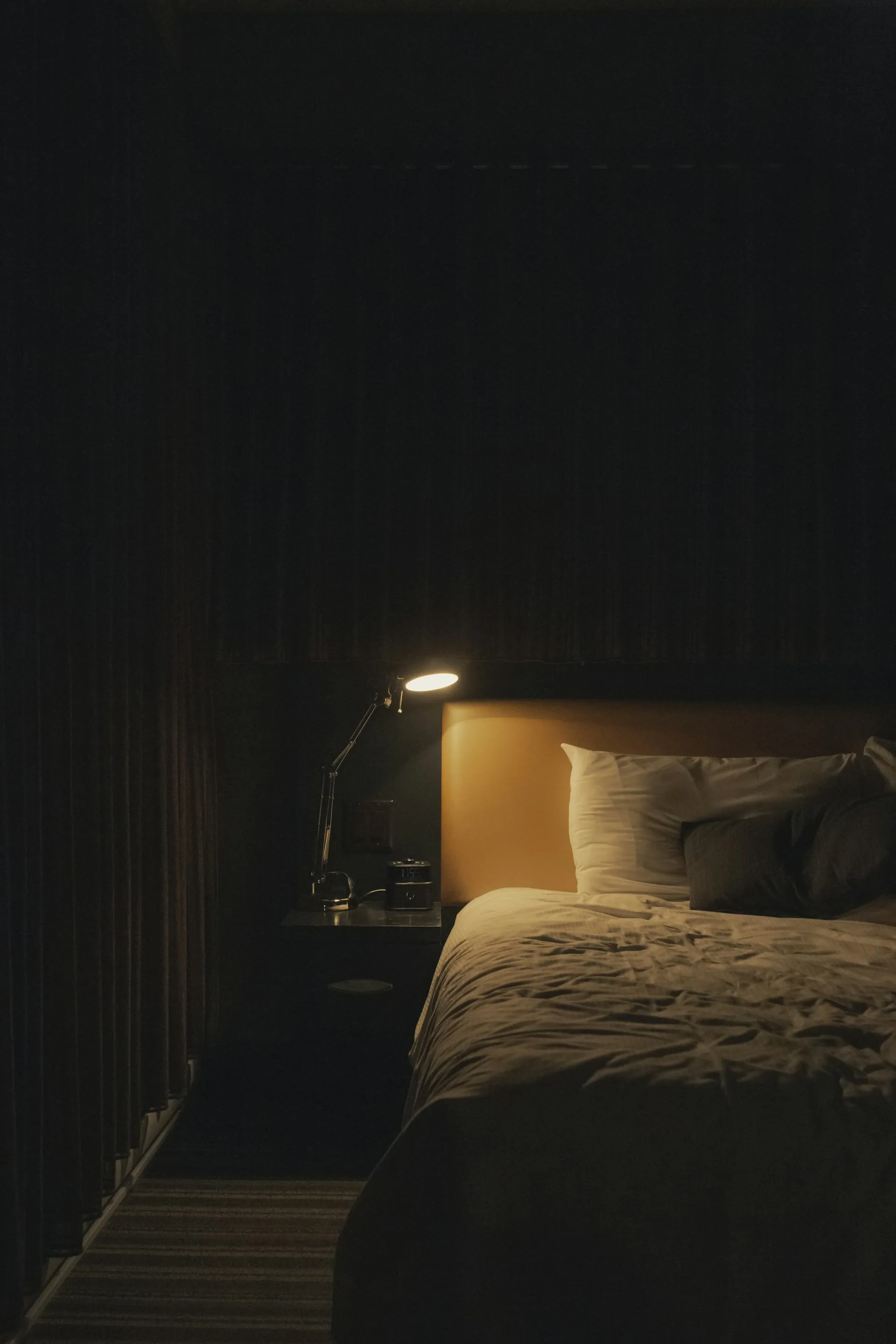
For most of the twentieth century, residential lighting had one function: illumination. A ceiling fixture, a bedside lamp, perhaps a porch light — all engineered to banish darkness, not to shape it. The idea that light itself could be a material, something you sculpted rather than simply switched on, belonged to restaurants and film sets. Homes were lit to be functional. Mood was accidental.
That premise has quietly collapsed. In the second quarter of 2026, Pinterest’s shopping trends data registered a forty-five percent month-over-month increase in outbound clicks for night lights and ambient lighting — the largest jump in the home category and one of the largest across all product verticals the platform tracks. Amazon lists over thirty thousand results for “ambient bedroom lighting” and over ten thousand for “night light ambient,” with top sellers moving between one and ten thousand units per month. What was once a hardware-store afterthought is now a deliberate design category, and the objects driving it range from eight-dollar amber plug-ins to hundred-dollar projection systems that paint northern lights across a bedroom ceiling.
Why the Shift Happened Now

Three forces converged. The first is sleep science. Over the past five years, circadian rhythm research has moved from the margins of wellness culture into mainstream product marketing. The consensus is blunt: blue-spectrum light after sundown suppresses melatonin production, delays sleep onset, and degrades sleep quality. Warm-spectrum amber light — the kind that mimics firelight and dusk — does not. Once that finding crossed from journals into lifestyle coverage, the question for consumers stopped being whether to change their evening lighting and started being which product to buy.
The second force is remote work. The bedroom is no longer just a bedroom; for millions of households it is also an office, a reading room, a video call backdrop, and a decompression space. Each function wants a different quality of light. A single overhead fixture cannot serve all of them. The natural response is to layer — a task lamp for work, a warm floor lamp for wind-down, a low-glow plug-in for the path to the bathroom at three in the morning. Ambient lighting is, in this sense, the lighting equivalent of open-plan zoning: not more rooms, but more moods within the same room.
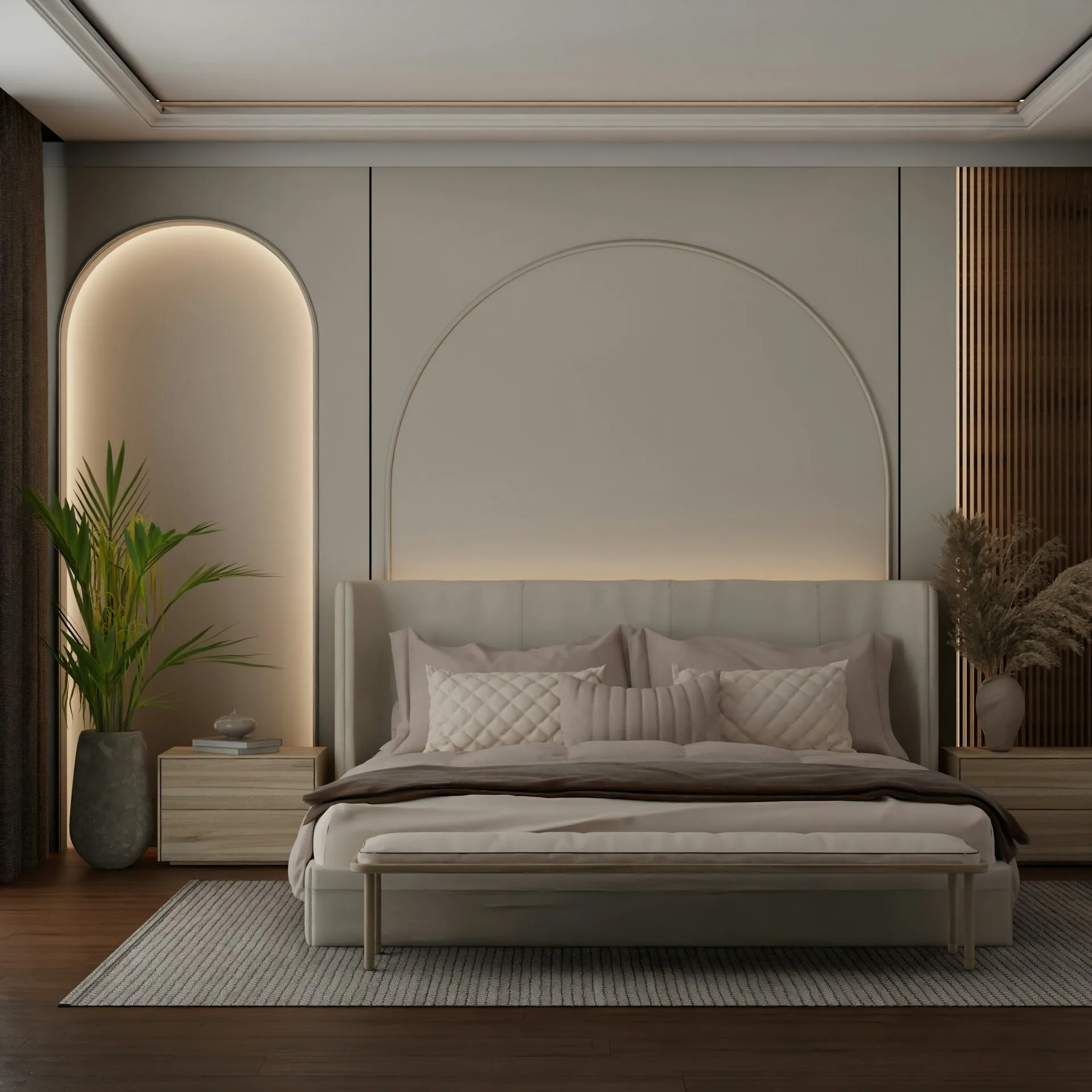
The third force is aesthetic. Amber light at night photographs well, and in a culture where the bedroom is a backdrop as often as it is a retreat, that matters. The rise of #cozy, #vscedit, and ambient-room content on short-video platforms has turned a specific color temperature into a recognizable visual signature. You can spot an ambient-lit bedroom from a thumbnail.
The Amber Night Light: Twenty Dollars, outsized Impact
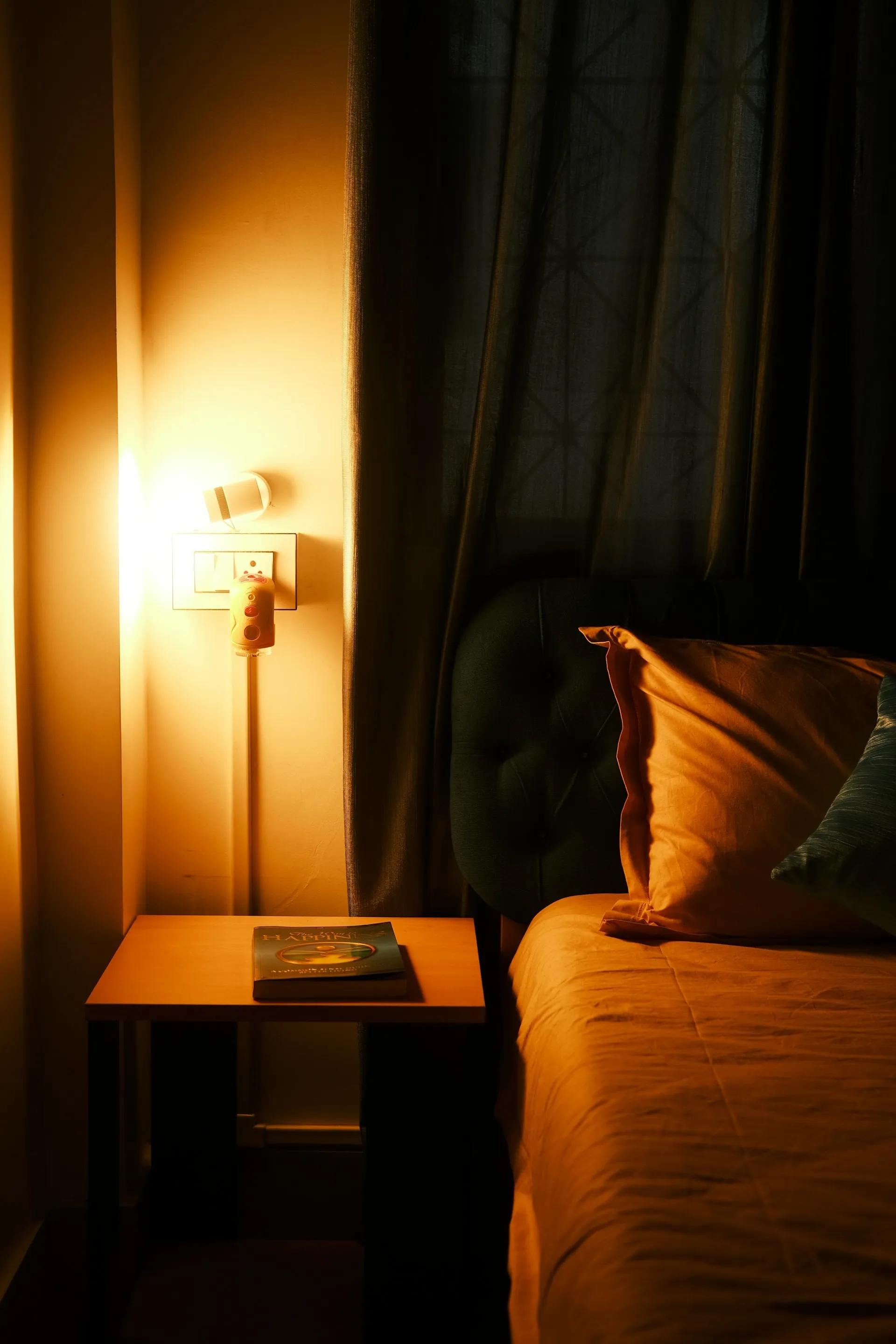
The simplest entries in the category are plug-in amber night lights with dusk-to-dawn sensors. They draw almost no power, activate automatically when the room darkens, and cast a warm amber glow rather than the cold white of older LED night lights. On Amazon, GE’s Sleeplite two-pack ($8.06) carries 4,162 reviews at 4.6 stars and sells over a thousand units monthly. YUNLEX’s two-pack with a three-level dimmer ($13.01) adds motion sensing and has accumulated 3,200 reviews at 4.7 stars. The DORESshop two-pack with adjustable brightness ($7.99) is moving ten thousand units a month.
What these products prove is that ambient lighting is not a luxury purchase. It is a low-friction, low-cost intervention that delivers a measurable change in how a room feels at night. The barrier to entry is eight dollars and a free wall socket. That accessibility is precisely why the category is scaling — it does not require renovation, contractor work, or even a smart-home hub. You plug it in, and the room is different.
The Projection Layer: Northern Lights in a Dorm Room
Above the ten-dollar tier, the category fragments into something more theatrical. The Mubarek 3-in-1 Sunset Lamp and Northern Lights Projector ($33.29) offers 216 color modes and projects animated aurora and ocean-wave effects onto walls and ceilings. It carries 872 ratings and moves four thousand units a month. The Galaxy Projector with 18-color lava-lamp functionality ($30.02) does something similar and sells three thousand units monthly. The Ocean Wave Projector ($19.95) casts a three-dimensional water-ripple effect across a ceiling and is another four-thousand-unit monthly mover.
These are not subtle objects. They are small light shows, designed for dorm rooms, teenage bedrooms, and the specific brand of social-media content that rewards saturated color in the background of a frame. But they serve a function beyond novelty: they replace the ceiling-mounted fixture as the room’s primary nocturnal light source, creating an environment that reads as softer, slower, and more intentional than a reading lamp. For a generation that grew up with screens as the dominant light source in a bedroom, a projector that paints the ceiling is a reintroduction to what ambient light can feel like when it is not coming from a rectangle.
LED Strips: The Quiet Workhorse
No single product defines the category more than the LED strip light. The KSIPZE 100-foot RGB music-sync strip is Amazon’s bestseller in the segment, carrying a remarkable 40,200 ratings at 4.4 stars and moving over ten thousand units monthly at $7.89. The economics here are startling — for under eight dollars, a consumer can install sixty feet of color-changing, app-controlled, music-reactive lighting that conforms to the architecture of any room. It runs along baseboards, behind headboards, under shelves, and around doorframes. It is, in effect, a lighting system you apply with adhesive.
The strip’s dominance tells a broader story about the category. Ambient lighting scales down to a two-dollar plug-in and up to a custom-installed architectural system, but the mass market lives in the middle: affordable, modular, user-installed, and visually dramatic. The LED strip is the ambient-lighting equivalent of the modular sofa — infinitely configurable, surprisingly cheap, and transformative in a way that a single fixture cannot be.
The Smart Corner Floor Lamp: Where Design Meets Tech
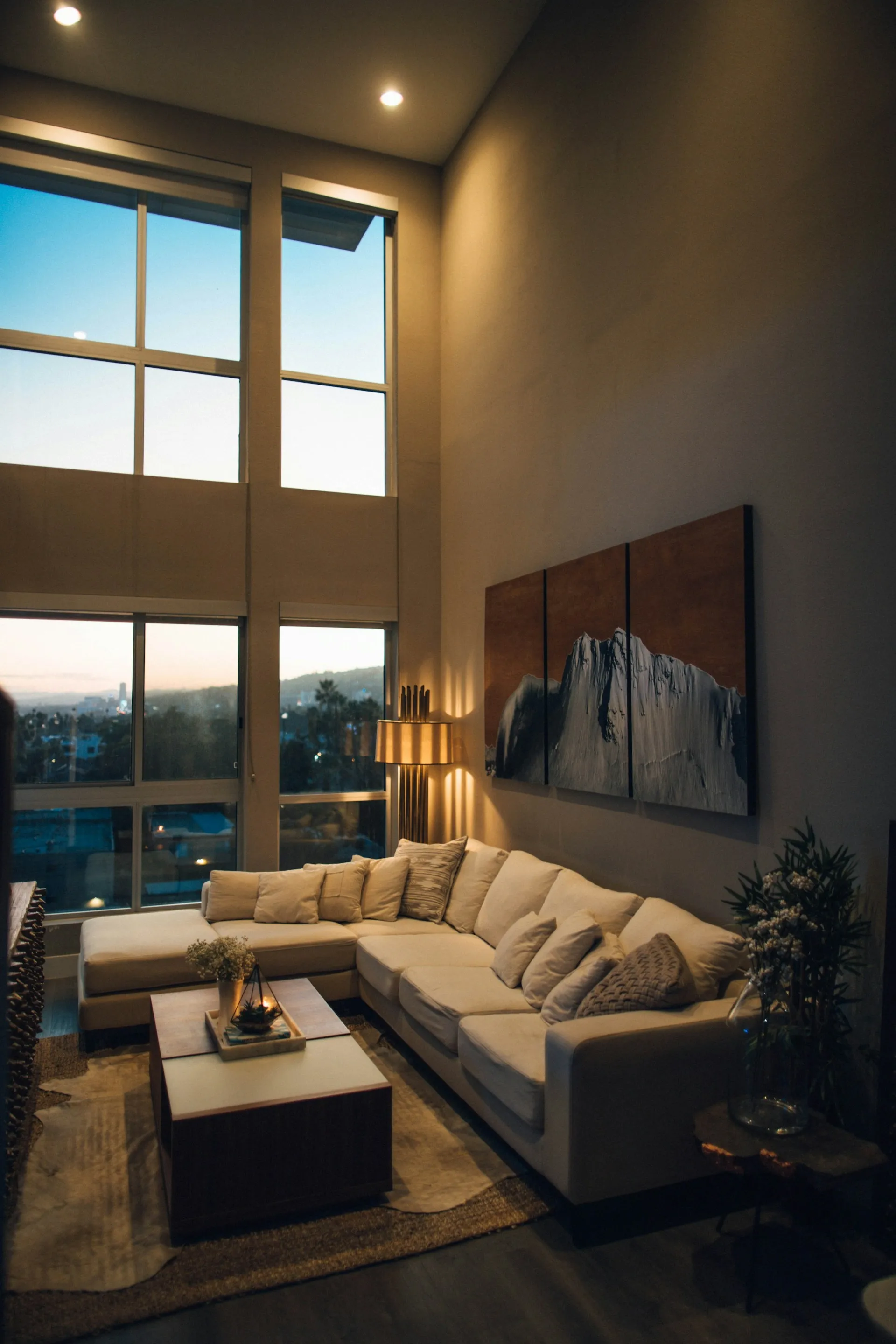
At the intersection of ambient lighting and connected home sits the smart corner floor lamp. The OIYN RGBICW corner lamp ($29.69) offers sixteen million colors, sixty-eight preset scenes, app and remote control, and music synchronization. It accumulates two thousand ratings and sells over two thousand units monthly. The proposition is specific: a single vertical fixture tucked into a room corner that can become a fireplace ember, a nightclub pulse, or a morning sunrise on command.
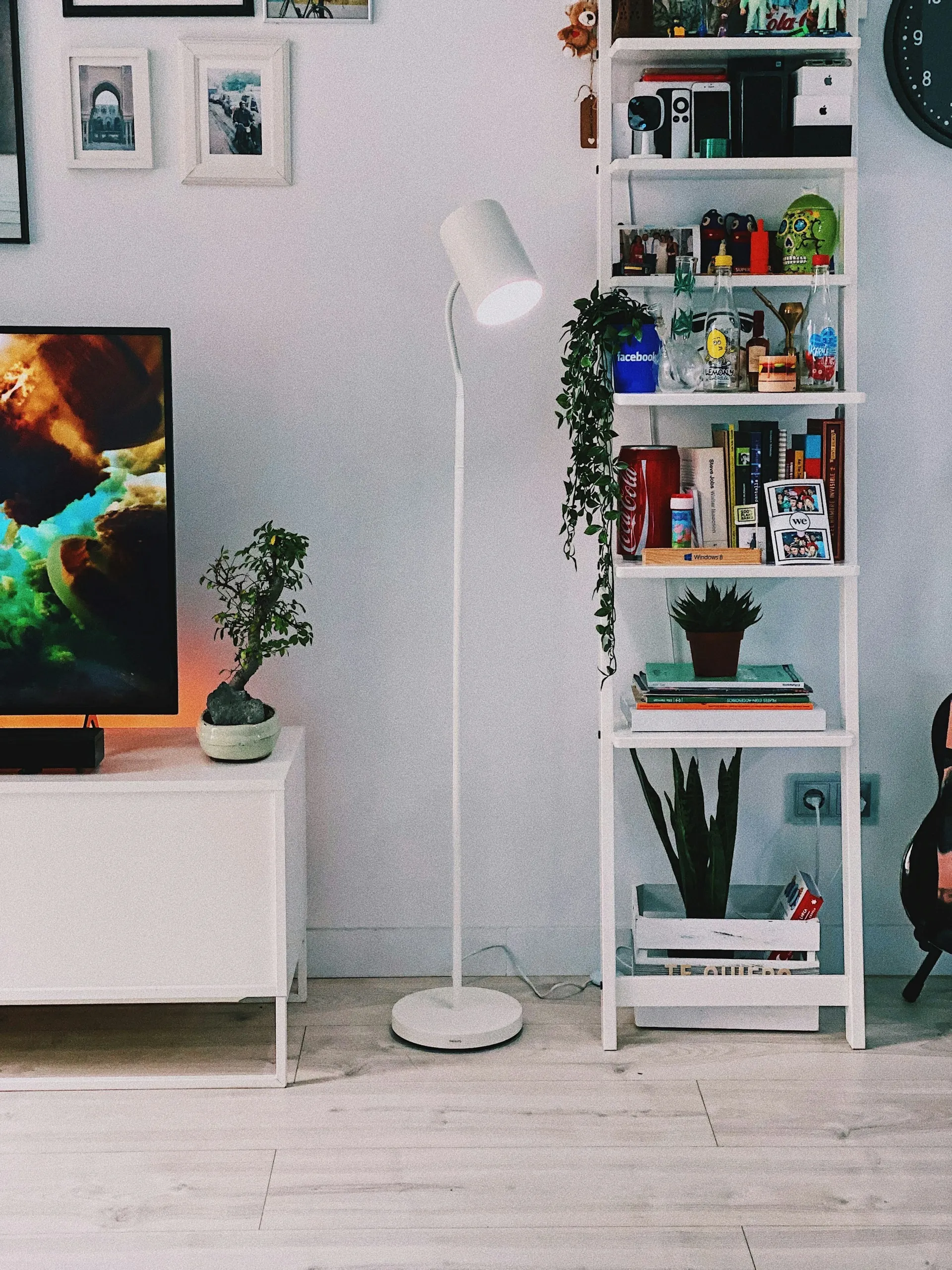
These lamps matter because they bridge two audiences that rarely overlap. The design-focused buyer wants a fixture that disappears into the architecture; the tech-focused buyer wants a device that responds to an app. A corner lamp that does both — sleek, unobtrusive, and capable of sixteen million colors — is the rare product that satisfies both constituencies without compromising either.
What the Five Bestsellers Have in Common
Surveying the top performers across both Amazon searches, a pattern emerges:
- Warm spectrum over cool. Amber and warm-white products dominate. Blue and cool-white variants are available but rank lower and sell less.
- Automatic activation. Dusk-to-dawn sensors and motion sensors appear in every top seller. Manual switches are a liability.
- Sub-twenty-dollar entry price. The category’s volume lives below $20. Above that, products must offer projection, smart-home integration, or substantial physical scale to justify the price jump.
- Install without tools. Adhesive strips, plug-in form factors, and remote controls dominate. Hardwired fixtures are absent from the bestseller list.
- High review counts at high ratings. The median top seller carries thousands of reviews at 4.4 stars or above. This is a category where consumers are actively satisfied with what they buy — which is not true of every product vertical.
The Quiet Implication
The ambient lighting trend is, underneath the product specifics, a reevaluation of what light is for in a home. For decades the answer was to make darkness visible. The new answer is that darkness is not the problem — the problem is that we spent a century lighting rooms as if they were warehouses. The objects selling at volume this year are not brighter than what came before. They are dimmer, warmer, slower, and more considered. They light a room the way a candle does — locally, softly, and with a specific mood in mind.
Forty-five percent month-over-month growth in a lighting subcategory is not a fad. It is a correction. And the correction is that homes are not spaces to be illuminated. They are spaces to be inhabited, and the right light, in the right place, at the right warmth, is what makes inhabiting them feel different from merely occupying them.