Reading time: 7 minutes
Motivation is a visitor — it arrives, stirs something inside you, and leaves before dawn. Habits, on the other hand, are the architecture of a life. They are the quiet, invisible scaffolding that holds everything up when willpower has gone to sleep. Scientists have spent decades mapping how routines take root, and coaches have field-tested their findings in the messy reality of everyday life. What follows is a distillation of ten principles that bridge the laboratory and the living room — practical, proven, and refreshingly free of hype.
1. Begin at First Light

There is something chemically honest about the early hours. Cortisol — often maligned as the stress hormone — is naturally elevated in the morning, and researchers have found that this peak makes the brain more receptive to new patterns. In one study, participants who performed a daily stretching routine in the morning formed the habit nearly fifty days sooner than those who stretched in the evening.
Admiral William McRaven, who commanded the raid that killed Osama bin Laden, used to tell new recruits a simple thing: if you want to change the world, start by making your bed. The gesture is absurdly small, yet it sets a tone. The day’s first action becomes a whisper: Done. I am already ahead.
Which habits suit the morning? Most beneficial routines feel tailor-made for dawn — a glass of water, a mindful breakfast, ten minutes of meditation, a short walk, a few pages of a book. Pick one. Just one. Let it settle into muscle memory before adding another.
2. Conjure Your Future Self

The woman you will be in five years is not a stranger — she is a tenant you are housing today. psychologist Kelly McGonigal has shown that people who frequently imagine their future selves make better decisions in the present. The brain, it turns out, is remarkably literal: when you paint a vivid picture of tomorrow, it begins calculating the consequences of today’s choices with greater precision.
The next time you are tempted to skip a workout or reach for a third slice of cake, pause. Project yourself forward. Will that future version of you feel grateful or resentful? The act of visualisation is not about guilt — it is about clarity. Your future self has no voice except the one you give her now.
3. Take Absurdly Small Steps

BJ Fogg, a Stanford professor and the architect of the Tiny Habits method, has spent his career arguing that ambition is the enemy of consistency. His prescription is almost comically simple: shrink the desired behaviour until it requires no motivation whatsoever. If ten push-ups feel heroic, do one. If one feels heroic, simply get into plank position and call it a day.
The logic is neurological, not motivational. The brain warms to repetition. Once a behaviour becomes automatic, the organism wants more — not because it is inspired, but because inertia now works in your favour. Start with fifty push-ups and the body recoils; start with one and the body asks, Why not two?
How to make a step small enough? Think of a habit you want to adopt. Now reduce it to something that feels silly — something so trivial it barely registers as effort. Want to eat more vegetables? Add a single carrot to your plate. That is the entire instruction.
4. Focus on the Lifestyle, Not the Goal
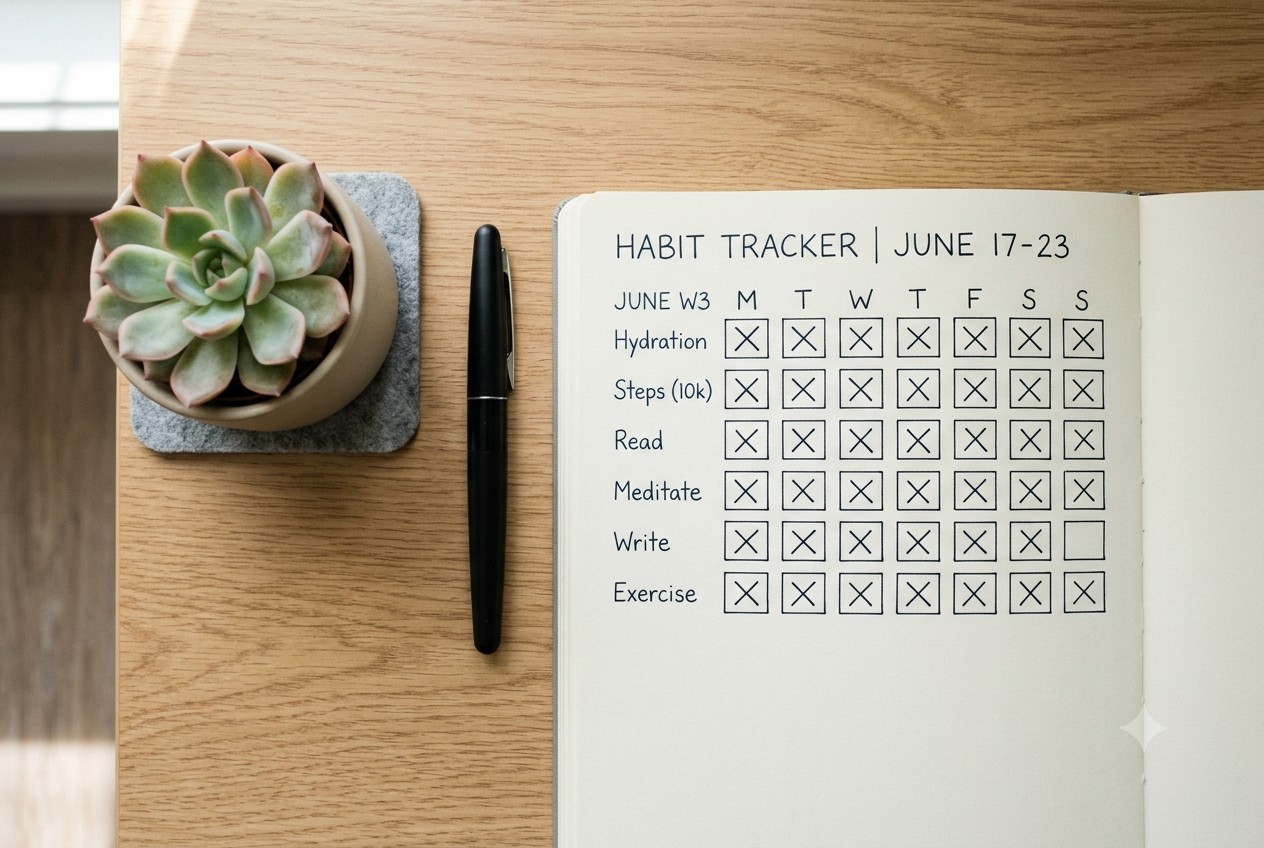
James Clear, author of Atomic Habits, frames it elegantly: everyday routines are the compound interest of self-improvement. Goals give you a direction, but systems — the daily architecture of your life — determine whether you arrive.
The distinction matters. A goal says lose ten kilos. A system says train three times a week, sleep before midnight, replace the afternoon biscuit with a piece of fruit. The goal is a destination; the system is the vehicle. Fixate on the vehicle, and the destination takes care of itself — minus the anxiety, the crash diets, and the Monday-morning resolutions that dissolve by Wednesday.
5. Give Yourself Permission to Be Slow

Two weeks. Twenty-one days. Ninety days. The internet loves a number. Science is less certain. In a landmark study by health psychologist Phillippa Lally, the time required to automatise a habit ranged from eighteen to two hundred and fifty-four days, with a median of sixty-six. That figure — sixty-six — has been quoted endlessly, but the range around it tells the real story: there is no universal clock.
Your habit has its own seasons. Some take root in weeks; others need months of patient tending. The error is not in being slow — it is in measuring yourself against someone else’s timeline. Focus on the satisfaction of the process rather than the urgency of the deadline. The habit will arrive when it is ready.
6. Engineer Your Environment for Convenience

Convenience is the invisible hand that shapes behaviour. A biscuit jar on the counter is a daily invitation; the same jar three aisles away in a distant shop is a forgotten thought. The food industry has built empires on this principle — one-click ordering, drive-through windows, snack-sized packaging — all designed to make the unhealthy choice the frictionless one.
The psychologist Wendy Wood took this idea to its logical extreme: she began sleeping in her running clothes so that morning jogs had zero activation energy. The lesson is not that you must sleep in gym wear — it is that every barrier you remove from a good habit and every barrier you place in front of a bad one tilts the playing field in your favour.
Practical adjustments. Put a glass of water where the biscuit tin used to be. Lay out your workout clothes the night before. Keep the phone charger in another room. Small renovations in your physical space yield large returns in your daily behaviour.
7. Remember Why You Started
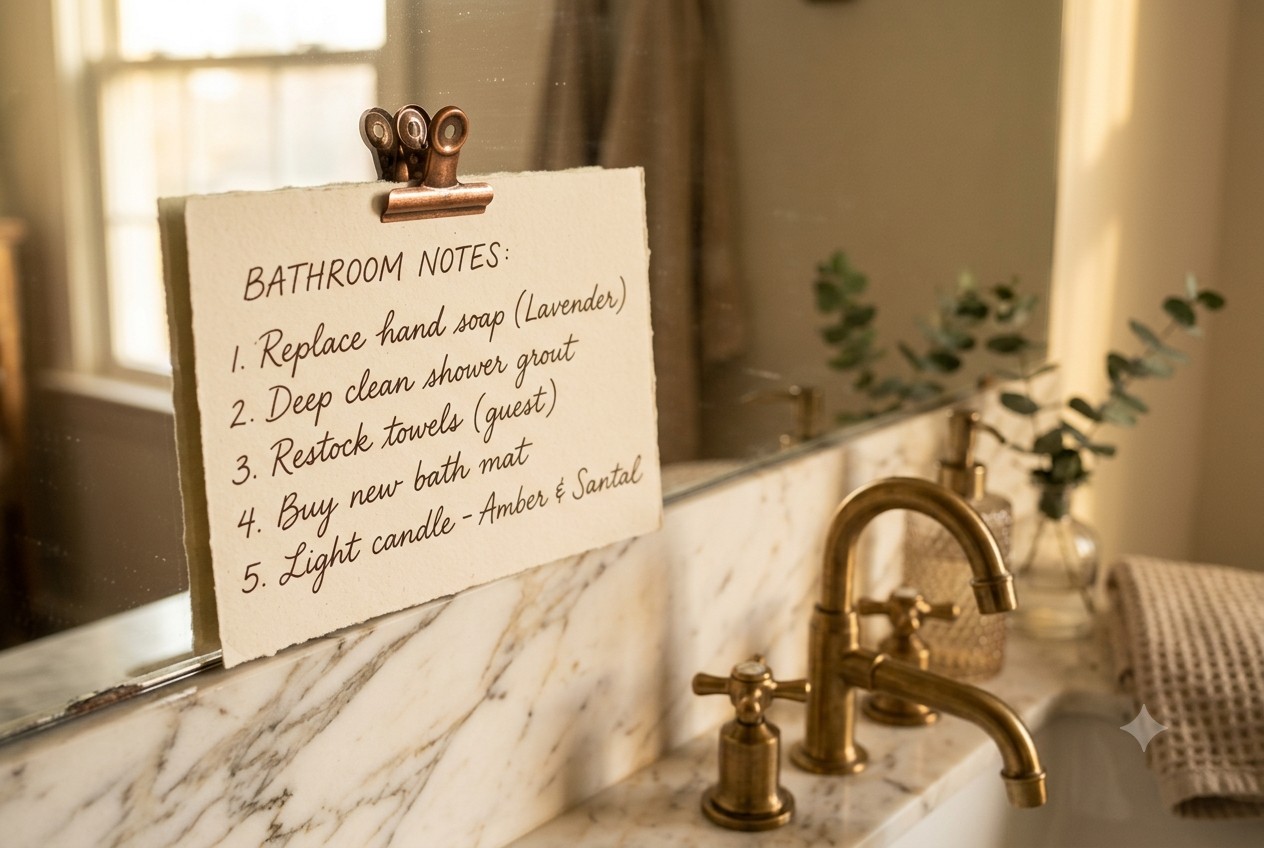
Psychotherapist Amy Morin observed that people abandon positive routines not in moments of strength, but in moments of emotional turbulence — sadness, anger, boredom. Under stress, the brain gravitates toward the familiar, and the familiar is rarely the healthy.
Morin’s prescription is deceptively simple: when you are calm and undisturbed, write a list — Ten Reasons I Want to Exercise Regularly — and place it somewhere you will see it daily. The dashboard of your car, the edge of your mirror, the lock screen of your phone. When the emotional weather turns rough, the list speaks in your own voice, reminding you of the conviction you held when the skies were clear.
8. Anchor New Habits to Existing Triggers

Behavioural scientist Alison Phillips discovered that habits form faster when they are tethered to something you already do without thinking. Brushing your teeth, pouring your morning coffee, unlocking the front door after work — these are not just actions; they are anchors. Attach a new behaviour to one of them, and you borrow its automaticity.
The rule is straightforward: When [existing trigger], I will [new habit]. After I brush my teeth, I will do two minutes of stretching. When I pour my first coffee, I will drink a glass of water first. The trigger does the remembering for you — which is fortunate, because willpower is a terrible secretary.
9. Surround Yourself with the Right People

The company you keep is not merely a social matter; it is a behavioural one. Studies have shown that the amount of chocolate your partner eats correlates with how much you eat. People with low self-control, researchers found, unconsciously seek partners with higher discipline — a sort of outsourced willpower. Environment pulls you upward or downward, and rarely with announcement.
Coach Barbara Sher called it a success team — a small group of people who share their progress regularly and hold each other accountable. The mechanism is not pressure but warmth: when someone else notices your effort, the effort feels less solitary. Find one person, or two, or three. Share the journey. The road is the same; the walking is lighter.
10. Reward Yourself — Consistently and Without Irony

Stephen Covey, the management philosopher, considered reward the closing bracket of every habit. Each time you reward yourself, he wrote, you confirm that the new behaviour is correct and reinforce it. Without reward, a habit is merely an obligation; with it, the behaviour becomes something the brain actively seeks.
Covey outlined seven steps worth repeating:
- Make a decision.
- Allow no exceptions until the action becomes automatic.
- Tell people you trust.
- Visualise yourself changing.
- Affirm your commitment aloud — morning or evening.
- Persist through setbacks without drama.
- Celebrate the small wins — every single time.
The reward need not be grand. A favourite song after a workout. A quiet cup of tea after a writing session. A moment of recognition, spoken inwardly: I showed up today. The brain is remarkably democratic in what it accepts as reinforcement — it cares only that the reward arrives, and that it arrives on time.
These ten principles are not a ladder to be climbed in order. They are tools in a kit — pick the ones that resonate, leave the rest, and return when you need to. The only requirement is the first step, however small it may be. The rest, as the science quietly insists, will follow.