A house stops being a building the moment you move in. But a home that actually works — that calms you when you walk through the door and sharpens you when you need to focus — doesn’t happen by accident. The trends reshaping residential design right now aren’t about painting walls trendy colors or buying what influencers peddle. They’re about aligning space with how we actually live. Here are the ten shifts that matter.
1. Natural Materials — The Return to Touch
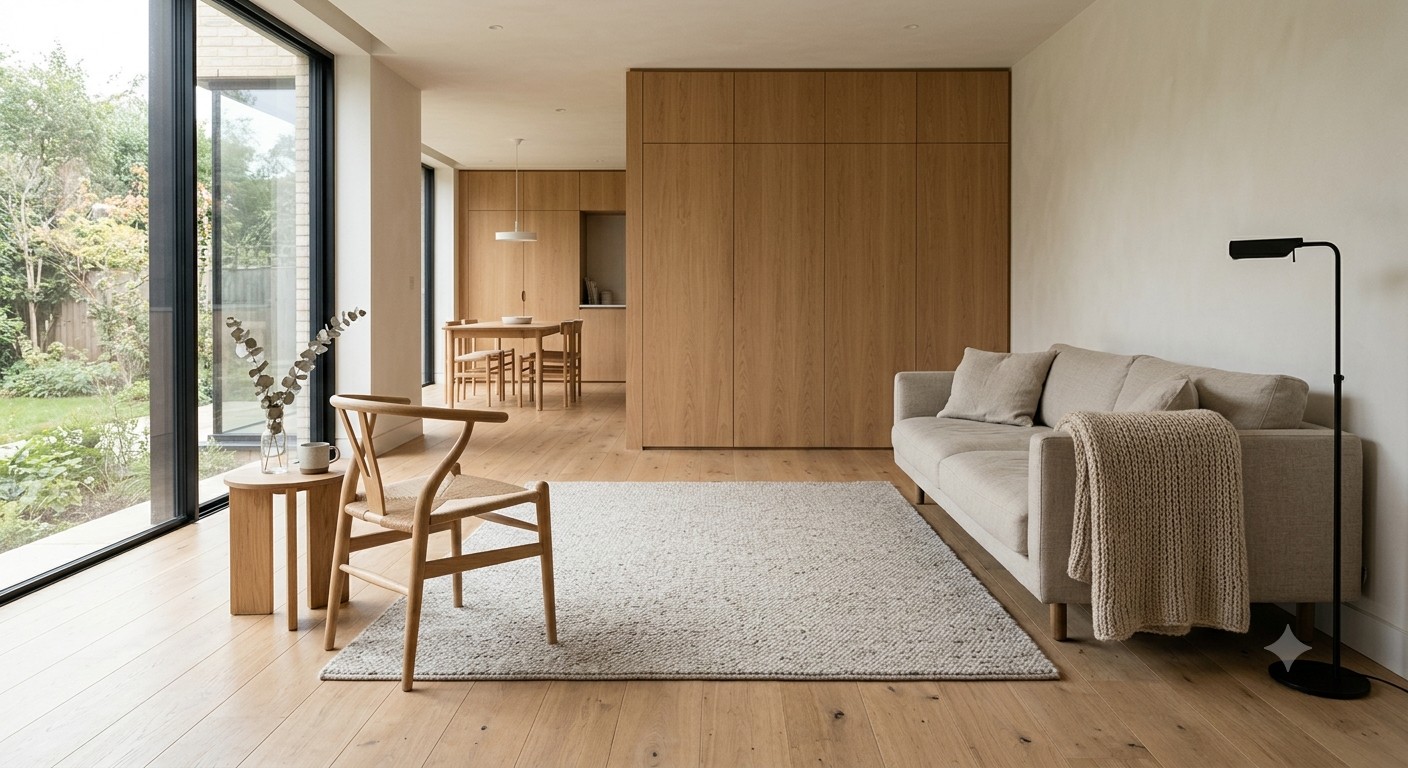
For years, we chose synthetic convenience over honest material: glossy laminates that looked like wood but felt like refrigerator doors, engineered stone with the personality of a spreadsheet. That era is over. Designers are reaching for oak with visible grain, raw marble that proudly shows its veins, hand-thrown ceramics, and clay plaster walls you want to run your fingers across.
The catch: natural materials demand confidence. They age. They mark. A walnut dining table darkens where hands rest; a marble backsheet develops a patina. Instead of fighting this, designers are celebrating it. Perfection was never the point. Texture is.
What’s working:
- Solid oak paneling instead of thin veneer
- Handmade ceramic sinks and statement basins
- Rattan and open-grain wood furniture
- Unpolished stone accents in kitchens and bathrooms
A single piece of unglazed stoneware on a minimalist shelf can make the whole room feel warmer. Try it.
2. Multi-Functional Spaces — One Room, Five Lives
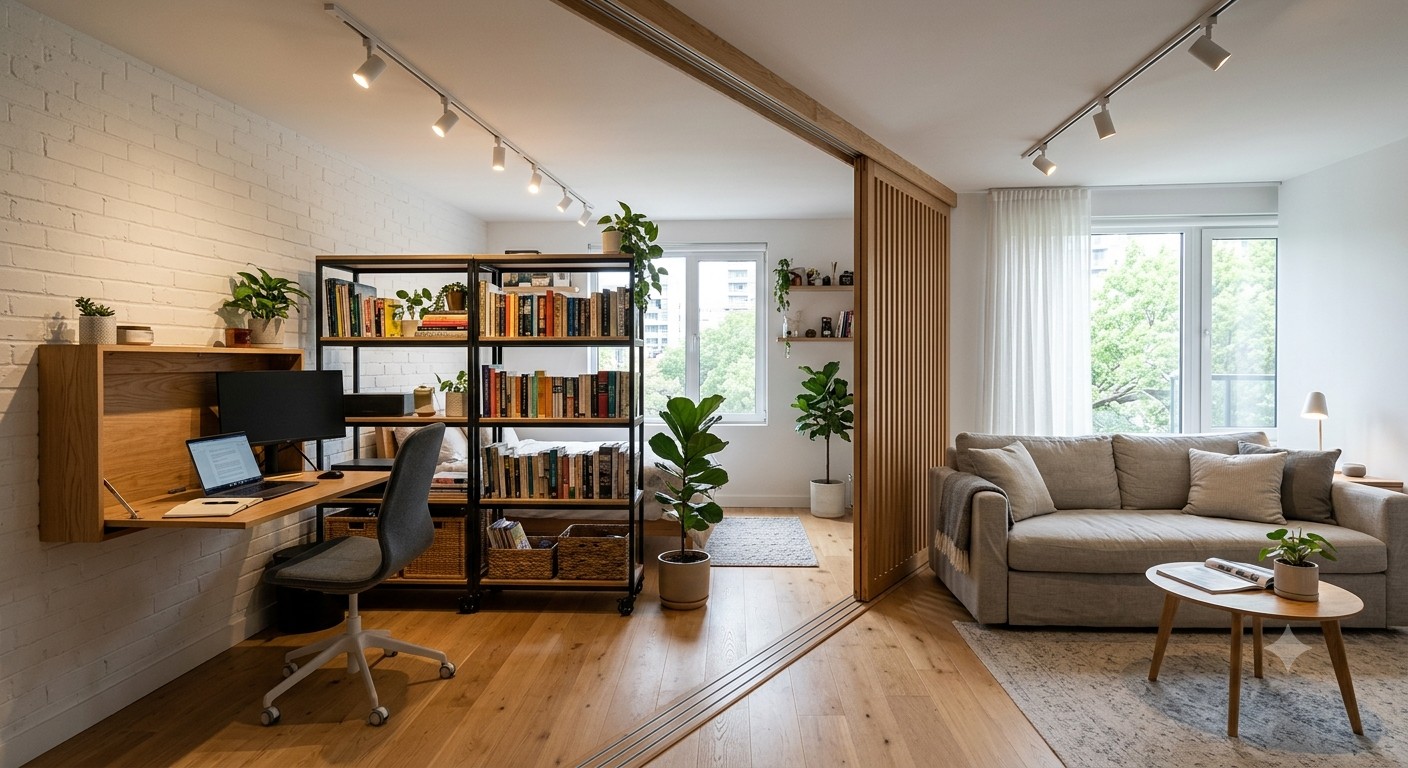
The home is no longer a place you return to after work. For millions of people, it is work, gym, studio, school, and sanctuary — often in the same afternoon. The homes that succeed in 2025 treat flexibility as a structural principle, not a weekend DIY project.
This doesn’t require knocking down walls. It requires planning. Movable partitions that divide a living area into a focused workspace. Multi-layered lighting schemes that shift the same room from “morning standup” to “Friday dinner party.” Transformer furniture — a wall bed that disappeares by day, a fold-down desk that becomes a bar by night.
Without a full renovation:
- Rolling shelving units as room dividers
- Dimmable, zoned lighting for task vs. mood
- Sofa beds and fold-away work surfaces
- Under-platform storage and recessed wall niches
In smaller homes, every square meter that only does one thing is a missed opportunity. Adaptability isn’t a luxury anymore — it’s the baseline.
3. Biophilic Design — Build Like Nature Intended
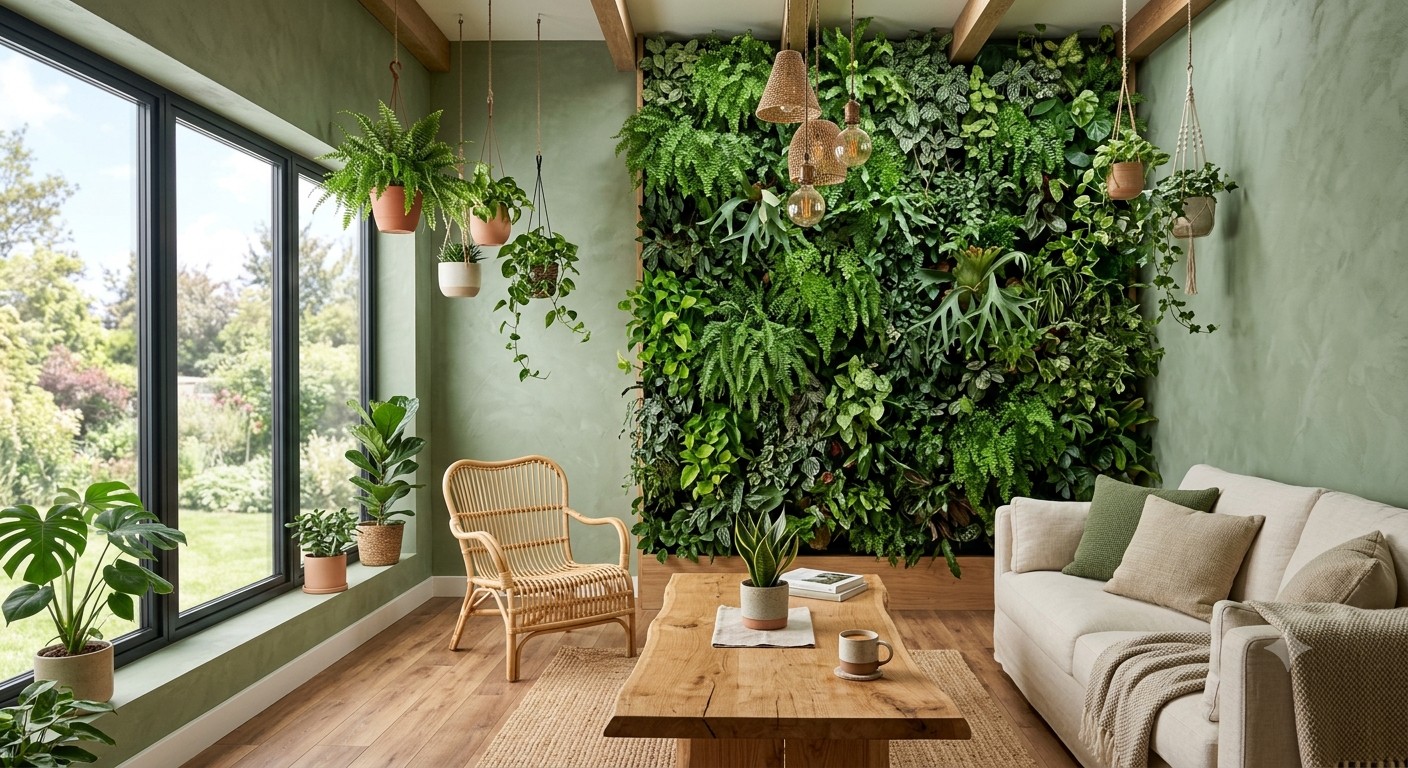
We’ve known for decades that proximity to greenery reduces cortisol and boosts focus. But biophilic design goes further than adding a potted fern to your desk. It’s a framework: build the environment so the connection to nature is structural, not decorative.
Living walls that filter air. Oversized windows that track the sun’s arc. Color palettes pulled from forest floors — sage, sand, clay, moss. Suspended plant installations that turn a blank wall into vertical landscape. The effect is cumulative: a room with natural light, living plants, and organic textures doesn’t just look better — it feels different within minutes.
How to start:
- Install a vertical garden in a light-rich hallway
- Maximize window area — remove heavy curtains
- Choose earth-tone palettes: green, beige, terracotta
- Mix floor pots with hanging planters at different heights
Someone I know turned a kitchen windowsill into a micro-garden. Her family now starts every morning picking fresh herbs for tea. The room changed completely, and so did their mornings.
4. Bold Accents in a Quiet Room
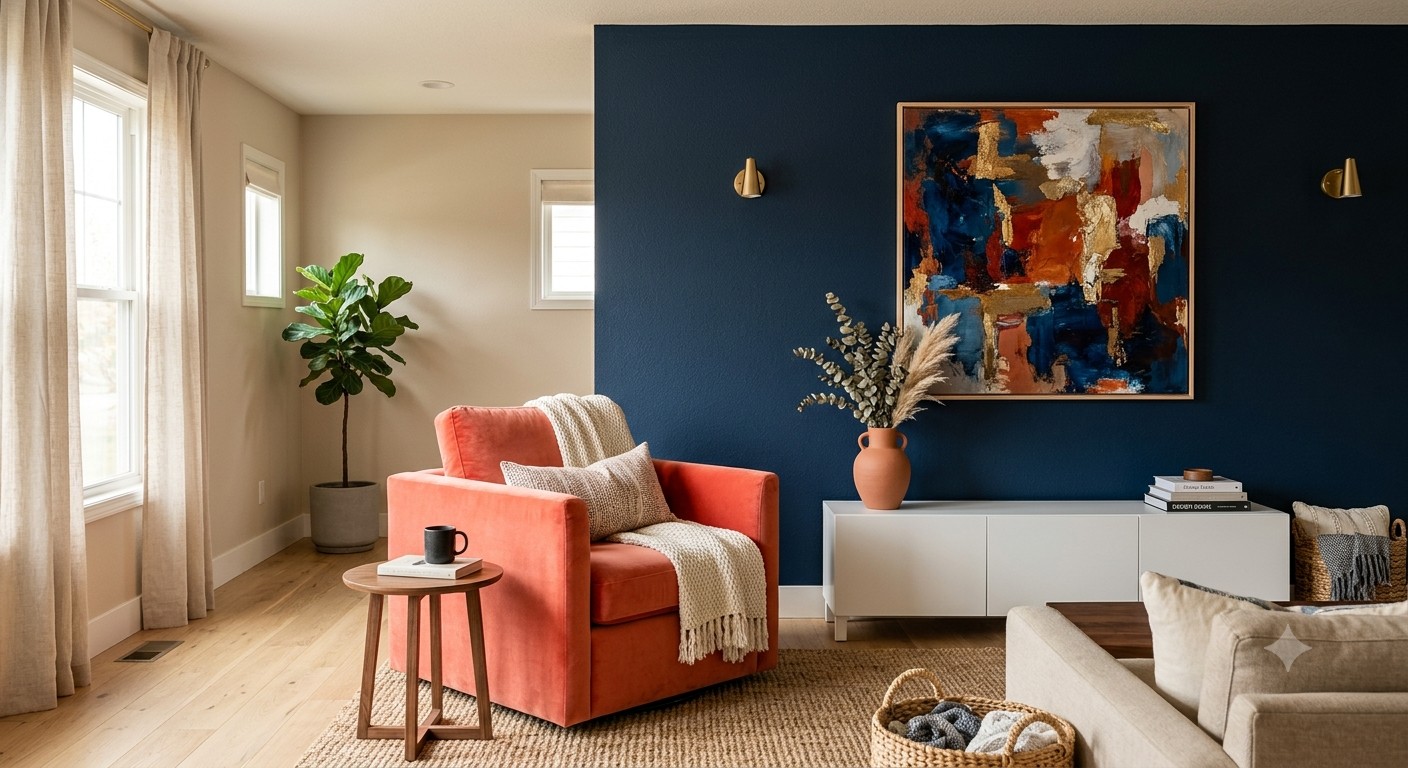
Neutral interiors have dominated for years: sand, smoke, bleached wood — rooms that whisper. But when everything is quiet, nothing has emphasis. The counter-movement is here: confident accent color that doesn’t apologize.
Deep navy on a single wall. A coral armchair in a room of oatmeal. A terracotta vase that commands attention on a pale console. The rule isn’t “go wild.” It’s “choose one moment.” One piece that breaks the silence. One color that makes you stop.
Techniques designers trust:
- A single saturated textile — cushion, throw, runner
- One contrast piece of furniture: chair, lamp, rug
- Abstract art with bold pigment as focal point
The accent isn’t decoration. It’s punctuation. It turns a pleasant room into a memorable one.
5. Smart Home, Quietly Done
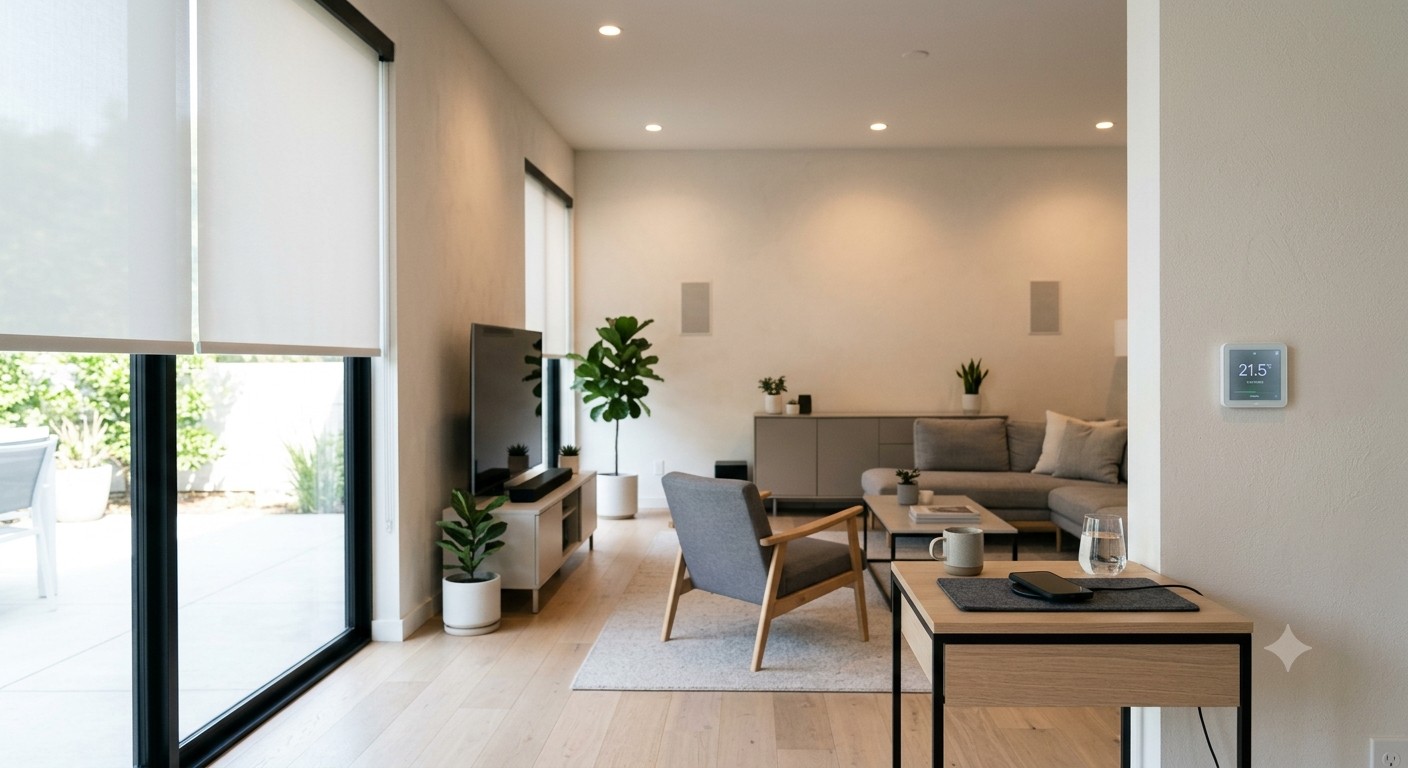
The smart home has grown up. The era of “look how many devices I can control with my phone” is fading. In its place: systems that work so smoothly you forget they’re there. Lights that adjust to time of day without being asked. Curtains that open with the sunrise. Climate control that reads the room. Speakers hidden inside walls.
A friend installed automated blinds six months ago. When I asked him if he likes them, he said: “I honestly don’t think about them anymore. They just open and close. That’s the point.” The best technology is the kind you stop noticing.
Where it matters:
- Motion-sensor lighting in hallways and stairs
- Voice-controlled ambient scenes
- Climate systems that balance humidity + temperature
- Built-in USB and wireless charging surfaces
Don’t overload. Pick the three things that would genuinely smooth your day. Then make them invisible.
6. Personal Before Popular — Your Interior, Your Character
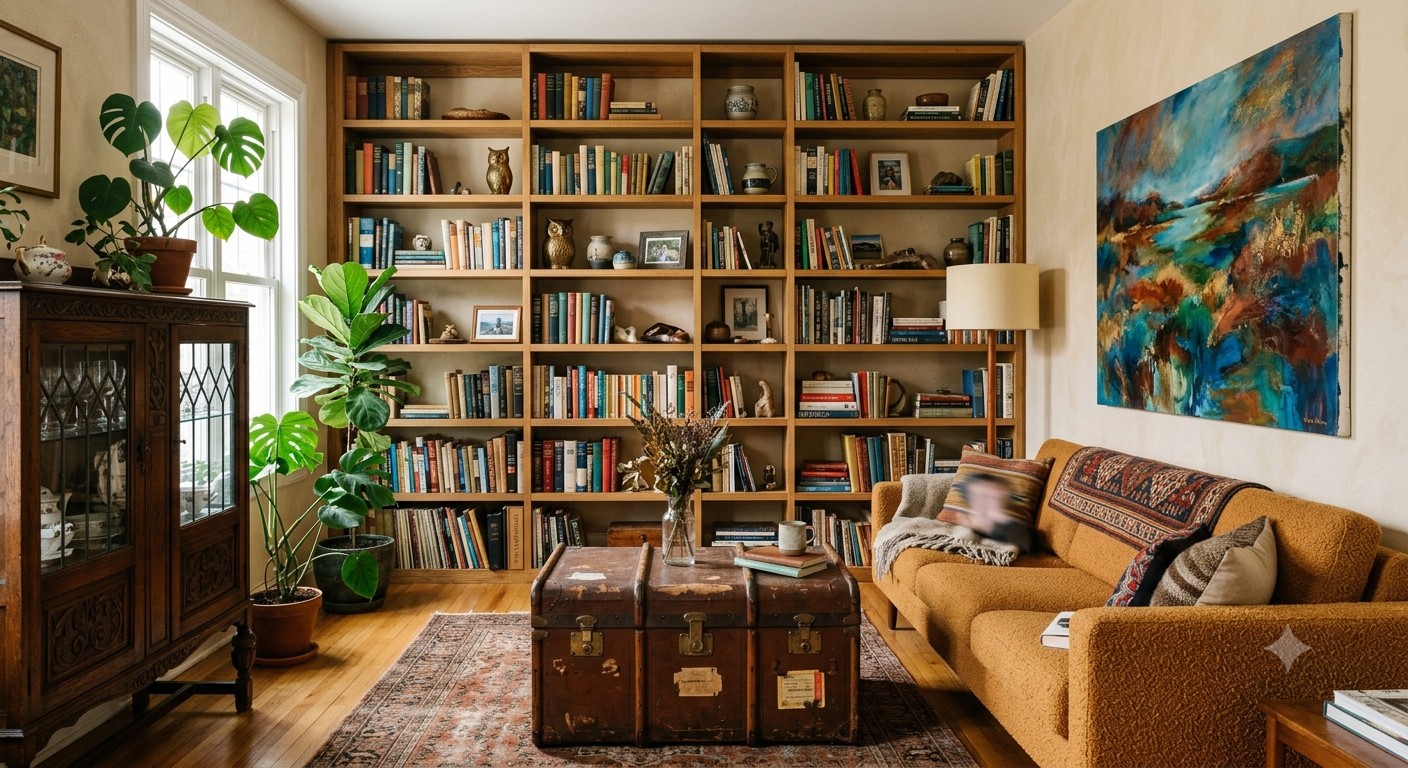
Trends are observations, not orders. The homes that age best are the ones that belong to someone — not to Pinterest. In 2025, the most compelling interiors are personal: a family heirloom next to a piece of contemporary design. Custom cabinetry drawn by the owner. A vintage trunk that holds blankets and a century of stories.
The shift is from “what’s trending” to “what’s true.” A room that tells you who lives there will always outperform a room that tells you what magazine the owner reads.
Ideas that work:
- Built-in bookshelves designed around your collection, not a catalog
- Commissioned art or photography with personal meaning
- Unusual storage solutions: hanging systems, vintage crates
One unusual object can define an entire room. Don’t be afraid to let it.
7. Human Minimalism — Clean, Not Cold
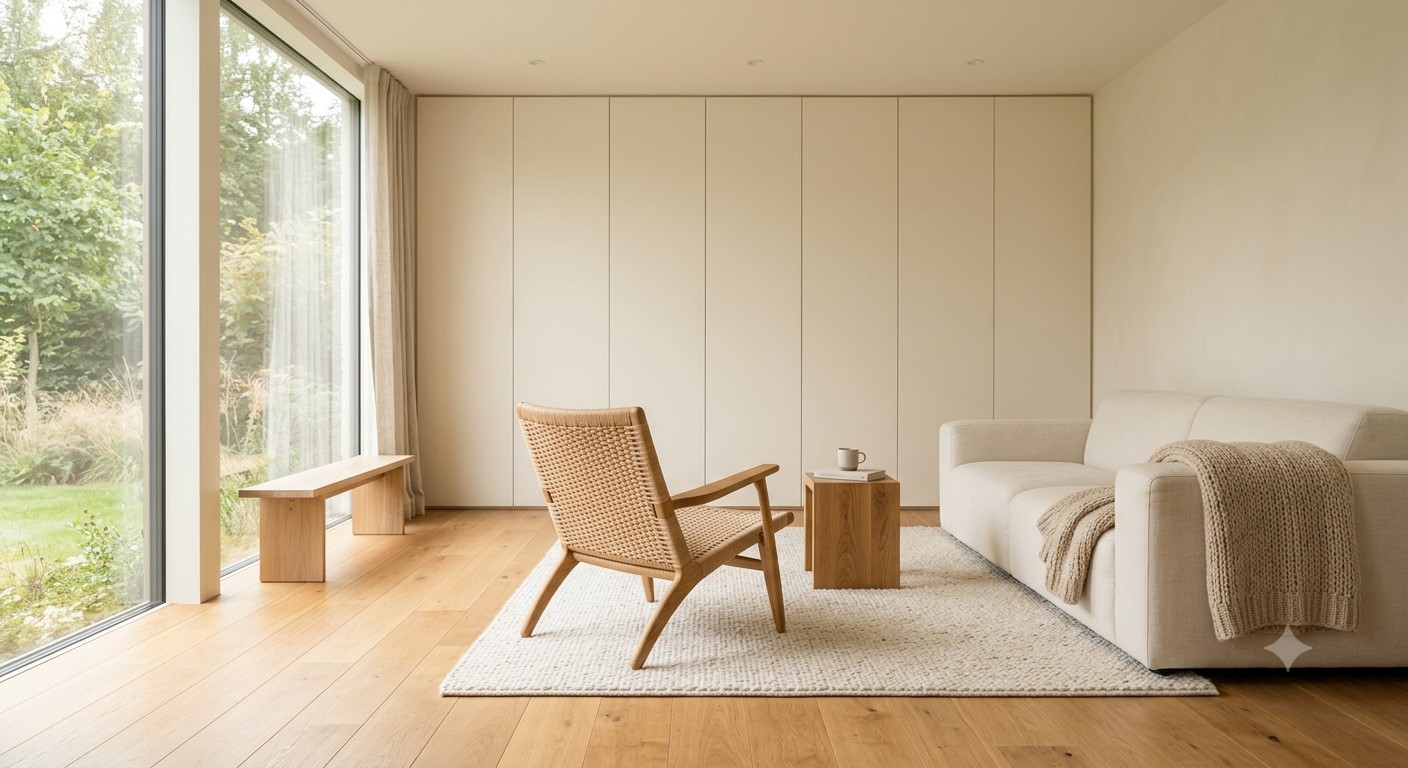
Minimalism got a bad reputation when it became synonymous with emptiness. Bare walls, single chairs, rooms that look like no one lives there. That’s not minimalism — that’s staging. Real minimalism in 2025 is about reducing noise, not comfort.
Functional furniture with clean lines but warm materials. Hidden storage that actually swallows clutter. Open floor plans that breathe, not echo. The goal: a space where your eye rests and your mind follows.
The updated rules:
- Neutral palette with natural wood accents
- Furniture that earns its place — beautiful and useful
- Flowing layouts with invisible storage systems
- Fewer objects, each one chosen with intention
When you remove the unnecessary, what remains has more weight. A single well-made chair in an uncluttered room becomes a statement. Ten chairs in the same room become furniture storage.
8. Soft Geometry — Arches, Curves, and the End of Sharp Corners
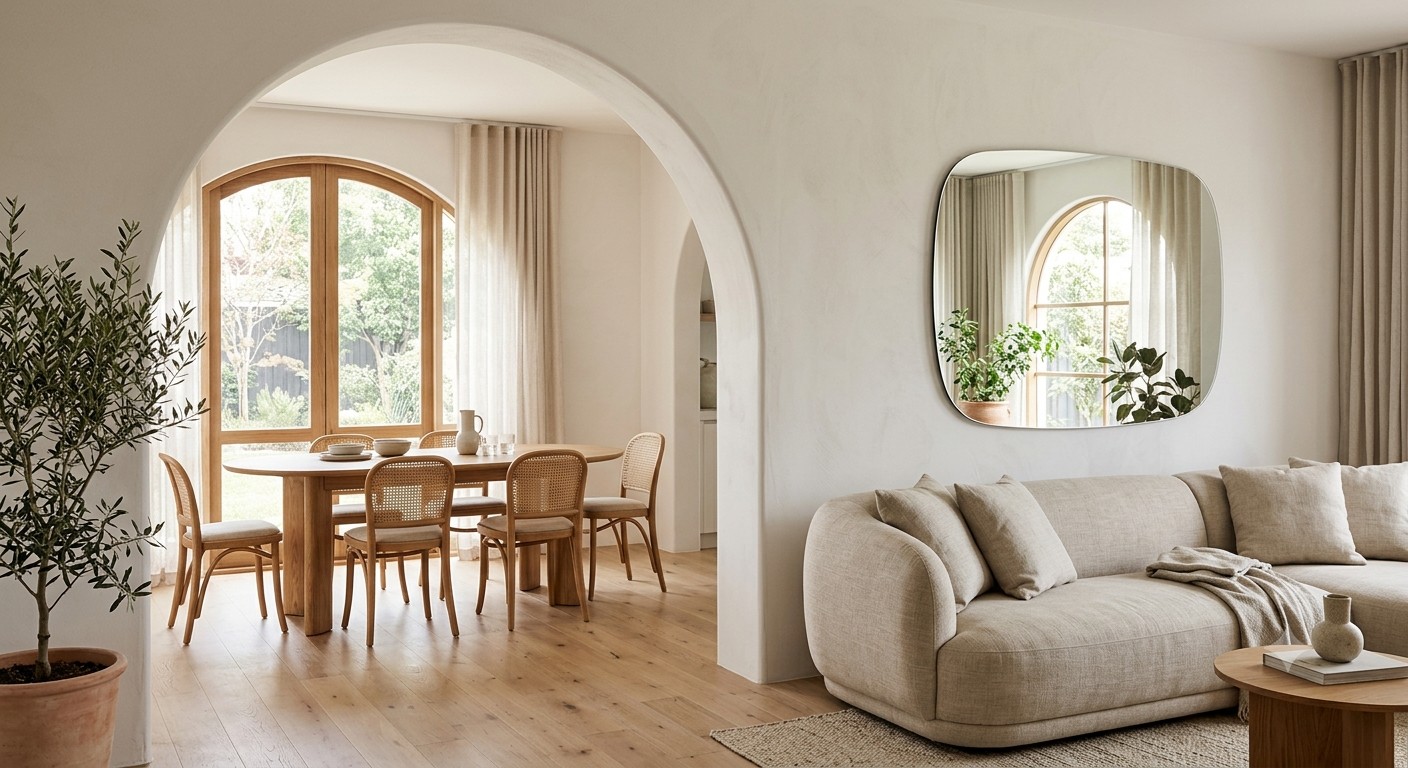
For a decade, interiors lived on right angles. Sharp edges. Angular everything. The pendulum is swinging back. Arched doorways, rounded mirrors, oval dining tables, curved sofas, door handles that feel like river stones. Soft forms don’t just look friendlier — they change how a room reads. A corridor with an arched entry feels expansive. A dining room with a round table feels intimate.
Where curves shine:
- Zoning an open-plan kitchen-living area
- Transitioning a narrow hallway into an open entry
- Framing bedroom and nursery doorways
In homes with children, rounded furniture edges are more than aesthetic — they’re practical. But even without kids, soft geometry makes a space feel less like architecture and more like an embrace.
9. Conscious Design — Buy Less, Choose Better
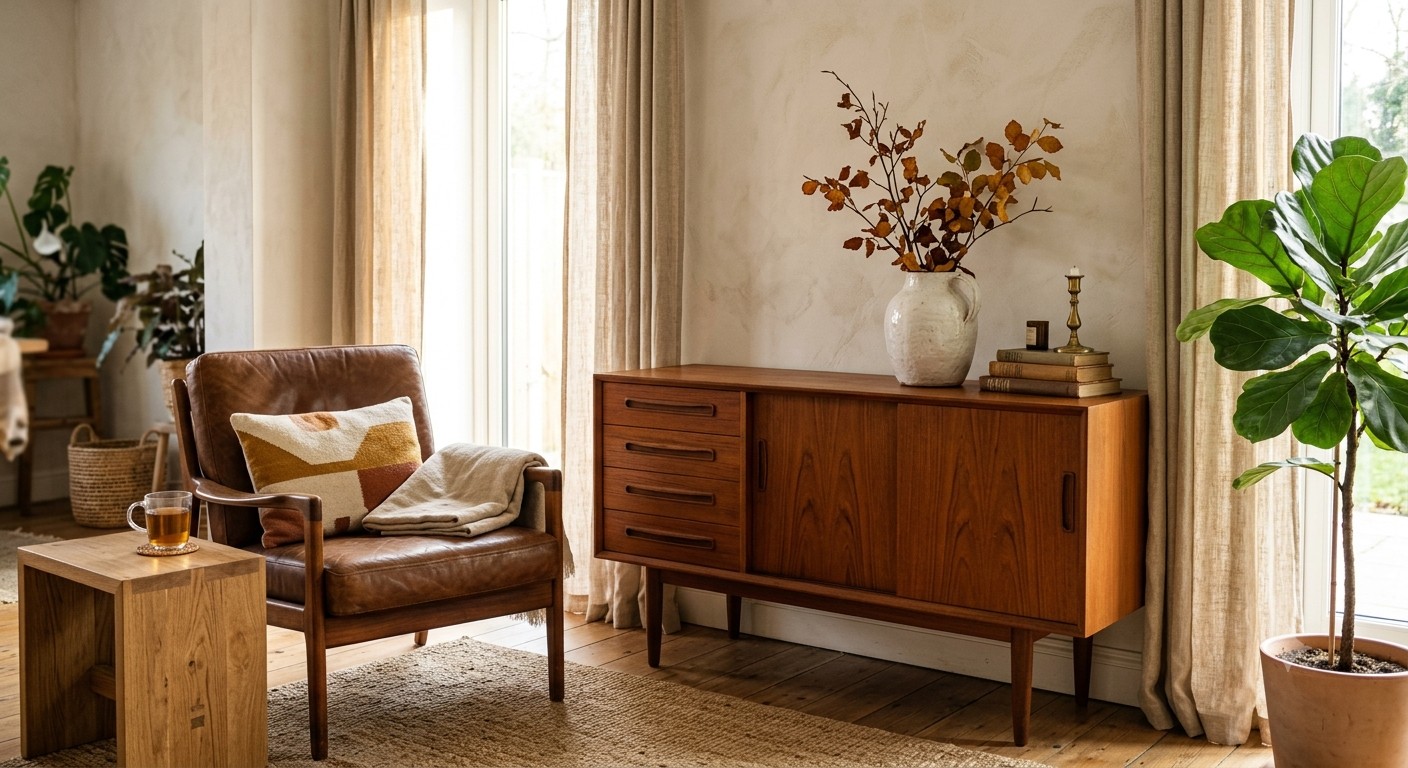
Fast furniture is the new fast fashion. Cheaply made, quickly discarded, environmentally expensive. The conscious design movement isn’t about austerity — it’s about intention. Choosing one well-made piece over five disposable ones. Restoring instead of replacing. Buying from makers who stand behind their work.
Upcycling isn’t a budget hack anymore. It’s a design philosophy. A refinished mid-century sideboard carries more character than anything fresh off a container ship. A restored leather chair tells a story that polyurethane never will.
Three steps to start:
- Ask: do I actually need something new, or can I restore what I have?
- Prioritize materials and construction over brand labels
- Choose pieces designed to outlast trends — not follow them
The things you keep the longest are the ones you chose with care. That’s not sentimental — it’s strategic.
10. The Open Kitchen — Where the House Lives
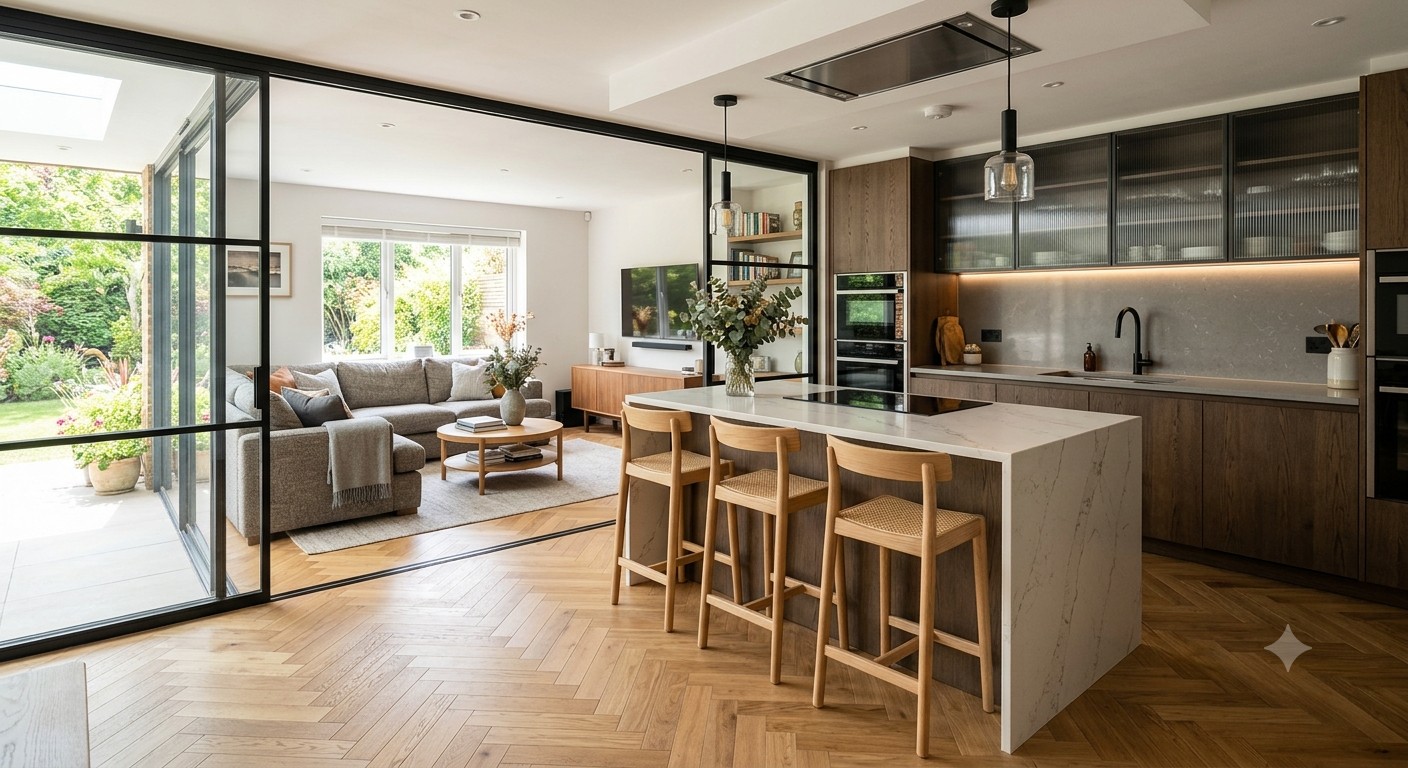
The wall between kitchen and living room is falling — permanently. Open-plan cooking isn’t just about aesthetics. It’s about life: reading to a child while stirring soup, laughing with guests while plating dinner, never being isolated from the conversation while you chop.
The best open kitchens in 2025 don’t just remove walls — they create flow. A single floor material running from prep counter to sofa. A bar peninsula that doubles as a homework station and a cocktail bar. Pocket doors or sliding panels for the moments you want separation without sacrificing openness.
Design features that work:
- Peninsula bars connecting kitchen and living zones
- Sliding glass or wood panels for flexible zoning
- Continuous flooring to create visual flow
- Extractor hoods built into ceilings, not islands
When cooking and conversation happen in the same breath, the house stops being a collection of rooms and becomes a single, breathing organism.
These ten shifts aren’t commands — they’re choices. The best homes don’t adopt every trend. They adopt the right trends for the people who live there. Mix three of these ideas with your own instincts, and you’ll create something no catalog can replicate: a space that’s unapologetically yours.