There is a Miami that the cruise ships never mention. It exists beyond the neon pulse of Ocean Drive, beyond the Instagrammed murals of Wynwood, beyond the well-trodden boardwalk where every tourist has already stood and pointed at the same turquoise horizon. This other Miami reveals itself only to those who slow down enough to notice — a city of bohemian villages where peacocks roam free, of lagoons carved from coral rock in the shape of a Venetian fantasy, of mangrove labyrinths where alligators watch you from the surface of still water.
Miami exists on another frequency. Here is how to tune in.
Coconut Grove — Where Miami Goes to Breathe
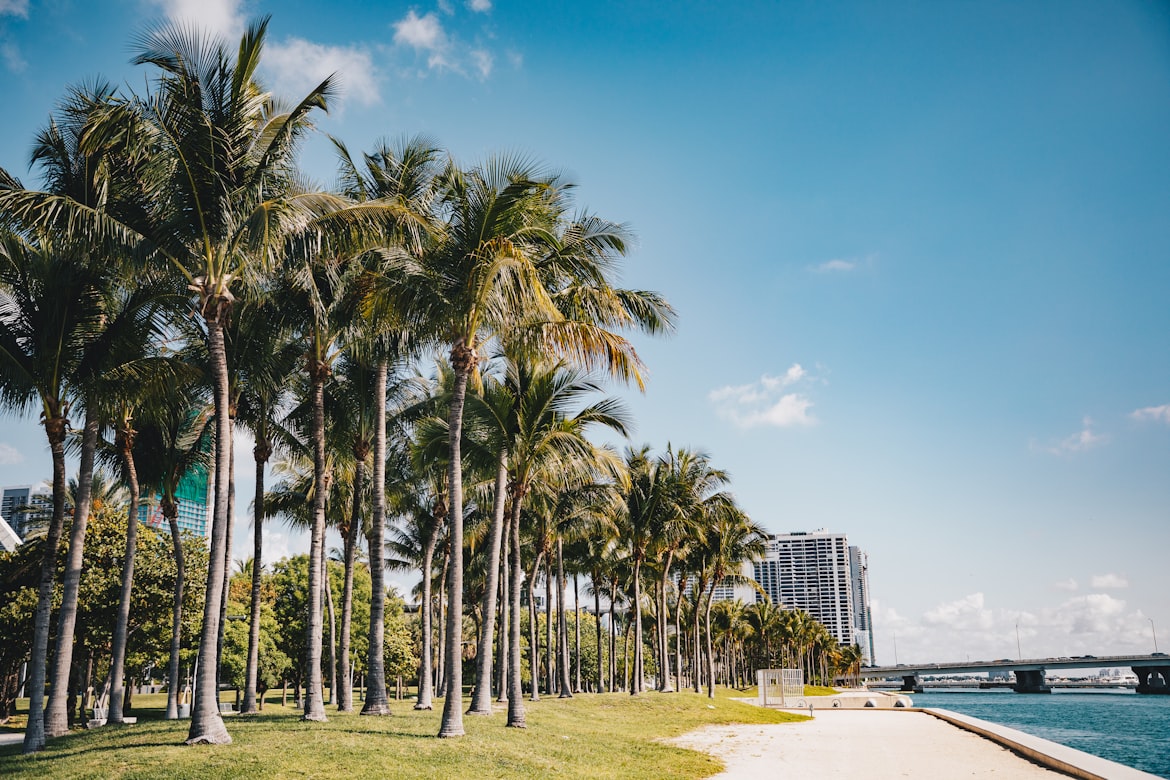
Before there was a city, there was a grove. Coconut Grove is Miami’s oldest continuously inhabited neighborhood, and it has never lost the bohemian spirit that drew artists, writers, and freethinkers to its shaded streets in the 1870s. Oscar Wilde visited and pronounced it charming. Marjory Stoneman Douglas found her voice here before she became the Everglades’ greatest champion. The groves of coconut palms that gave the village its name have thinned, but the soul remains — in the canopy of banyan trees that arch over Main Highway like the vaulted ceiling of a natural cathedral, in the independent bookshops and galleries that refuse the chain-store impulse, in the open-air cafes where a conversation about poetry still feels more appropriate than one about real estate.
Then there are the peacocks. They appear without warning — iridescent males fanning their tails on front lawns, hens shepherding chicks across residential streets with the authority of creatures who understand that this territory belongs to them. They are descendants of escapees from a private estate, and they have become Coconut Grove’s most charismatic residents, transforming an already extraordinary neighborhood into something genuinely magical.
At the water’s edge, The Barnacle Historic State Park preserves the 1891 home of Ralph Middleton Munroe — a man who designed sailboats and refused to let progress erase the forest around him. The house stands as it always has, a testament to a Miami that measured wealth not in square footage but in the shade of ancient trees. The park’s lawn rolls down to Biscayne Bay, and on a Sunday afternoon, with the peacocks calling from the canopy and the bay shimmering beyond, you understand what drew the dreamers here in the first place.
Coral Gables — The City Beautiful, Built to Remain So
George Merrick had a vision that would have seemed absurd in 1920s Florida swampland: a Mediterranean Revival city of limestone buildings, grand avenues, and civic beauty that would rival the great cities of Europe. He called it Coral Gables, and against every reasonable expectation, he built it. The result is Miami’s most elegant neighborhood — a place where je ne sais quoi is an architectural style.
The Venetian Pool is Merrick’s masterpiece. Carved from a coral rock quarry in 1924, this 820,000-gallon aquatic fantasy is fed by spring water that flows through grottoes, beneath stone bridges, and past waterfalls cascading from Venetian-style towers. It has hosted orchestras, synchronized swimming spectacles, and generations of Miamians who understand that the most refined way to endure subtropical heat is inside a work of art. The water is refreshed daily, the coral overhangs throw shade that feels sculptural, and the experience of swimming here approaches something the Romantics would have called sublime.
Miracle Mile stretches through the heart of Coral Gables as a boulevard of curated elegance — independent boutiques, bespoke jewelers, and restaurants that value substance over spectacle. It is the anti-mall: a place where shopping remains a walkable, civilized affair. The Biltmore Hotel presides over the district from its 315-foot tower, a National Historic Landmark whose lobby has hosted jazz legends and whose pool — once the largest in the world — still stretches across the grounds like a mirage of another era’s confidence.
The Design District — Where Commerce Becomes Art
North of downtown, the Miami Design District has achieved something almost impossible: it has made luxury shopping feel like a cultural act. This is not a mall. It is an urban gallery where the architecture rivals the merchandise — Zaha Hadid’s car park is a sculpture before it is a place to leave your vehicle, and the installation-filled courtyards between Hermès, Louis Vuitton, and Dior turn a retail stroll into something closer to a museum crawl without walls.
The Institute of Contemporary Art, Miami, anchors the district’s cultural credibility. Its geometric facade by Aranguren & Gallegos Arquitectos gives almost nothing away from the street — you enter through a shaded courtyard that opens into galleries of rigorous, exploratory contemporary art. The museum’s program is unafraid of difficulty or beauty, often embracing both simultaneously. Nearby, the ICA’s sculpture garden and the district’s steadily growing collection of private galleries create a density of artistic encounter that rivals any neighborhood in the Americas.
The Design District’s genius is in making the boundary between commerce and culture irrelevant. Here, a $6,000 handbag and a thought-provoking installation share the same aesthetic ecosystem, and neither diminishes the other. It is Miami’s most articulate statement about what luxury actually means: not price, but intention.
Pérez Art Museum Miami — Architecture as Provocation
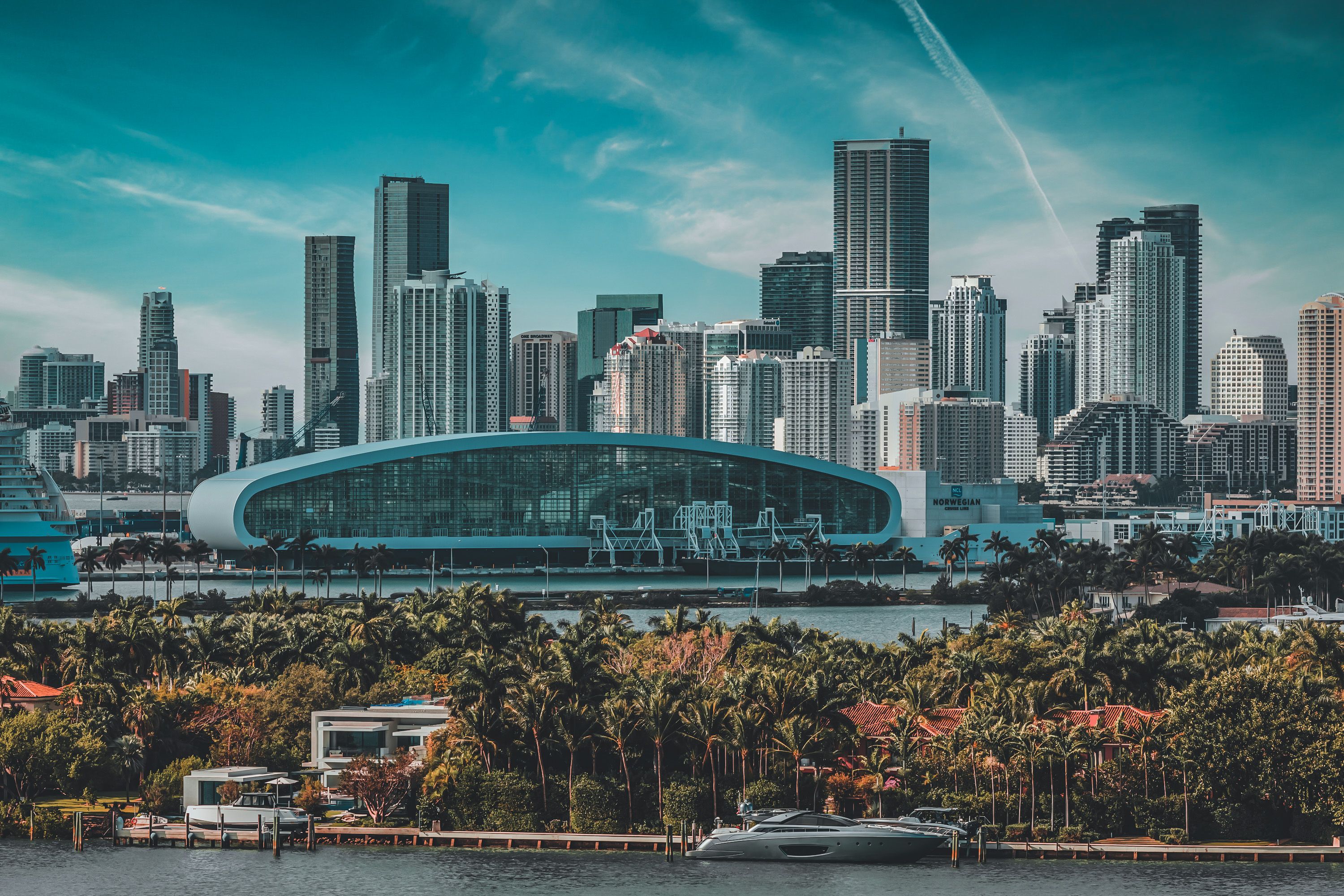
On the waterfront of Museum Park, PAMM rises like a paradox: a building of dramatic cantilevers and hanging gardens that somehow appears to float above the very hurricane forces it was engineered to withstand. Designed by Herzog & de Meuron, the museum’s architecture is a meditation on Miami’s relationship with water and wind — its elevated platforms and vegetative columns create shade and air movement that make the building feel alive, breathing, responsive.
Inside, PAMM’s collection focuses on art of the Americas, the Caribbean, and the African diaspora — perspectives that have long been underrepresented in major American museums but that are central to Miami’s identity as a hemispheric crossroads. The rotating exhibitions are curated with a seriousness that rewards repeat visits, and the museum’s commitment to emerging artists from the Global South makes it a destination for collectors and curators who understand that the art world’s center of gravity is shifting southward.
The veranda — because in Miami, even a museum needs a veranda — offers one of the most contemplative views of Biscayne Bay anywhere in the city. Sit here after the galleries, and the art continues in the water, the light, the passing vessels. PAMM understands that in Miami, the boundary between culture and nature is a conversation, not a wall.
The Everglades — The River of Grass, an Hour from Everything
Drive west from the city, and within an hour, the built environment dissolves. The road narrows, the signage disappears, and you enter the Everglades — 1.5 million acres of slow-moving water, sawgrass prairie, and mangrove forest that constitutes the largest subtropical wilderness in the United States. This is not a park. It is a living system — a river of grass flowing imperceptibly toward the sea, supporting an ecosystem found nowhere else on Earth.
Airboat tours deliver the adrenaline version: skimming across the water at speed, the engine roaring, alligators sliding out of your path with prehistoric indifference. But the deeper experience is quieter. Walk the Anhinga Trail at dawn, when the herons are fishing and the alligators are still, and the Everglades reveals itself as something meditative — a place where human timescales mean nothing and the patience of water shapes everything.
For the traveler who values depth over velocity, a guided eco-tour with a naturalist opens dimensions that the airboat cannot reach: the micronations of bromeliads growing on cypress trunks, the nesting cycles of roseate spoonbills, the cultural legacy of the Miccosukee people who have inhabited these wetlands for centuries. The Everglades is not Miami’s backyard. It is Miami’s origin story — the ecological foundation without which the city would not exist.
Key Biscayne and Bill Baggs Cape Florida — The Island That Time Respected
Across the Rickenbacker Causeway, the city’s skyline shrinking in the rearview mirror, Key Biscayne unfolds as an island of rare composure. It is not the Key West of legend — it is something quieter and more residential, a place where Miami goes when it wants to remember what Florida felt like before the towers came.
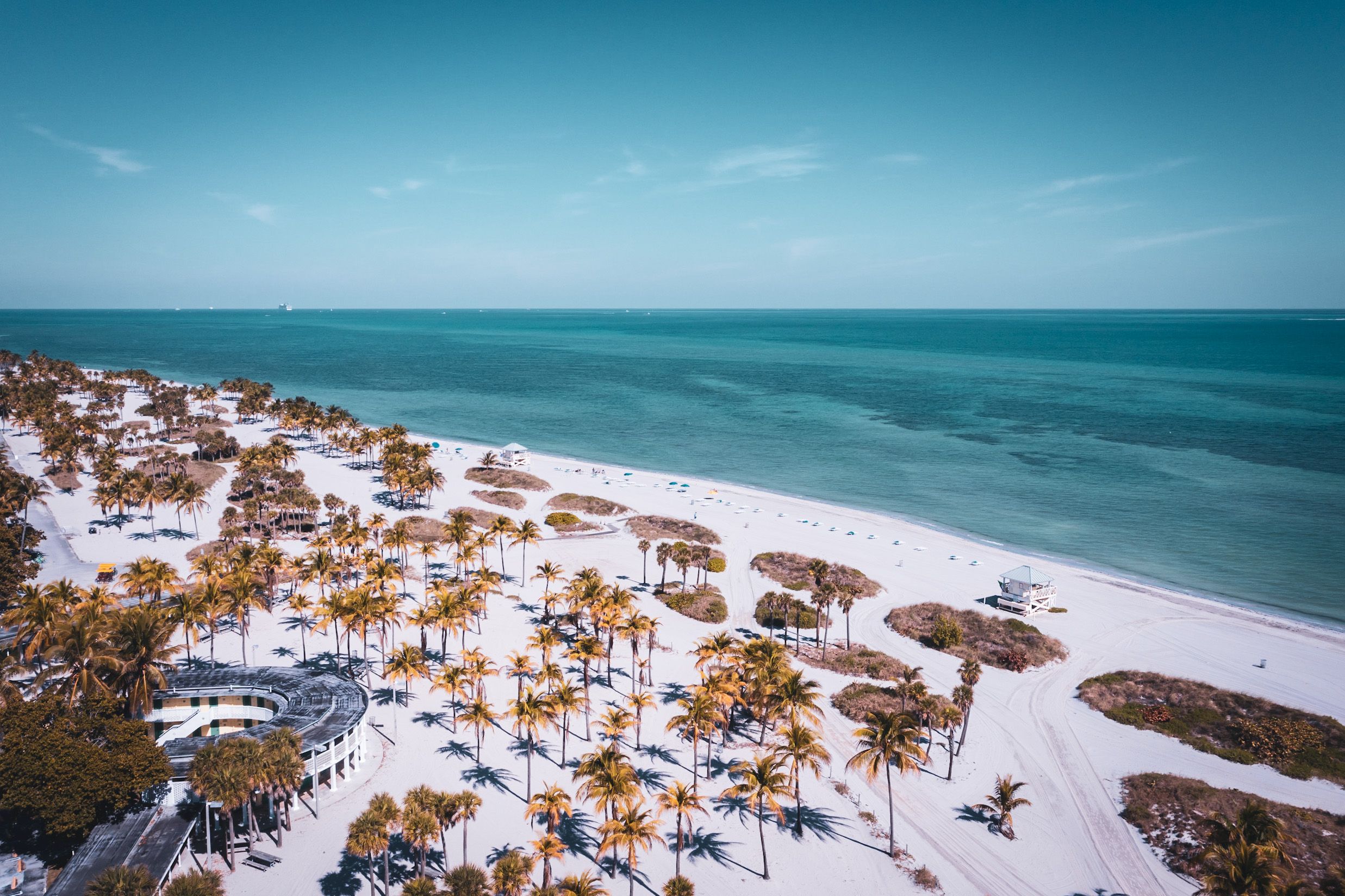
Bill Baggs Cape Florida State Park occupies the island’s southern tip, and its centerpiece is the Cape Florida Lighthouse — the oldest standing structure in Miami-Dade County, built in 1825 and rebuilt after Seminole warriors set it ablaze in 1836. The beach here has repeatedly been named among the nation’s top ten, and it earns the distinction not through spectacle but through grace: the sand is pale, the water is clear, and the crowd density allows for actual solitude — a commodity almost unheard of on Miami’s main beaches.
The park’s nature trails wind through coastal hammocks of seagrape and sable palm, and the fishing from the seawall is the kind of unhurried pursuit that separates visitors from residents. On Key Biscayne, the sophistication is not performed. It is simply lived.
Bal Harbour — Where Discretion Is the Ultimate Luxury
If the Design District is luxury as cultural provocation, Bal Harbour is luxury as private conviction. This village at the northern tip of Miami Beach contains one of the most exclusive shopping environments on the planet: Bal Harbour Shops, an open-air collection of the world’s most prestigious brands arranged beneath a canopy of tropical foliage. The architecture rivals the merchandise — sunlight filters through the trees, koi ponds catch the reflections, and the entire effect is of a garden where golden goose happens to be luggage.
Bal Harbour’s genius is its restraint. There is no spectacle here, no circus of self-promotion — only the quiet confidence of a place that knows exactly what it is and has no interest in persuading anyone. The beaches are pristine, the residential towers are among the most coveted addresses on the continent, and the pace is what Miami’s pace would be if Miami had nothing to prove. For the traveler who has graduated from conspicuous consumption to curatorial discernment, Bal Harbour is the destination that respects that graduation.
Miami’s Spa and Wellness Scene — The Art of Elective Stillness
Miami moves fast. It stays up late. It turns volume up. And precisely because of this, its wellness culture has developed a sophistication born from genuine necessity — not the performative wellness of social media, but the hold-onto-your-equilibrium kind that professionals, parents, and the perpetually overstimulated actually require.
The spas of the Faena, the Four Seasons Surf Club, the Mandarin Oriental — these are institutions that have elevated bodywork to a philosophical practice. Treatments incorporate botanicals from the Everglades, marine minerals from the Atlantic, and techniques from global traditions that Miami’s diaspora populations have carried across oceans. The spa at the Standard in Miami Beach takes a more communal approach — hydrotherapy pools, cold plunges, and a social-ritual quality that turns wellness into a lifestyle event.
Beyond the hotel spas, Miami’s wellness landscape extends into cryotherapy chambers in the Design District, float tanks in Wynwood, and a growing community of practitioners who understand that in a city of constant stimulation, the most radical act of luxury is choosing to be still.
Rooftop Bars — Where the Skyline Becomes the Cocktail
Miami’s relationship with elevation is a love story told in rooftops. When the Atlantic trade winds meet a city that has built itself vertically, the result is an architectural category that exists almost nowhere else: the rooftop bar as serious proposition, where the cocktails are crafted with the same intentionality as the views.
Atop the East Hotel in Brickell, Sugar offers a tropical-garden-in-the-sky experience — bamboo groves, Asian street food, and a panorama that takes in the downtown skyline, Biscayne Bay, and the first stars with equal composure. The Rooftop at the Gale in South Beach is more intimate, more historically aware — an Art Deco perch where the city’s architectural heritage spreads below you like a catalog of the 20th century’s most optimistic design movement. And in the Design District, the rooftop at Contempo delivers the neighborhood’s characteristic collision: serious art, serious cocktails, and a view of a skyline that Miami seems to redesign every few years out of sheer creative restlessness.
The ritual is specific. Arrive as the light begins to gild the buildings. Order something that involves muddled fruit and a spirit you don’t usually drink. Watch the sky perform the sunset that has launched a thousand real estate transactions. Understand that in Miami, the rooftop is not merely a vantage point — it is a philosophical position.
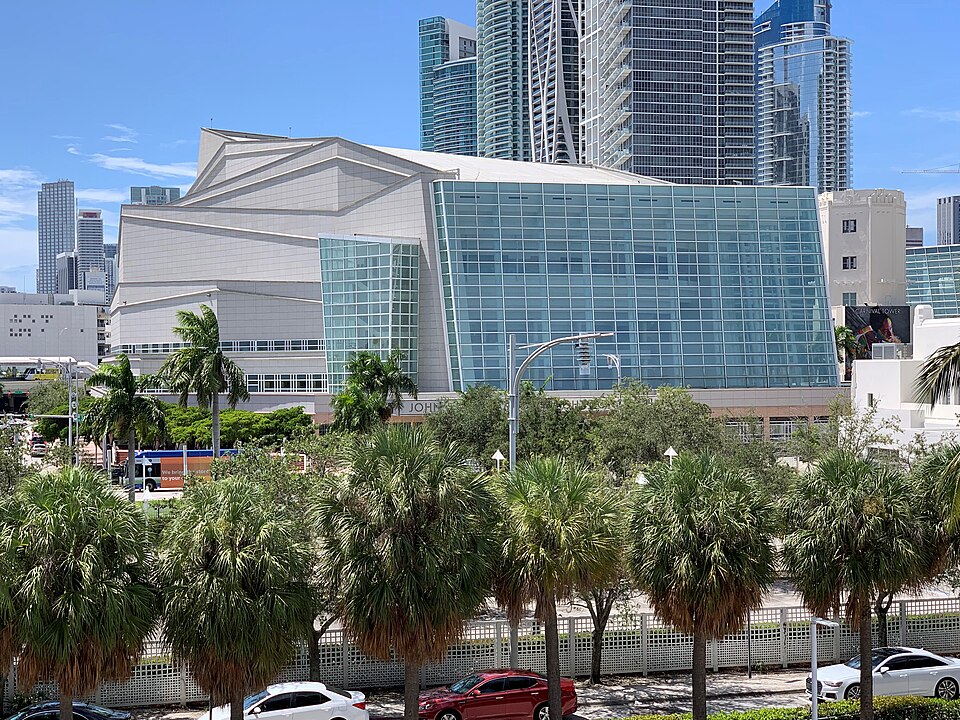
The Arsht Center — Performance as Civic Architecture
The Adrienne Arsht Center for the Performing Arts is Miami’s most underappreciated marvel. Designed by César Pelli, this 570,000-square-foot complex in downtown Miami is a cathedral of performance — a building whose very structure seems to breathe with the creative energy it houses. The Ziff Ballet Opera House and the Knight Concert Hall are acoustically world-class spaces that have hosted everything from the Miami City Ballet to Yo-Yo Ma, from Hamilton to the New World Symphony’s boundary-dissolving collaborations.
The New World Symphony, America’s only full-time orchestral academy, makes its home at the adjoining New World Center — a Frank Gehry-designed building with a 7,000-square-foot projection wall that broadcasts performances into the adjacent park for free. It is the most democratic cultural gesture in a city sometimes accused of being only for those who can afford it, and it is absolutely characteristic of Miami: world-class art, made accessible, in a building designed by a Pritzker Prize winner, projected onto a wall for anyone who happens to be walking by.
The Arsht Center’s programming is unapologetically ambitious. Miami’s performing arts scene has matured past the point of importing culture from elsewhere — it now generates culture that elsewhere imports. This is the frequency most visitors never find, because it requires sitting still and listening rather than moving and consuming. But for those who do, it reveals the deepest truth about Miami: this city’s sophistication is not borrowed. It is homegrown, and it is extraordinary.
Miami does not end where the guidebooks say it ends. The ten attractions covered elsewhere — the murals, the dominoes, the boardwalk — are merely the prelude. The city’s true sophistication lives in the margins: the bohemian village where peacocks still walk the streets, the Venetian pool carved from living coral, the wetlands that remember everything the city has forgotten, the rooftop where the skyline becomes a meditation rather than a backdrop.
This is not a city you visit. It is a city you tune into — and once you find the right frequency, you will hear things that the casual visitor never will: the silence of a hammock at dawn, the resonance of a concert hall designed by a genius, the particular quality of light that filters through banyan trees older than the city itself.
Arrive curious. Leave transformed. That is not a suggestion. It is the only itinerary Miami respects.