There was a time when luxury meant silk sheets, a reserve wine cellar, and a car that announced your arrival before you stepped out. Those markers haven’t disappeared — they’ve just been demoted. In 2025, the most discerning minds have reached a quiet consensus: luxury without health is just decoration.
You see it in the choices being made at the highest levels. The Fortune 500 executive who once measured his year by deal closings now measures it by resting heart rate and sleep architecture. The creative director who used to burn through assistants now builds recovery days into her production schedule. The venture capitalist who celebrated four-hour sleep as a competitive advantage now calls it what it always was: a liability compound.
The conversation has shifted. It’s no longer about what you have — it’s about what you can sustain. Energy, clarity, longevity, resilience. These are the new status symbols, and they don’t come with a logo. They come with discipline, investment, and an understanding that the body is the single asset no portfolio can replace.
What follows are five movements reshaping how the world’s most intentional people approach their wellbeing this year. Not trends in the fleeting sense — structural shifts in what it means to live well. Each one represents a fundamental rethinking of how we treat the one possession that appreciates when you invest in it and depreciates when you don’t: yourself.
1. Biohacking, Evolved: The Age of Precision
Five years ago, biohacking meant cold plunges at dawn, bulletproof coffee, and a sleep tracker that told you what you already suspected — you weren’t sleeping enough. It was enthusiastic, blunt-edged, and seductively simple. Everyone was optimizing, but no one was entirely sure what they were optimizing for.
The first wave of biohacking was universal advice dressed in tech-forward language. Sleep eight hours. Take vitamin D. Move your body. Sound counsel, certainly, but about as personalized as a horoscope — technically addressed to you, functionally addressed to everyone.
The second wave is something else entirely. It’s clinical, it’s personal, and it starts with your DNA.
In 2025, genetic testing kits have moved from novelty to necessity for those serious about optimization. Not the ancestry kind — the kind that maps your methylation pathways, identifies your APOE variants, and reveals whether you’re a fast or slow caffeine metabolizer. This isn’t trivia. It’s the blueprint for how your body actually processes the world, and it turns generic health advice into something it was never designed to be: relevant to you.
Imagine discovering that your MTHFR gene variant means you can’t efficiently convert folic acid into its active form — a detail that makes standard prenatal supplements near-useless for you while a simple methylfolate substitution changes everything. Or learning that your ACTN3 “speed gene” profile makes you a responder to power training but a non-responder to endurance protocols, upending years of well-intentioned jogging. This is the difference between following advice and following your advice.
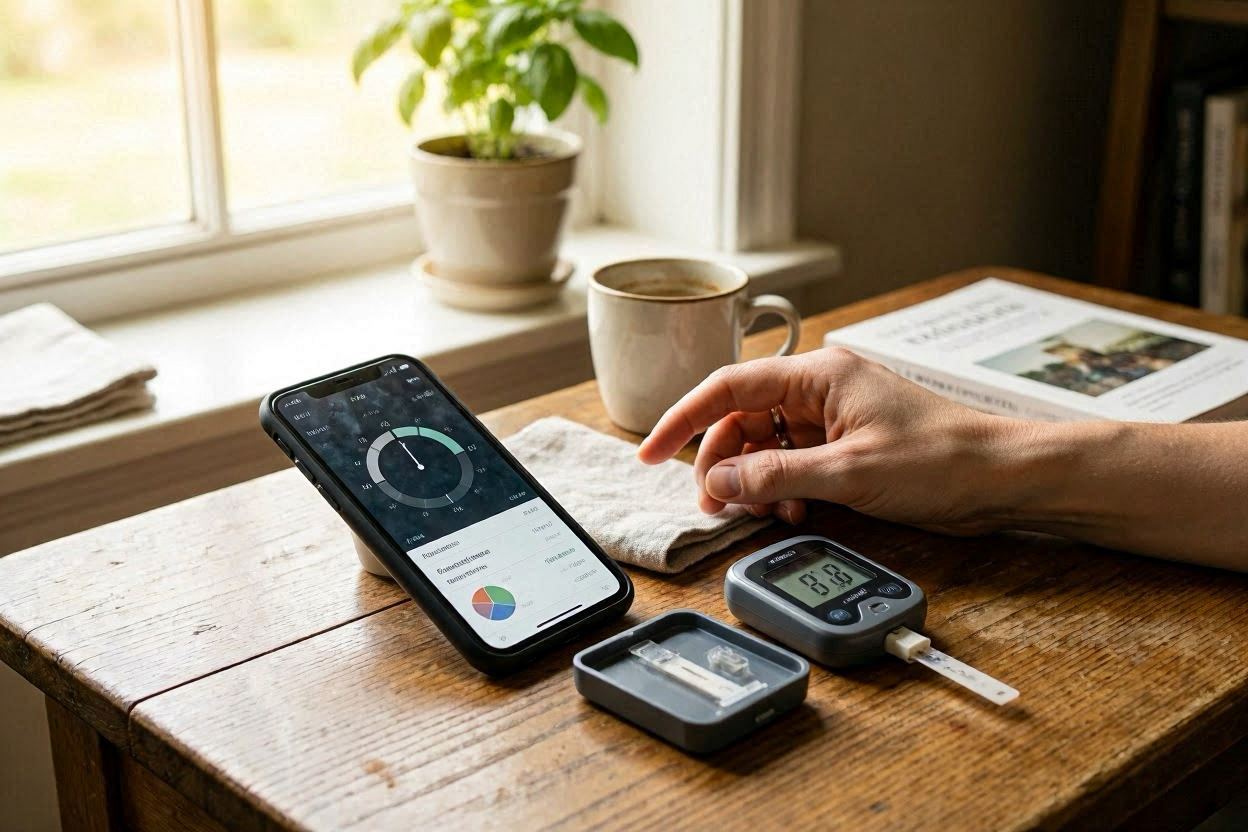
The precision extends beyond genetics. Continuous glucose monitors, once reserved for diabetics, are now worn by the metabolically curious — executives tracking how a board meeting affects their blood sugar, founders discovering that their “healthy” smoothie spikes harder than a croissant, creatives learning that their afternoon slump isn’t about willpower but about a glucose nosedive they could have prevented twenty minutes earlier.
HRV readings dictate whether you train hard or recover. Microbiome analyses reshape your supplement stack quarterly. Sleep architecture reports break down your night into REM, deep, and light phases with surgical granularity — and tell you not just how you slept, but what to do about it tomorrow.
This is biohacking’s graduation from bro-science to legitimate medical practice — and it’s attracting a demographic that used to outsource their health entirely to annual checkups. The new equation is simple: data plus agency equals control. And control, in the luxury wellness vocabulary, is the ultimate commodity.
The new standard: Not “I optimize” — “I optimize for me.”
2. Mental Wealth: The Currency Nobody Is Faking Anymore

There’s a particular kind of exhaustion that no vacation cures. It’s the wear of perpetual availability, of being reachable across time zones, of decision fatigue stacked on notification fatigue stacked on the ambient anxiety of a world that never stops broadcasting. You can check into the most serene resort on the planet — infinity pool, warm stone, jasmine on the breeze — and if your nervous system is still running at the frequency of a trading floor, you haven’t left. You’ve just changed your wallpaper.
This paradox — the luxury vacation that doesn’t actually restore you — has become one of the most talked-about failures in the wellness industry. And in 2025, the conversation has shifted from how to escape to how to build a life you don’t need to escape from.
Mental health has moved from the margins of wellbeing to its absolute center. Not as a crisis response — therapy when things break — but as a proactive, non-negotiable practice. The shift is architectural: companies building sabbatical programs into executive contracts, hotels designing “neuro-quiet” rooms alongside their gyms, and calendars that block silence the way they once blocked meetings. The underlying principle is radical in its simplicity: you don’t wait for the machinery to break down before you service it.
Mindfulness has matured past its app-store phase. The serious practitioners aren’t chasing ten minutes of calm between calls — they’re building contemplative infrastructure. Vipassana retreats — ten days of silence, no phone, no reading, no writing — are booking out months in advance, attracting the same demographic that used to fill waiting lists for reservation-only restaurants. Digital detox programs that confiscate your devices at the door have waitlists that would make a Michelin star blush. The irony is thick and acknowledged: the people most dependent on connectivity are the ones most desperate to escape it.
And psychotherapy? It’s no longer a confession; it’s a performance enhancer. The entrepreneur who processes their attachment patterns before a funding round is no longer the exception — they’re the archetype. The executive who works through their imposter syndrome in Tuesday sessions rather than medicating it with acquisitions is the one making the clearer bets. Therapy has become what personal training was twenty years ago: something everyone in the know does, and nobody in the know talks about as though it’s remarkable.
Corporate culture has caught on. The organizations winning talent wars aren’t the ones with the fanciest offices; they’re the ones with the healthiest emotional economies. Mental health days, internal counseling, and explicit boundaries around after-hours communication have shifted from progressive perks to baseline expectations. The companies that treat burnout as a character flaw rather than a structural failure are finding themselves on the wrong side of history — and the wrong side of their best people’s resignation letters.
The new standard: Not “I grind, then I recover” — “I build a life that doesn’t require recovery.”
3. Functional Nutrition: When Food Becomes Medicine, Deliberately

Eating “clean” was the wellness mantra of the 2010s. It was earnest, it was admirable, and it was hopelessly vague. Clean relative to what? A kale salad is clean, sure — but is it doing anything for you, or is it simply not doing anything to you? There’s a meaningful difference between the absence of harm and the presence of benefit, and the 2025 wellness mind has no patience for confusing the two.
Functional nutrition answers that question with surgical specificity. The movement isn’t about avoiding harm — it’s about engineering benefit. Every ingredient is chosen for what it does: turmeric for its curcumin-mediated anti-inflammatory response, fermented foods for microbiome diversity, adaptogenic mushrooms like lion’s mane for cortisol modulation and cognitive support. This isn’t dietary anxiety; it’s dietary intention.
Superfoods have graduated from Instagram aesthetic to laboratory-validated intervention. Masala chai has more antioxidant activity than a blueberry smoothie, but nobody was Instagramming it until the clinical data showed up. Reishi, chaga, and cordyceps — once the province of Traditional Chinese Medicine practitioners and mycology hobbyists — are now served at juice bars in the same neighborhoods where cold-pressed olive oil commands premium shelf space. The science caught up, and the market followed.
But the real sophistication lies in the stacking — combining compounds that amplify each other’s effects in ways that isolated ingredients cannot. A polyphenol-rich green tea extract alongside omega-3 fatty acids for synergistic neuroprotection. Prebiotic fiber paired with targeted probiotic strains to ensure you’re colonizing what you’re feeding. Quercetin with vitamin C to enhance bioavailability. The functional eater isn’t counting calories; they’re counting mechanisms of action.
The market has responded with remarkable speed. Boutique meal services now deliver not by cuisine but by function: “Cognitive Performance,” “Immune Resilience,” “Inflammation Reset,” “Metabolic Optimization.” The language of nutrition has absorbed the language of pharmacology — and the people who can afford both are blending them seamlessly. High-end restaurants have taken note, with tasting menus that list ingredient function alongside flavor profile: “Wild salmon — rich in astaxanthin and DHA for neurological support. Paired with fermented kimchi for gut microbiome diversity.”
The deeper shift is philosophical. For decades, food was either pleasure or punishment — indulgence or restriction, comfort or discipline. Functional nutrition introduces a third axis: food as investment. Every meal is a deposit in a biological account that compounds. Eat well enough, for long enough, and the returns aren’t just measured in years — they’re measured in the quality of those years. In the sharpness of your thinking at seventy. In the inflammation markers that your doctor reviews with something approaching disbelief.
The new standard: Not “I eat healthy” — “I eat with purpose, and I can tell you exactly what that purpose is.”
4. Active Longevity: The Cross-Generational Revolution

Longevity used to be a coded word for anti-aging — and anti-aging was a coded word for vanity with a medical budget. Creams, serums, injectables. The industry was built on the promise of looking younger, which is a fundamentally different project from being younger, functionally, for longer. That era, while hardly extinct, has been eclipsed by something far more ambitious.
The longevity conversation in 2025 isn’t about looking younger; it’s about performing younger, for decades longer than anyone thought possible. It’s about VO2 max at 75 that rivals the average 40-year-old. It’s about grip strength at 80 that lets you carry your own luggage through an airport. It’s about bone density, balance, cognitive sharpness, and the unglamorous but indispensable capacity to get up from the floor without reaching for furniture.
The most striking development isn’t the science — though the science is extraordinary, with senolytics, NAD+ precursors, and therapeutic plasma exchange dominating the research frontier. It’s the demographic. Active longevity has shattered the age barrier. Walk into any serious training facility and you’ll find a 62-year-old former attorney working through a progressive overload program alongside a 28-year-old founder. They’re both tracking their VO2 max. They’re both periodizing their recovery. They’re both thinking in decades, not in seasons. The shared vocabulary has created a shared culture — and it’s erased the imagined dividing line between “young fitness” and “senior wellness.”
The over-50 crowd isn’t dipping a toe into fitness — they’re diving in, and the data is staggering. Marathon registrations for the 55+ bracket have surged year over year. Competitive masters swimming, once a niche pastime, now fills within days of opening. Functional fitness programs designed around maintaining independence — the ability to carry luggage, navigate uneven ground, rise from the floor without assistance — have become the fastest-growing segment in boutique fitness. This isn’t “gentle stretching for seniors.” It’s serious training with serious outcomes, and its adherents have the lab work to prove it.
What’s particularly notable is the mind-set shift. The previous generation approached exercise as rehabilitation — something you did after you got hurt, or because the doctor said so. The new generation of longevity seekers approaches it as pre-habilitation: training not to recover from what’s already broken, but to prevent what hasn’t broken yet. They’re investing in bone density before osteopenia appears, in balance before the first fall, in cardiovascular reserve before the cardiac event. It’s the difference between purchasing collision coverage and driving more carefully — and they’re doing both.
And it’s generational in the truest sense. Family wellness retreats — where three generations train, recover, and learn together — are among the most sought-after experiences in luxury travel. Grandparents leading morning mobility sessions, children teaching parents about recovery nutrition, and everyone sharing the same fundamental goal: to stay capable, to stay engaged, to stay present. Not because they’re chasing a number on a birthday cake, but because they recognize that a long, vigorous life isn’t a gift — it’s a practice.
The new standard: Not “I hope I stay active” — “I’m engineering a body that outlasts the warranty.”
5. Investing in Health Security: The Unsexy Pillar That Holds Everything Up

Here is the uncomfortable truth that no smoothie bowl or meditation retreat or cold plunge will ever address: your body is your most valuable asset, and it is also your most vulnerable one. No amount of organic matcha or HRV optimization or breathwork will protect you from the financial devastation of an unexpected medical crisis. You can be the most biohacked, mentally centered, functionally nourished, and physically robust person on the planet — and a single diagnosis can still render all of it secondary if you haven’t prepared for the economics of uncertainty.
In 2025, the most sophisticated wellness thinkers have arrived at a conclusion that sounds almost mundane but is profoundly radical: health security is wellness.
This isn’t about fear. It’s about architecture. The same mindset that drives someone to track their sleep stages or choose supplements based on genetic data applies here with equal force: be deliberate, be informed, be prepared. The person who invests in their body but neglects the financial infrastructure protecting that body is building a house with an exquisite interior and no foundation.
Health insurance, once treated as bureaucratic afterthought — something HR handles during onboarding, then forgotten until a claim form appears — is being re-evaluated with the same rigor as any other investment. The discerning approach isn’t about finding the cheapest premium; it’s about understanding coverage depth, out-of-pocket maximums, access to specialists and leading medical institutions, and the flexibility to seek second opinions without network constraints. The right policy is the one you hope to never use but are grateful exists when you need it — much like the emergency fund, the fire extinguisher, and the spare tire.
Think of health insurance as underwater infrastructure: invisible until it matters, and then the only thing that matters. The cost of comprehensive coverage is a fraction of the cost of a single uncovered surgical event. The ROI isn’t speculative — it’s actuarial, and the math has never been more transparent.
Preventive care investment follows the same calculus. Full-body MRI scans, early-detection blood panels, genetic risk assessments conducted annually rather than reactively, comprehensive cardiac screening, and dermatological full-body mapping — these aren’t indulgences. They’re the equivalent of inspecting a building’s foundation before the earthquake hits. The cost of early detection is a fraction of the cost of late intervention, and the return on investment isn’t just financial — it’s temporal. Time is the one asset that no premium can buy back, and early detection buys time in quantities that late-stage treatment simply cannot.
Financial wellness, meanwhile, has earned its rightful place in the holistic health conversation. This isn’t wellness-adjacent — it is wellness, metabolically speaking. Chronic financial stress produces cortisol responses that no adaptogenic supplement can override. The person lying awake worried about how they would cover a medical emergency is experiencing a measurable physiological assault — one that compounds alongside the anxiety. Elevated cortisol disrupts sleep, impairs immune function, accelerates cellular aging, and undermines the very health practices it sits alongside. You cannot meditate your way out of financial insecurity, and you cannot supplement your way past chronic stress.
Building the financial resilience to absorb a health shock — through insurance, emergency reserves, and proactive preventive care budgets — isn’t separate from wellbeing. It is wellbeing. The body and the balance sheet are not separate systems; they’re one integrated ecosystem, and weakness in either one degrades the other.
The most forward-thinking investors now count health insurance, emergency reserves, and preventive care budgets alongside their gym memberships, therapy sessions, and organic grocery bills in their annual wellness spend. They don’t see a contradiction. They see a system — one where every pillar supports the others, and where removing any single pillar puts the entire structure at risk.
The new standard: Not “I’ll cross that bridge when I come to it” — “I built the bridge before I needed it, and I sleep better because it’s there.”
The Thread That Connects Them
Read these five shifts side by side and a pattern emerges: sovereignty. Each one is a move away from luck, genetics, or circumstance as the determinant of your health — and toward deliberate, informed, funded control.
Biohacking gives you data sovereignty over your biology — the power to make decisions based on your actual physiology rather than population averages. Mental wealth practice gives you sovereignty over your attention and emotional landscape — the capacity to choose your state rather than being chosen by it. Functional nutrition gives you sovereignty over what your food does to you — and for you — transforming every meal from a passive event into an active intervention. Active longevity gives you sovereignty over time itself — the ability to extend not just the span of your years but the vitality within them. And investing in health security gives you sovereignty over uncertainty — the one variable you can never fully eliminate, but can absolutely prepare for, insure against, and absorb when it arrives.
The thread isn’t just control. It’s continuity. Each of these five movements reinforces the others in a virtuous cycle. Better data leads to better nutrition. Better mental health enables the discipline that longevity training demands. Financial security creates the psychological safety that allows genuine rest. And genuine rest produces the recovery that biohacking protocols optimize for. Remove one element and the system degrades. Include all five and you have something that no single trend can deliver alone: a coherent, resilient, intentional approach to being alive.
Luxury in 2025 isn’t the car, the watch, or the address. It’s the quiet confidence that your body, mind, and future are not left to chance. The real flex isn’t what you’re wearing — it’s what you’re building.