
Luxury without health is just decoration. The silk sheets don’t feel the same when you’re running on four hours of fragmented sleep. The reserva doesn’t pair well with chronic inflammation. The quarterly retreat loses its restorative power when your baseline biology is running a deficit it was never designed to carry.
We live in an era of wellness noise — influencers pushing moringa powder, cold tub evangelists, and a new supplement stack every week that promises to “hack” something or other. Most of it is decoration. Pretty packaging around an empty promise.
What follows is different. These are twenty-seven health habits grounded in evidence — the kind that comes from clinical trials, meta-analyses, and large-cohort studies. No anecdotes. No miracle cures. Just the data, translated into decisions you can make today. Grouped not by arbitrary number, but by the logic of how a day — and a life — actually unfolds.
What You Put In
The most consequential health decision you make isn’t which supplement to take or which wearable to strap on. It’s what enters your mouth. Not once a week under special circumstances — every day, at every meal, often without thinking. The science on food choices is remarkably clear on what helps and what harms. The surprise, perhaps, is how simple the signal really is.
Abandon liquid sugar. Sugary drinks are uniquely dangerous because your brain doesn’t register liquid calories the way it does solid food. You drink three hundred calories of soda and your appetite doesn’t flinch — no satiety signal, no compensatory eating less later. The result is predictable: strong links to obesity, type 2 diabetes, and heart disease. And fruit juice? Almost as bad as cola. The fiber that makes whole fruit health-promoting is stripped away in juicing, leaving you with a glucose spike in a glass. Drink water. Drink coffee. Drink tea. Leave the sugar at the bottom of the bottle.
Eat nuts — the data is extraordinary. Nuts are high in fat, which is precisely why the wellness industry spent decades warning you away from them. The science says otherwise. Nuts are dense in magnesium, vitamin E, and fiber. They actually help with weight loss — your body doesn’t absorb ten to fifteen percent of the calories they contain, and they may boost metabolic rate. One study found that almonds increased weight loss by sixty-two percent compared to complex carbohydrates. That is not a marginal result. That is the difference between a strategy that works and one that doesn’t.
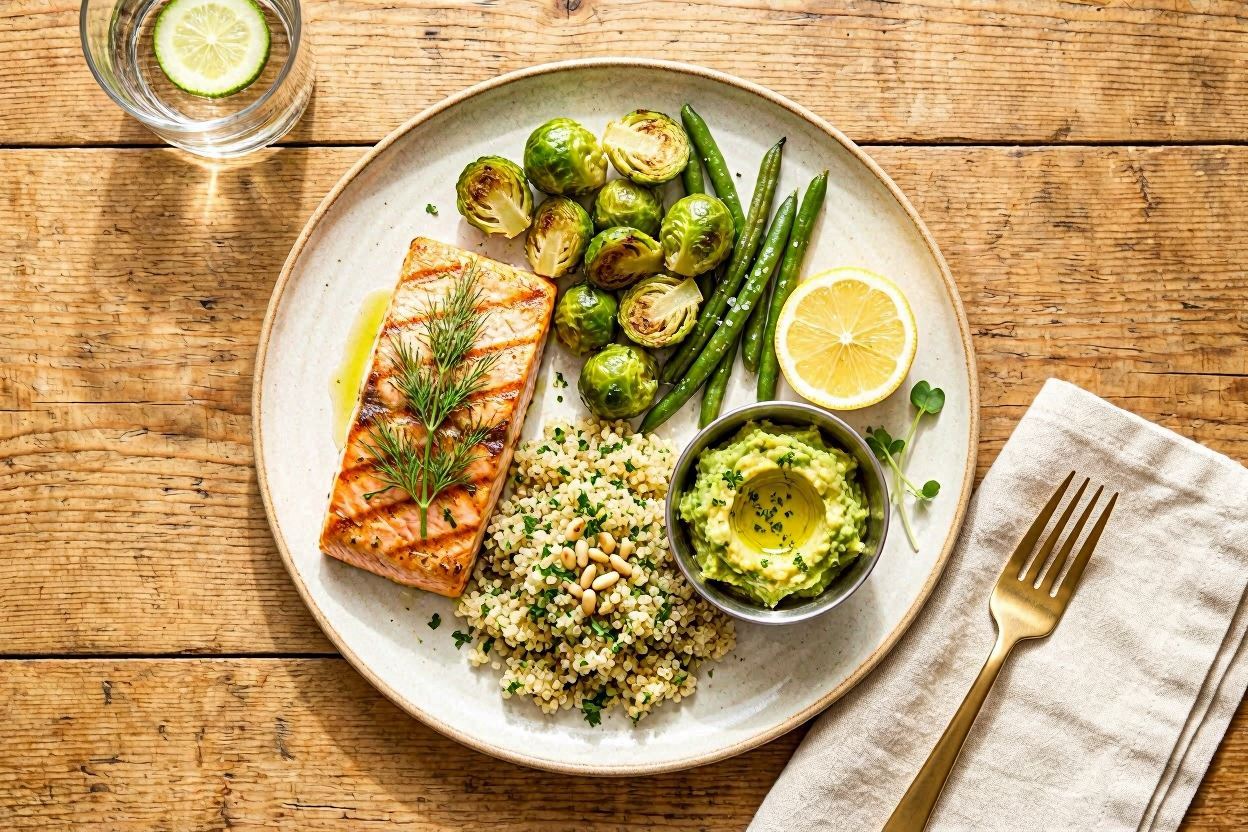
Choose real food over engineered products. Processed junk food isn’t food in any meaningful sense — it’s an industrial product designed to override your satiety signals and stimulate reward circuits. Low in fiber, protein, and micronutrients. High in sugar and refined grains. The result is the closest thing to a proven “food addiction” the literature documents. The fix isn’t complicated: eat things that grew from the ground or had a life. If your great-grandmother wouldn’t recognize it, it probably isn’t serving you.
Eat vegetables and fruits — all of them, and more than you think. This is the most boring and most validated advice in nutrition science. Prebiotic fiber, vitamins, minerals, antioxidants — the whole pharmacopeia, delivered without a prescription. People who eat more produce live longer and carry lower risk of heart disease, type 2 diabetes, and obesity. No single superfood matters. Volume and variety do.
Eat the whole egg — yolk included. Eggs are nature’s multivitamin, and the yolk contains nearly every nutrient worth mentioning. The cholesterol myth has been thoroughly dismantled: a study of 263,938 participants found no association between egg consumption and heart disease risk. None. The yolk isn’t your enemy — it’s the part worth eating.
The Fuel Philosophy
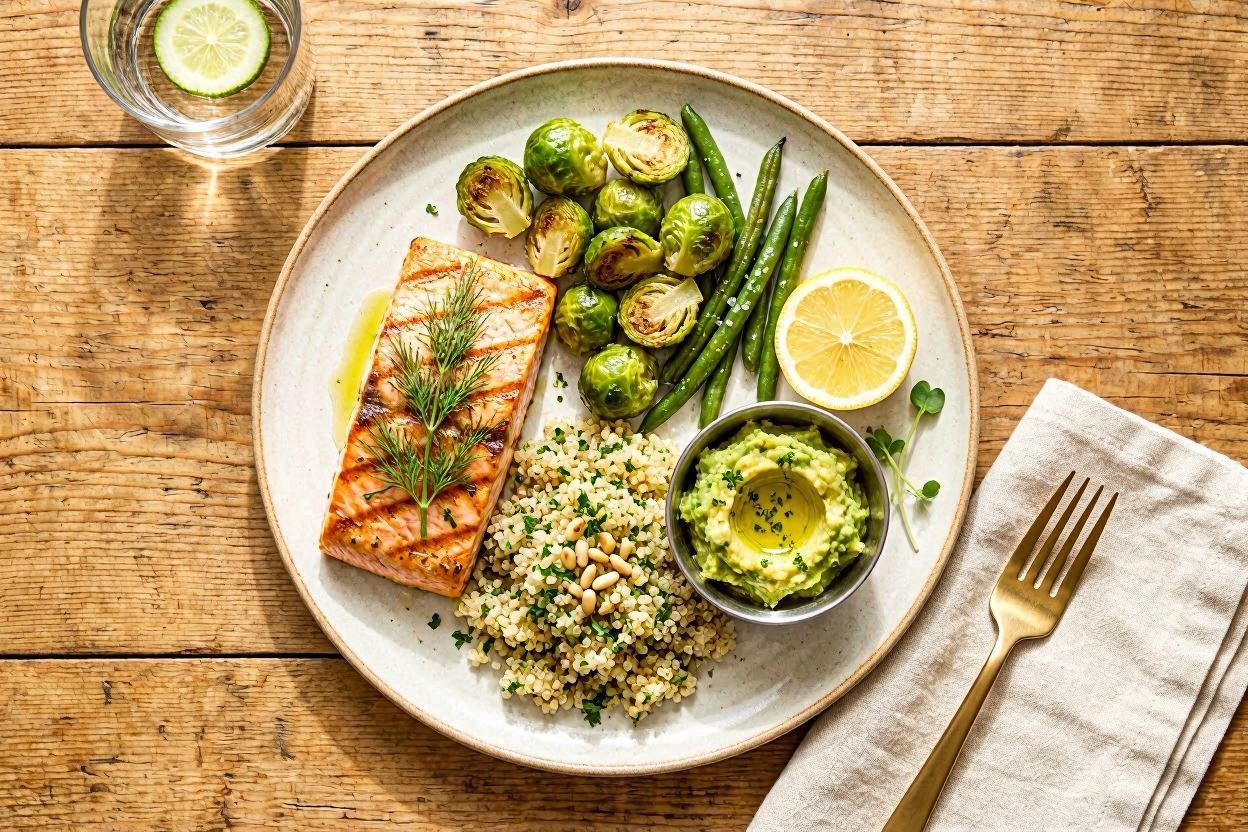
Beyond the simple choice of what to eat lies a more nuanced question: how does your body actually process what you give it? This is where nutrition science gets interesting — and where most conventional advice collapses under the weight of evidence. The data tells a story that is both more forgiving and more demanding than the wellness magazines would have you believe.
Drink water before meals — the math is striking. Hydration boosts metabolism by twenty-four to thirty percent over the following ninety minutes. Drinking two liters of water daily can burn an additional ninety-six calories through thermogenesis alone. But the real magic is timing: five hundred milliliters of water thirty minutes before each meal increased weight loss by forty-four percent in a controlled study. Not a supplement. Not a drug. Water, timed correctly. Free.
Fatty fish is non-negotiable. Salmon, sardines, mackerel — these are your primary sources of omega-3 fatty acids, the high-quality protein that reduces heart disease risk, damps down inflammation, and appears protective against dementia and depression. If you eat one thing on this list intentionally, make it fatty fish. Twice a week, minimum.
Vitamin D3 if you lack sun exposure — and you probably do. Forty-one point six percent of the US population is deficient. The consequences ripple through bone health, mood regulation, and cancer risk. Low vitamin D is also associated with shorter lifespan. If you live above thirty-five degrees latitude, work indoors, or have darker skin, supplementation isn’t optional — it’s basic maintenance.
Protein is not a macronutrient to fear — it’s the one to prioritize. Adequate protein boosts metabolism, increases satiety, reduces late-night snacking, and lowers both blood sugar and blood pressure. For anyone managing weight — and that is most of us — protein is the lever that makes everything else easier.
Extra virgin olive oil deserves its reputation. Heart-healthy monounsaturated fats, powerful antioxidants, and a body of evidence linking it to lower risk of death from heart attacks and strokes. This isn’t Mediterranean diet mythology — it’s clinical data. Use it generously.
Minimize added sugar — it is one of the worst ingredients in the modern diet. Linked to obesity, type 2 diabetes, heart disease, and multiple forms of cancer. Not because sugar is poison in microdoses, but because the quantities most people consume are biologically disruptive. Reducing added sugar is one of the highest-return health investments you can make.
Refined carbohydrates are the quiet problem. Stripped of fiber and nutrients, they digest rapidly, spike insulin, and leave you hungry again within an hour. Linked to overeating and metabolic disease in large cohort studies. The fix isn’t eliminating carbs — it’s choosing the ones that still look like food.
Saturated fat is more nuanced than the headlines suggest. It raises cholesterol — but it also raises HDL (the protective kind) and shifts LDL particles from small, dense, and dangerous to large, buoyant, and benign. New research has questioned the direct link between saturated fat intake and heart disease. This doesn’t mean unlimited butter is optimal. It means the story is more complicated than “saturated fat equals heart attack,” and the data supports moderate intake without panic.
Avoid artificial trans fats entirely. Industrial trans fats are linked to inflammation and heart disease. They’ve been banned in many countries, but traces persist in some processed products. There is no safe dose. Read labels. Walk away.
Use herbs and spices generously — they’re pharmacologically active. Ginger and turmeric carry potent anti-inflammatory and antioxidant effects. Cinnamon modulates blood sugar. Garlic supports cardiovascular health. These aren’t culinary afterthoughts — they’re bioactive compounds in palatable form.
Coffee is not the enemy — it may be an ally. Rich in antioxidants, coffee consumption is linked to longevity and lower risk of type 2 diabetes, Parkinson’s disease, and Alzheimer’s. The caveats are simple: don’t drown it in sugar, and know your caffeine tolerance. But the default position of the evidence is firmly pro-coffee.
How You Move

Exercise advice usually falls into one of two camps: the minimalist “just walk” crowd or the maximalist “crush yourself daily” faction. The evidence, characteristically, occupies a saner middle ground. What matters most is not the label on your workout — it’s what the movement actually does to your body composition, your metabolism, and the fat you can’t see.
Cardio is your weapon against visceral fat. Aerobic exercise is among the most effective interventions for reducing abdominal fat — specifically visceral fat, the metabolically active kind that wraps around your organs and drives disease. Cardio doesn’t just burn calories; it reshapes your internal landscape in ways that scale weight alone cannot capture.
Resistance training is the architecture of metabolic health. Lifting weights — or using your body weight against gravity — strengthens muscles, improves insulin sensitivity, and builds the metabolic infrastructure that keeps you functional as you age. You don’t need a gym. You need gravity and intention.
Target belly fat specifically — waist size may be a better health indicator than weight. Visceral fat is not the same as subcutaneous fat. It is metabolically harmful, linked directly to metabolic disease, and it doesn’t show up on a bathroom scale. A tape measure around your waist tells you more about your health trajectory than BMI ever will. The evidence-based approach: cut refined carbohydrates, increase protein and fiber, and move with intent.
How You Rest

You cannot supplement your way out of sleep deprivation. You cannot out-exercise it, out-meditate it, or out-earn it. Sleep is the foundation on which every other health behavior rests — and when that foundation cracks, everything above it destabilizes. The science on this is unambiguous and, frankly, alarming.
Sleep is the strongest risk factor for obesity that most people ignore. Poor sleep drives insulin resistance, disrupts appetite hormones, and degrades both physical and mental performance. The data is stark: short sleep duration increases obesity risk by eighty-nine percent in children and fifty-five percent in adults. Those numbers come from meta-analyses, not small studies. If you are doing everything right with diet and exercise but sleeping poorly, you are building on sand.
Protect your melatonin — avoid bright light before bed. Blue light from screens disrupts melatonin production, the hormone that signals your brain to initiate sleep. Amber glasses in the evening, reduced screen time an hour before bed, dim lighting — these aren’t lifestyle tips. They’re circadian biology.
Cook meat gently — burning it creates carcinogens. Overcooking or charring meat produces heterocyclic amines and polycyclic aromatic hydrocarbons, compounds linked to elevated cancer risk. This isn’t a reason to avoid meat. It’s a reason to cook it with care — lower temperatures, less charring, and a bit more attention to method.
How You Live

Health isn’t just what you eat and how you move. It’s the architecture of your days, the quality of your connections, and the mindset you bring to your own body. Some of the most powerful evidence-based interventions have nothing to do with nutrition or exercise — and everything to do with how you think about the project of being well.
Tend your gut microbiome — it runs more than you think. The bacteria in your digestive tract influence everything from immunity to mood to weight regulation. Disruption of the gut microbiota is linked to obesity and chronic disease. Eat probiotic foods — yogurt, sauerkraut, kimchi. Take a probiotic if your diet lacks fermented foods. And above all, eat enough fiber to feed the organisms that are feeding you.
Don’t smoke, and address substance use before anything else. If you smoke, no amount of kale, cardio, or meditation will outweigh the damage. Fix this first. Alcohol, if you drink, should be moderate — and the emerging evidence suggests the safest amount may be less than most people assume. This is the non-negotiable baseline.
Protect your relationships — social connection is a health intervention. People with close friends and family are not just happier. They are healthier and they live longer. Loneliness is a risk factor for mortality on par with smoking and obesity. This is not sentimentality — it’s epidemiology. Invest in your relationships the way you invest in your portfolio: deliberately and with compound returns in mind.
Track your intake occasionally — awareness drives change. The single greatest barrier to improving your diet is not knowing what you actually eat. Tracking food intake — even for a few days — reveals calorie counts, macronutrient ratios, and micronutrient gaps you’d never guess from memory alone. People who track are significantly more likely to lose weight and keep it off. It’s not obsessive. It’s informed.
Stop going on diets — they predict future weight gain. This is perhaps the most counterintuitive finding in the literature: dieting is one of the strongest predictors of future weight gain. The restrict-binge-restrict cycle doesn’t work. What works is adopting a sustainable way of eating that nourishes rather than deprives. Eat well consistently. Move your body. Sleep enough. Let the weight take care of itself. diets end; lifestyles persist.
The unifying thread across all twenty-seven of these habits is modesty. None of them promises a revolution. None comes with a brand name or a limited-edition drop. What they offer is something more durable: alignment with what the evidence actually supports.
Drink water before meals. Sleep eight hours. Eat the whole egg. Move in ways that challenge your muscles and your cardiovascular system. Don’t drink sugar. Measure your waist, not just your weight. Strength-train. Cook with olive oil and spices. Tend your relationships. Stop dieting.
These are not glamorous recommendations. They are the ones that work — and in a wellness industry awash in glamour and thin on evidence, that may be the most luxurious thing of all.