
There is a particular kind of vitality that no cream, no serum, no twelve-step evening ritual can replicate. It arrives not from what you apply to your skin but from what you feed the ecosystem living inside you — the trillions of microorganisms that constitute your gut microbiome. And the most elegant intervention science has identified isn’t expensive, proprietary, or complicated. It is simply this: eat thirty different plant species in a single week.
The proposition sounds almost too simple to be serious. Thirty plants. Seven days. That’s it. No fasting protocols, no elimination diets, no proprietary probiotic blends costing what a small car costs to maintain. Just an abundance of plant diversity, arranged across a week of meals you might actually enjoy eating. And yet the science behind it is anything but simple — it is among the most compelling findings in modern microbiome research, and it is rewriting how we understand the relationship between what we eat and how we look, feel, and age.
Luxury without health is just decoration. And health, as it turns out, begins in the gut.
The Science: What the American Gut Project Discovered
The American Gut Project — one of the largest crowd-sourced microbiome studies ever conducted, spanning thousands of participants across multiple continents — arrived at a finding that quietly upended conventional nutrition thinking. When researchers compared the dietary habits of participants with the composition and diversity of their gut microbiomes, a striking pattern emerged: individuals who consumed more than thirty different plant species per week had significantly more diverse gut microbiomes than those who ate ten or fewer.
This is not a marginal difference. It is the difference between a thriving rainforest and a monoculture plantation. A diverse microbiome is a resilient microbiome — richer in beneficial strains, more resistant to disruption, more capable of producing the compounds your body relies on for everything from serotonin synthesis to skin barrier repair.
The logic is deceptively straightforward. Different plant species nourish different microbial populations. Spinach feeds one community; lentils sustain another; blackberries reward yet another. When you restrict your diet to the same dozen plants week after week, you feed the same narrow cast of microbes and starve the rest. Over time, diversity collapses. The ecosystem simplifies. And with it, many of the downstream benefits that a rich microbiome provides begin to erode.
What does a diverse microbiome actually deliver? More than most people imagine:
- Digestion and nutrient absorption — A richer microbial community breaks down a wider range of fibers and phytonutrients, extracting more from what you eat and converting it into bioavailable forms your body can actually use.
- Immune resilience — Approximately seventy percent of your immune tissue resides in your gut. A diverse microbiome trains that tissue more effectively, producing a more calibrated immune response and a stronger barrier against chronic inflammation.
- Metabolic efficiency and energy — The microbes you cultivate directly influence how your body metabolizes carbohydrates, fats, and proteins. A richer ecosystem means more efficient energy extraction and fewer metabolic fluctuations that leave you reaching for a third espresso at four in the afternoon.
- Mood, cognition, and stress response — The gut-brain axis is not metaphorical. Your microbiome produces roughly ninety percent of your body’s serotonin and influences GABA, dopamine, and cortisol regulation. The state of your gut is, in a very literal sense, the state of your mind.
- Skin health — The gut-skin axis is equally real. Dysbiosis — an imbalance in microbial populations — is implicated in rosacea, acne, eczema, and accelerated skin aging. A diverse microbiome supports the integrity of the gut lining, reduces systemic inflammation, and promotes the kind of luminous complexion that no highlighter can authentically replicate.
- Vitamin and bioactive compound production — Your gut microbes synthesize several B vitamins, vitamin K2, and short-chain fatty acids like butyrate — a compound so protective it is sometimes called the “guardian of the gut.” The more diverse your microbial population, the more robust this internal pharmacy becomes.
- Medication response — Emerging evidence suggests that microbiome composition influences how the body metabolizes and responds to pharmaceuticals, meaning that the ecosystem in your gut may determine how effectively a treatment works — or whether it works at all.
The thirty-plant threshold, then, is not arbitrary. It represents the point at which dietary diversity translates into measurable microbial diversity, and microbial diversity translates into a cascade of tangible health benefits. The quest is simple: one week, thirty different plant species. One species counts once, regardless of how many times you eat it. Vegetables, fruits, berries, herbs, legumes, whole grains, nuts, seeds, and spices all count. The rules are generous, the strategy is flexible, and the payoff — a more vibrant, resilient, radiant version of yourself — is worth every mindful bite.
Day One: Building the Green Foundation
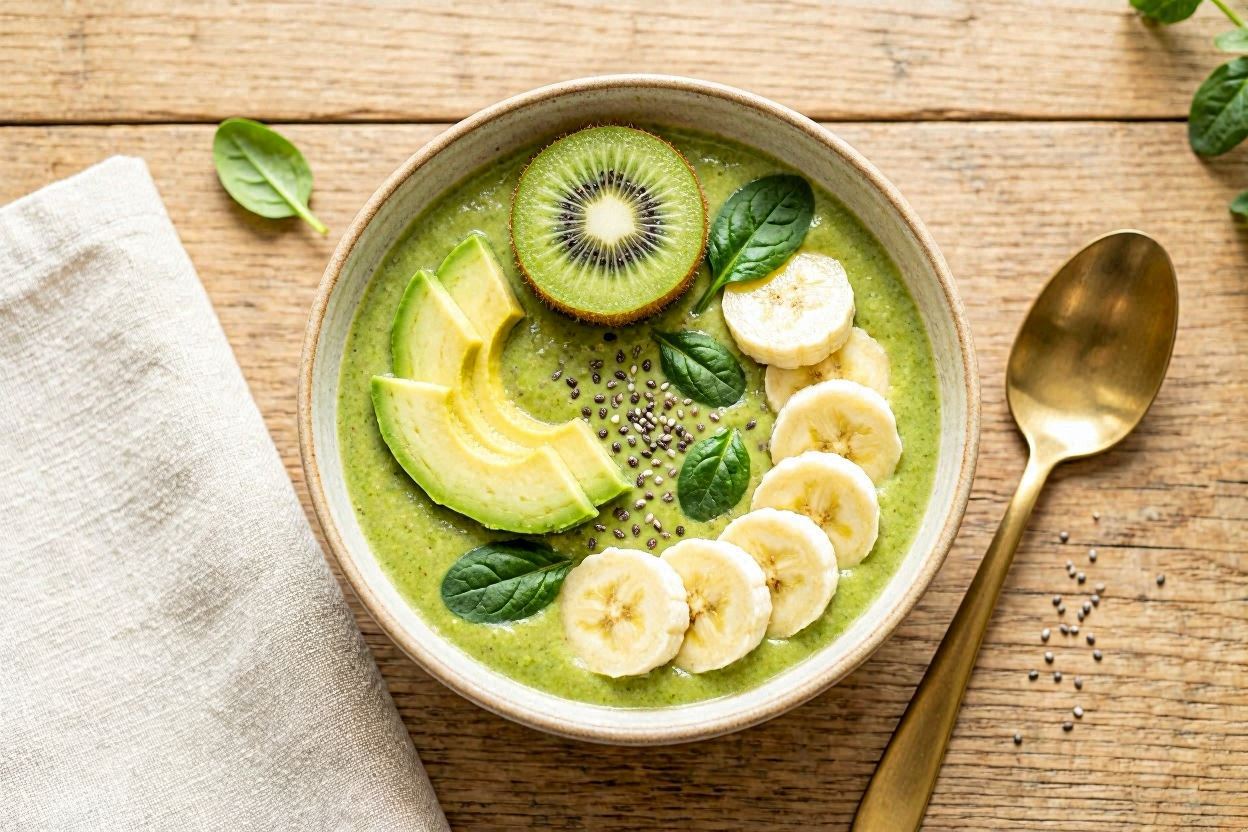
Today’s plants: spinach, dill, parsley, cucumber, radish
Every ambitious undertaking begins with a foundation, and in the plant world, that foundation is green. Day one establishes the base layer of your weekly count with five humble but powerful plants — the sort you might already have in your kitchen but rarely think to celebrate.
The approach is deliberately approachable. A salad of cucumber, radish, and spinach dressed with dill and fresh parsley, finished with yogurt or a drizzle of good olive oil and lemon. If salads feel too perfunctory, fold spinach into a morning omelet, pair cucumber and radish with your grain bowl or porridge, and use dill and parsley as the aromatic bed beneath a piece of fish or chicken at dinner. The point is not gastronomic complexity — it is awareness. Starting the count, feeling the texture of intentionality, and understanding that five plants in a single day is not only achievable but quietly satisfying.
Think of this day as orientation. You are not yet climbing; you are simply finding your footing on the trail.
Day Two: The Berry Indulgence
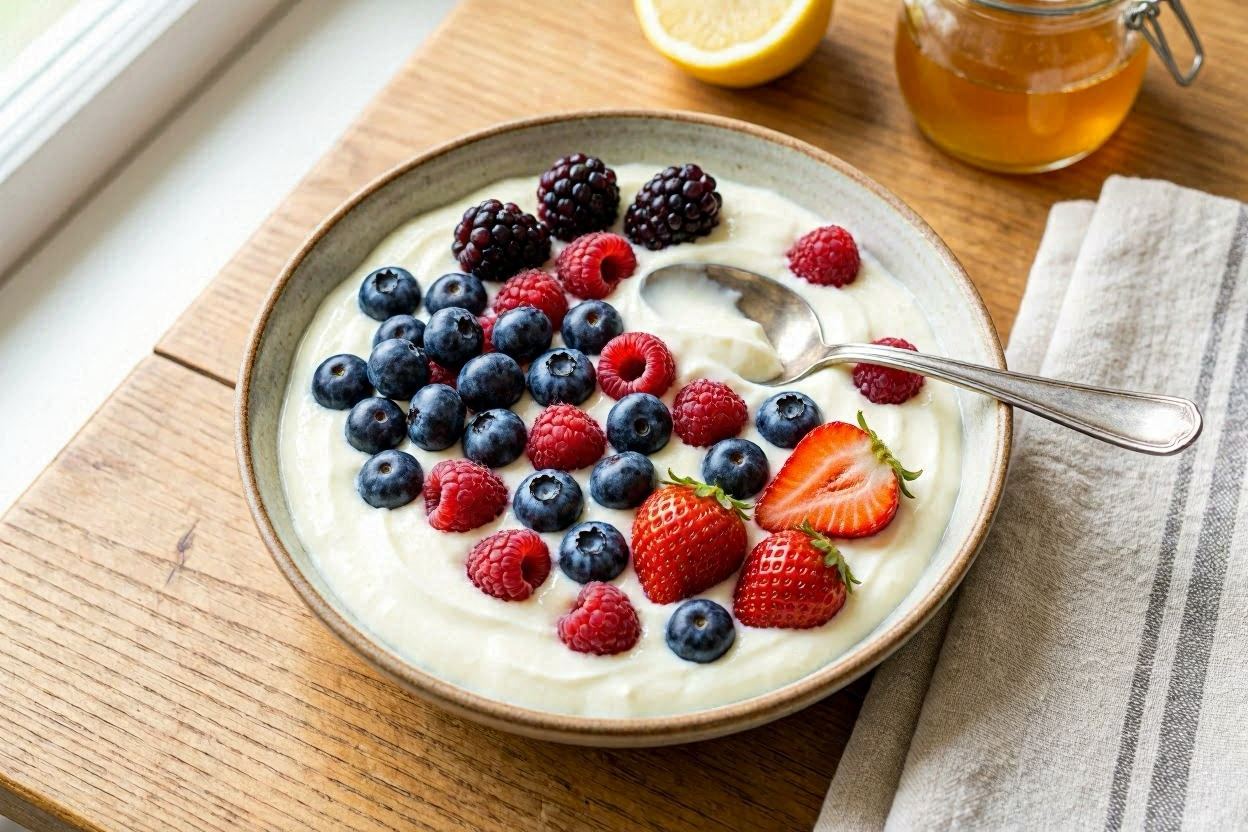
Today’s plants: strawberry, sweet cherry, mint, oats, chia seeds
If day one was about discipline, day two is about pleasure — and proving that this challenge is anything but austere. Strawberries and sweet cherries are among the season’s most seductive offerings, and they pair beautifully with the remaining three plants on today’s list.
Prepare rolled oats — not the instant, sweetened variety, but proper steel-cut or whole-rolled oats, the kind that demand patience and reward it — topped with fresh strawberries, pitted cherries, torn mint leaves, and a generous spoonful of chia seeds. Alternatively, layer everything over thick, full-fat yogurt and allow the chia to create its characteristic gel overnight for a breakfast that feels almost too luxurious to be functional.
Mint does more than refresh the palate — it is a carminative herb that supports digestion, and in the context of this challenge, it represents something important: herbs count. Every sprig, every pinch of something green and aromatic, is a plant species. This is where the count begins to accelerate, almost without effort.
Day Three: The Satisfying Crunch
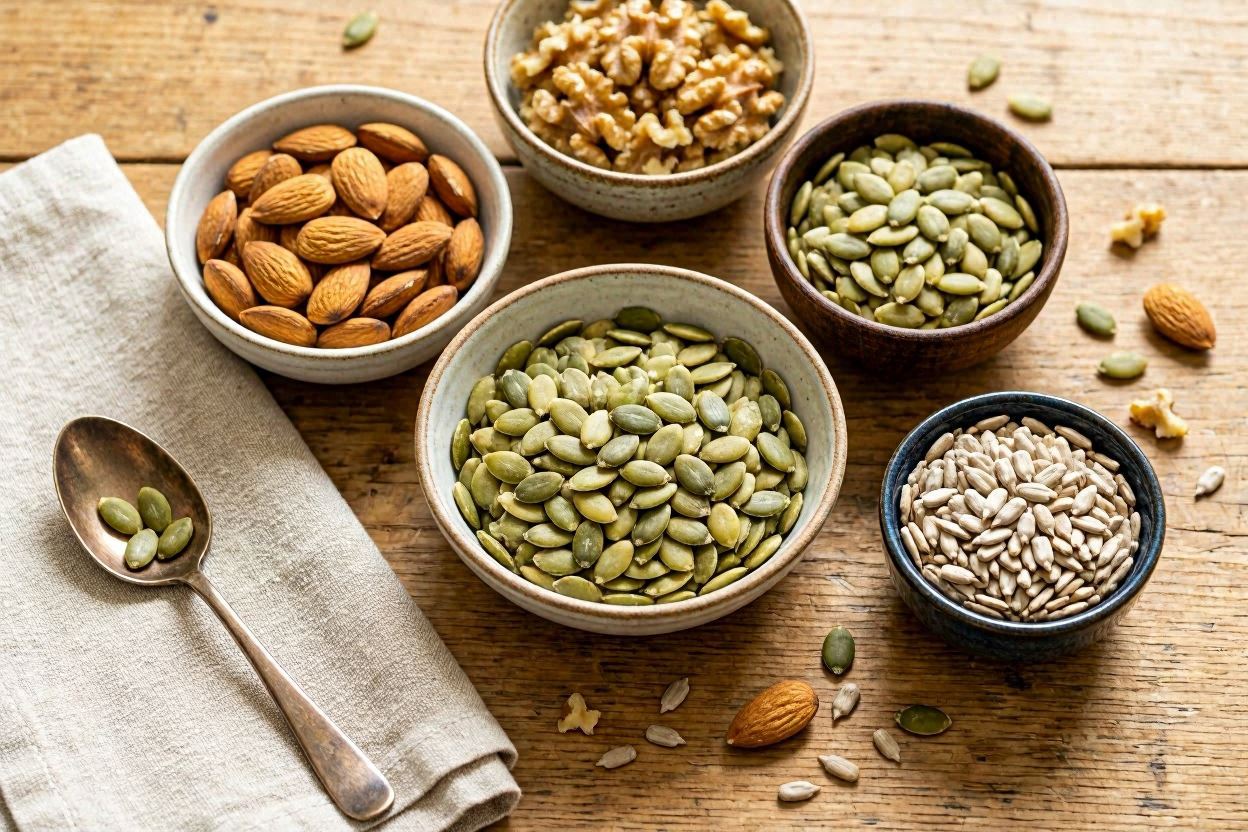
Today’s plants: young cabbage, spring onion, carrot, zucchini, sesame
Day three pivots toward texture and the deep satisfaction of raw crunch — something the modern diet, with its smoothies and purées, too often neglects. A slaw of shredded young cabbage, julienned carrot, and sliced spring onion is the workhorse preparation here: simple, crisp, and endlessly adaptable. Dress it with sesame oil and toasted sesame seeds, and you have a side dish that elevates everything it touches.
Zucchini offers versatility — slice and grill it, roast it until its edges caramelize, or grate it into vegetable fritters that make a weeknight dinner feel considered rather than reflexive. Sesame seeds, whether white or black, bring not just a nutty finish but lignans and minerals that your microbiome metabolizes with evident enthusiasm.
By day three, the count sits at fifteen. You are halfway there, and the momentum has shifted. What began as a counting exercise has become a creative one — a daily negotiation between appetite and imagination, between what you want to eat and what you have not yet thought to include.
Day Four: The Summer Plate, Elevated
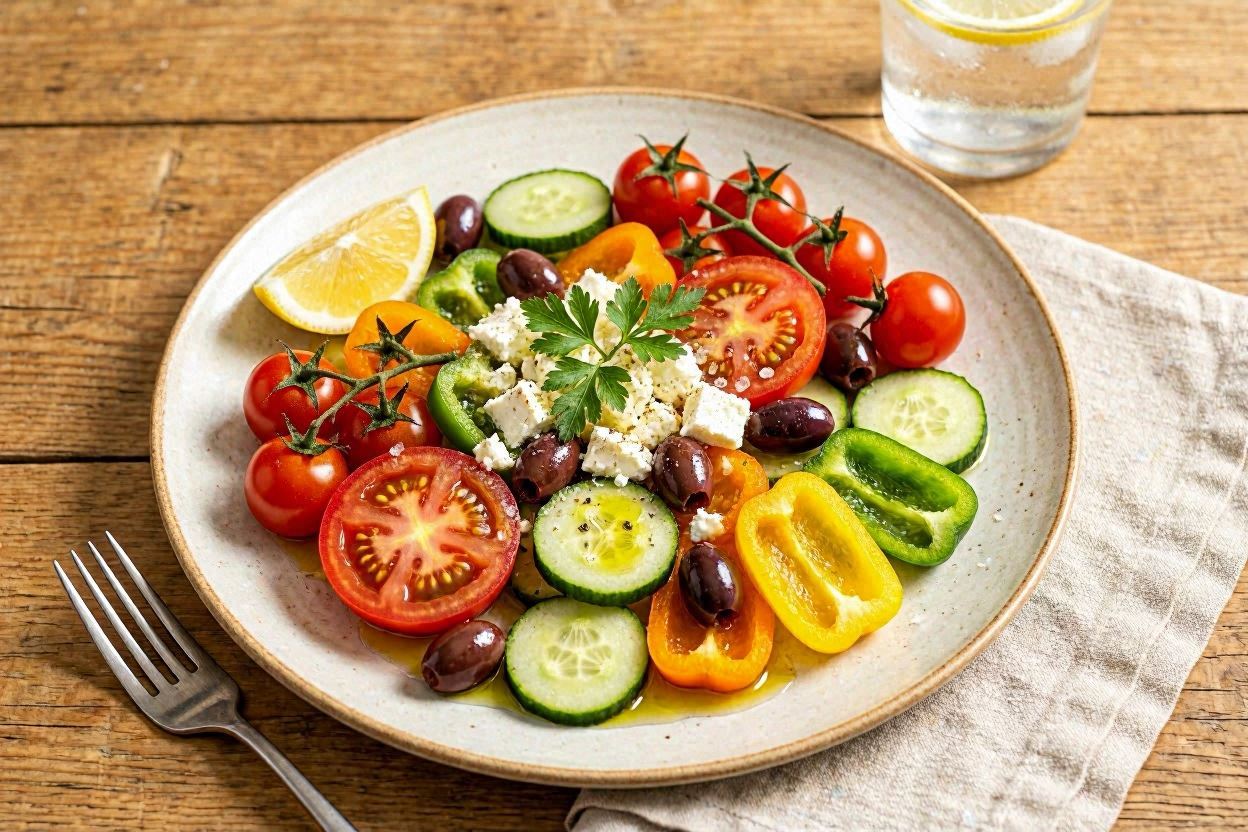
Today’s plants: young green peas, basil, tomatoes, lettuce leaves, pumpkin seeds
This is the day where the challenge reveals its aesthetic dimension. A plate composed of tender lettuce, ripe tomatoes, sweet young peas, and fragrant basil, crowned with roasted pumpkin seeds and dressed in lemon juice, soy sauce, and your best extra-virgin olive oil — this is not a sacrifice. This is the kind of meal that makes you understand why the Mediterranean diet remains the gold standard for both pleasure and longevity.
Basil is the quiet standout here. Beyond its unmistakable aroma, basil contains volatile oils with demonstrated antimicrobial and anti-inflammatory properties — a small but meaningful contribution to the environment your gut microbes inhabit. Pumpkin seeds add zinc, magnesium, and a satisfying textural contrast that elevates the plate from simple to intentional.
Twenty plants. The threshold is in sight.
Day Five: A Second Berry Celebration
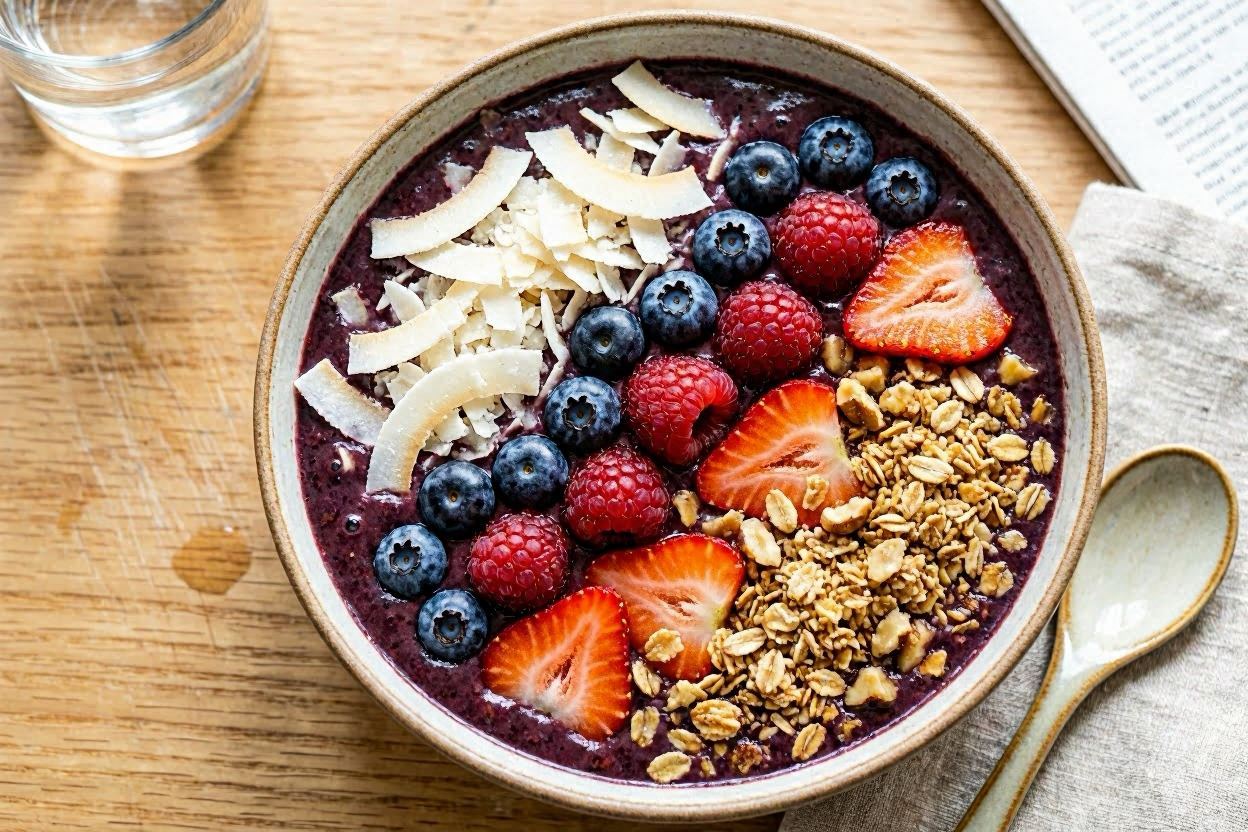
Today’s plants: raspberry, blackcurrant, apricot, walnut, flaxseed
There is a reason this challenge includes two berry-heavy days: berries are among the most concentrated sources of polyphenols — the plant compounds that act as signaling molecules for your gut bacteria, selectively promoting the growth of beneficial strains while discouraging the opportunistic ones. Raspberries and blackcurrants, in particular, deliver anthocyanins and ellagic acid at levels that few other foods can match.
Layer them with sliced apricot over yogurt, kefir, fresh cheese, or grain porridge. Add ground flaxseed — always ground, as whole flaxseed passes through the digestive tract largely intact — and crushed walnuts, whose omega-3 alpha-linolenic acid content and polyphenol-rich skin make them one of the most microbiome-supportive nuts available.
By now, the count has reached twenty-five. The finish line is close enough to feel inevitable. And something else has happened: you have likely noticed a shift in how you are eating — not less, not more restrictively, but more curiously._open Your hand drifts toward the bunch of herbs at the market rather than past them. You pause at the bulk bin of seeds you have never tried. The challenge has reawakened something that the monotony of routine eating had dulled: the pleasure of choosing.
Day Six: The Warm Salad — Sustaining Without Weighing
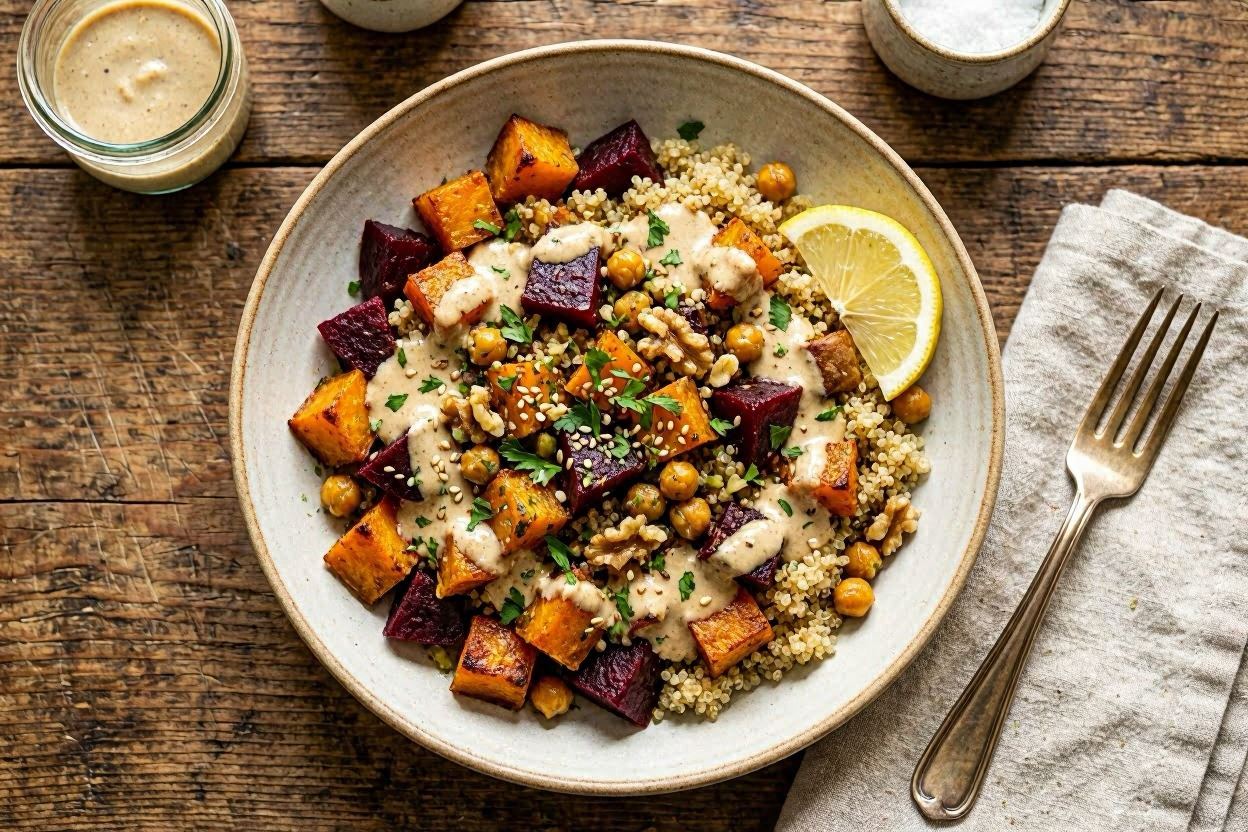
Today’s plants: beetroot, arugula, garlic, lentils, sunflower seeds
Day six introduces warmth — not the heavy, enervating warmth of starch-laden comfort food, but the quiet comfort of a composed plate where each element has been considered. Lentils form the protein anchor, their earthy depth a natural partner for the sweetness of roasted or boiled beets. Arugula brings its signature peppery bitterness, and garlic — incorporated into the dressing rather than applied raw — contributes allicin, a sulfur compound with well-documented antimicrobial and prebiotic properties.
Sunflower seeds scattered across the top provide a final textural note and a quiet dose of vitamin E, selenium, and the kind of gentle satisfaction that comes from a meal that nourishes without demanding recovery time.
Twenty-nine. One plant short of the goal. And the most celebratory day is yet to come.
Day Seven: Sealing the Count — and the Glow
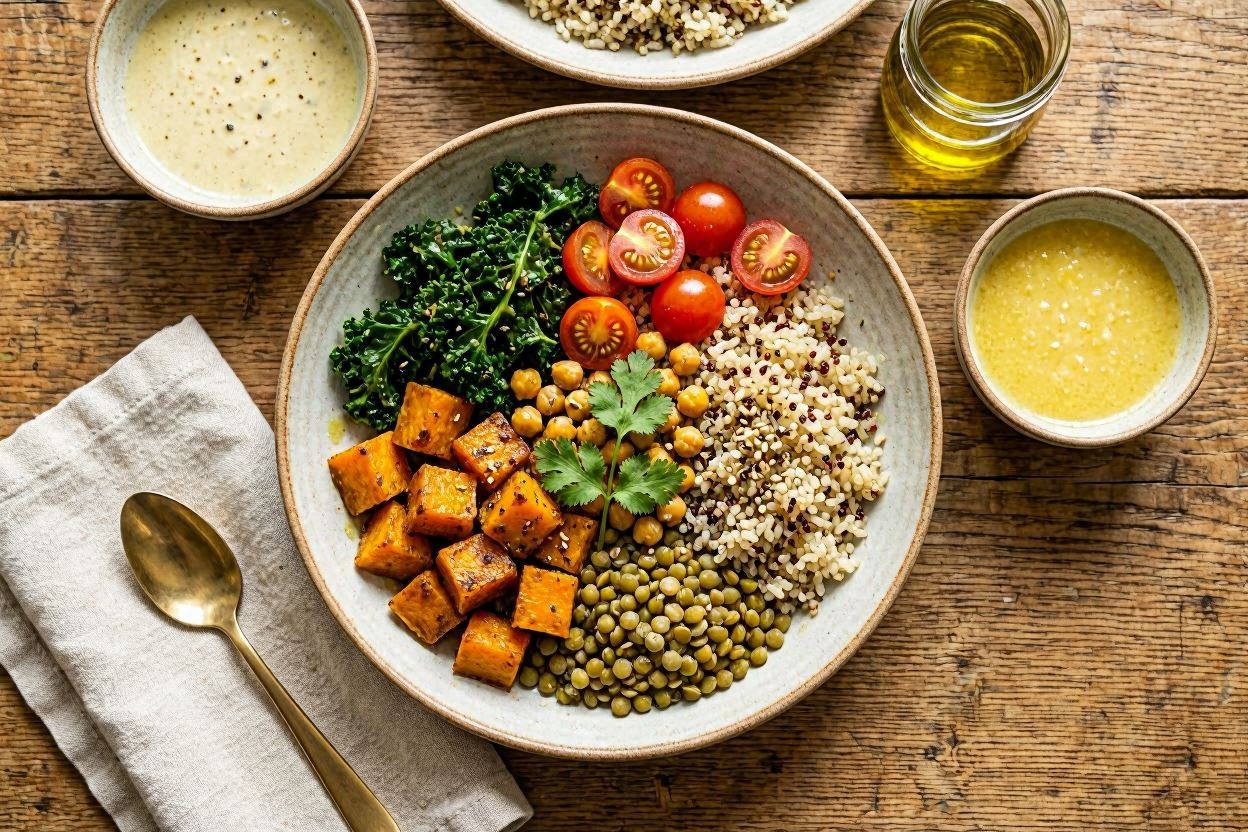
Today’s plants: peach, blueberry, cilantro, avocado, corn
The final day of the quest is designed to feel like a conclusion worth arriving at. Avocado toast on good sourdough, topped with sweet corn kernels and a shower of fresh cilantro, finished with lime juice — this is the kind of plate that belongs on a terrace in late June, eaten slowly, with nowhere in particular to be.
For dessert — or rather, for the end of the meal that is also the end of the challenge — sliced peach with blueberries and a spoonful of natural yogurt or fresh cheese. The sweetness is real, the satisfaction is earned, and the count is complete.
Thirty plants. Seven days.

What Happens After the Quest
The thirty-plant challenge is not a detox. It is not a reset. It is not seven days of deprivation followed by a return to whatever was there before. It is — if you allow it to be — a reorientation. A way of seeing your meals not as fuel or obligation but as communication with an ecosystem that is always listening, always responding, always shaping the version of you that the world sees.
The people who continue to eat thirty or more plant species per week after the challenge ends are the ones who experience sustained benefits: more consistent energy, more resilient digestion, skin that holds its own against the passage of seasons, and a quiet confidence that comes from knowing that their most foundational investment — the one in their own biology — is compounding.
The beauty industry sells you what to apply. The supplement industry sells you what to swallow. The thirty-plant challenge asks you to do something more radical and more effective: to eat with attention, to choose with variety, and to trust that the ecosystem inside you — given the right raw materials — will do what it has evolved to do over millions of years. Produce health. Produce resilience. Produce glow.
Thirty plants. Seven days. The most powerful luxury you will ever consume is not sold in a bottle. It is grown in the ground, harvested in season, and eaten with the kind of deliberate abundance that is, itself, the definition of living well.