There was a time when a beautiful home was enough. Immaculate surfaces, a considered palette, the right furniture in the right place — it could all be photographed and admired. But something fundamental has shifted. In 2026, the most compelling interiors are no longer content to sit quietly and look pretty. They have learned to participate.
The modern apartment has become something far more sophisticated than a backdrop for daily life. It is an active collaborator in how you work, rest, connect, and recover. The walls move. The light adjusts. The materials breathe. And every detail — from a hand-thrown ceramic bowl to the invisible sensor managing your morning routine — carries intention. This is not decoration. This is design that lives alongside you.
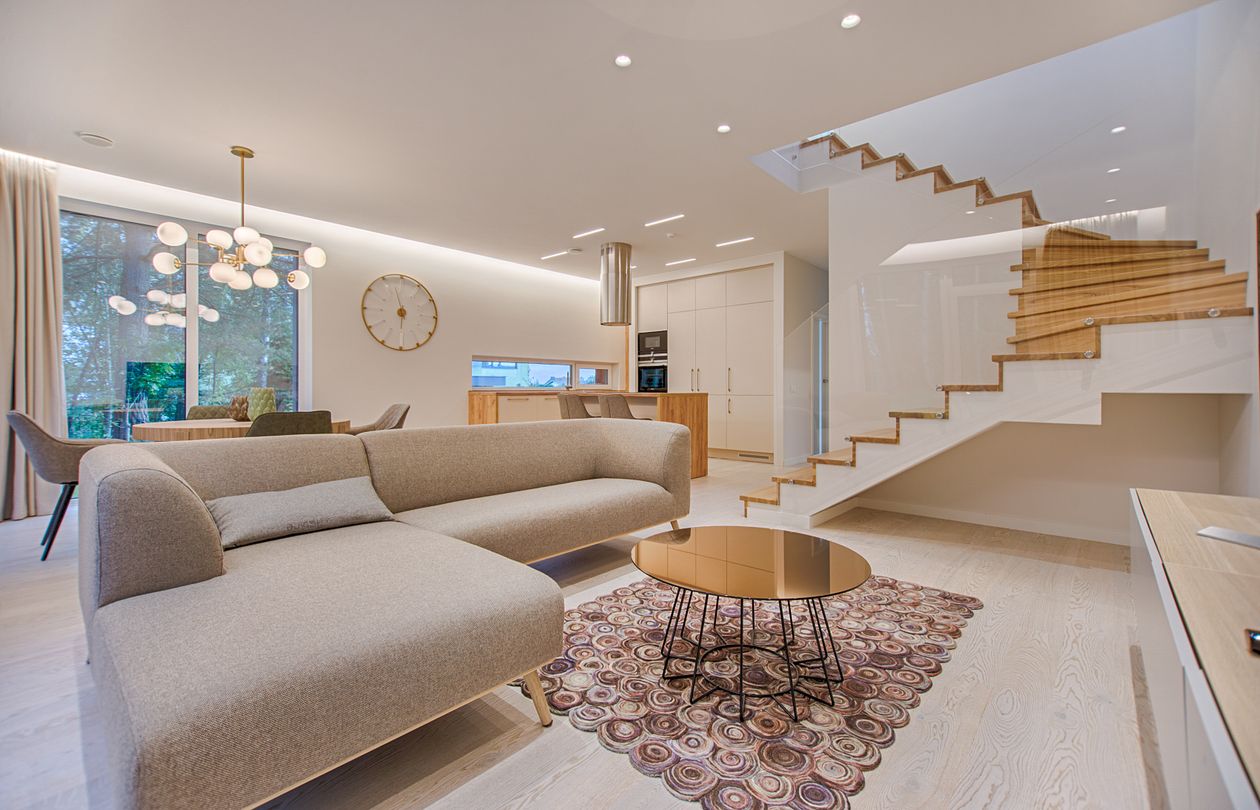
The End of the Static Floor Plan
For decades, we accepted a simple contract with our homes: here are your rooms, each with a fixed purpose, each separated by walls that do not move. The kitchen is for cooking. The study is for working. The living room is for — well, living, presumably, but mostly for looking impressive when guests arrive.
That contract has been torn up.
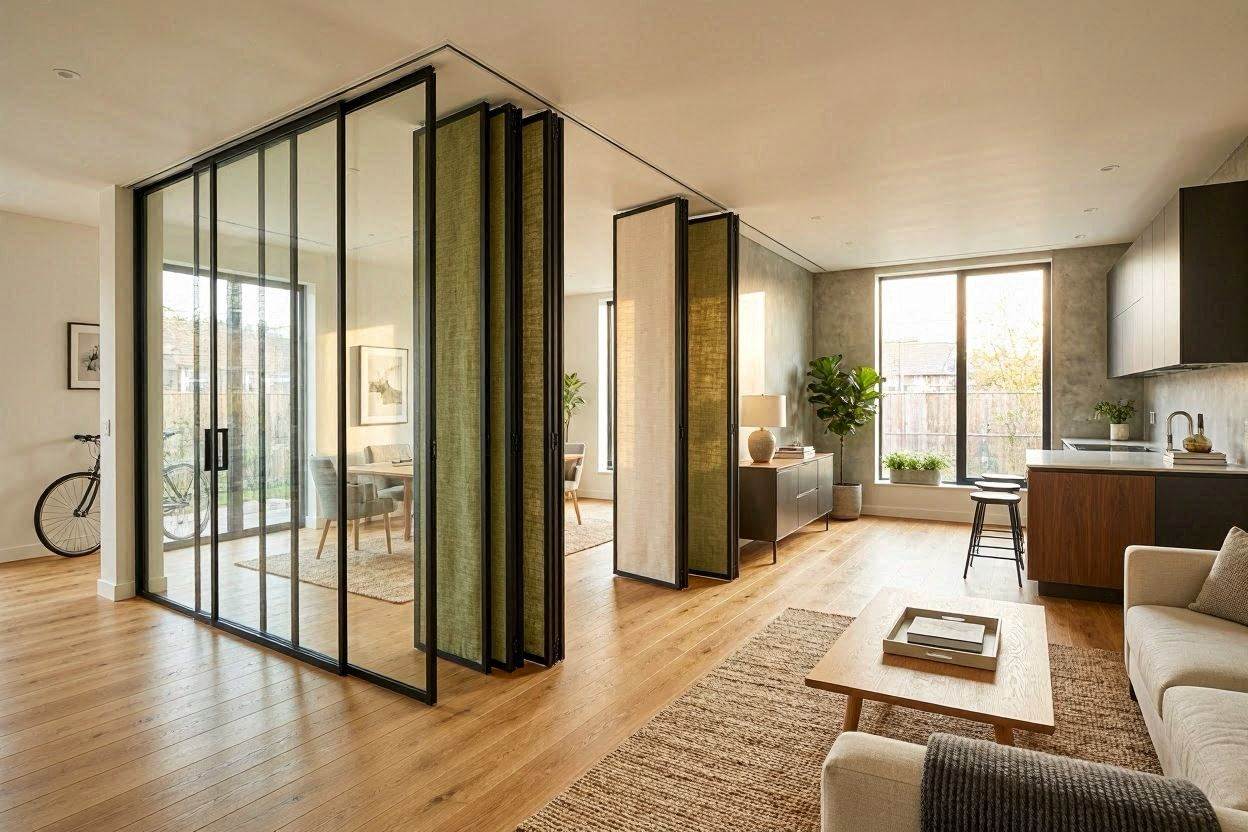
In 2026, the single most significant shift in apartment design is the death of the rigid floor plan. Sliding partitions replace load-bearing walls between social spaces. A single generous room transforms throughout the day: a sunlit workspace at nine, a lunch setting by noon, a yoga studio by five, and an intimate dinner venue by eight. The furniture folds, extends, nests, and disappears. Nothing is permanent except the intention to adapt.
This is not a stylistic flourish — it is an architectural response to how life actually unfolds. The past several years rewrote our relationship with home permanently. Living, working, exercising, hosting, retreating — all of it happens within the same walls, often within the same hours. Designers who understand this have stopped trying to assign a single function to a space and instead layered multiple scenarios into every square metre with surgical precision.
The elegance lies not in how many things a room can become, but in how effortlessly it transitions between them. A well-designed sliding partition does not feel like a compromise. It feels like architecture finally catching up with the way people actually live.
Colour as Emotional Architecture
We have left the era of the sterile white box. That particular brand of Scandinavian minimalism — all pale birch and clinical surfaces — served its purpose, but it was never truly warm. It photographed beautifully. It felt correct. But correctness and comfort are not the same thing.
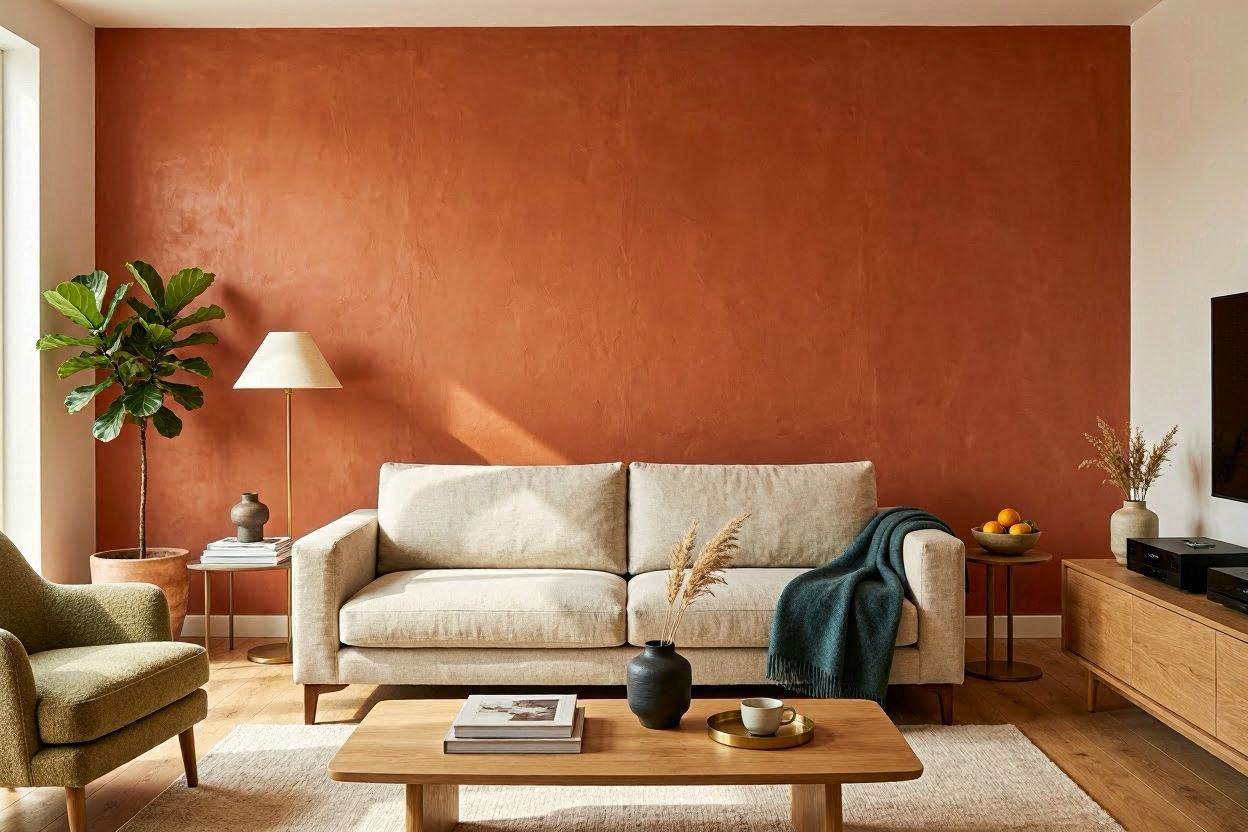
The colour palettes emerging in 2026 are something altogether richer: deep, grounded hues that seem to hold warmth rather than reflect it. Think terracotta that has faded in the Mediterranean sun, the quiet olive of aged plaster, the honeyed amber of late afternoon light on raw linen. And then — strategically, almost provocatively — a single vivid gesture. A cushion in burnt sienna. A lacquered niche in deep aubergine. A piece of hand-blown glass in a startling, joyful cobalt.
But the deeper revolution is not aesthetic. It is psychological. Designers in 2026 are deploying colour as a tool of emotional regulation — understanding that the ochre hallway you walk through after a difficult meeting does something specific and measurable to your nervous system. That the muted sage of a bedroom wall is not merely pretty; it is an act of care. Colour, in this new paradigm, is not decoration. It is therapy rendered in pigment.
The result is spaces that feel emotionally calibrated. Rooms that hold you rather than merely house you. Interiors where the colour itself seems to understand what you need before you do.
Materials That Remember Where They Came From
For a long while, interior design was entranced by the synthetic. High-gloss lacquers, engineered composites, impossibly uniform surfaces — they spoke of precision and modernity. But precision, it turns out, can feel cold. And modernity without soul is just novelty.
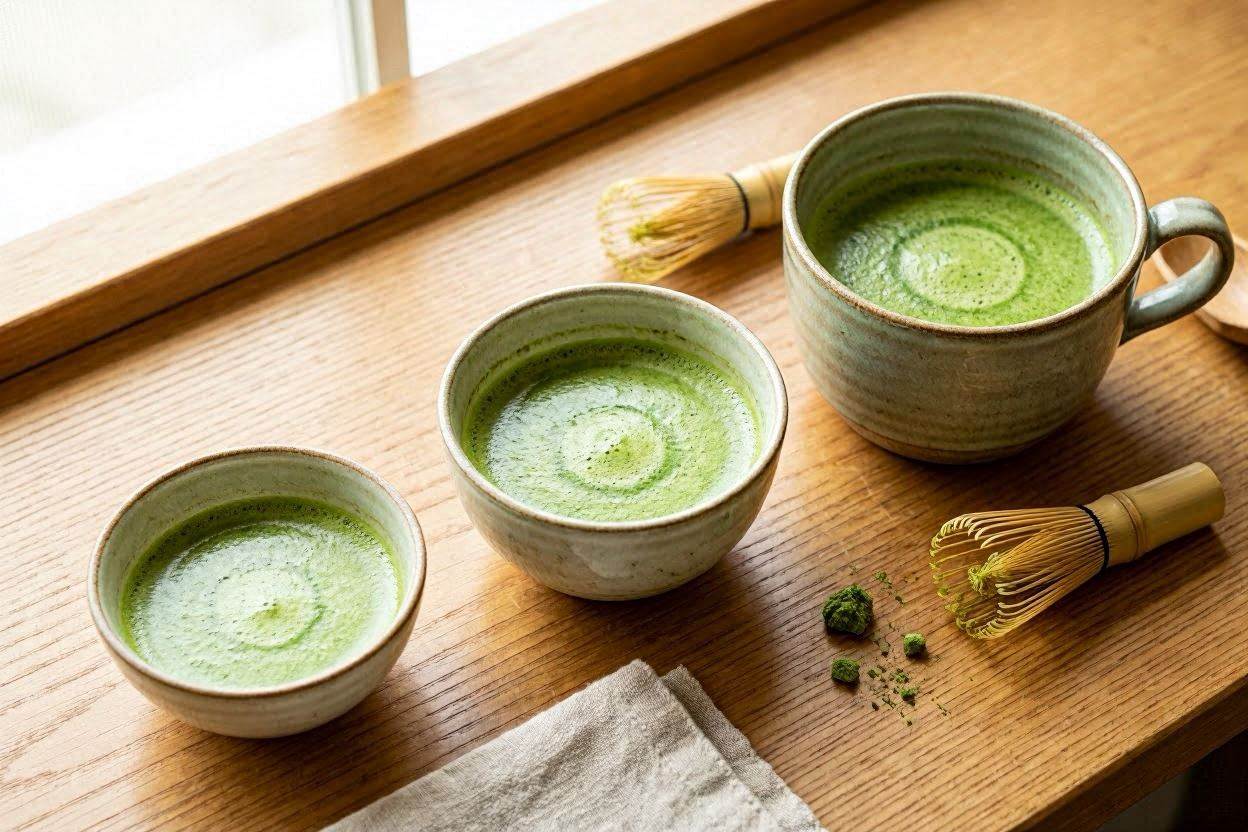
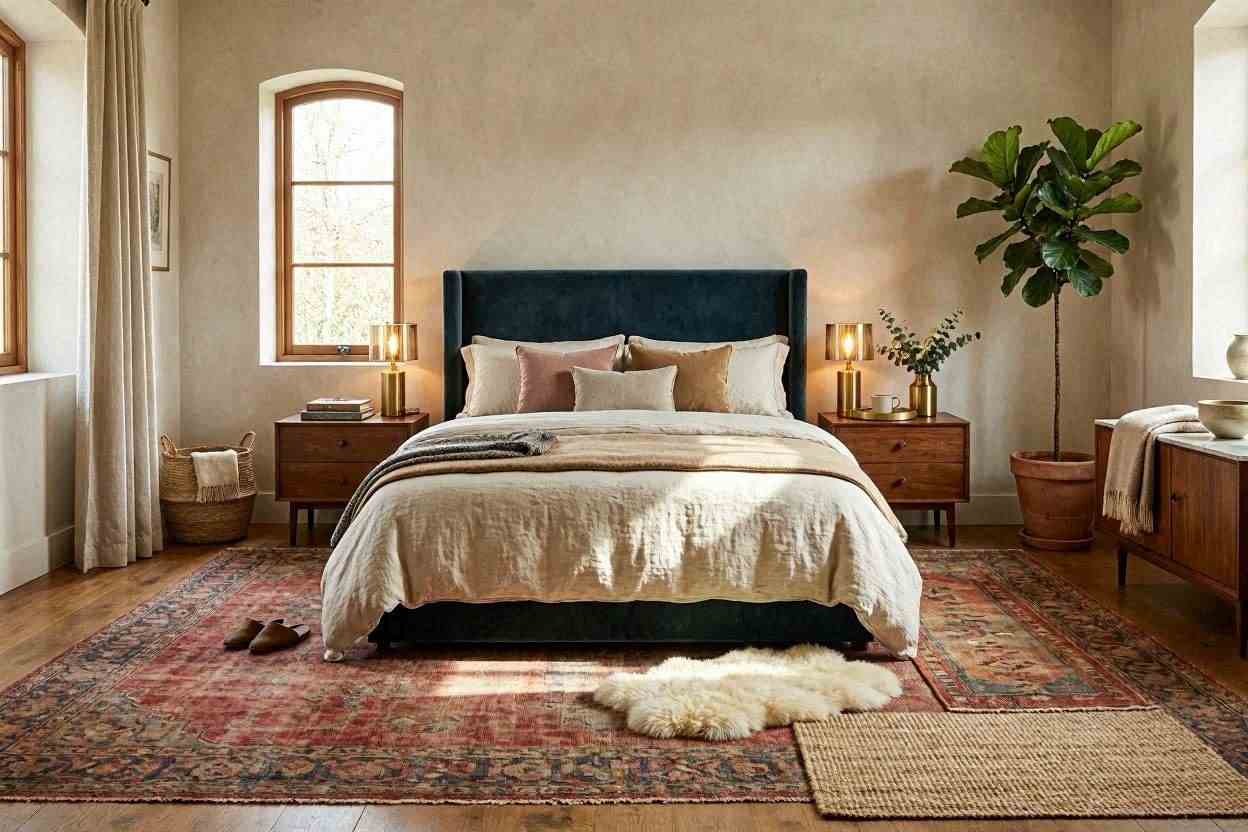
The materials returning to favour in 2026 share a common language: they are of the earth. Unfilled travertine with its porous surface telling the story of millennia. Solid oak that will mark and patina with the touch of daily use. Hand-forged brass that blooms with verdigris over years. Linen with slubs and irregularities that remind you a human hand was involved in its making.
What these materials offer is not merely visual warmth — though they certainly provide that. They offer tactile reassurance. In a world increasingly mediated by glass screens and polished aluminium, the simple act of resting your hand on a raw stone countertop or feeling the subtle grain of ash wood beneath your fingertips is a small, daily restoration. A reconnection with the physical world that the digital age has made it so easy to forget.
This return to natural materials is not nostalgic. It is strategic. When your home is also your office, your gym, your sanctuary, and your social venue, the quality of what you touch and see at close range takes on an outsize importance. A single beautiful, honest material — used with conviction — does more for the atmosphere of a room than a dozen decorative objects ever could.
Designing for the Way a Day Actually Unfolds
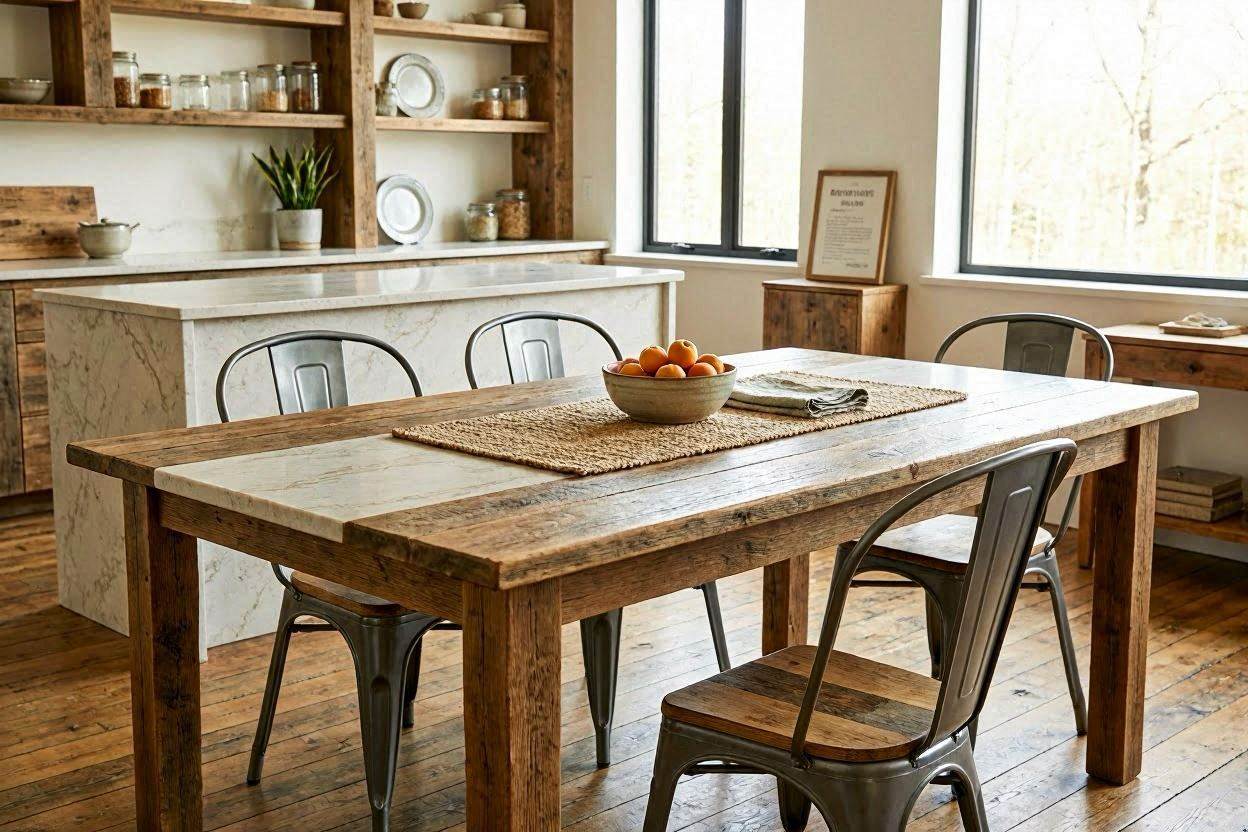
Consider an ordinary Tuesday. You wake before seven and the apartment is quiet — hushed lighting, curtains still drawn, the kitchen island waiting. By mid-morning, the space has reconfigured itself: the partition between living and dining areas slides open, natural light pours in, and the same surface that held your coffee now supports your laptop with a view of the skyline. By afternoon, you need movement — the furniture shifts, the open floor becomes available, and the room breathes differently. By evening, everything contracts again into intimacy: warm lamplight, lowered shades, the dining table extended for two.
This is not a fantasy. It is how the best apartments of 2026 are designed to function. The philosophy is simple: a great interior does not ask you to adapt to it. It adapts to you.
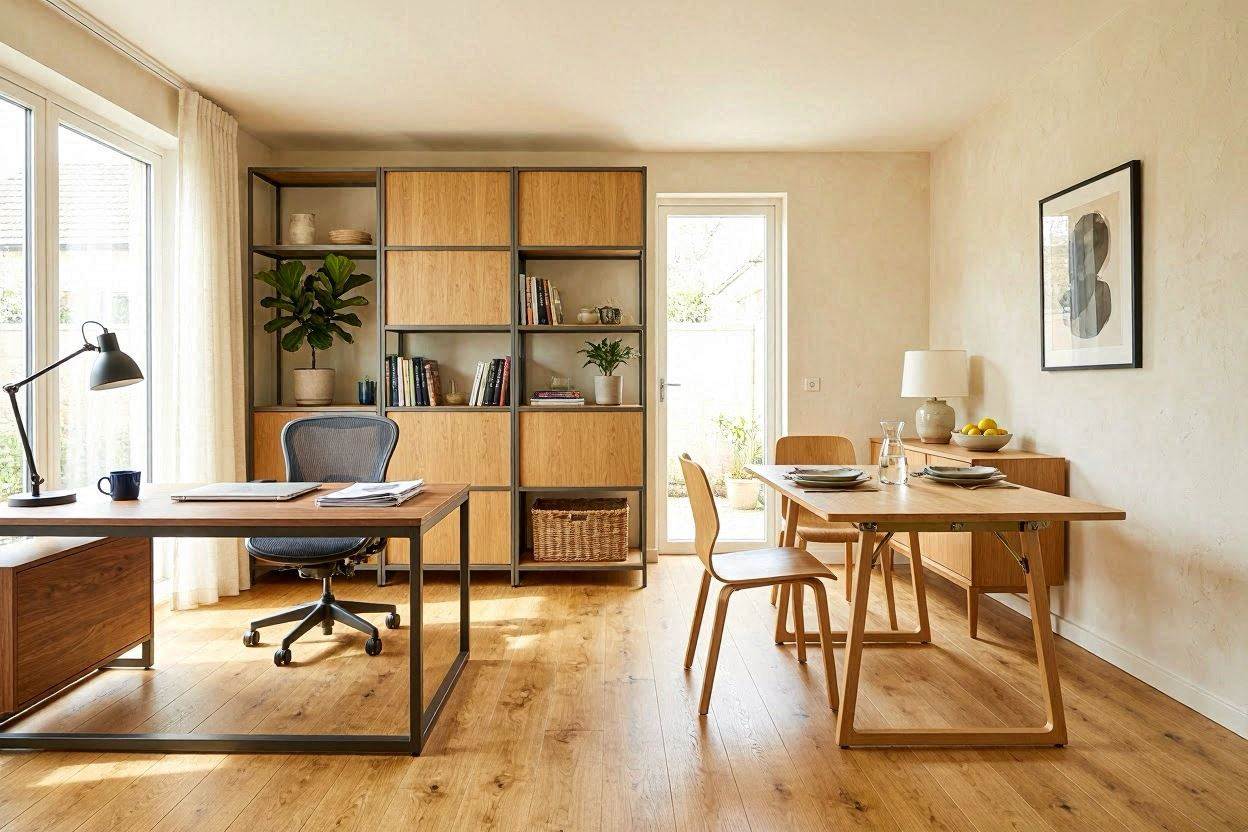
Multi-functionality in 2026 is not about cramming a fold-out desk into a closet or hiding a Murphy bed behind a false wall — those are solutions born of desperation, not design. The new multi-functionality is graceful. It is a dining table that extends with a single fluent gesture. A modular sofa that reconfigures for conversation or solitude. A guest room that serves as a reading room every other day of the year and transforms only when needed. Storage systems that disappear into walls. Lighting that shifts its quality to match the task and the hour.
The measure of success is seamlessness. If you ever feel like you are setting up your home for its next function, the design has failed. A well-planned apartment of 2026 transitions between its daily lives the way a dancer transitions between steps — with such fluidity that you barely notice the change has occurred.
The Unrepeatable Detail: Personalization as Identity
Here is a truth that mass production will never quite manage: no one falls in love with a showroom. We fall in love with the specific — the particular object that could only belong in this room, owned by this person, carrying this story.
Personalization in 2026 has evolved far beyond monogrammed towels and a gallery wall of family photographs. It is a deep, almost contemplative practice of curating objects that carry emotional resonance. An abstract painting acquired from the artist’s studio on a rainy afternoon in Lisbon. A hand-thrown vessel made by a ceramicist whose work you followed for years before finally acquiring a piece. A vintage textile discovered in a Provençal market, now draped across a chair where morning light catches its faded pattern.
These are not accessories. They are anchors. They are the elements that transform a beautifully designed interior into something unmistakably, unrepeatably yours. And their power is precisely in their specificity — the knowledge that no other home on earth contains this particular arrangement of objects and meanings.
Designers have recognized this hunger for singular identity and responded with spaces that are, in a sense, deliberately incomplete. They provide the architecture — the bones, the palette, the quality of light — but deliberately leave breathing room for the owner’s narrative to fill in. The best interiors of 2026 are collaborations between designer and resident, and they are never truly finished. They evolve as life evolves.
The Invisible Intelligence: Technology That Serves Without Showing
Smart home technology has undergone its own quiet revolution. The first generation was loud about its presence — massive touch panels, visible speakers, gadgets that demanded attention and admiration. We were meant to be impressed. And for a while, we were.
But the smart home of 2026 has learned the most important lesson in the design of domestic technology: the highest compliment is not “how impressive” but “how did I not notice?”
Climate systems that anticipate your schedule and pre-condition each room before you enter it. Lighting that adjusts colour temperature throughout the day in harmony with your circadian rhythm. Blinds that follow the sun’s angle without being told. Audio that moves with you through the apartment, present where you are, absent where you are not. Security and energy management that hum along in the background, requiring input only when something is genuinely unusual.
The technology has not become less powerful — quite the opposite. It has become polite. It respects the aesthetic integrity of the space. It does not compete with a hand-finished plaster wall or a carefully selected piece of art. It does not announce itself at all. It simply ensures that the environment around you is always optimal — always the right temperature, the right light, the right ambiance — without ever making you aware of the machinery behind the magic.
This is not luxury in the traditional sense — it is not something to be shown off to visitors. It is luxury in the deeper, older sense: the experience of being effortlessly supported in your own home. Of living in a space that seems to understand you.
Where All of This Leads
The most remarkable thing about the way interiors are evolving in 2026 is not any single trend. It is the fact that all of these developments — the flexible planning, the emotional colour, the natural materials, the seamless multi-functionality, the deeply personal details, the invisible technology — are converging toward a single, unified idea.
A home that is for you. Not just assigned to you or occupied by you, but designed — in every detail, at every scale — to support the specific life you live within it. To respond to your rhythms. To calm your anxieties. To celebrate your particular beauty. To adapt when your needs change. To hold your story.
This is the definition of luxury in 2026: not the accumulation of expensive things, but the creation of an environment so thoughtfully attuned to human life that it functionally disappears, leaving only the experience of being well — truly, deeply, domestically well — in a space that was made for exactly this moment, exactly this person, exactly this life.
The apartment that learns to live with you is not a trend. It is a revelation. And it is only the beginning.