Your bedroom is the one room in the house that’s entirely yours. Not the guests’, not the neighbors’ — yours. Yet most people pour their design energy into kitchens and living rooms while the place they spend a third of their life remains an afterthought. That stops now.
We’ve curated 25 luxury bedroom designs that span every aesthetic — from neoclassical grandeur to modern minimalism — each paired with actionable design principles you can borrow regardless of your budget or square footage.
1. Arched Alcoves That Breathe Elegance
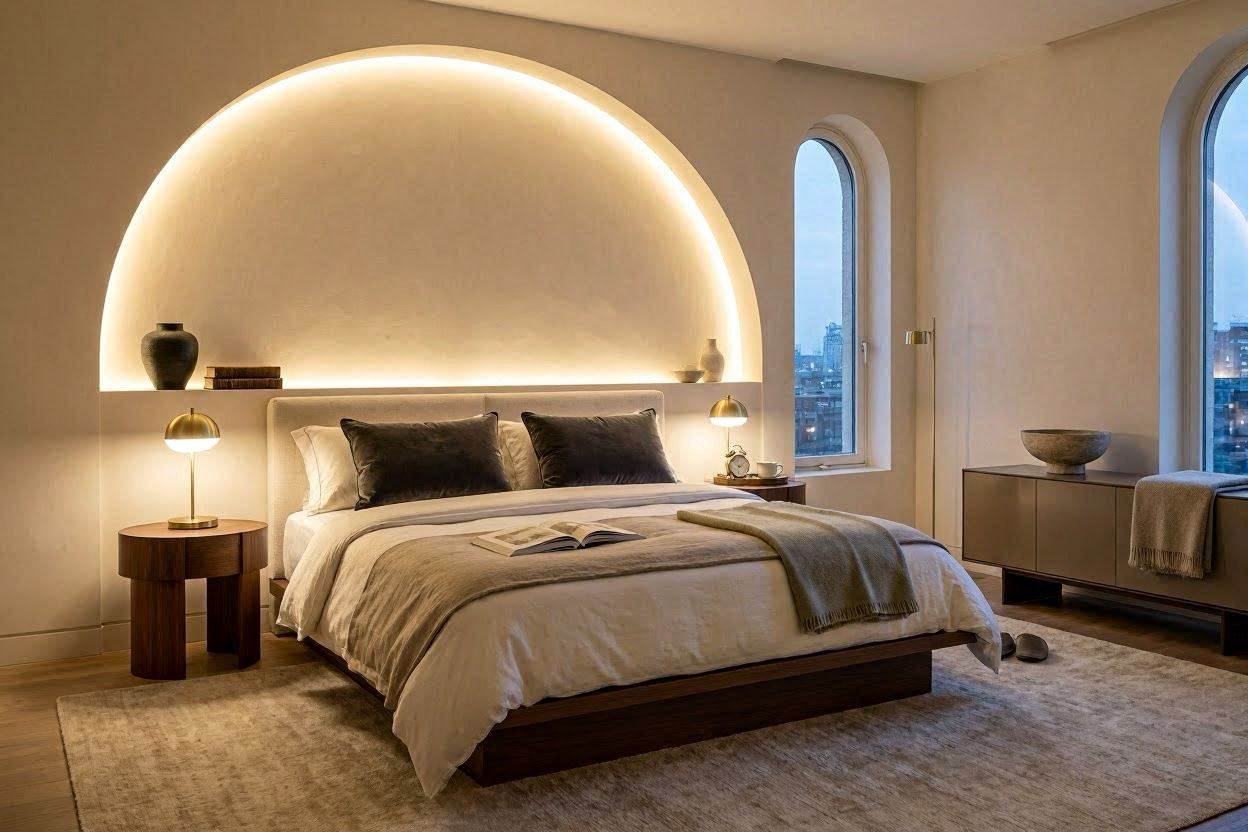
Archways carry an inherent sense of ceremony — they signal transition, importance, intention. But you don’t need load-bearing architecture to get the effect. Faux archways built from gypsum, contrasting wall materials, or even panel molding can achieve the same emotional weight. Here, shallow bedside alcoves are carved and emphasized with reeded gypsum, while a center arch cradles a dreamy mural that shifts the entire mood of the room.
The principle: Arches don’t have to be structural. They’re a language of elegance that works in any material.
2. Earthy, Grounded, Alive
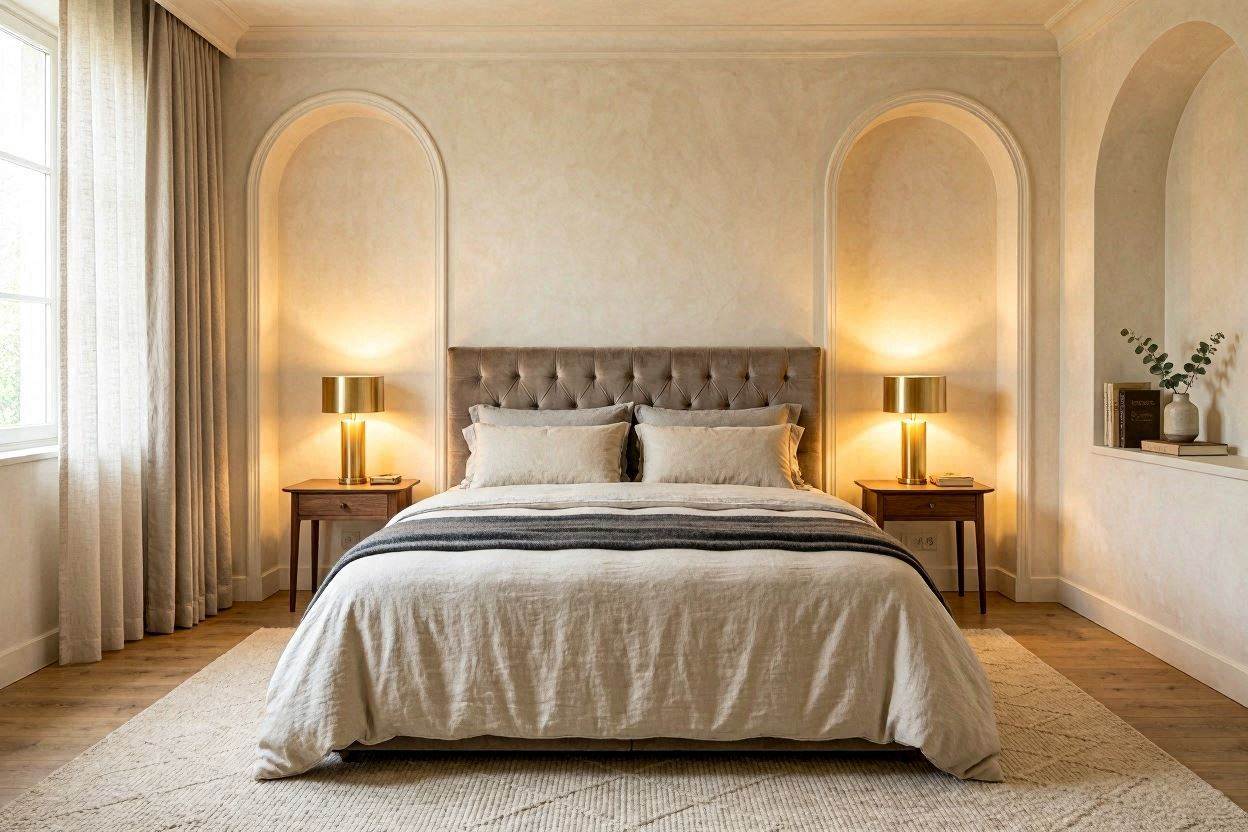
A textured wooden headboard. A solid wood accent table. A moss-green bedcover and area rug that whisper rather than shout. This design proves that “luxury” and “natural” aren’t opposites — they’re collaborators. Even in the densest cityscape, a bedroom rooted in organic materials feels like a retreat from everything wired and hurried.
The principle: Warm browns and muted greens create a palette that calms the nervous system. Start with wood, layer in green, let the texture do the talking.
3. Textured Cocoon Walls
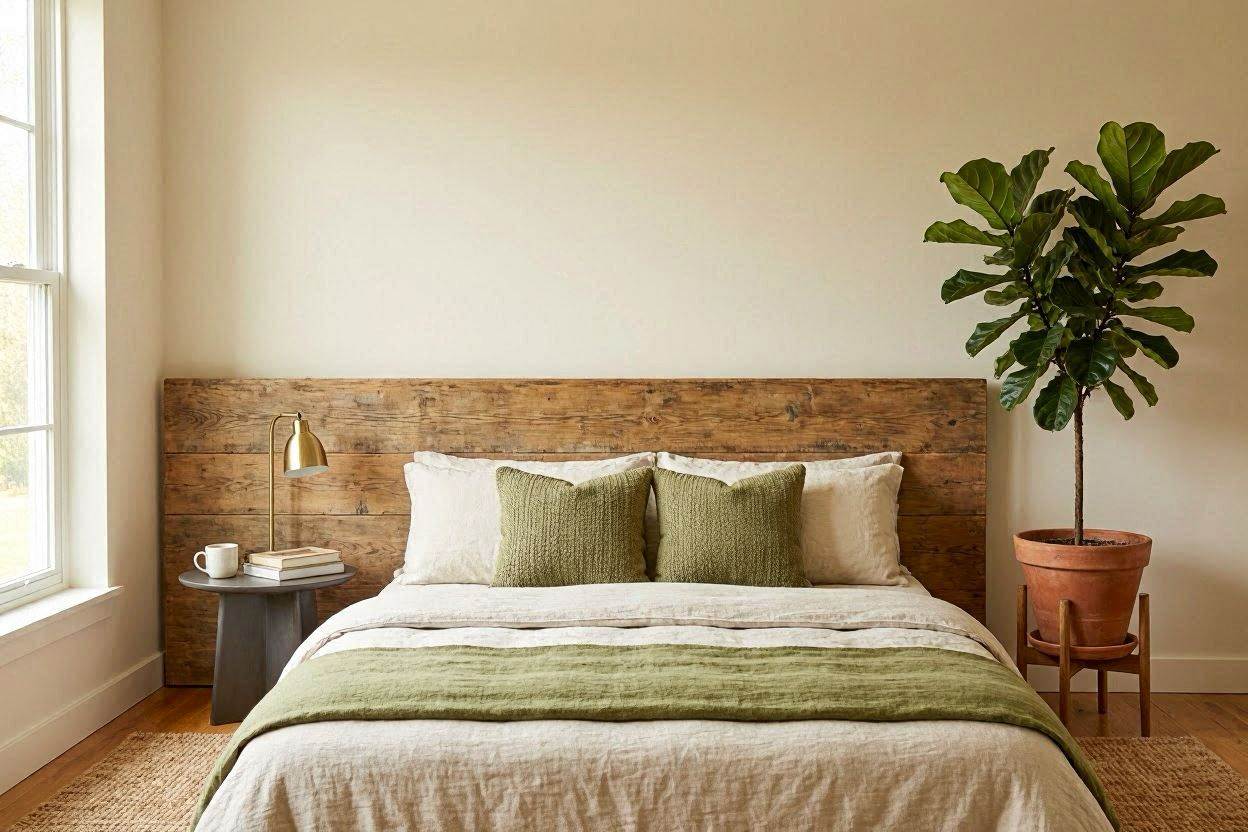
Modern homes can feel like boxes — clean, efficient, and emotionally flat. The antidote? Create your own architectural interest. A concave focal wall clad in wood-slatted panels wraps the headboard in a cocoon. Contradict the natural grain with a sleek black-gloss underlining band. Then give the whole composition a halo of LED perimeter lighting. The result: a room that feels designed, not just decorated.
The principle: Texture and curvature compensate for architecture. Add one dramatic focal element and let everything else support it.
4. Beautiful Asymmetry
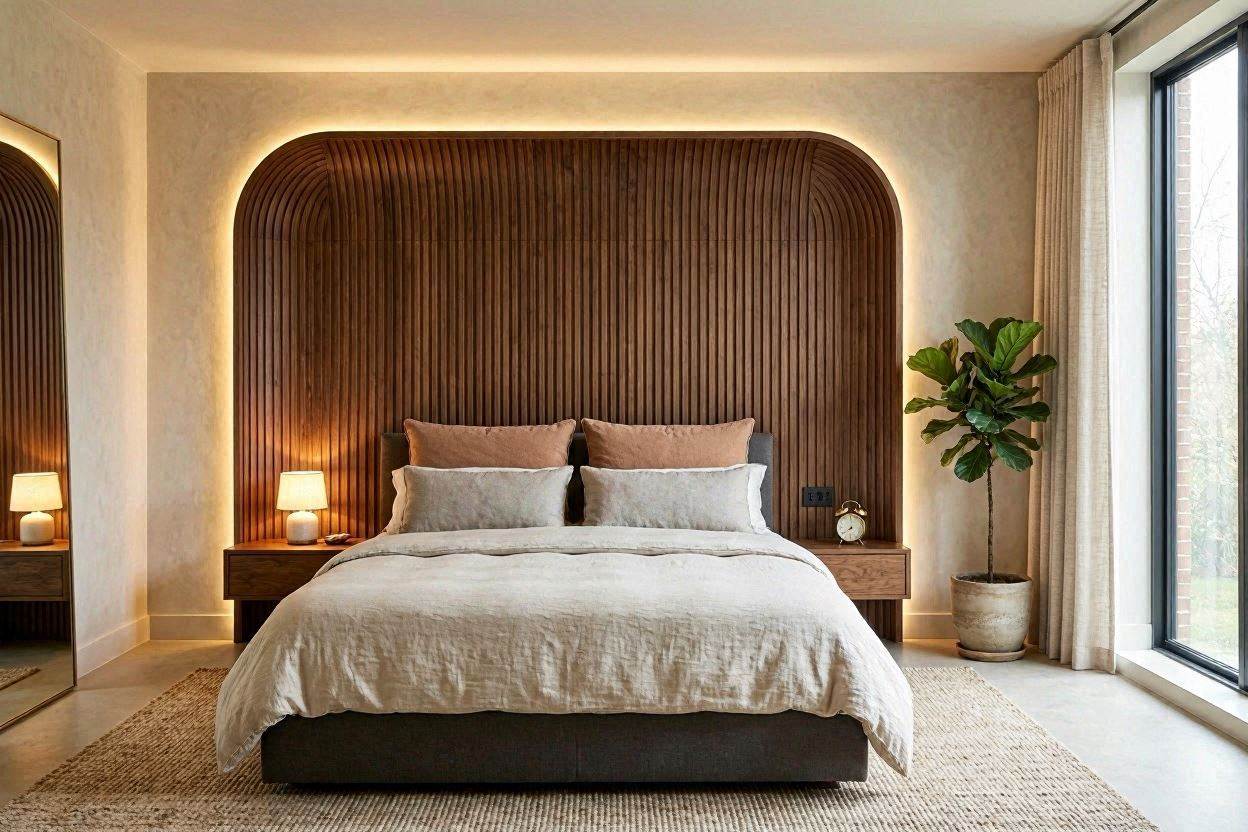
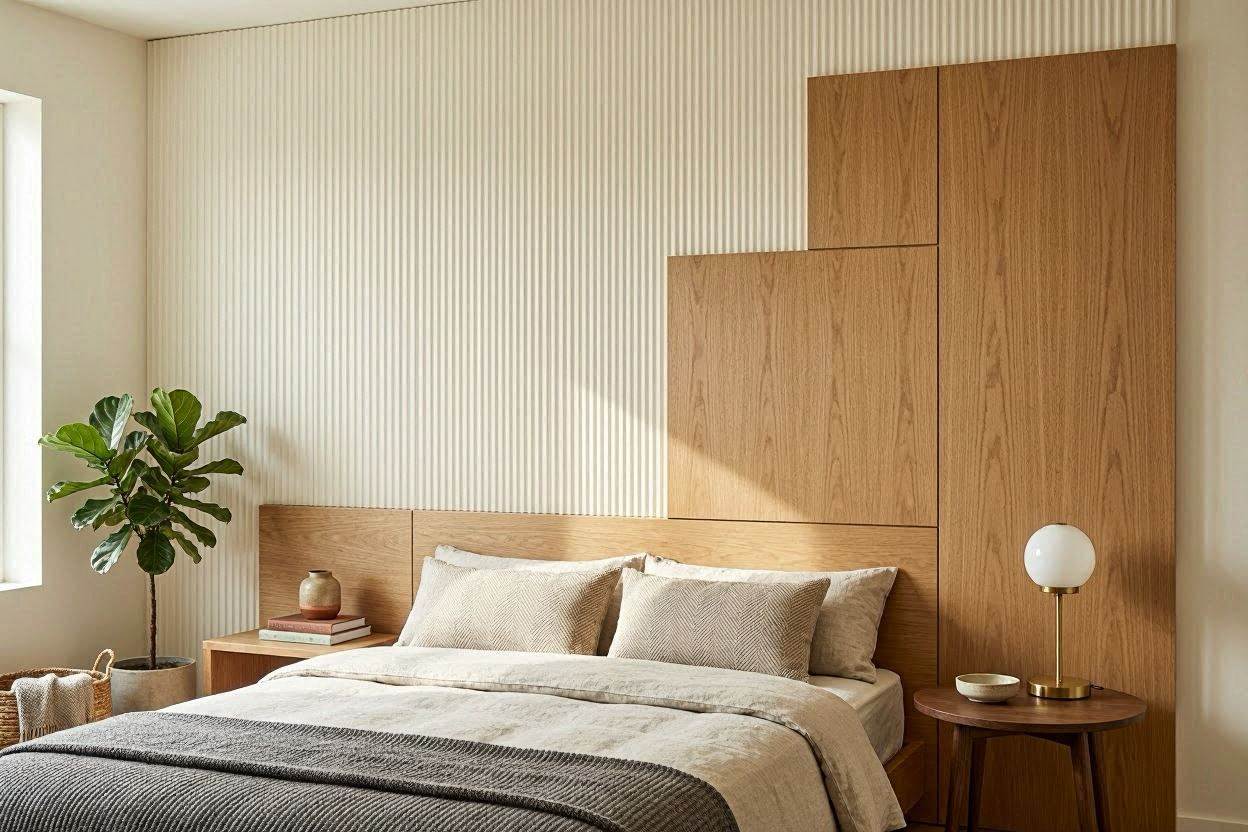
Symmetry is safe. Asymmetry is alive. Instead of matching nightstands, identical lamps, and a mirror-perfect focal wall, this design lets reeded gypsum share the stage with extruded wooden paneling. The bedside pendants are similar but not identical. The nightstands are distinct. The result feels collected over time rather than bought in an afternoon.
The principle: One matched element (like color temperature or material family) is enough to hold asymmetry together. Let the rest breathe.
5. The Bedroom Lounge
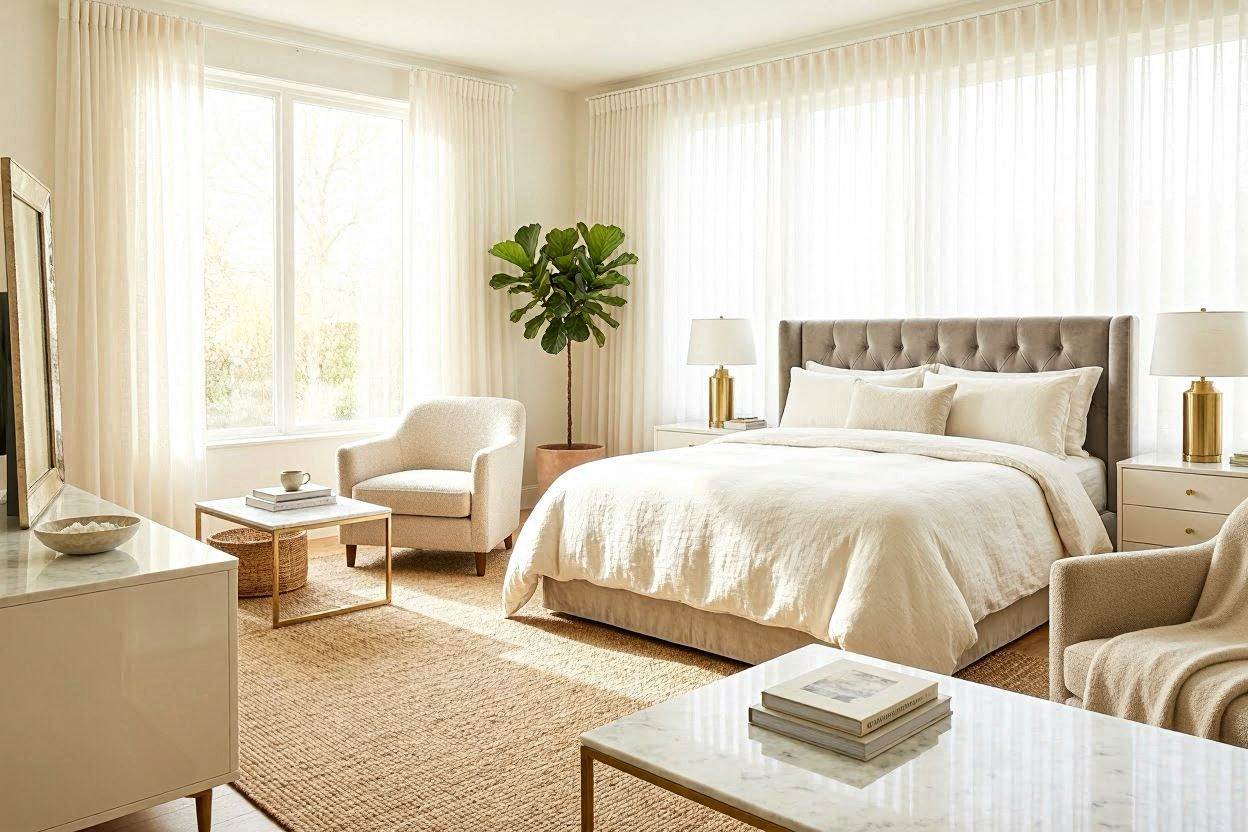
If your bedroom is large enough to feel sparse, a dedicated lounge area transforms it from “sleeping quarters” into a private suite. Define zones with area rugs. Add a coffee table for morning ritual — your espresso, your current read, a floral centerpiece. A footstool for the seating invites you to stay longer. The bedroom stops being a place you leave and becomes a place you linger.
The principle: Zoning through rugs and furniture turns a bedroom into a suite. The lounge area says “I choose to be here,” not “I’m stuck in bed.”
6. Rustic Meets Refined
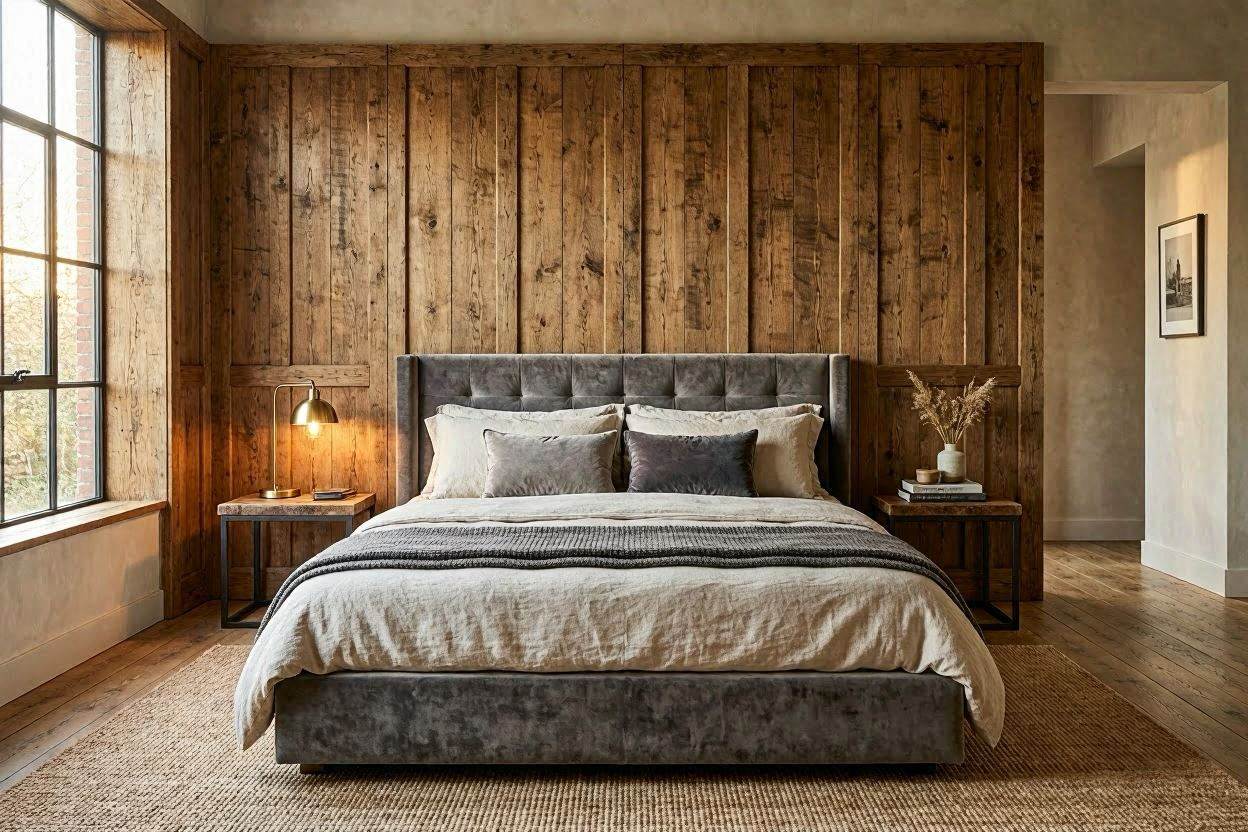
Chunky wooden wall paneling reads as cabin — until you pair it with a gray velvet bed, sleek bedside units, and contemporary black pendants. Suddenly it reads as heritage luxury. Round mirrors against the warm timber double the garden views and add a soft geometry that keeps the rustic from becoming rough. This is the alchemy: raw material plus polished form equals depth.
The principle: Rustic needs refinement to feel intentional, not accidental. Balance every rough texture with a sleek counterpart.
7. White-on-White Depth
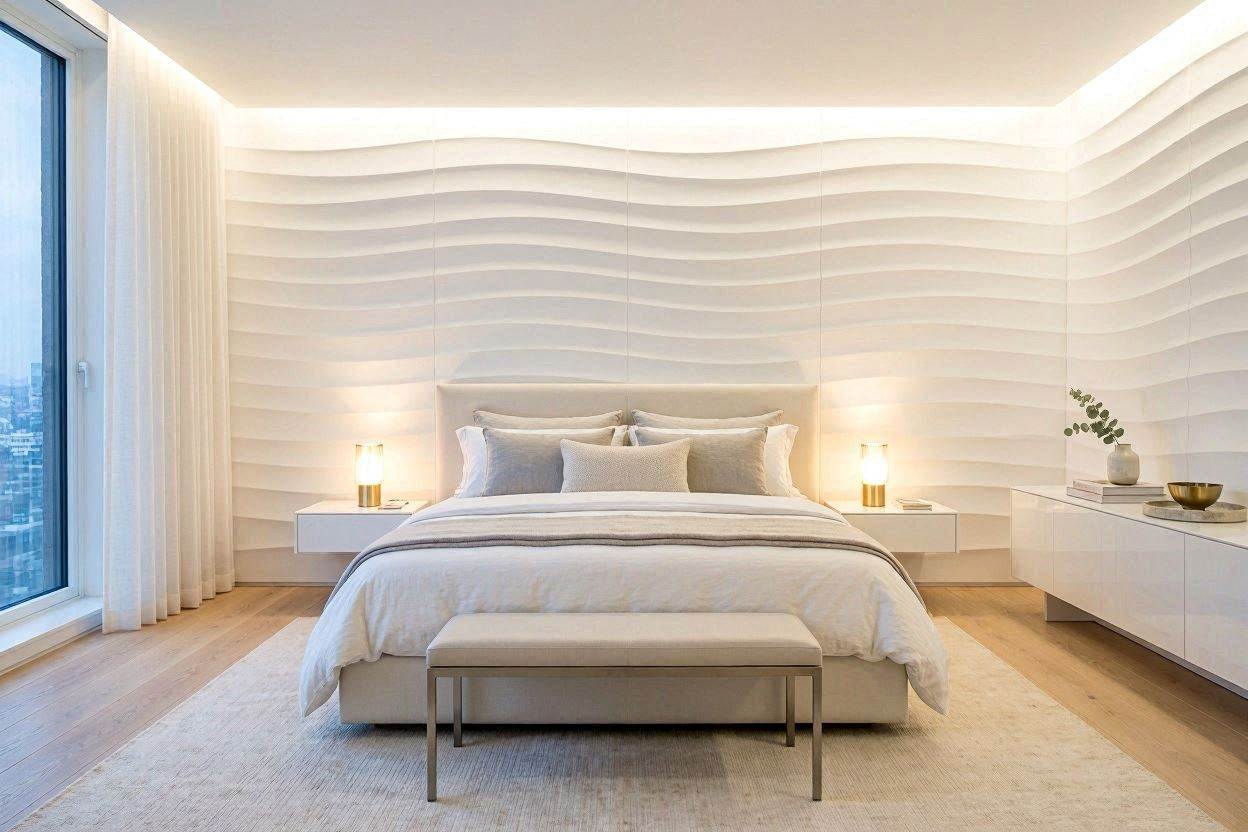
An all-white bedroom sounds flat until you’ve lived in one built by someone who understands texture. Here, contoured wall panels press an organic, sculptural essence into the space. Concealed mood lighting dramatizes every curve. The perimeter glow extends across drapes and voiles, wrapping the room in atmospheric warmth that a flat white surface could never achieve alone.
The principle: Monochrome only works when texture does the heavy lifting. Add contour, add glow, add depth.
8. The Power of Sage
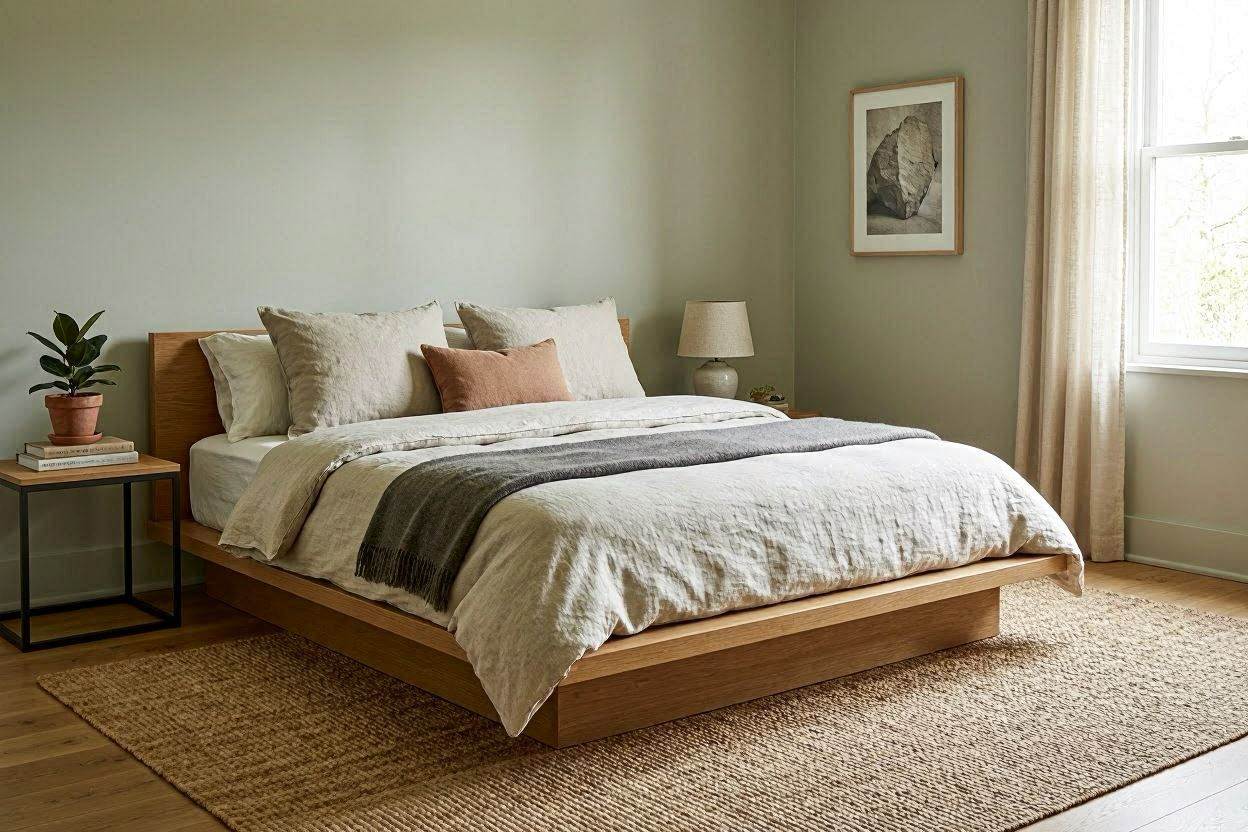
Minimal furniture. One deeply framed platform bed. Wall paint that perfectly color-matches the plush green upholstery. Landscape photography in sympathetic tones. Unique pendant lights that introduce organic form. Sometimes luxury isn’t about having more — it’s about choosing exactly enough and making every element belong to the same quiet conversation.
The principle: When the palette is restrained, precision matters. Every shade, every shape, every object must earn its place.
9. Neoclassical Grandeur, Modern Balance
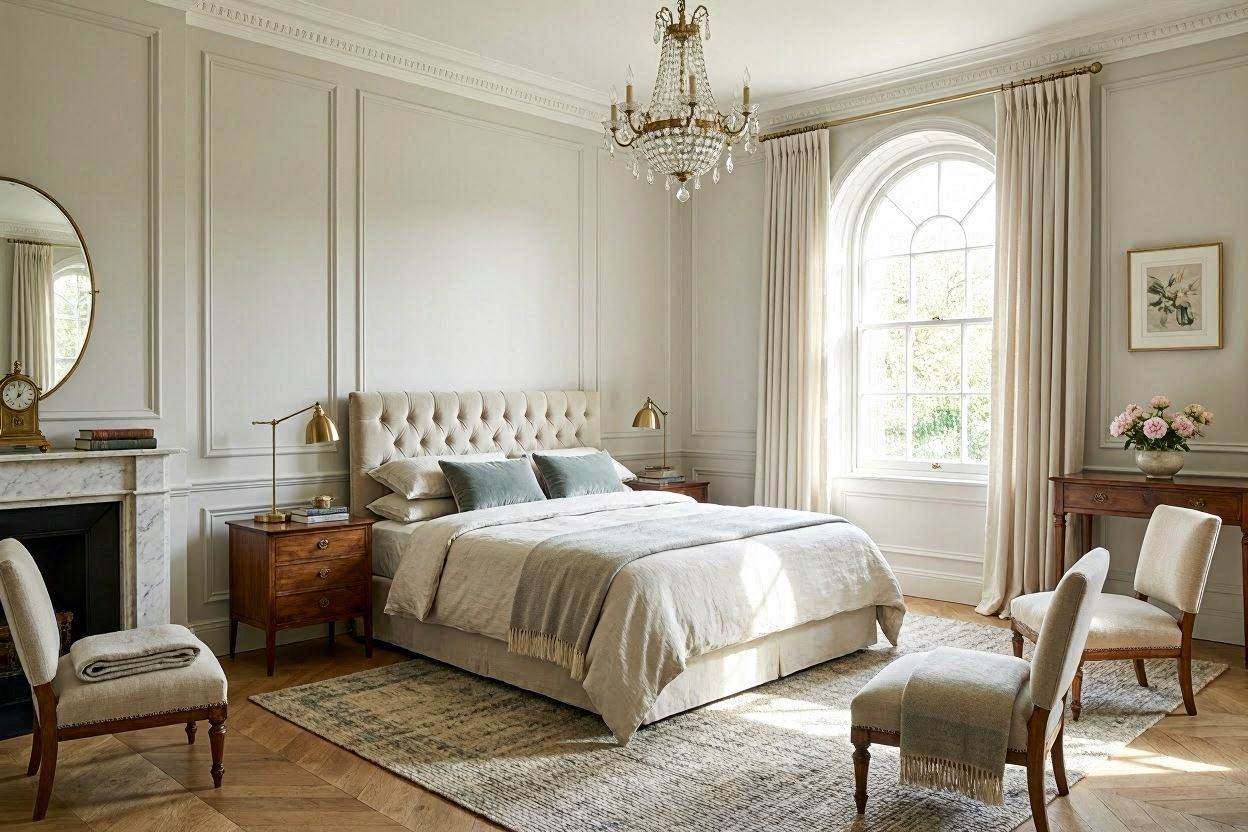
Classic panel molding across a tall headboard wall. Gracefully arched windows. A traditional ceiling rose. A stunning chandelier. These elements could easily slip into period-piece cosplay — but the moment you introduce abstract contemporary art, minimalist furniture silhouettes, and a modern area rug, the room becomes current. It’s not a museum. It’s a home that knows its history and isn’t trapped by it.
The principle: Traditional architecture plus contemporary furnishings creates timelessness. Neither era dominates.
10. Full-Width Headboards
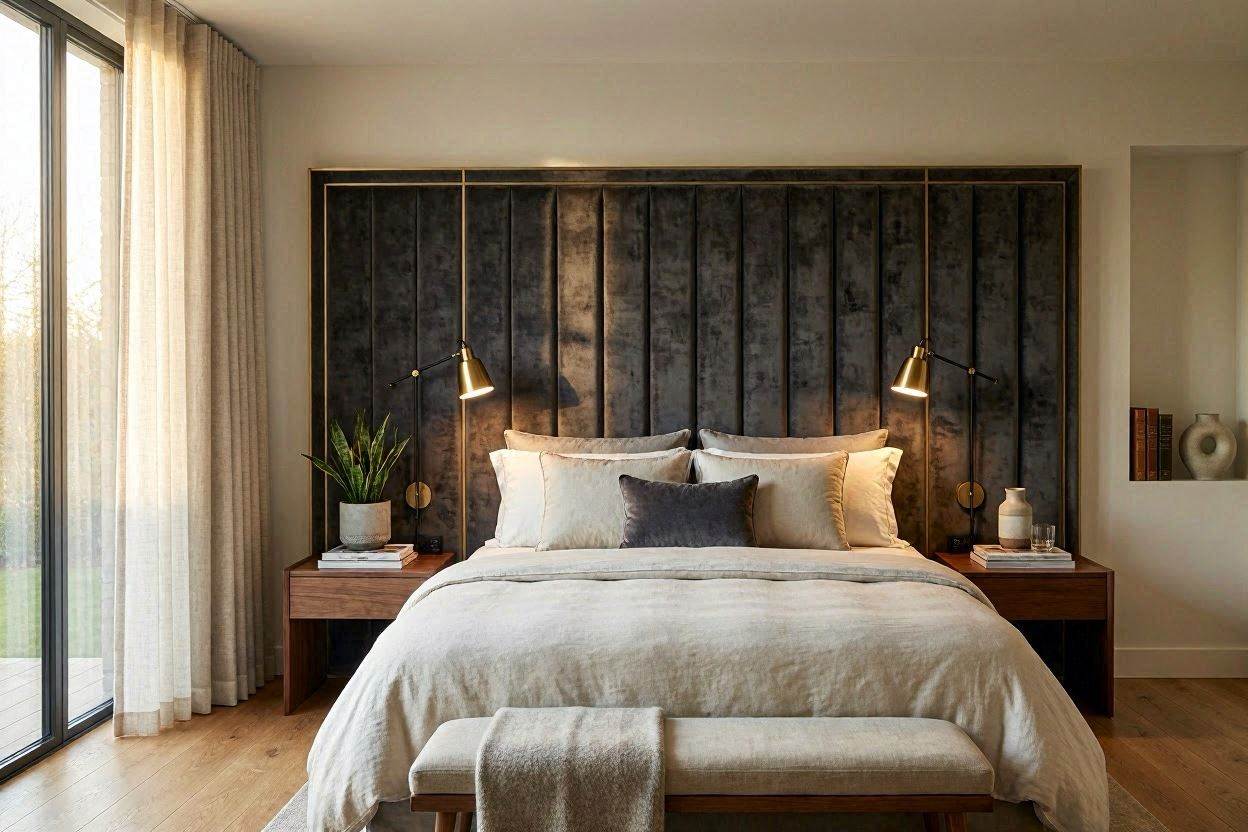
A headboard that stretches the entire width of the bedroom eliminates the visual gap between bed and wall, creating a seamless bespoke aesthetic. This design goes further: overlapping wood grain and gray upholstery build a layered focal point that gives the room depth. Two pendant lights of different designs echo the layered approach overhead.
The principle: A full-width headboard transforms the bed from furniture into architecture. It’s the single most impactful bedroom upgrade you can make.
11. Tufted Headboard Walls
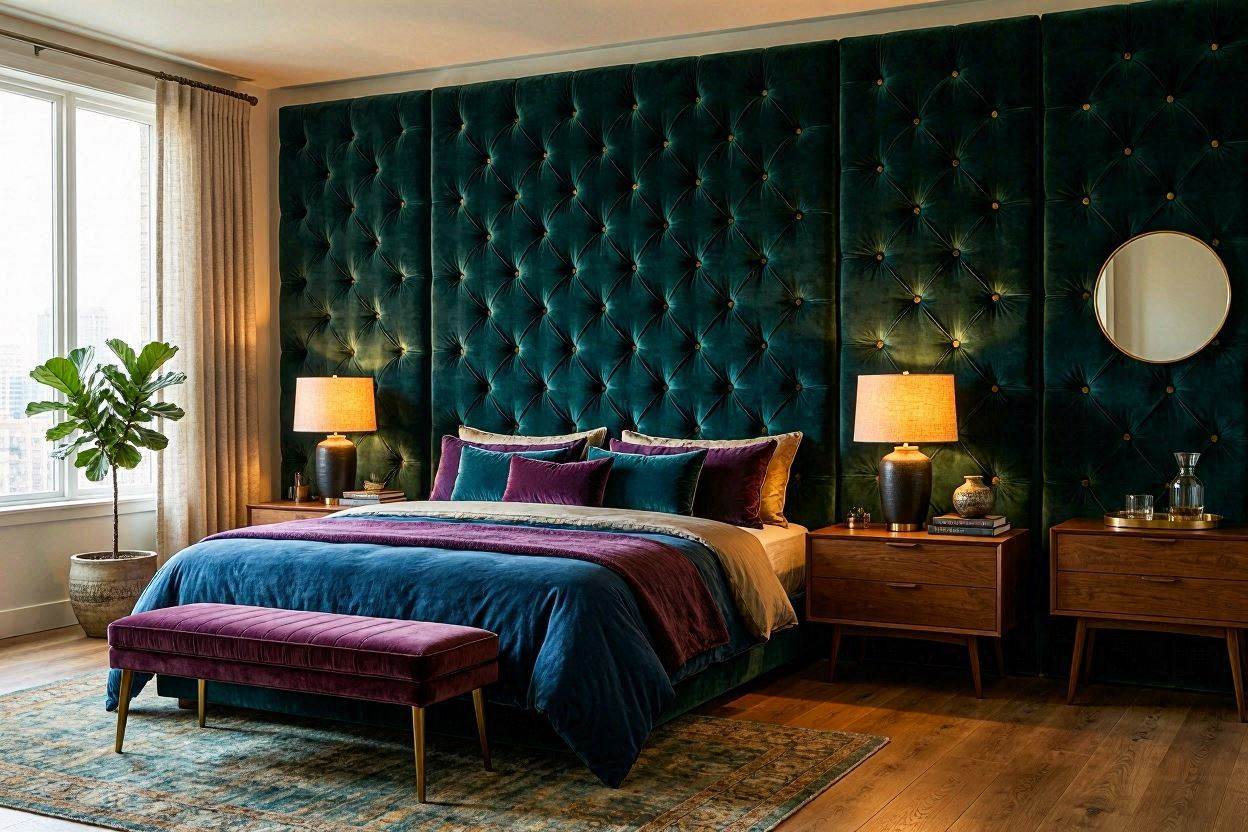
Channel tufting. Biscuit tufting. Diamond tufting. Each technique adds its own rhythm to a headboard focal wall. Taking the upholstered treatment right to the ceiling line creates an enveloping effect — the room literally wraps around you in softness. Frame the fabric with a deep wooden border and flank it with slatted panels, and you have textural juxtaposition that rewards a second look.
The principle: Tufting isn’t decoration — it’s architecture in fabric. The technique you choose dictates the mood: channel for streamlined, diamond for traditional opulence.
12. Mirrored Panels That Multiply Light
Rooms starved of natural light need more than lamps — they need physics. Custom-cut mirror panels, whether wide full-length installations behind bedside tables or thin slivers between decorative wall panels, multiply every photon that enters. The bedroom appears lighter, larger, more open. It’s the oldest trick in the designer’s book, and it still outperforms any smart bulb.
The principle: Reflective surfaces are light multiplication. Use them strategically in dark rooms before reaching for artificial solutions.
13. The Glass-Enclosed Suite
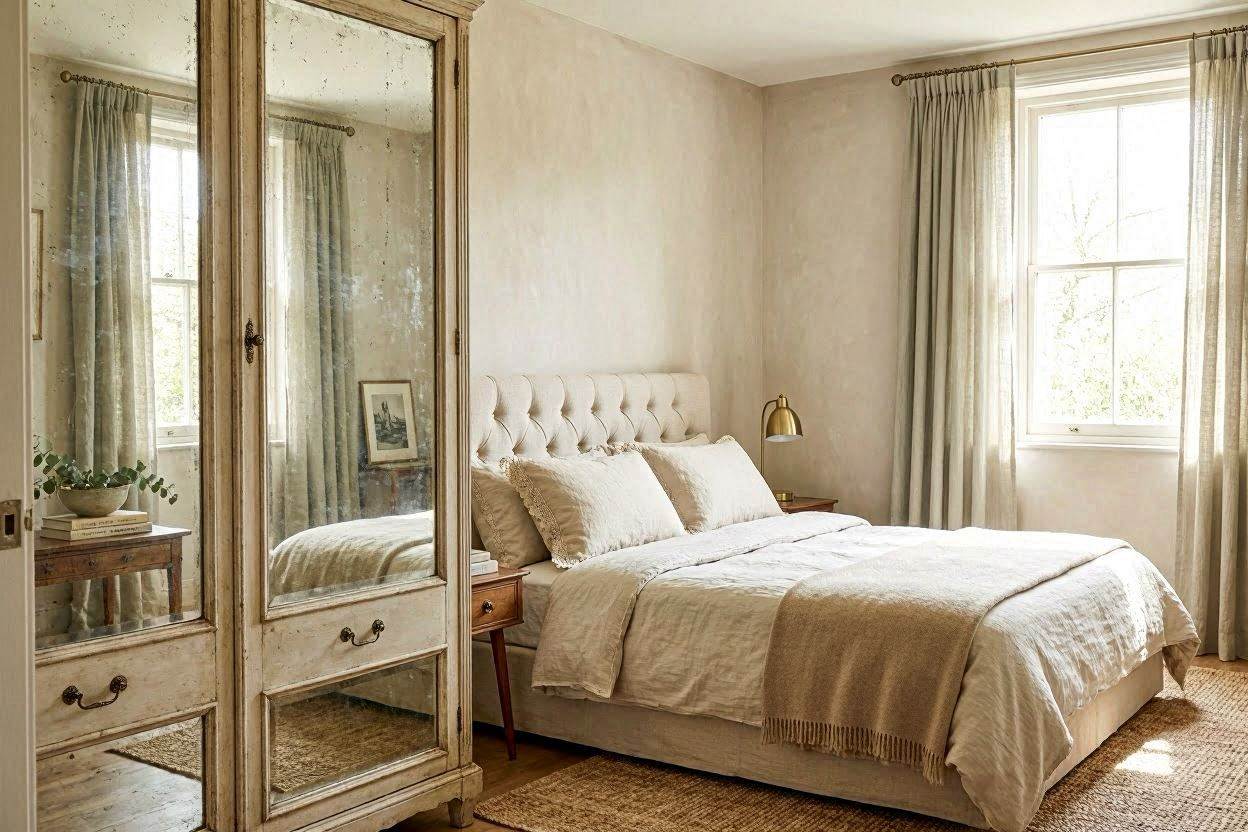
Who said ensuite walls need to be solid? A glazed partition between the sleep space and the bathroom doubles the sense of volume. Both rooms drink in natural light they’d otherwise lose. Here, the bright white glass-walled bathroom becomes a headboard feature wall for the dark, wood-clad bedroom. A biscuit-tufted platform bed plays textural counterpoint to the extruded bathroom tiles. Bold? Yes. Worth it? Every time.
The principle: Transparency creates perceived space. When privacy is needed, sheer curtains or switchable glass give you the best of both worlds.
14. The Stone Statement
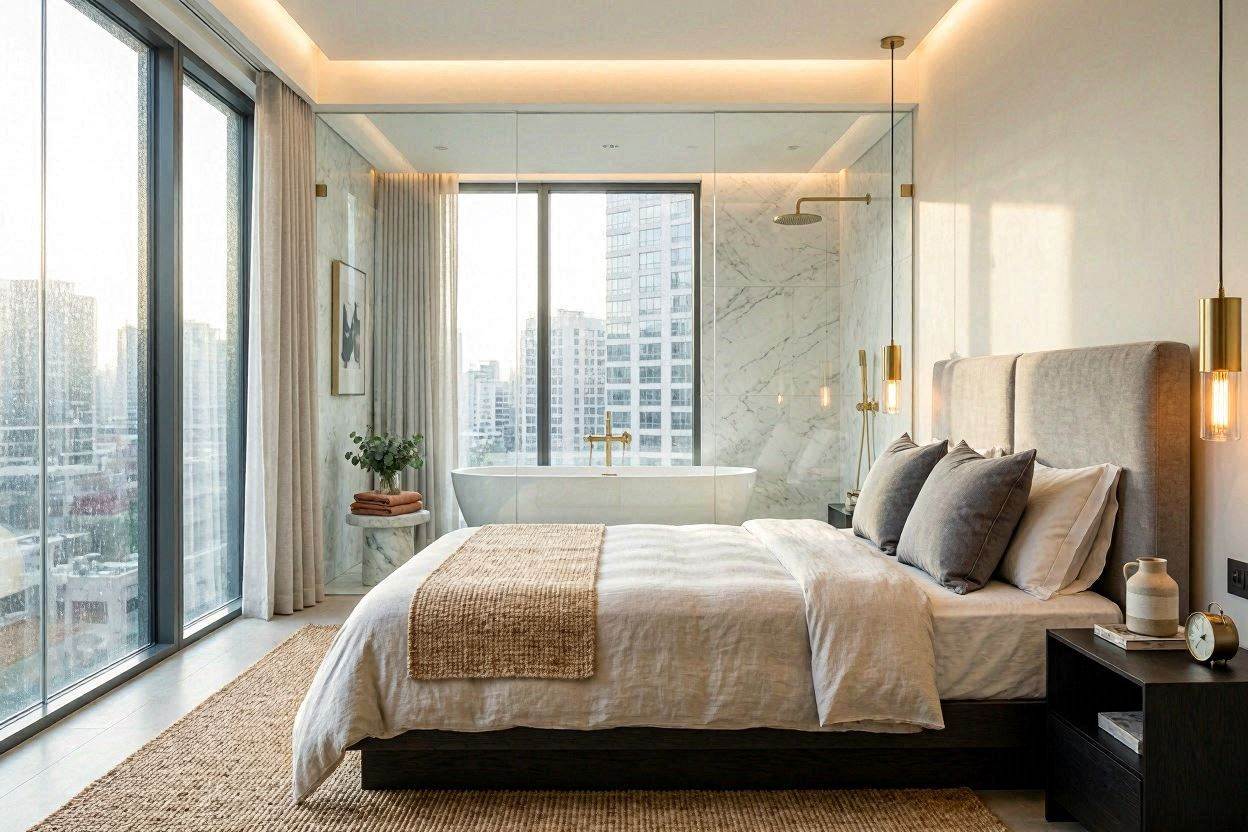
A rockface headboard wall commands attention through sheer natural drama — the rugged, irregular surface against soft textiles creates a tension that no manufactured material can replicate. Organic stone tones complement neutral palettes and wooden elements effortlessly. The trick is illumination: a frame of LED strips ensures the texture reads as beauty, not darkness.
The principle: Natural stone is the ultimate texture. It demands proper lighting to sing. Without it, drama becomes gloom.
15. Layered Lighting Design
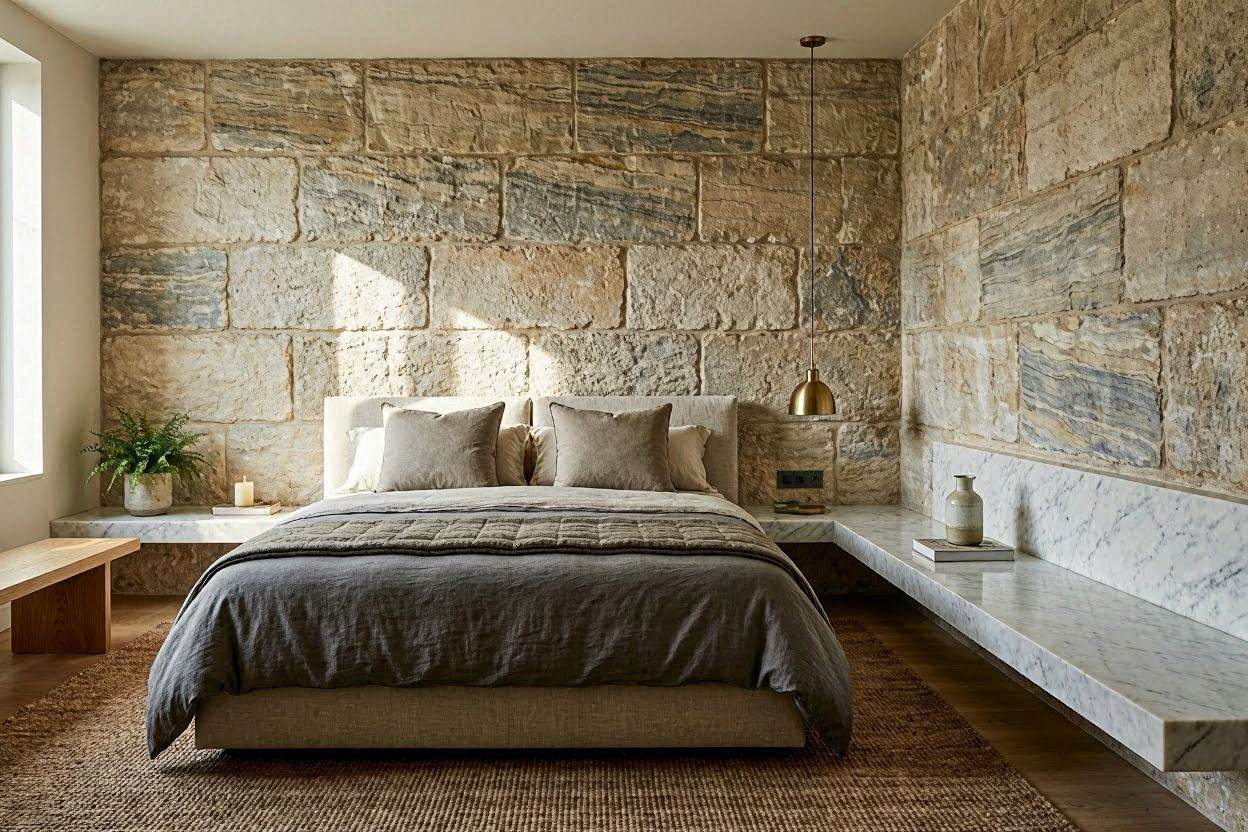
A tall upholstered headboard overlaid with a duo of modern chandeliers. The opposite bedside lit by floor lamps of differing heights. A ribbon of LEDs completing the atmospheric glow. This room understands that luxury isn’t a single light source — it’s layers: ambient for the room, task for the function, accent for the drama. Three minimum. Five is better.
The principle: One overhead light is the enemy of luxury. Layer your sources, vary your heights, control them independently.
16. Living With Botanicals
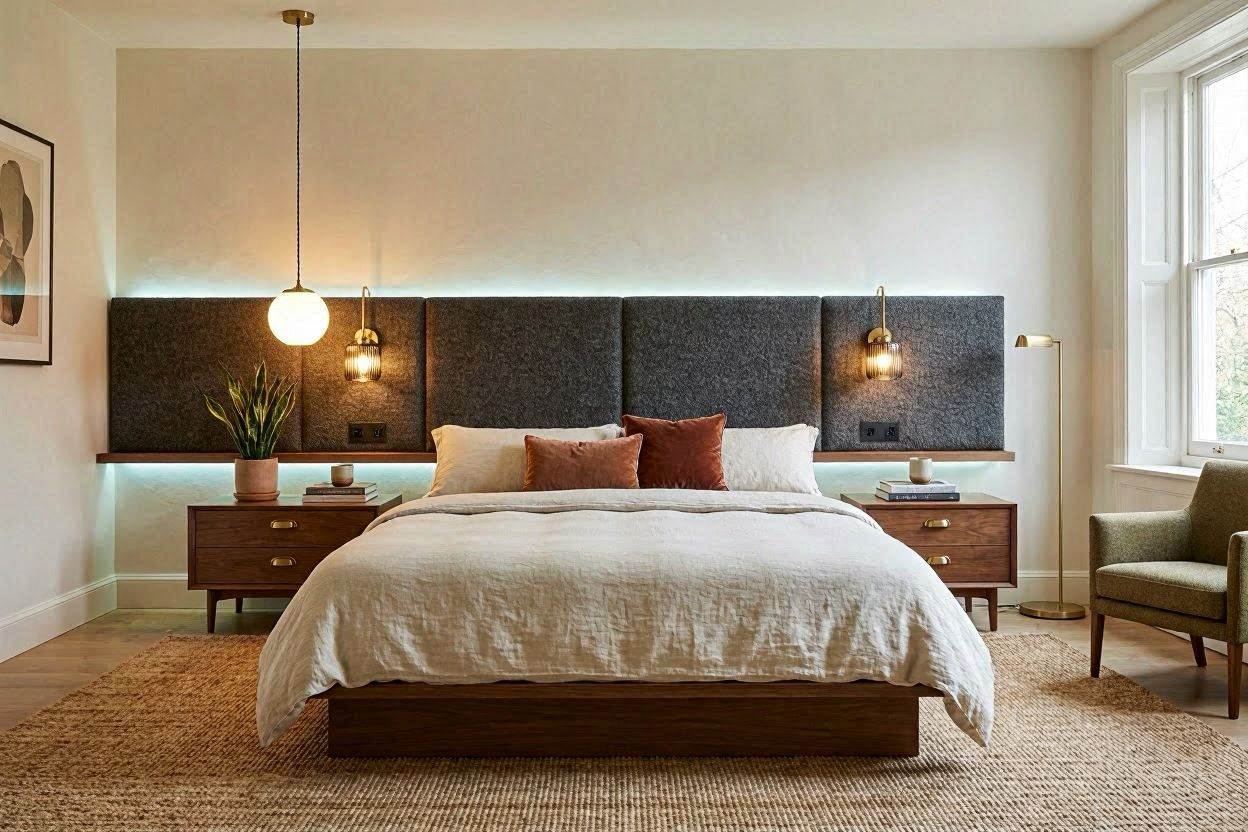
Botanical elements uplift the mood — it’s not just aesthetics, it’s biology. Rattan pendant lights over natural wood tables. Botanical artwork on the walls. Fresh flowers in decorative vases. An earthy brown accent palette in throws and cushions that grounds the green. You don’t need a garden view; you need to bring the garden in.
The principle: Plants and botanical motifs aren’t trends — they’re design constants. Incorporate them as deliberately as you would a piece of furniture.
17. Marble as Architecture
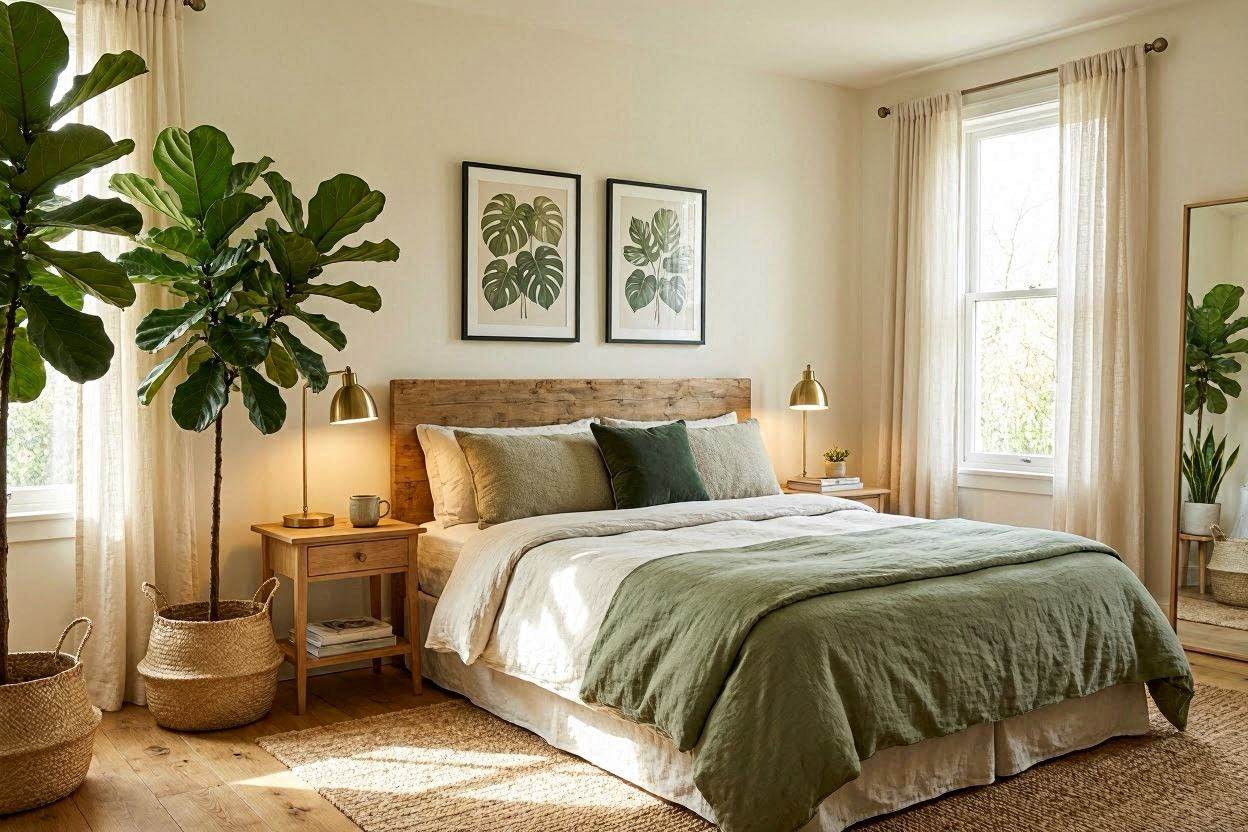
A black-veined white marble headboard slab doesn’t decorate a wall — it becomes one. Its cool, polished surface demands a warm counterpoint, here provided by a textile focal wall. A tall floor reading lamp beside the bed pulls the vertical layering together, drawing the eye from floor to ceiling. Marble is commitment, not compromise. It either dominates or it shouldn’t be there.
The principle: Marble works best when treated as architecture, not accessory. Give it wall-scale presence or leave it for the bathroom.
18. Floating Vanities
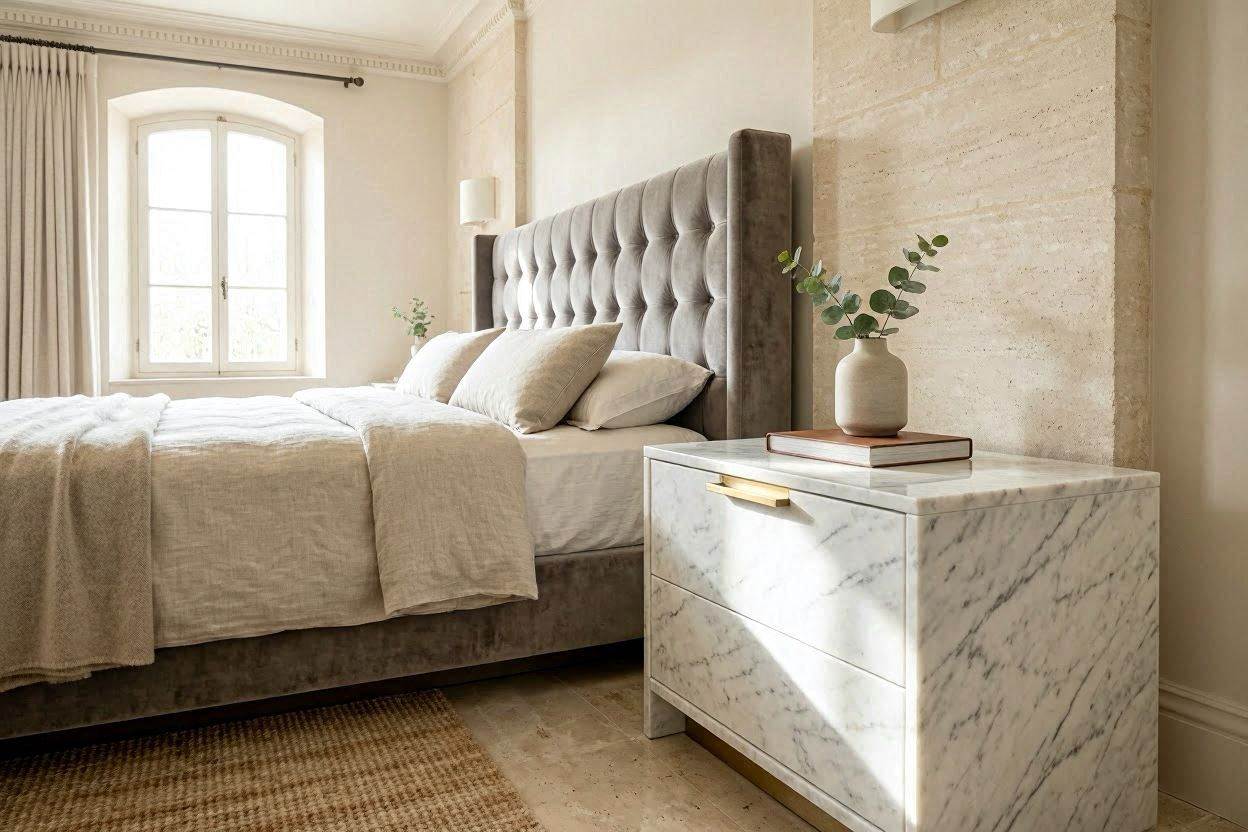
A vanity table needn’t squat on four legs. A wall-mounted design floats, making the floor space appear larger and the room feel cleaner. Install a full-length mirror behind to amplify the illusion. The absence of visible support reads as modern, deliberate, considered — exactly what luxury should feel like.
The principle: Remove visual weight wherever function allows. Floating pieces make rooms feel designed, not furnished.
19. The Backlit Mirror
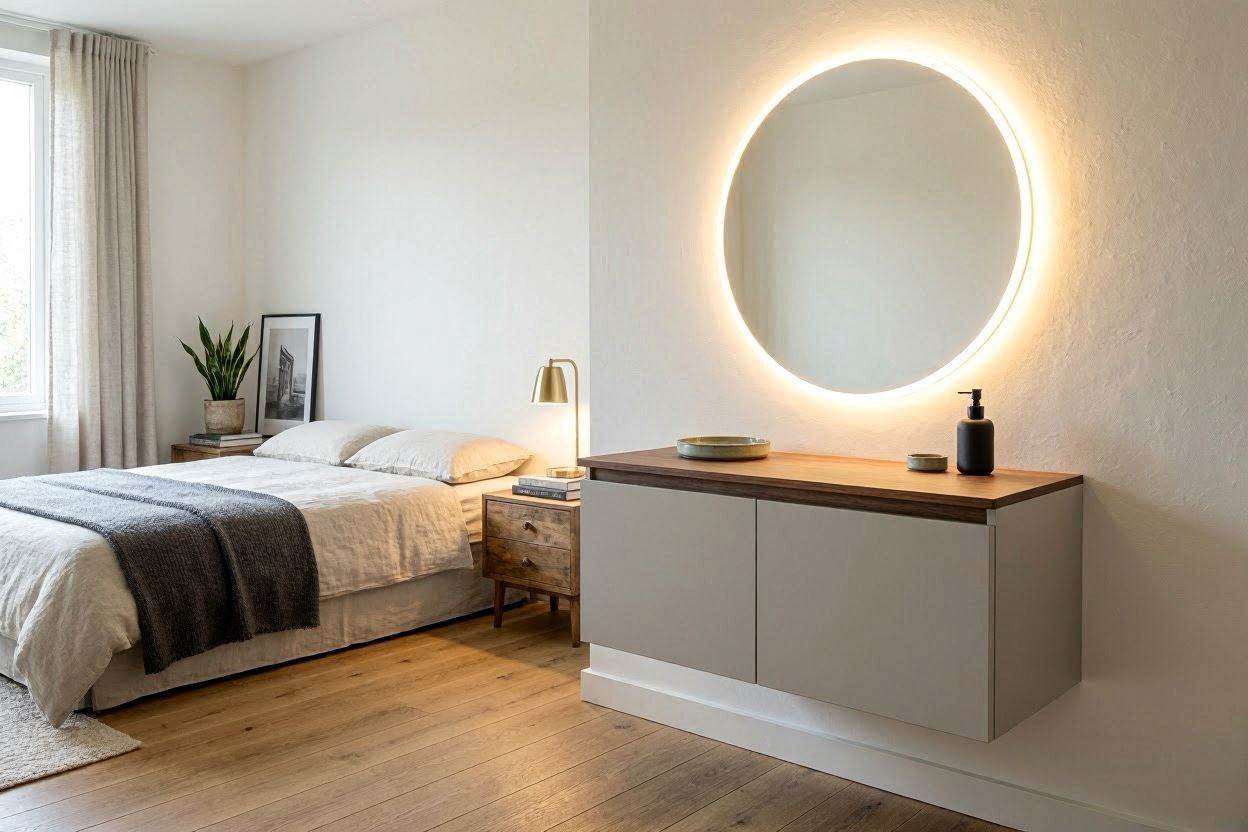
A backlit wall mirror draws attention to a vanity area while simultaneously adding mood lighting to the room. It doubles task illumination for the face and balances ambient light from a pendant on the opposite bedside. Where the vanity doubles as a bedside table, this single element solves two problems with elegance.
The principle: Illuminated mirrors are dual-function by nature. Use them at the intersection of task and atmosphere.
20. The Return of Bouclé
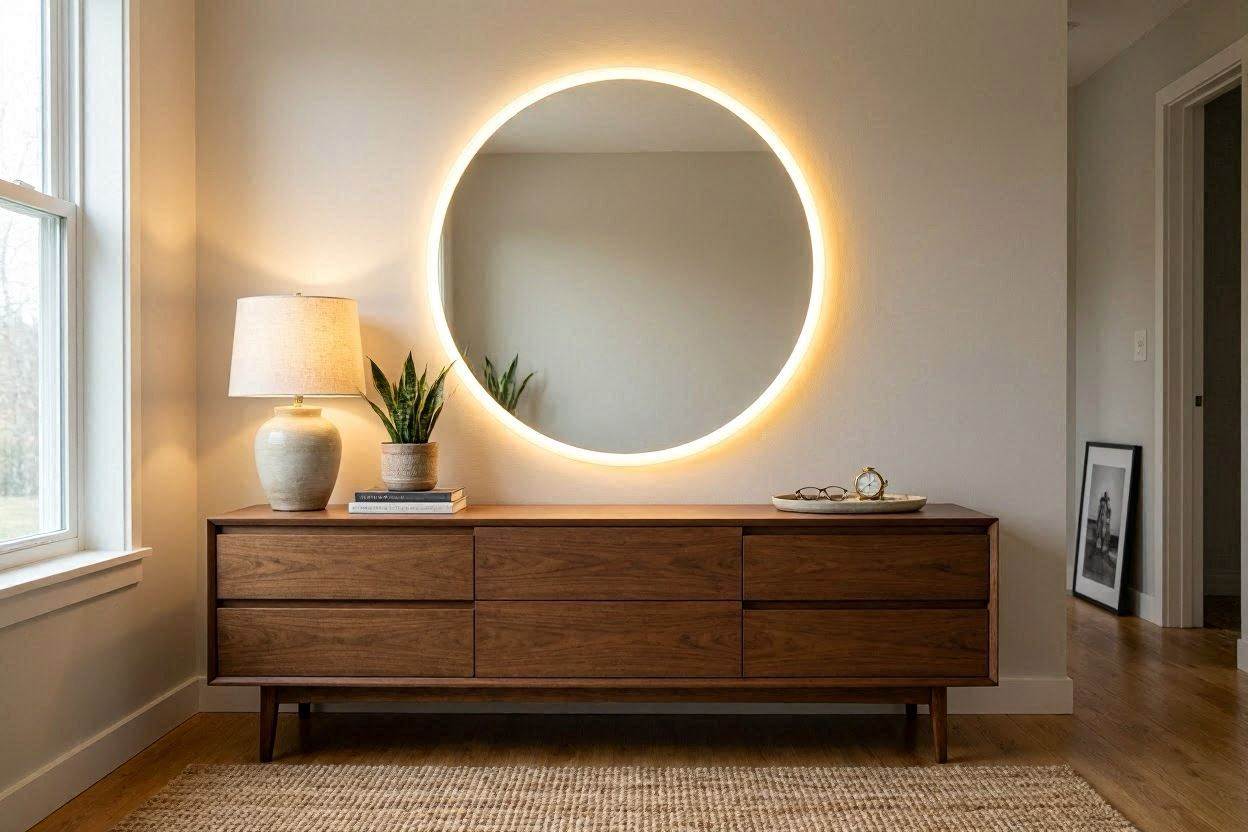
Bouclé has signaled luxury since Eero Saarinen and Florence Knoll wrapped their iconic creations in it, since Chanel sent it down catwalks. Its looped texture reads as softness, approachability, warmth. Bring it into the bedroom through a curved headboard or an end-of-bed bench. Here, an artistic wall installation behind the headboard quietly picks up the fabric’s intricate looping — a conversation between two surfaces.
The principle: Bouclé is the textile equivalent of a linen blazer: effortlessly elevated. Pair it with smooth surfaces for contrast that rewards touch.
21. Rugs That Anchor
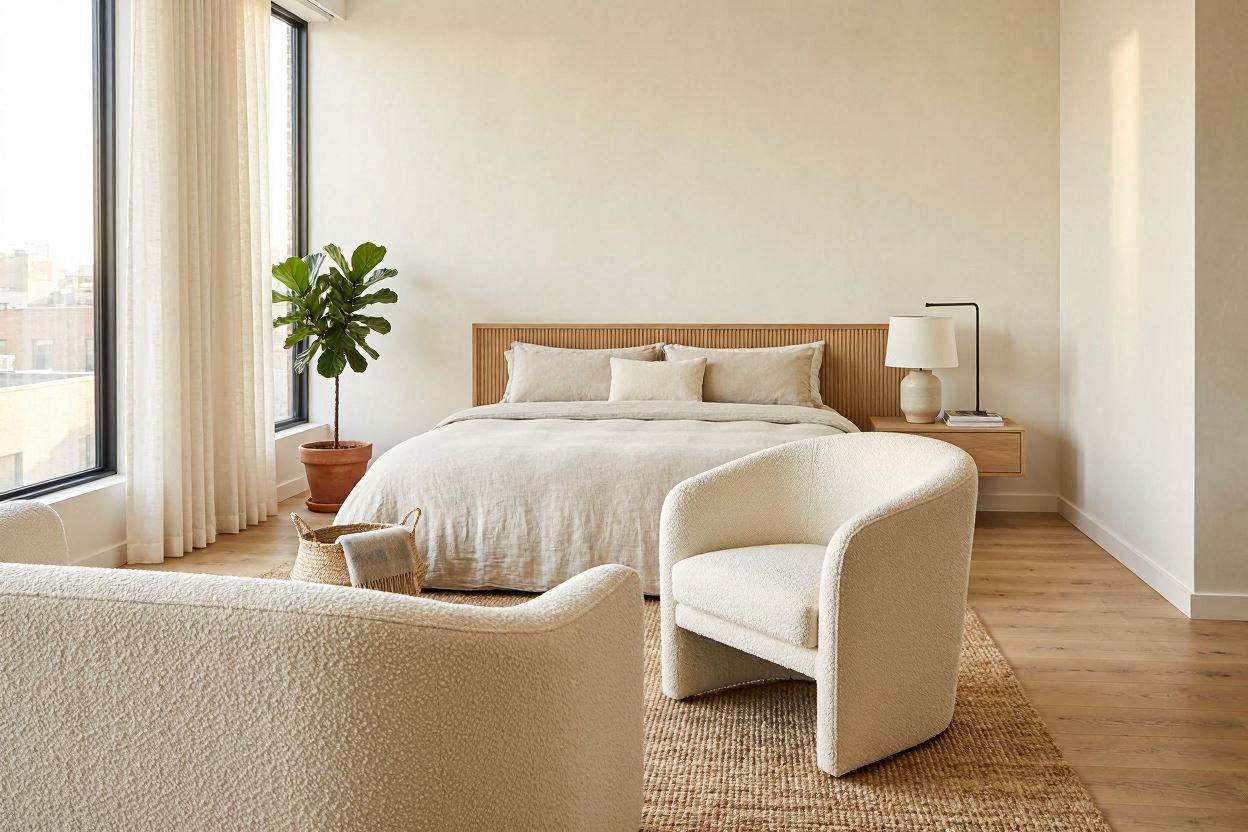
A statement rug isn’t floor covering — it’s a foundation. It anchors the room’s design, creates a focal point that ties together furniture and finishes, and adds personality through pattern or saturated color. This black and greige rug complements high-end pieces while merging the entire curation into a harmonious blend of comfort and intent.
The principle: Begin with the rug, not the bed. A well-chosen floor piece dictates the palette and personality of the entire room.
22. The Black Bedroom
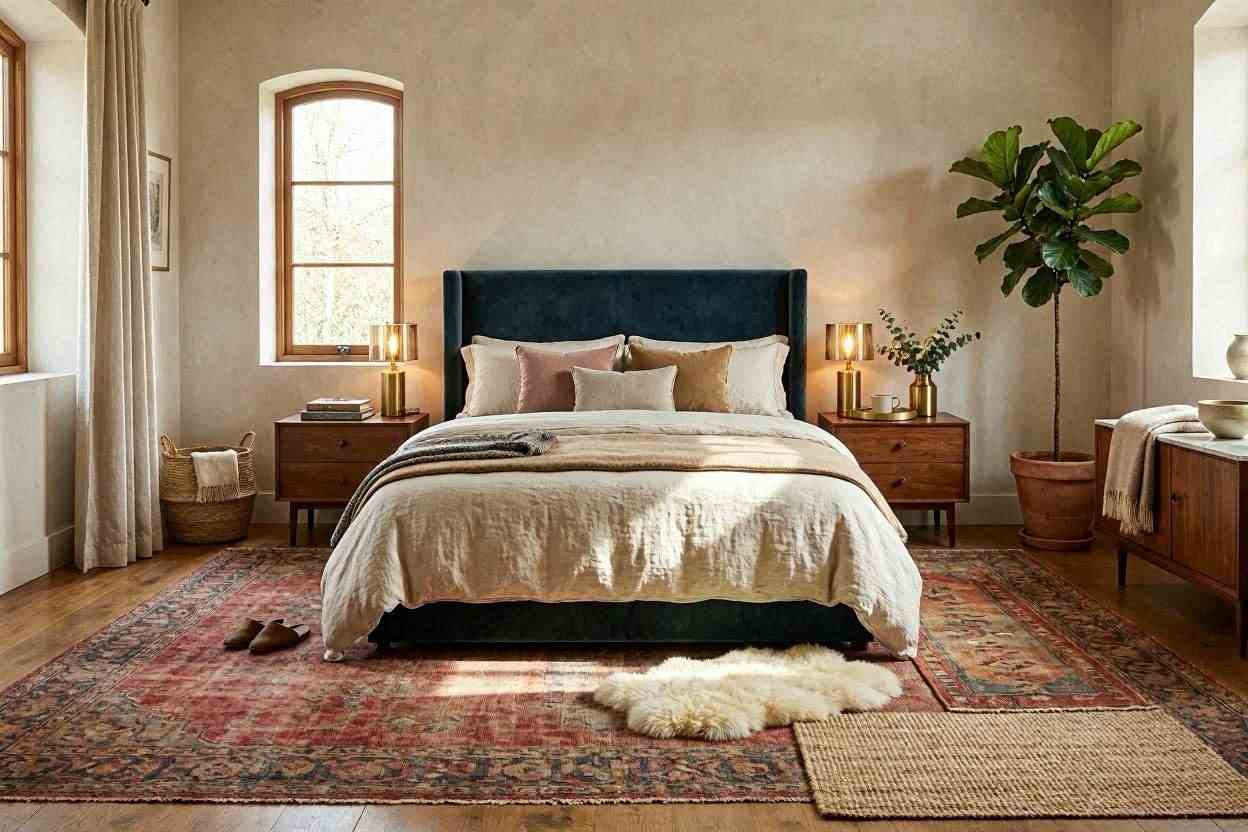
Blackout blinds help you sleep. A black bedroom is sleep. When every surface absorbs light rather than reflecting it, the room becomes a cocoon of darkness that no curtain alone can achieve. The key is discipline: every piece must promote comfort through simplicity while adhering strictly to the shadow palette. Stray into random color and the spell breaks.
The principle: A monochromatic dark room requires stricter curation than a bright one. Every object must justify its presence.
23. Layout Is Luxury
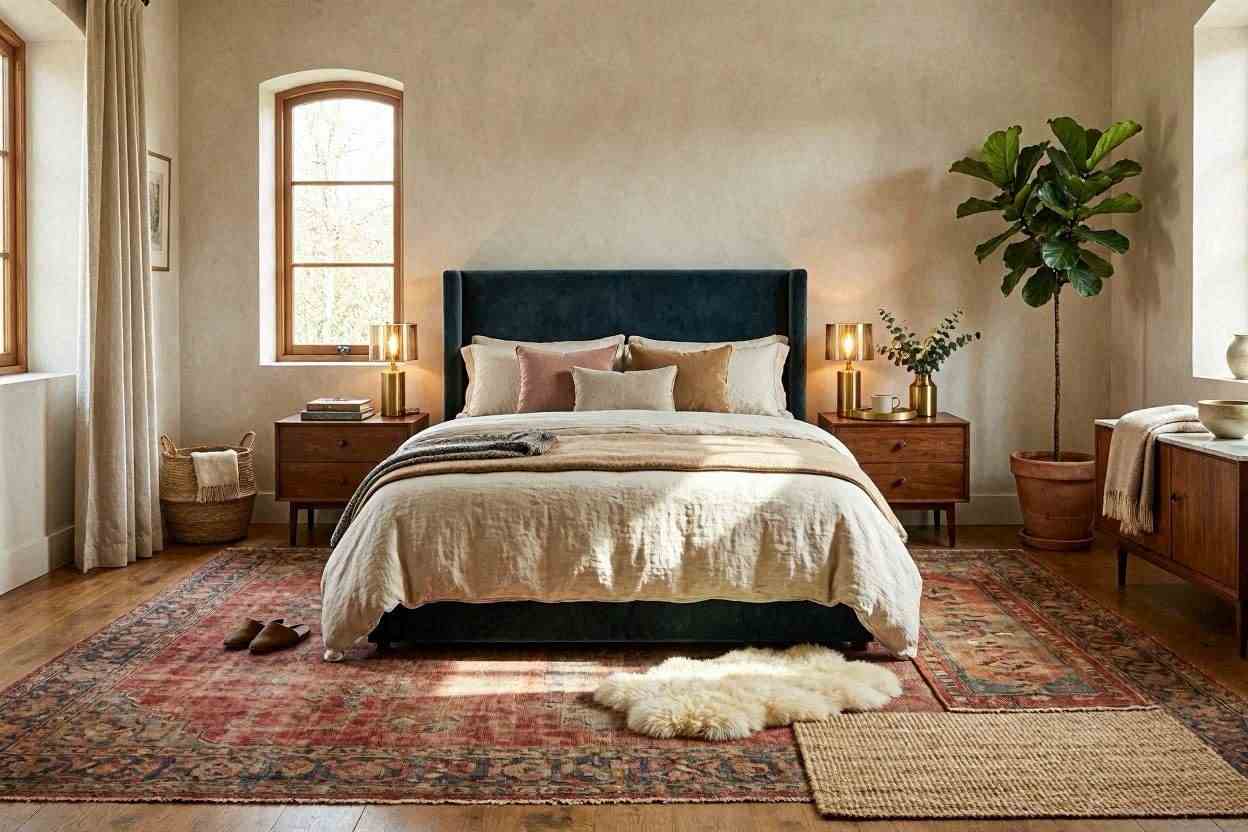
Do you need an end-of-bed bench for dressing or breakfast? A generous bedside table or just a slim shelf? A work nook, a vanity, a reading chair? Luxury isn’t square footage — it’s a layout that anticipates how you actually live. When your bedroom supports your routines seamlessly, you feel it. That feeling is the luxury.
The principle: Before choosing finishes, map your rituals. The layout that respects your habits will always feel richer than the one that merely looks good.
24. Iconic Silhouettes
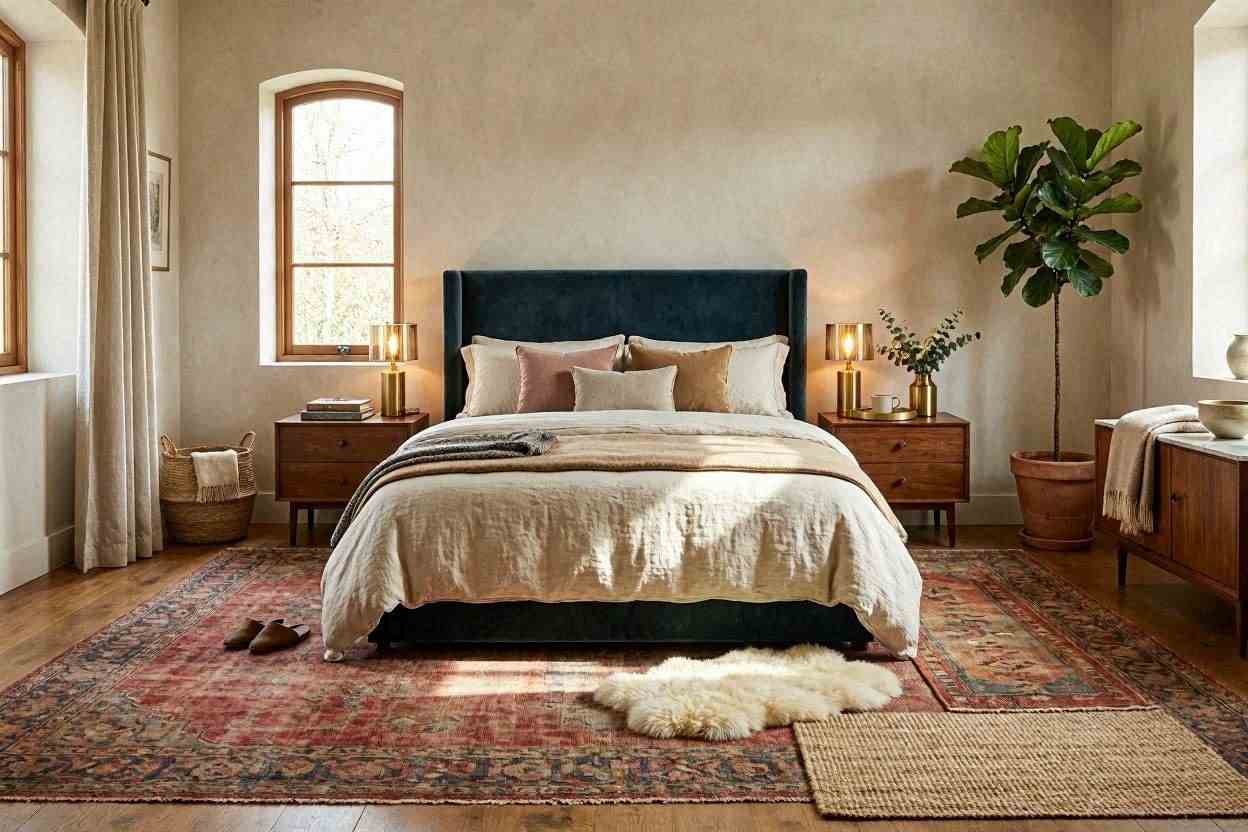
The bronze Atollo lamps. The magnificent circular chandelier. Neither is loud or garish — they simply carve out iconic silhouettes that the eye can’t ignore. When selecting bedroom furniture and lighting, go for shapes that speak to you — or choose designs that have already stood the test of time. The investment in one iconic piece pays aesthetic dividends for decades.
The principle: One iconic silhouette does more work than ten mediocre pieces. Invest in form, not quantity.
25. Embrace the Moody
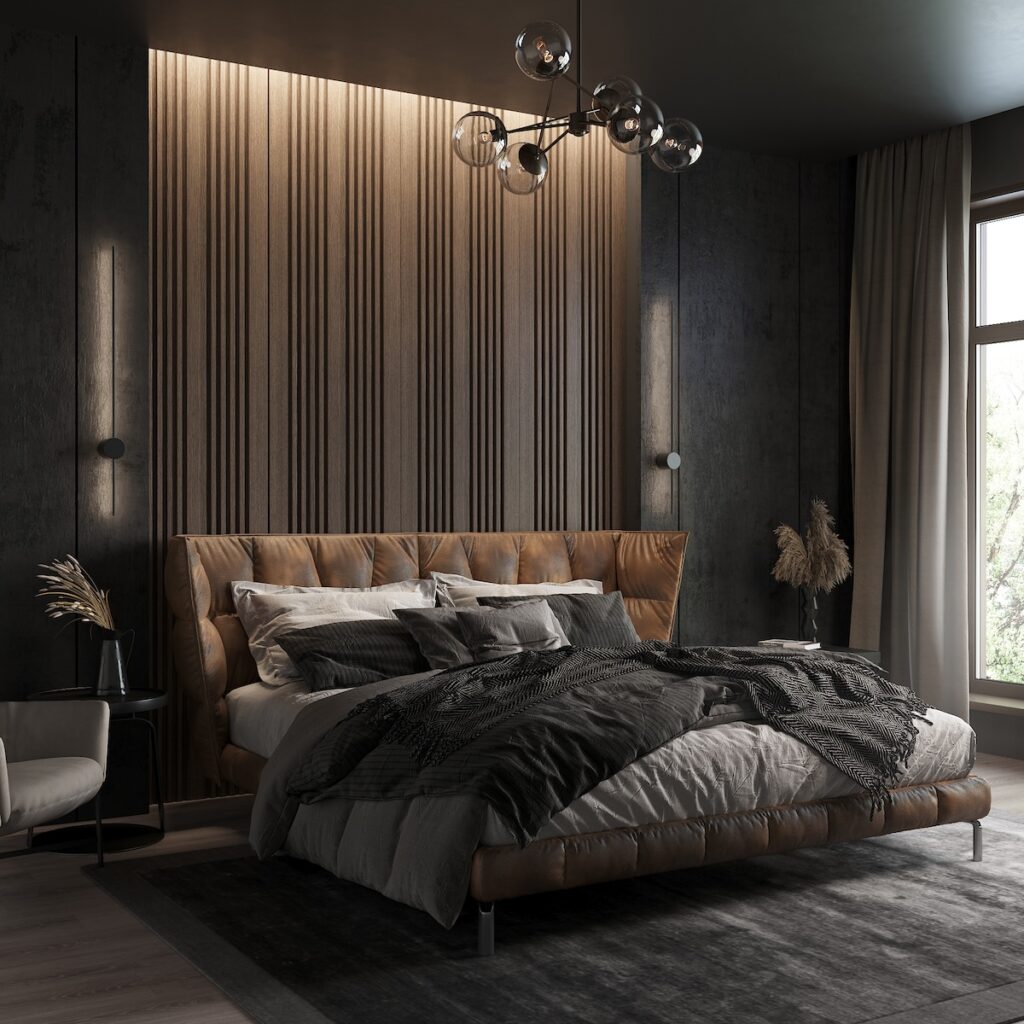
Black walls. A sophisticated brown faux-leather platform bed. Moody gray textiles. Two linear wall sconces subtly lighting the bedsides. A modern chandelier providing overhead brightness. This room is drama distilled — proof that atmosphere doesn’t require scale or splurge, just commitment. Lighting, again, is everything: without those sconces and chandelier, the room would be a cave. With them, it’s a sanctuary.
The principle: Moody rooms live and die by their lighting. Multiply your light sources, vary their heights, and control their warmth independently.
The through-line across all 25 ideas: luxury bedrooms aren’t built by spending more — they’re built by choosing with more intention. Whether you gravitate toward neoclassical elegance or modern minimalism, whether your palette is sage green or midnight black, the principles are universal: texture over flatness, layering over uniformity, intentionality over accumulation. Start with one element that speaks to you, and let every other decision serve it.