
Luxury without health is just decoration. You can assemble the most enviable wardrobe and curate a social calendar that would make a diplomat weep — but if your recovery is non-existent, your nutrition is an afterthought, and your fitness regime lives solely in the realm of good intentions, you are not living well. You are decorating a life you don’t have the energy to fully inhabit.
The paradox of modern wellness: never before have we had so many tools at our disposal, and never before has the gap between knowing and doing felt so wide. The information age delivered every protocol and training methodology to our screens — then left us to navigate the clutter alone. The result isn’t empowerment; it’s paralysis.
The answer isn’t more willpower. It’s better infrastructure. The people who sustain healthy lives aren’t the ones with the most discipline — they’re the ones with the most deliberate systems. The right app reduces the decision fatigue of every meal. The right wearable creates an ambient awareness that makes inactivity feel like an exception. The right recovery tool transforms a passive activity into something you actively look forward to.
What follows are nine categories of tools that make healthy living not just possible, but practical. Each category represents a friction point in the wellness journey, and the tools within it dissolve that friction. Together, they form a system — the kind of infrastructure that makes the well-lived life not a heroic achievement but a natural consequence of being well-equipped.
1. Fitness Apps: The Decision Engine in Your Pocket
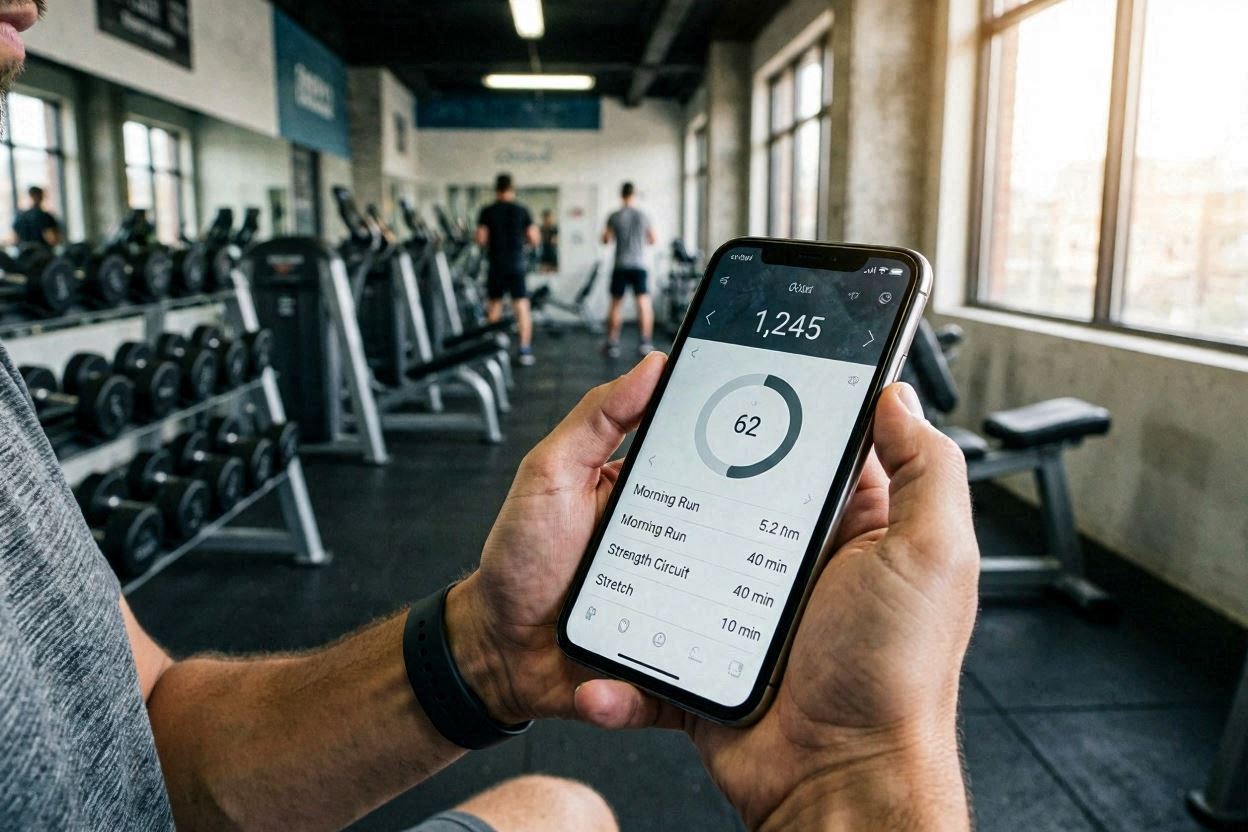
Every meal begins with a question: what am I eating, and does it serve me? Every workout begins with another: what am I doing today, and is it enough? Unanswered, these questions accumulate into a low-grade anxiety that erodes the very motivation they’re meant to ignite. Answered deliberately, they become the architecture of progress.
Fitness apps have evolved far beyond glorified pedometers. The best ones function as decision engines — systems that reduce the infinite possibilities of what to eat and how to move into a manageable, personalized set of choices. MyFitnessPal, with its database of over a million foods, transforms the tedious arithmetic of calorie tracking into something approaching ease: scan a barcode, log a meal, move on. Cronometer takes this further for those with specific dietary frameworks — paleo, low-carb, vegetarian, even pregnancy-specific profiles — offering micronutrient tracking that reveals not just how much you’re eating but what it’s actually providing. The difference between counting calories and tracking nutrients is the difference between balancing a checkbook and reading a financial statement.
On the movement side, apps like Strava have redefined what it means to train with intention. GPS tracking, route mapping, and a social layer that turns solitary runs into a quiet, ongoing conversation with a community — these features don’t just record your effort; they reinforce it. When your morning run becomes part of a shared narrative, consistency shifts from obligation to commitment. For guided training, platforms like Nike Training Club and Freeletics deliver structured workout videos that require zero equipment and zero planning — removing the two largest barriers to exercise before they even surface.
The principle is consistent across every app in this category: reduce the distance between intention and action. The best tool isn’t the one with the most features — it’s the one that makes the next healthy decision the easiest one to make.
2. Performance Sportswear: Engineering the Micro-Environment
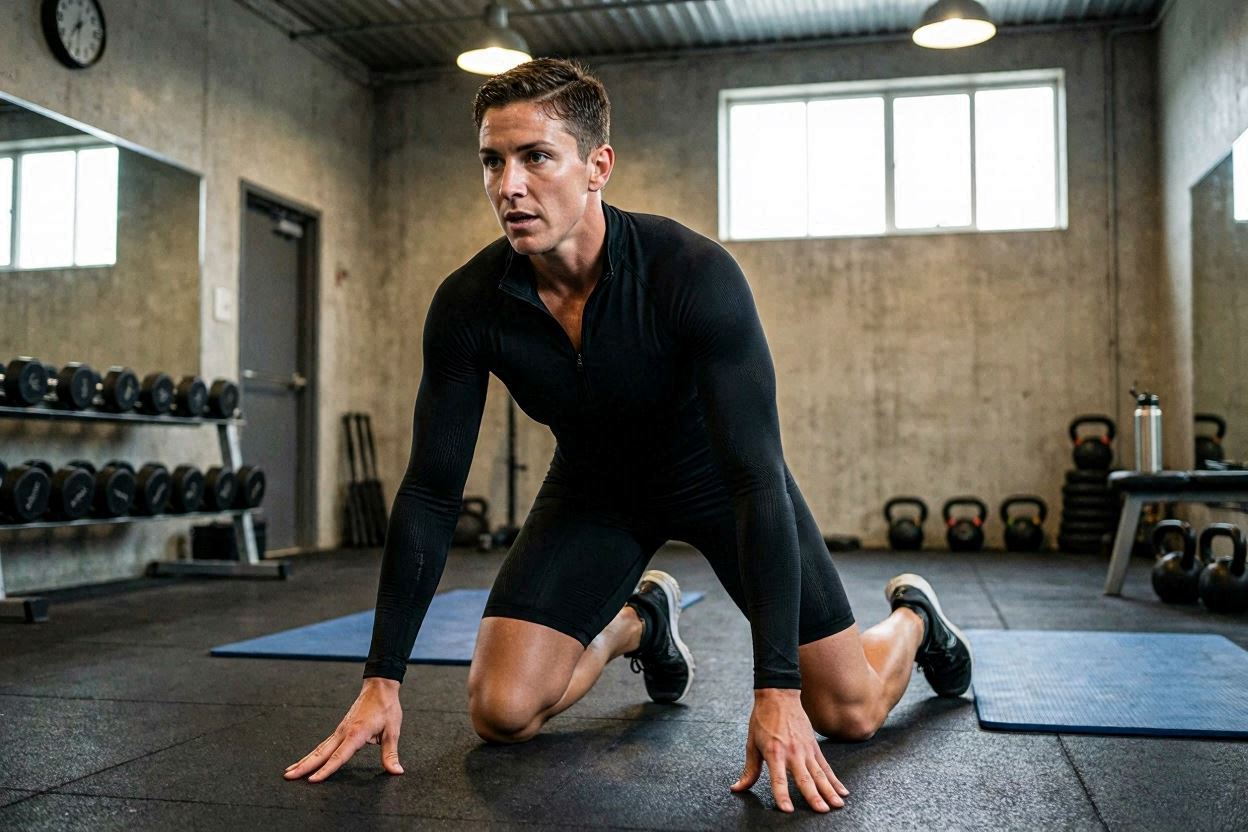
There was a time when workout clothing was an afterthought — an old cotton t-shirt and whatever shorts were within reach. That era produced a generation who associated exercise with discomfort, and who quit not from lack of willpower but because their clothing was actively working against them. Cotton absorbs sweat and holds it against the skin — clammy, heavy, and discouraging. The wrong fabric turns a challenging workout into an unpleasant one, and unpleasant things don’t get repeated.
Performance sportswear is engineered fabric — polyester, nylon, polyamide blends designed to wick moisture away from the skin and disperse it across the surface for rapid evaporation. You stay dry, you stay light, and you stay focused on the work rather than on the accumulating discomfort of a soggy shirt.
Compression garments represent perhaps the most underappreciated advancement in athletic clothing. Operating in the 15–30 mmHg range, compression wear improves venous return, enhances oxygen delivery to working muscles, reduces post-exercise soreness, and accelerates recovery. This isn’t marketing lore — it’s vascular mechanics.
Activity-specific engineering takes this further: aerodynamic construction for cyclists, thermal regulation for cold-weather runners, water-resistant treatments for open-water athletes. In every case, the garment isn’t just covering the body — it’s supporting the activity.
3. Wearable Tech: The Ambient Consciousness of Your Own Body
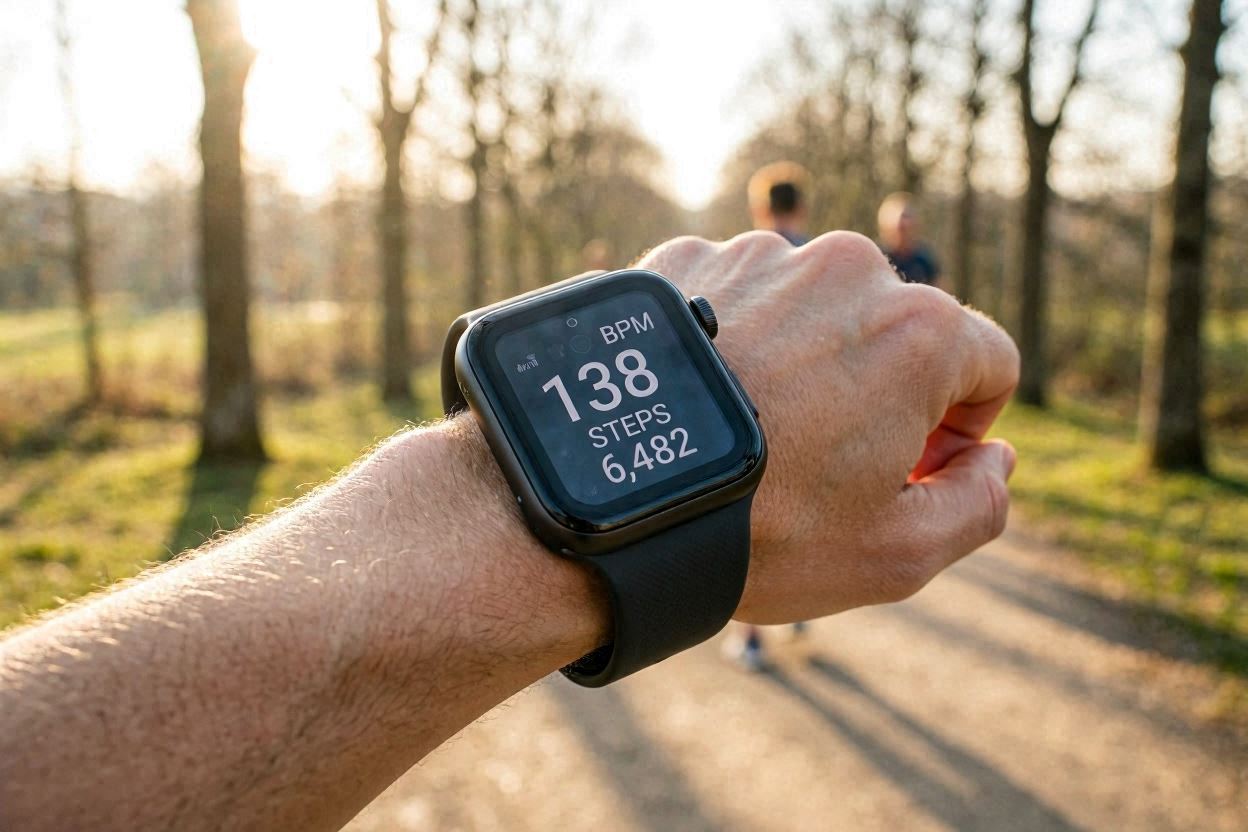
The human body sends approximately 11 million bits of sensory information to the brain every second. The conscious mind processes roughly 50. The rest operates in the background — heart rate, blood oxygen, respiratory rhythm, sleep architecture — a vast interior weather system that shapes how you feel and perform, yet remains invisible without instrumentation.
Wearable technology makes the invisible legible. Step reminders interrupt the dangerous stillness of the desk-bound workday. Heart rate monitoring ensures you’re training in the zone that produces the adaptation you’re after. Sleep tracking reveals the architecture of your rest with granularity that makes “get eight hours” look quaint — because eight hours of fragmented sleep and seven hours of cohesive sleep produce very different outcomes.
For the serious athlete, dedicated sport-testers offer more: chest-strap heart rate monitors with clinical-grade precision, multi-band GPS for challenging terrain, breathing rate analysis, and advanced training load algorithms. The principle here is feedback — not the intrusive, notification-saturated kind, but the quiet, persistent kind that accumulates into awareness. Wearables don’t make you healthy. They make health visible. And what becomes visible becomes manageable.
4. Smart Wellness Gadgets: The Instrumented Life
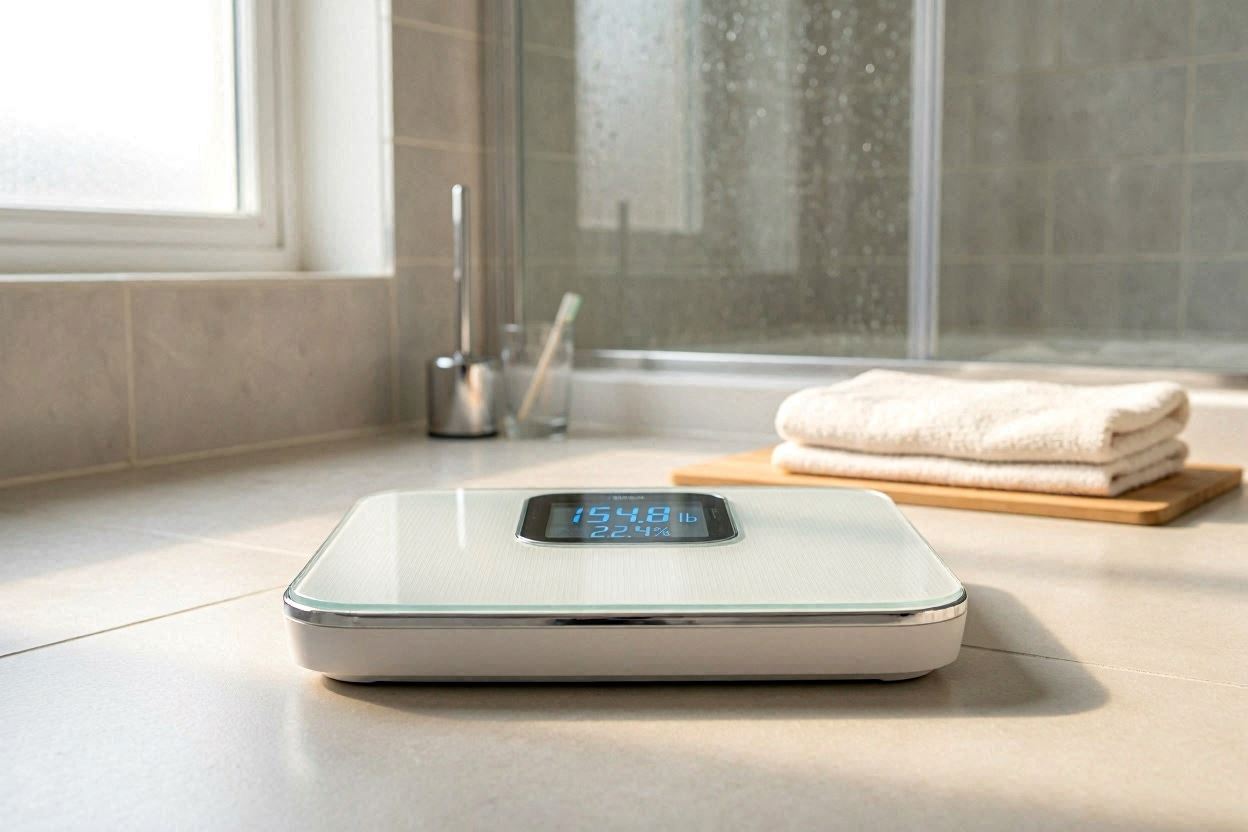
The bathroom scale was once a blunt instrument: one number, one dimension, one data point that told you almost nothing useful. Weight alone conflates muscle with fat, water with tissue. The person who loses five pounds of muscle and gains three pounds of fat celebrates a number that is moving in the wrong direction.
Smart body composition scales have replaced this bluntness with nuance. Connected via Wi-Fi, they measure bone mass, muscle mass, body water percentage, and visceral fat — the metabolically active fat that drives inflammatory risk. Over weeks and months, they reveal the direction your body is moving, not just the position it occupies on any given morning.
Beyond the scale, the ecosystem has expanded into territory that would have seemed science-fictional a decade ago. Smart jump ropes that count revolutions and track interval timing. Fitness mirrors that turn any wall into an interactive studio class. Muscle stimulators that complement active training. Pulse oximeters that make respiratory health trackable from home. Smart water bottles that nudge hydration — because thirst is a lagging indicator, and by the time you feel it, you’re already dehydrated.
Each gadget shares a common logic: they take a behavior that was previously unmeasured and make it visible. What gets measured gets managed. What gets managed gets improved.
5. Fitness Journals: The Power of Written Accountability
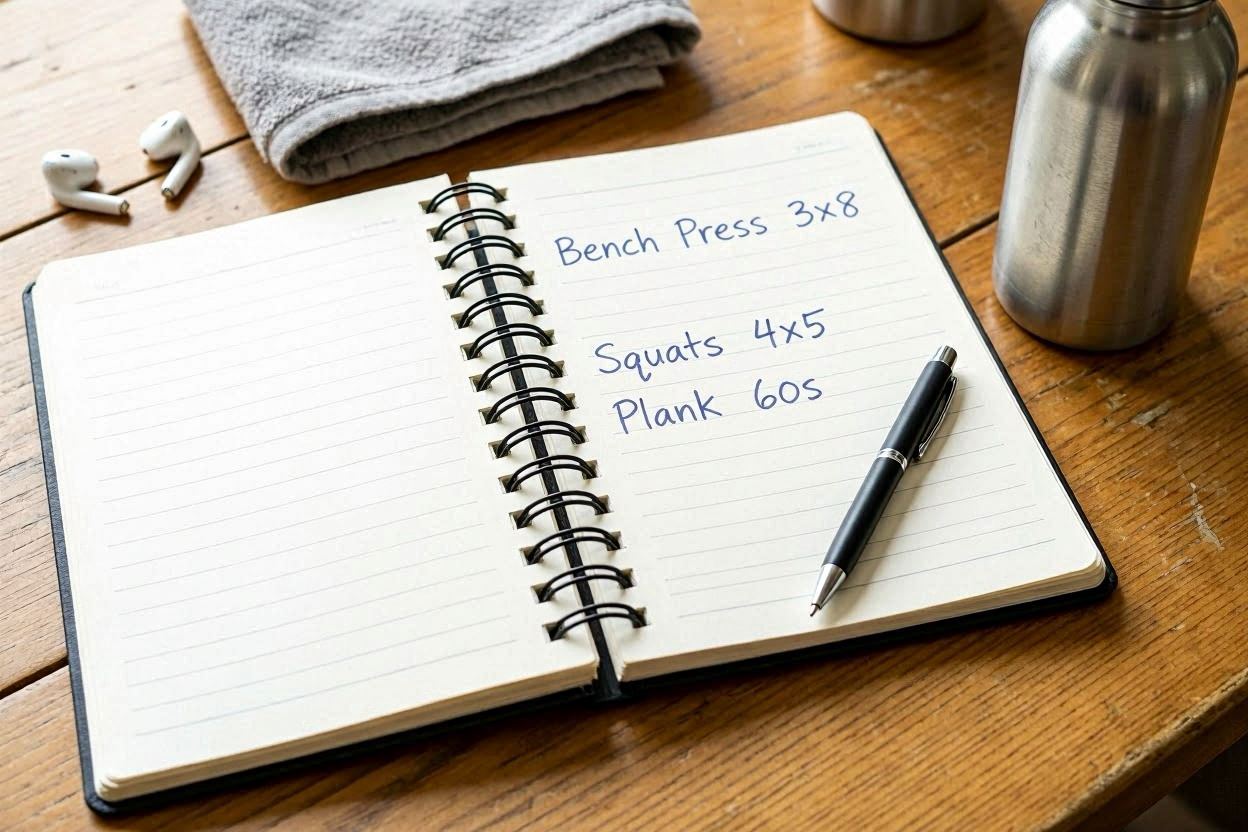
There is a particular honesty that arrives only when you write something down. The mind smooths over missed sessions, inflates effort, and retroactively adjusts expectations to match outcomes. A fitness journal doesn’t negotiate. It records the date, the exercises, the sets, the reps, the load. It captures what you actually did, not what you intended or wish you had done.
The journal is the single most undervalued tool in the wellness arsenal because it produces the most valuable commodity in any training program: honest self-assessment. When you look back at four weeks and see that your squat hasn’t increased, that your morning runs have been shorter than you remembered, or that your nutrition notes reveal a pattern of skipped meals on Wednesdays — you have information that no app or coach can provide without your own willingness to record it.
The practice need not be elaborate. Date. Exercise. Sets. Reps. Load. A brief nutrition note. A sentence about how you felt. The power isn’t in the detail — it’s in the consistency. The unexamined training program isn’t worth following, because you can’t improve what you haven’t defined.
6. Meal Prep: The Architecture of Intentional Eating

Willpower is a finite resource, and the modern food environment is engineered to deplete it. Every unscheduled meal is an invitation to negotiate with yourself — and the negotiation rarely ends in kale. The drive-home window, the late-morning desk hunger, the post-workout rationalization — these aren’t character flaws. They’re design flaws. They’re what happens when your eating infrastructure depends on good decisions at the exact moments when decision-making capacity is lowest.
Meal prep is the architectural solution. Cooking multiple portions in advance removes the decision from the moment of hunger. The food is already made, portions are measured, macros are balanced. You eat what you prepared — because the path of least resistance now leads to the choice you intended to make when you were thinking clearly, not the one you’d make when you’re tired and surrounded by convenience.
The cascading benefits are considerable. Regular meals prevent blood-sugar volatility that drives overeating. They reduce waste, save money, and eliminate the mental overhead of daily meal decisions. Most importantly, they transform nutrition from a reactive practice into a proactive one — the difference between a diet and a lifestyle.
7. Diagnostic Tests: Knowing What Your Body Actually Needs

Generic wellness advice operates on a fundamental assumption: that you are approximately average. Standard recommendations are designed for a statistical mean that describes no actual person. Your body is a specific system with specific deficiencies and predispositions that render generic advice somewhere between helpful and counterproductive.
Home diagnostic testing has made personalized health data accessible in ways once confined to clinical settings. DNA testing kits provide insights into nutritional needs, exercise suitability, and metabolic tendencies — revealing that you’re predisposed to vitamin D deficiency, or that your omega-3 requirements are higher than average, or that your iron metabolism differs from the norm. These aren’t curiosities; they’re actionable specifications that transform a generic protocol into a calibrated one.
Targeted tests go further: vitamin D levels, omega-3 indices, iron panels, gluten intolerance markers — each one a data point that narrows the gap between what your body needs and what you’re giving it. The results replace guesswork with evidence. And evidence-based decisions are an entirely different enterprise from ones based on what the wellness influencer of the month happens to be promoting.
8. Recovery Tools: The Other Half of Training

There is a persistent myth that adaptation happens during the workout. It doesn’t. The workout is the stimulus. The adaptation — muscle repair, neural recalibration, cardiovascular remodeling — happens during recovery. Skip recovery, and you’re not training harder; you’re accumulating fatigue with interest.
Recovery tools have moved from the physiotherapy clinic into the home. Massage rollers apply sustained pressure to fascia and muscle tissue, increasing range of motion and reducing adhesions. Massage balls offer pinpoint precision for stubborn knots that rollers can’t address. Massage guns deliver percussive therapy that improves local blood flow, reduces perceived soreness, and accelerates clearance of metabolic waste.
The distinction between active and passive recovery matters. Passive recovery — rest, sleep — is essential but insufficient. Active recovery — low-intensity movement, targeted self-myofascial release, mobility work — accelerates the processes that passive recovery supports but doesn’t fully drive. The combination, executed with the same intention as training itself, transforms a punishing exercise habit into a sustainable athletic practice.
You wouldn’t neglect the charging cable for a device you depend on. Your body is that device. Recovery is the cable.
9. Home Gym Essentials: The Elimination of Every Excuse
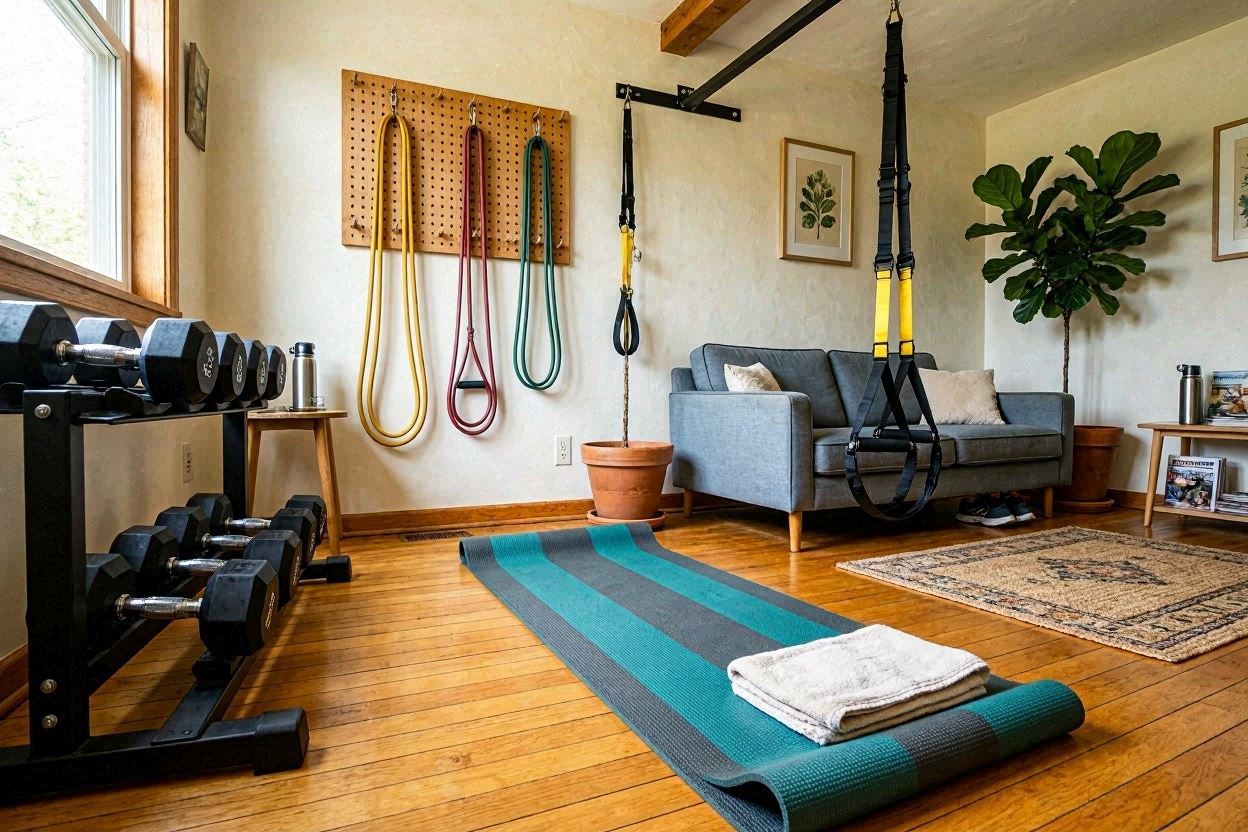
The gym is, for many people, the single largest barrier to fitness. Not the cost — the commute. Travel, changing, waiting for machines, showering, returning — 30 to 60 minutes of overhead per session. Over a year, that accumulates into dozens of hours that could have been spent training or sleeping or simply living. The home gym doesn’t just save time; it eliminates the logistical friction that turns the intention to exercise into a negotiation about whether it’s worth the logistics today.
A well-equipped home gym need not replicate a commercial facility. A quality training mat provides stability, cushioning, and the explicit demarcation of a space dedicated to movement. Resistance bands add progressive load to every fundamental movement — squats, lunges, push-ups, rows — each more productive with elastic tension. Suspension trainers are perhaps the most elegant fitness equipment ever designed: a single, compact tool enabling hundreds of full-body exercises using nothing but gravity and bodyweight. Dumbbells, in a range matching current strength, provide the overload necessary for genuine muscle development.
For the vast majority of goals — metabolic health, functional strength, body composition, cardiovascular fitness — a minimal home setup provides everything a commercial gym offers, without the commute, crowds, or recurring expense. The home gym makes consistency geometrically easier because it reduces the distance between deciding to work out and actually working out to the space between your desk and your floor.
And consistency, not intensity, determines outcomes.
The System, Not the Sprawl
Read these nine categories together and a pattern emerges: each one addresses a specific form of friction. Fitness apps dissolve decision fatigue. Performance sportswear removes physiological discomfort. Wearable tech makes invisible signals visible. Smart gadgets bring measurement to unmeasured behaviors. Fitness journals enforce honest self-assessment. Meal prep eliminates reactive eating. Diagnostic tests replace guesswork with specification. Recovery tools close the training loop. Home gym essentials erase the logistical barrier between intention and action.
None of these tools, individually, will transform your health. Their job is to remove the obstacles between you and the practices that will. They are infrastructure, not intervention — the roads, not the destination.
A final note: these tools generate extraordinary amounts of information about your body, and it can be seductive to chase the metrics at the expense of the experience. Don’t. The purpose of all this infrastructure is not to make you a patient of your own data — it’s to make you a more capable version of yourself. The numbers serve you, not the other way around.
Luxury without health is just decoration. But the well-equipped life — one where the friction between intention and action has been systematically removed — produces something no amount of decoration can replicate: a body that performs, a mind that endures, and a daily experience of vitality that makes every other luxury worth having. Build the system. The health will follow.