A well-styled tray is the quiet anchor of a room. It corrals the everyday — remotes, coasters, a candle — into something that looks deliberate, even serene. Whether it sits on a coffee table, a centre table, or a dining table, a decorative tray turns surface clutter into a still life.
This guide walks through tray styling for three key surfaces, then breaks down four aesthetic categories so you can match the tray to your interior language. A few universal rules close it out.
Coffee Table: Calm, Considered, Functional
The coffee table catches everything. Keys, cups, a book you meant to finish, a candle someone gifted you. A tray draws a boundary. It says: these things belong together, and everything else finds another home.
Start With the Right Shape
For a medium-to-large sofa pairing, a round tray softens the straight lines of a rectangular coffee table and works beautifully. If your table is narrow or square, a rectangular tray runs parallel to the edges without eating up too much surface — the tray should never overwhelm the table.
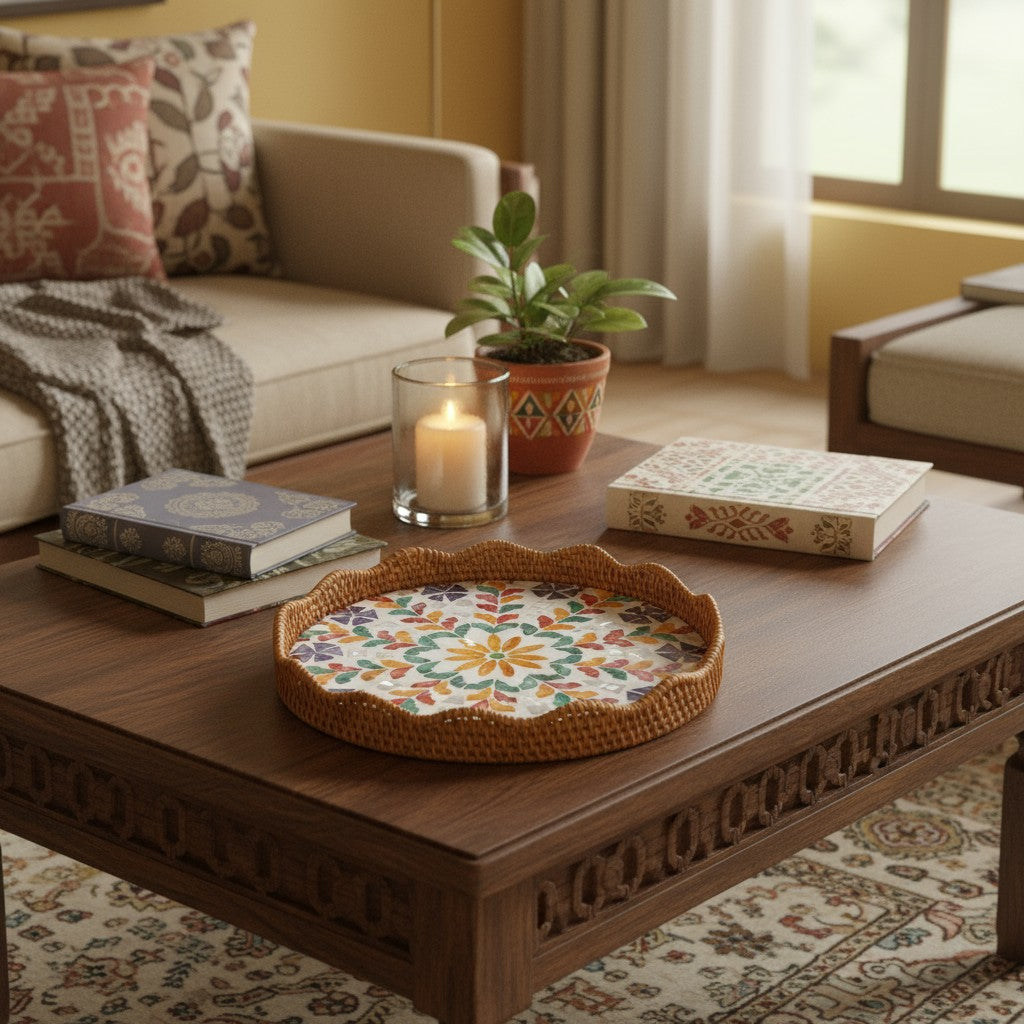
Build a Simple Three-Piece Cluster
You do not need ten objects. Three is enough:
- Height — a stack of two or three books, or a small lidded box.
- Softness — a candle, or a small vase with a single stem.
- Utility — a stack of coasters, or a small bowl for keys, earphones, remotes.
This triplet reads as styled, not staged. Everything sits within the tray’s border, yet each piece is easy to move when you need the surface.
Seasonal Swaps
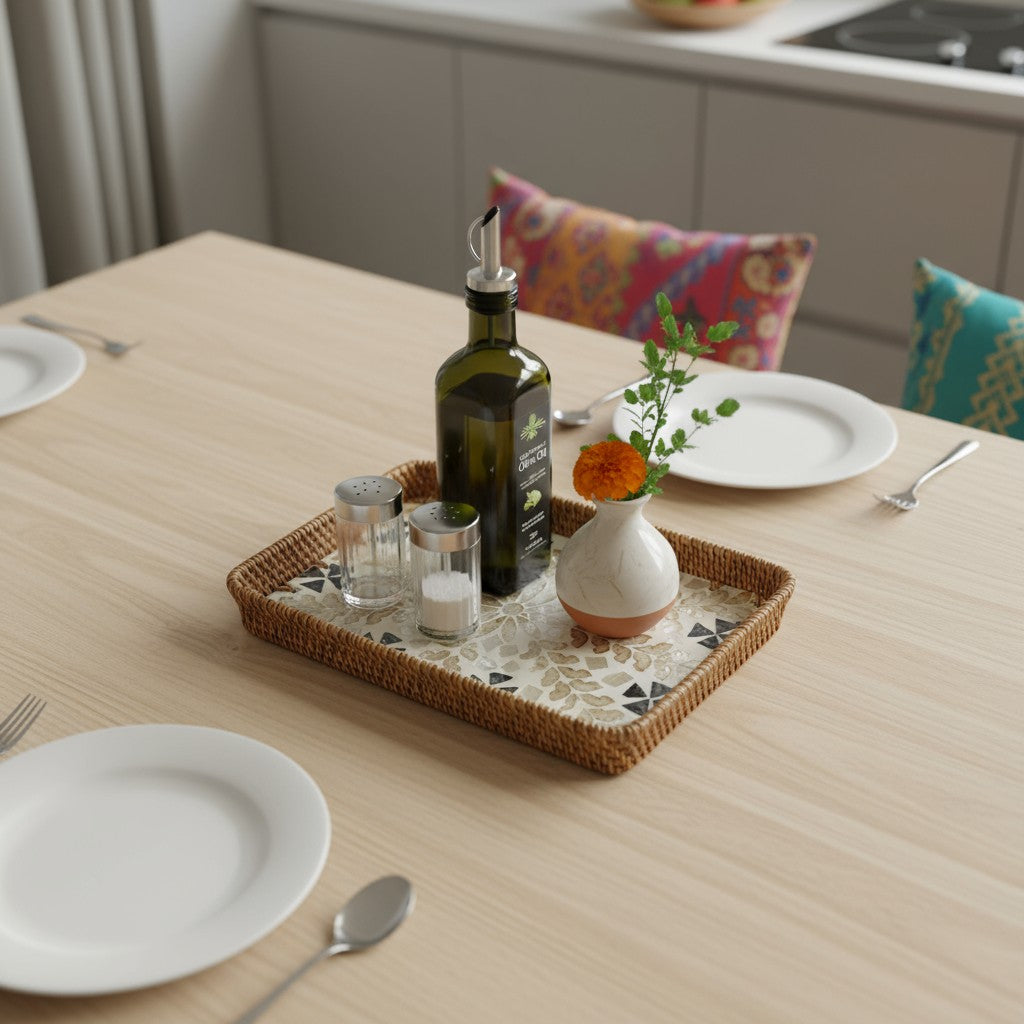
On ordinary days, your tray might hold two to four coasters, a small jar for biscuits or nuts, and a tiny vase for evening glow. When the season shifts — Diwali, Christmas, a dinner party — swap the jar for sweets, lights, and flowers. The tray stays; the story changes.
Centre Table: Open, Airy, Decorative
A centre table typically has more breathing room than a coffee table. The tray can be larger, more ornamental, and styled with a looser hand.
Echo the Table’s Shape
- Round centre table → a round tray reinforces the geometry. A mother-of-pearl or bone-inlay round tray becomes a focal point.
- Rectangular centre table → a square or rectangular tray sits neatly in the centre without blocking sightlines.
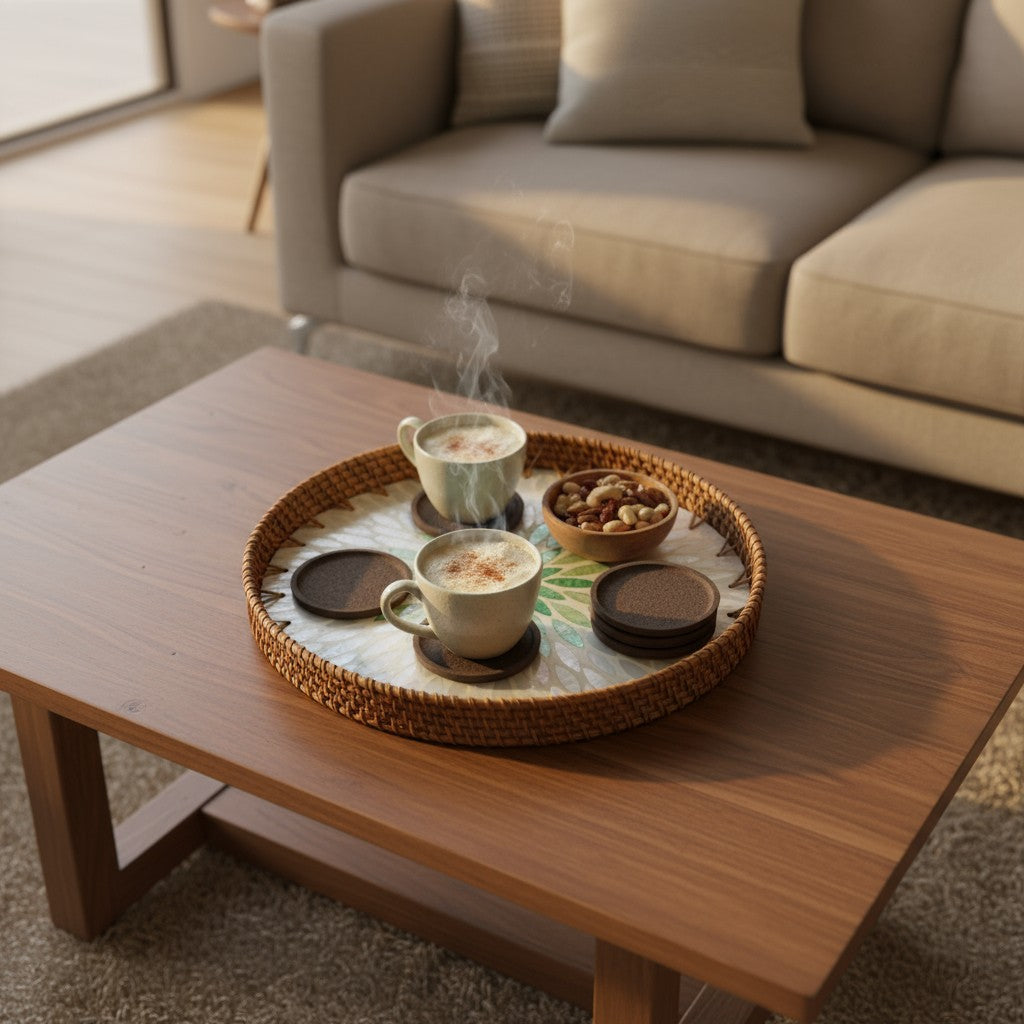
Think of the Tray as a Mini Landscape
A bit of greenery, a bit of light, one or two meaningful objects. Try:
- A small indoor plant or leafy stem in a simple glass vase.
- A scented candle, or a cluster of two or three small candle holders.
- A shallow bowl for potpourri, shells, or stones you have collected.
Leave open surface around the tray so it stands out. The centre table is the one place where negative space is your friend.
Rotate With the Season
- Everyday: plant + candle + coasters.
- Festive: swap the plant for a brass bowl with floating flowers; line candle holders along the tray’s edge.
- Quiet corner: the same tray can hold incense, a small lamp, and objects that mark a personal ritual.
Dining Table: Functional, But Still Beautiful
The dining table tray works harder than any other. It holds condiments, catches crumbs, and has to look good from every chair in the room.
Treat It as a Centrepiece
A rectangular tray is the natural choice — it sits in the centre without blocking conversation across the table. Fill it with:
- Salt, pepper, oil, and sauces in matching bottles or small jars.
- A single flower stem or a small vase.
- A candle for soft evening light.
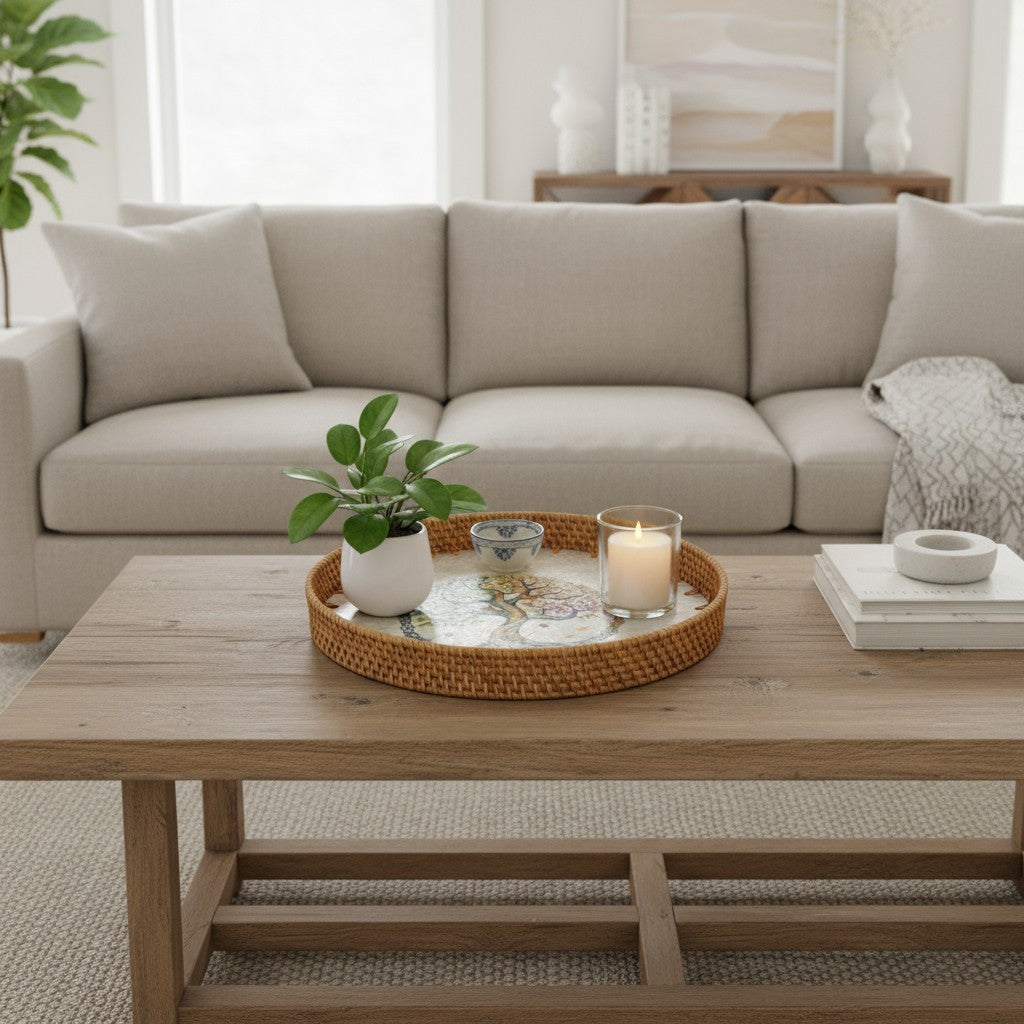
The beauty is logistical: when it is time to clear the table, you lift the entire tray in one move.
Everyday Versus Hosting Mode
- Everyday: keep it lean — basic condiments plus one small plant or candle.
- Hosting: add a second, smaller round tray with nuts, dried fruit, or chocolates. When guests arrive, move it to the coffee table.
The Breakfast Station
For morning coffee or tea, a rattan serving tray becomes a mobile station — cups, a folded napkin stack, a small bowl of snacks. Carry it to the table, let everyone help themselves, and carry it back to the kitchen when done. One tray, zero trips back and forth.
Four Style Categories for Trays
Not every tray suits every room. These four categories cover the most common interior languages.
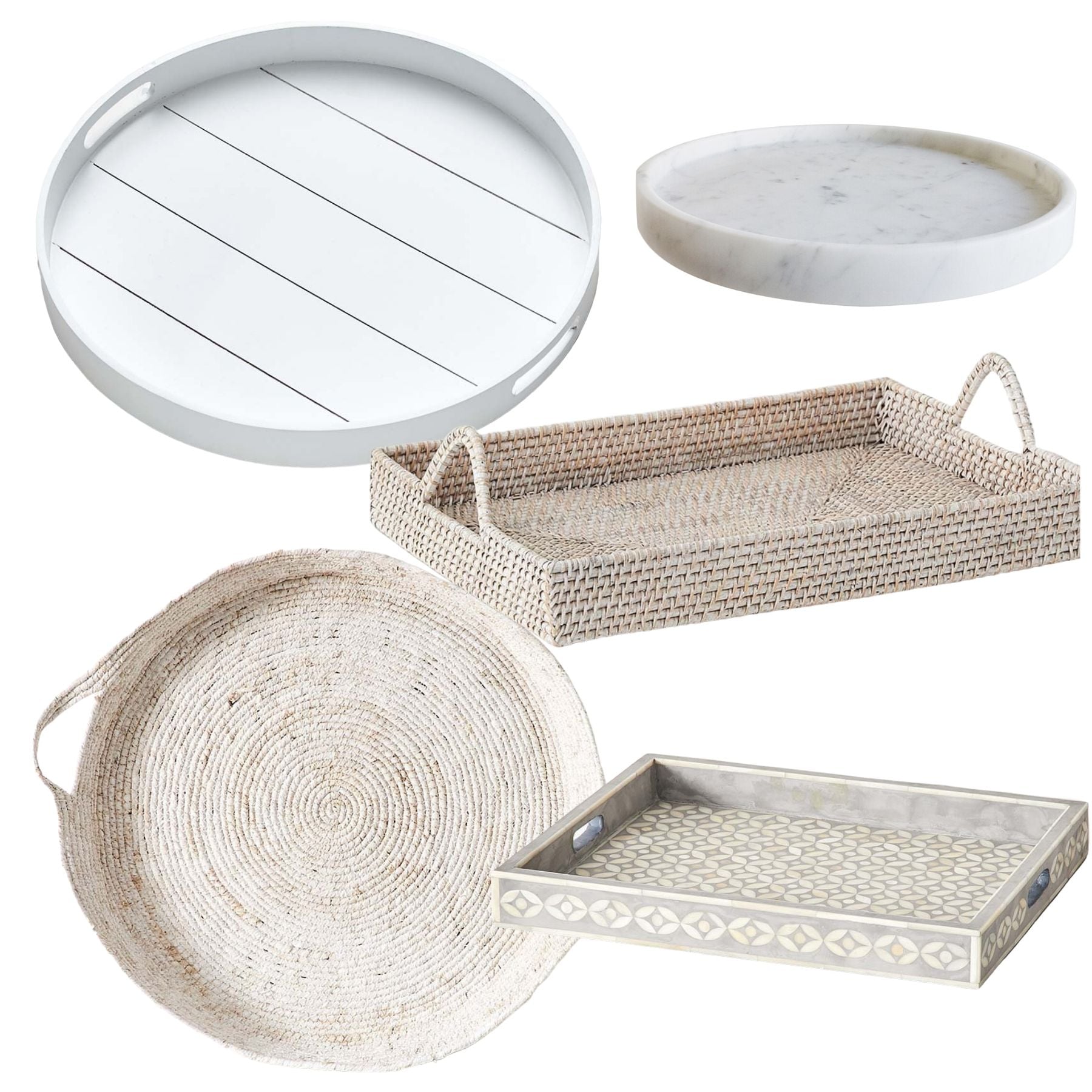
Coastal & Hamptons
Neutral palettes, turned-down colour, turned-up texture. Think marble, rattan, grass, and glossy timber. The detail is tactile — veining, weave, grain. A round marble tray on a dark timber table. A whitewashed rattan tray on a linen sofa. These trays suit calm, serene interiors — Scandi, Provincial, or anyone who wants their living room to feel like a exhale.
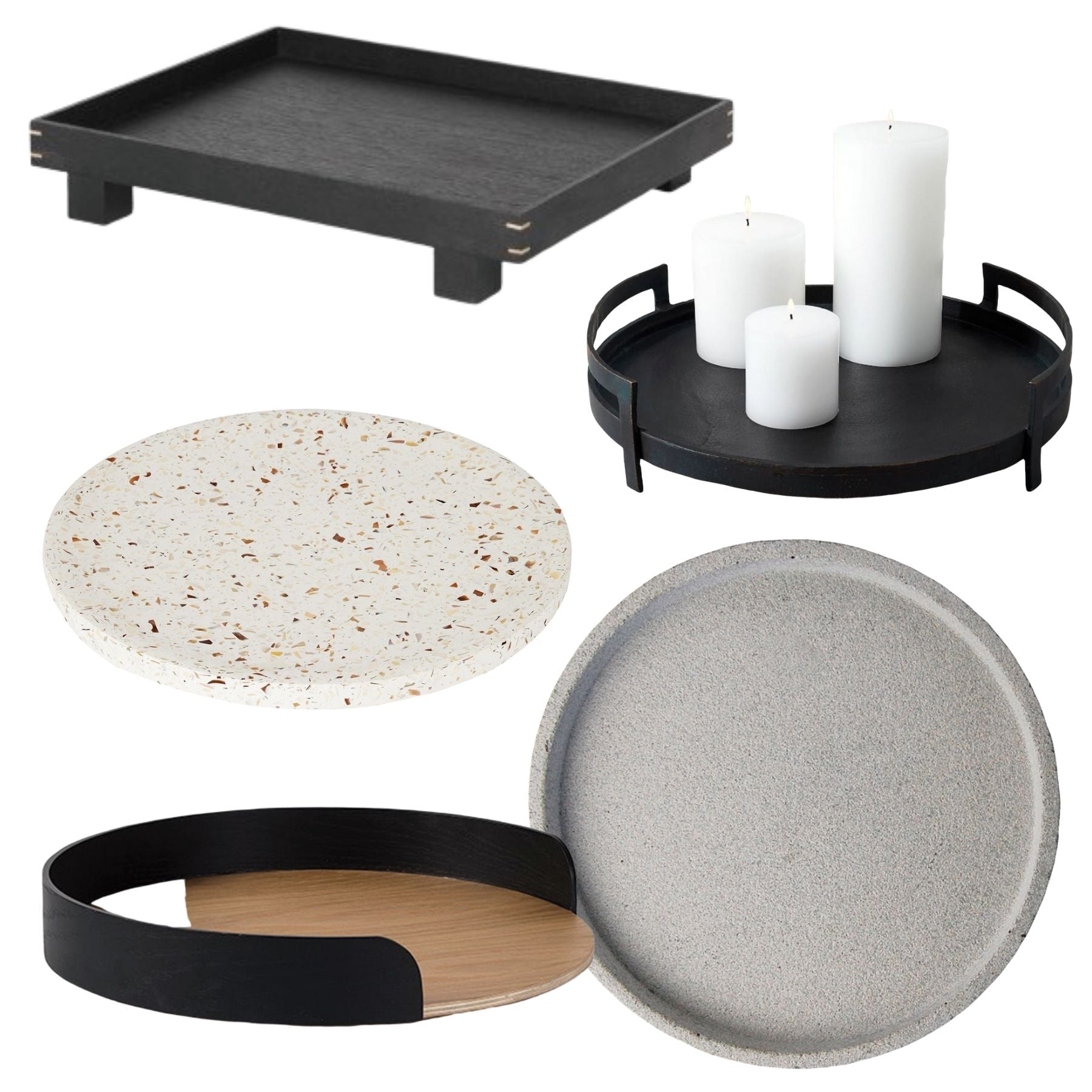
Contemporary
Concrete, terrazzo, blackened oak, stone. These trays have a maturity — a casual sophistication, sometimes even a masculine edge. They hold their own in a city apartment or a dark, moody living room. A concrete round tray on a glass coffee table. A black-oak rectangular tray on a marble-topped console. They do not fade into the background.
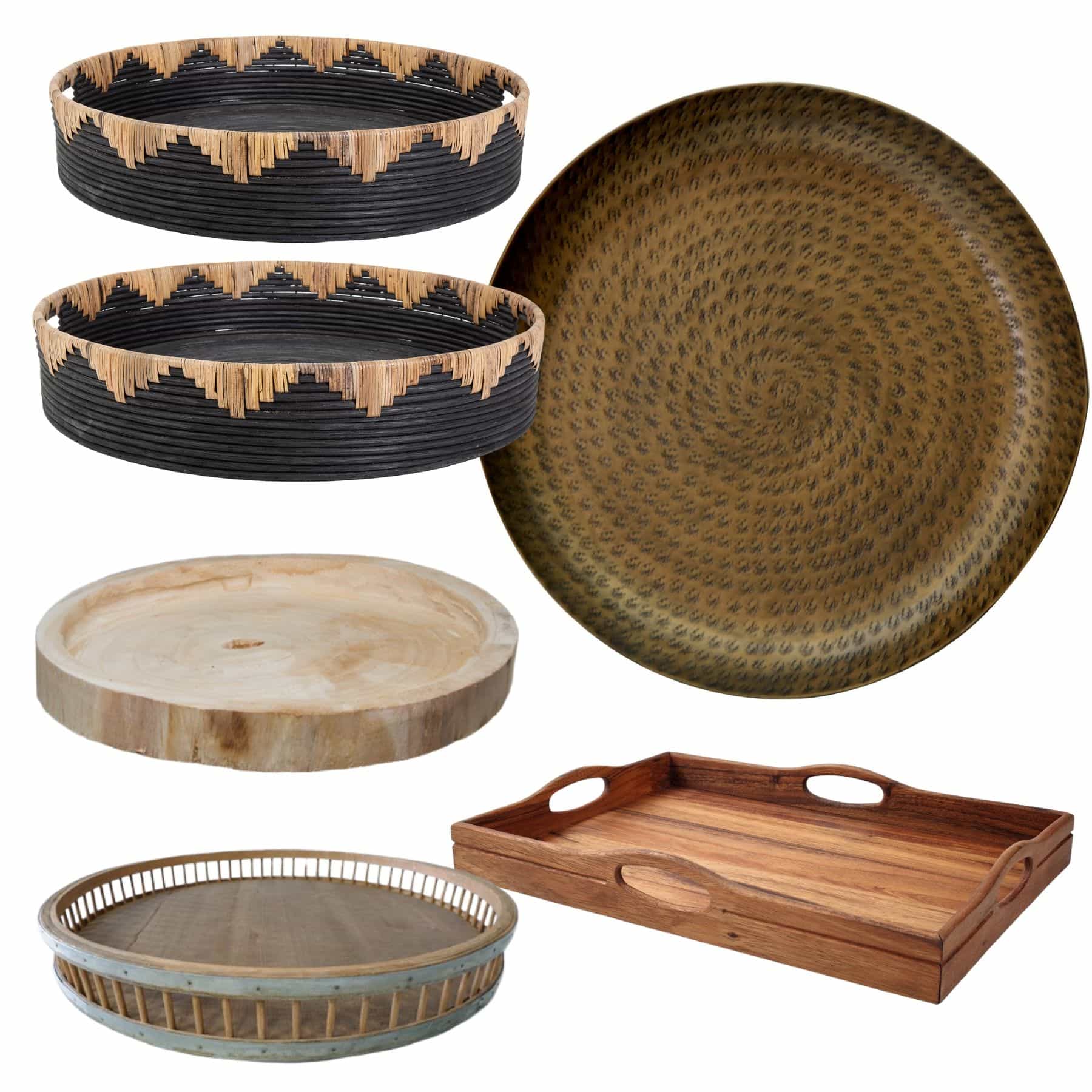
Global Eclectic
Earth, rust, handmade. These trays look like they were found at a market overseas — hammered brass, natural wood with visible grain, iron and bamboo. They bring story and character. Pair them with layered textiles, a vintage rug, and a mix of old and new. A hammered brass tray on a carved-wood table. A round bamboo tray on a cane chair. They whisper: someone travelled here.
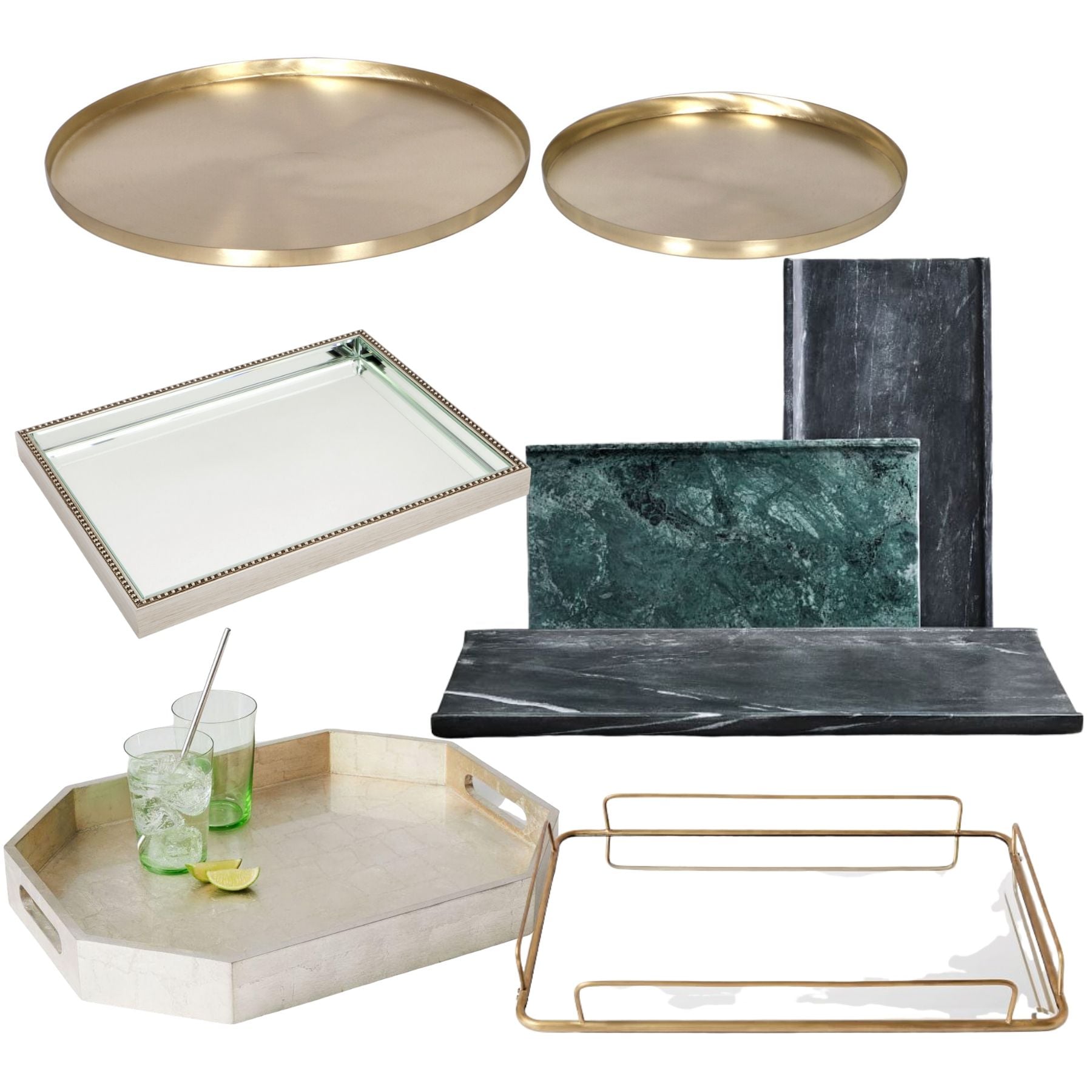
Luxe
Marble and metal, shimmer and confidence. Brass trays with a soft sheen, mirrored bases, green marble, lacquered finishes. These trays are jewellery for the table — quiet luxury, not loud. A round brass tray on a marble coffee table. A mirrored rectangular tray on a dark console. They suit pared-back rooms where one beautiful object does the heavy lifting.
Four Styling Rules That Always Work
Regardless of table or tray style, these principles hold.
- Cluster in odd numbers. Three or five objects look calmer than four. Odd numbers force asymmetry, which reads as natural.
- Mix heights. One tall piece (a vase or plant), one medium (a candle or jar), one low (a bowl or coaster stack). The eye travels.
- Leave empty space. A tray that is fully covered reads as cluttered. Let the tray’s material show — marble veining, rattan weave, timber grain.
- Repeat one material. A rattan tray with rattan coasters. A marble tray with a marble catchall. Material repetition ties the composition together without matching everything.
The simplest version: one tray, three objects, a little breathing room. That is often all it takes for a room to feel settled, warm, and quietly intentional.
Trays Worth Considering
If you are building a tray vignette from scratch, a few well-chosen pieces cover most interiors. Browse all table trays on Amazon.
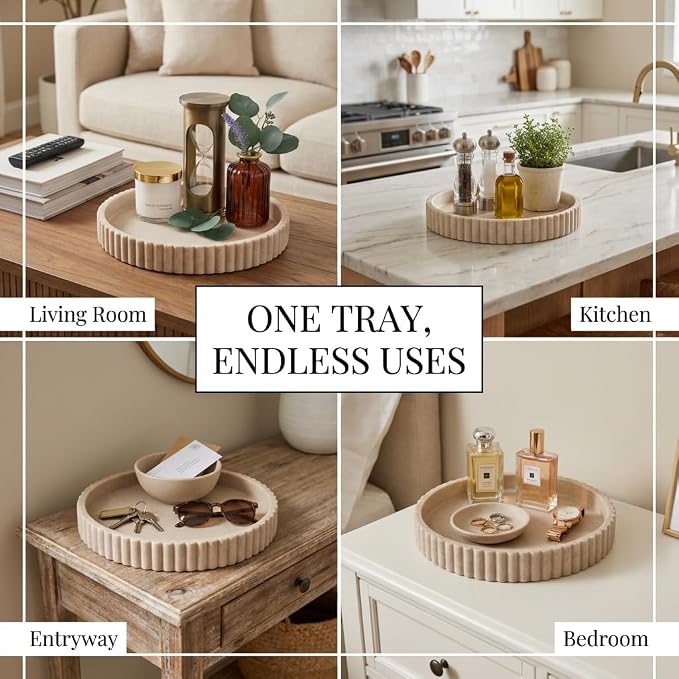
OAKOA Round Decorative Tray — A minimalist round tray that works on coffee tables and consoles alike. Clean lines, understated finish — the quiet workhorse of the category.
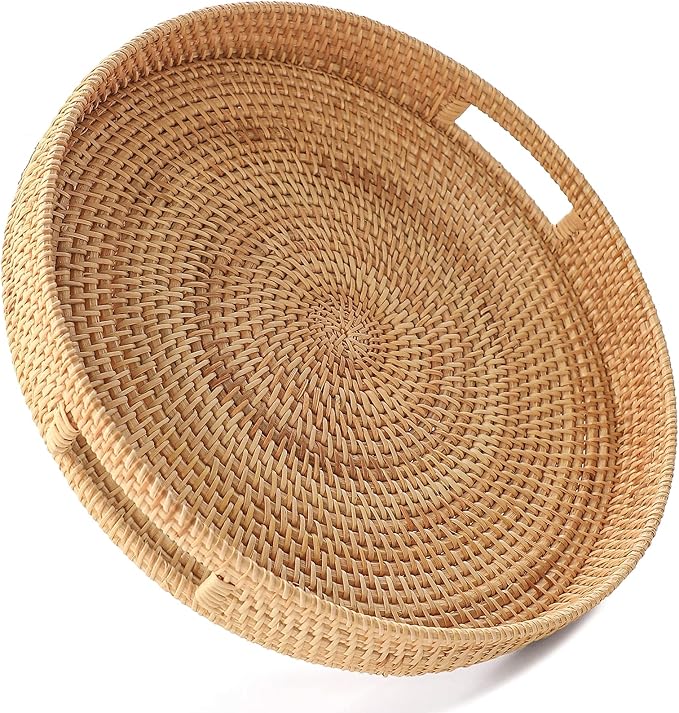
Hand-Woven Rattan Serving Tray — Natural rattan with handles. Perfect for the coastal, Hamptons, or global-eclectic interior, and functional enough to carry tea and snacks from kitchen to table.
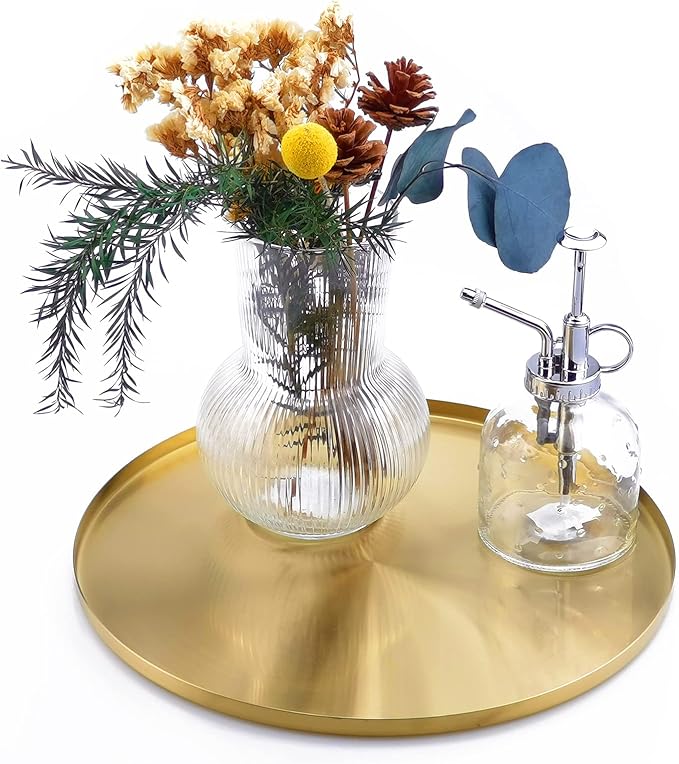
Brushed Gold Round Tray — Stainless steel with a brushed brass finish. Adds a luxe shimmer without ostentation. Pair with a marble coffee table and a single candle.
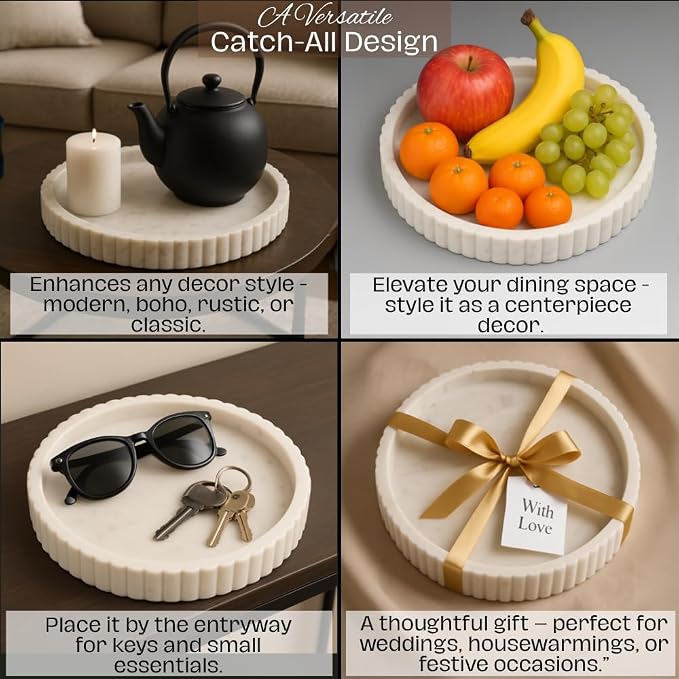
Handcrafted Marble Decorative Tray — Natural marble with a handcrafted finish. The veining does the talking — style it with a single vase and let the material breathe.
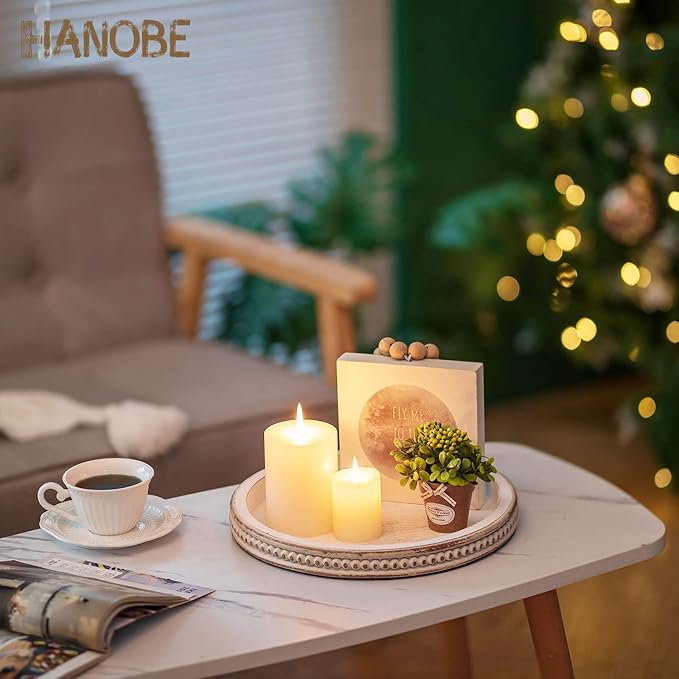
Whitewashed Round Wood Tray — A rustic farmhouse piece in whitewashed wood. Lightweight, versatile, and equally at home in a coastal or country interior.
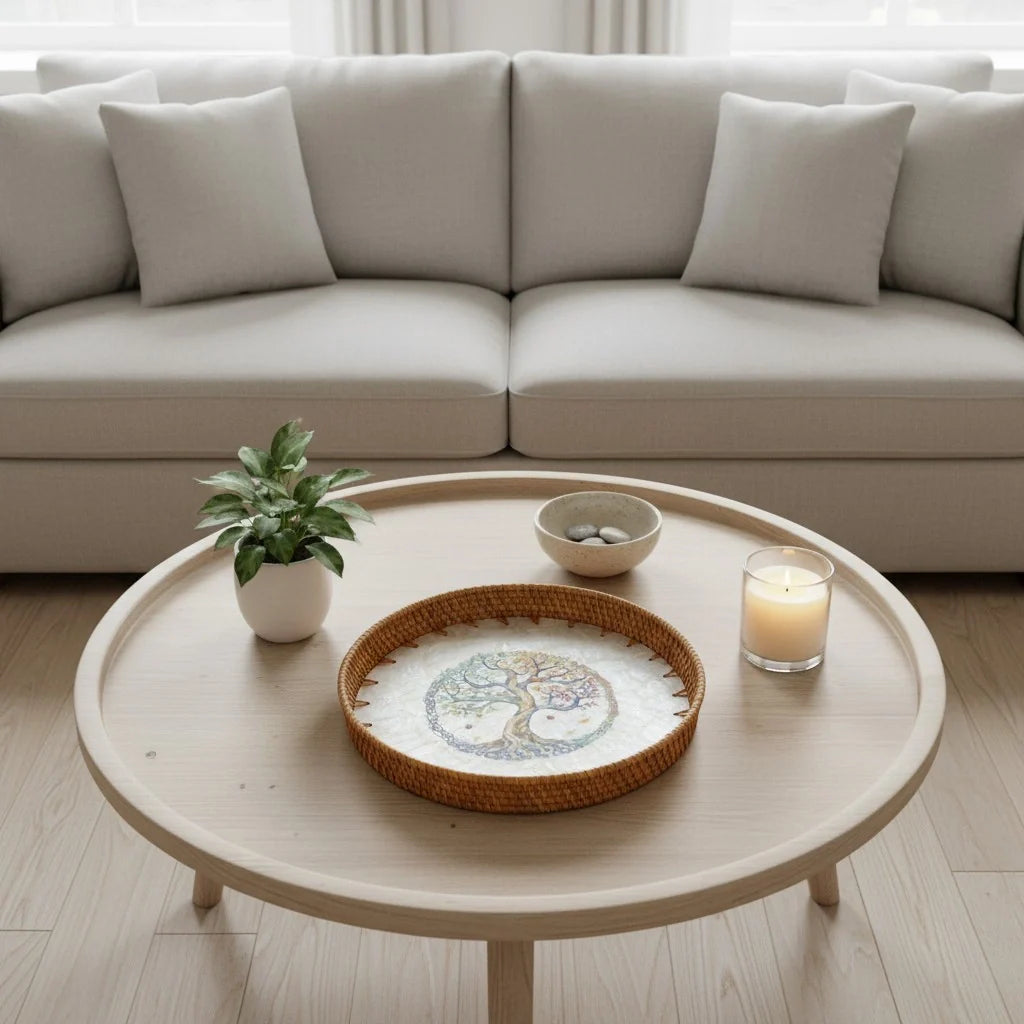
Vintage Brass Tray with Claw Feet — A footed brass tray with a vintage sensibility. The elevated base adds height to your tableau — no stack of books needed.
A single tray and a few favourite things. That is the whole formula.