Spain doesn’t simply have beaches — it has ecosystems. The Mediterranean hands you bathtub-warm coves framed by pine forests that smell of resin and salt. The Atlantic throws wind, swell, and drama at anyone brave enough to paddle out. And 1,300 kilometers south of the mainland, the Canaries offer year-round swimming while the rest of Europe shivers under blankets.
The playa is a near-sacred space in Spain, a country ringed by some 8,000 kilometers of coastline — from tiny pine-clasped rocky coves to giant dunes, glitzy Mediterranean ports, and surf-smashed Atlantic bays. Add in cliff-top villages so white they make you blink, chiringuitos (beach bars) where mojitos are paired with sunsets that pop, and tapas bars grilling freshly caught seafood, and you begin to understand: Spaniards don’t just go to the beach. They live it.
We combed through thousands of kilometers of shoreline to surface the 12 that earn their place on your radar — each one a different answer to the question: what does the perfect beach day look like?
Quick Guide
- Families and gentle swims: Las Teresitas, La Concha, Cullera, Aiguablava, Playa de Muro
- Solitude and raw nature: Platja de Castell, Los Genoveses, Playa del Silencio
- Postcard turquoise: Ses Illetes, Cala Macarella, Formentor
- Atlantic wind, kites, space: Bolonia, Zahara de los Atunes
- Near Valencia, no island hop: El Saler, Cullera
- Year-round warmth: Maspalomas, Las Teresitas
Weather Cheat Sheet
| Region | Best Months | Water Temp | Vibe |
|---|---|---|---|
| Valencia coast | May-Oct | 24-27C | Calm, family-friendly |
| Costa Brava | Jun-Sep | 22-25C | Sheltered coves |
| Mediterranean Andalucia | Jun-Sep | 22-26C | Warm, easy |
| Atlantic Andalucia | Jun-Sep | 20-23C | Windy, wild |
| Northern Atlantic | Jul-Sep | 18-22C | Refreshing, bold |
| Canary Islands | Year-round | 19-23C | Eternal spring |
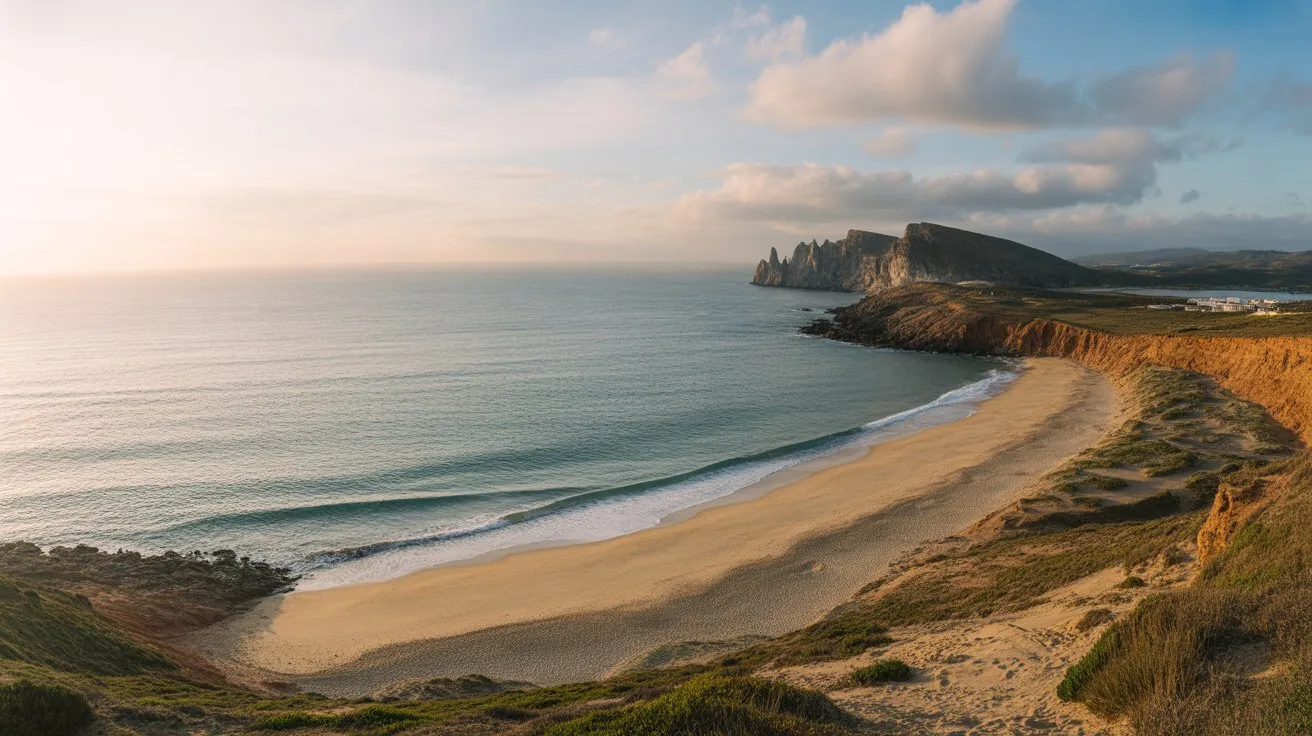
1. El Saler, Valencia — Pine Forest Meets Sand Dune
Fifteen minutes from Spain’s third-largest city, you’re walking on boardwalks through a protected dune system with white sand underfoot and umbrella pines overhead. El Saler sits inside the Albufera Natural Park — a rice-growing wetland that also happens to have a Blue Flag beach. The air here carries a peculiar blend of sea salt and wetland vegetation, something you won’t find on any island. It’s the kind of place that makes you question why anyone flies to an island when this exists on the commuter bus route.
Best time: June-September (shoulder season for long uncrowded walks) Nearest airport: VLC Valencia Get there without a car: City buses 24 and 25 run directly to the beach Perfect for: Families, runners, anyone who needs a quiet sea day within city reach Know before you go: The dunes are protected — stick to boardwalks and marked trails
2. Cullera
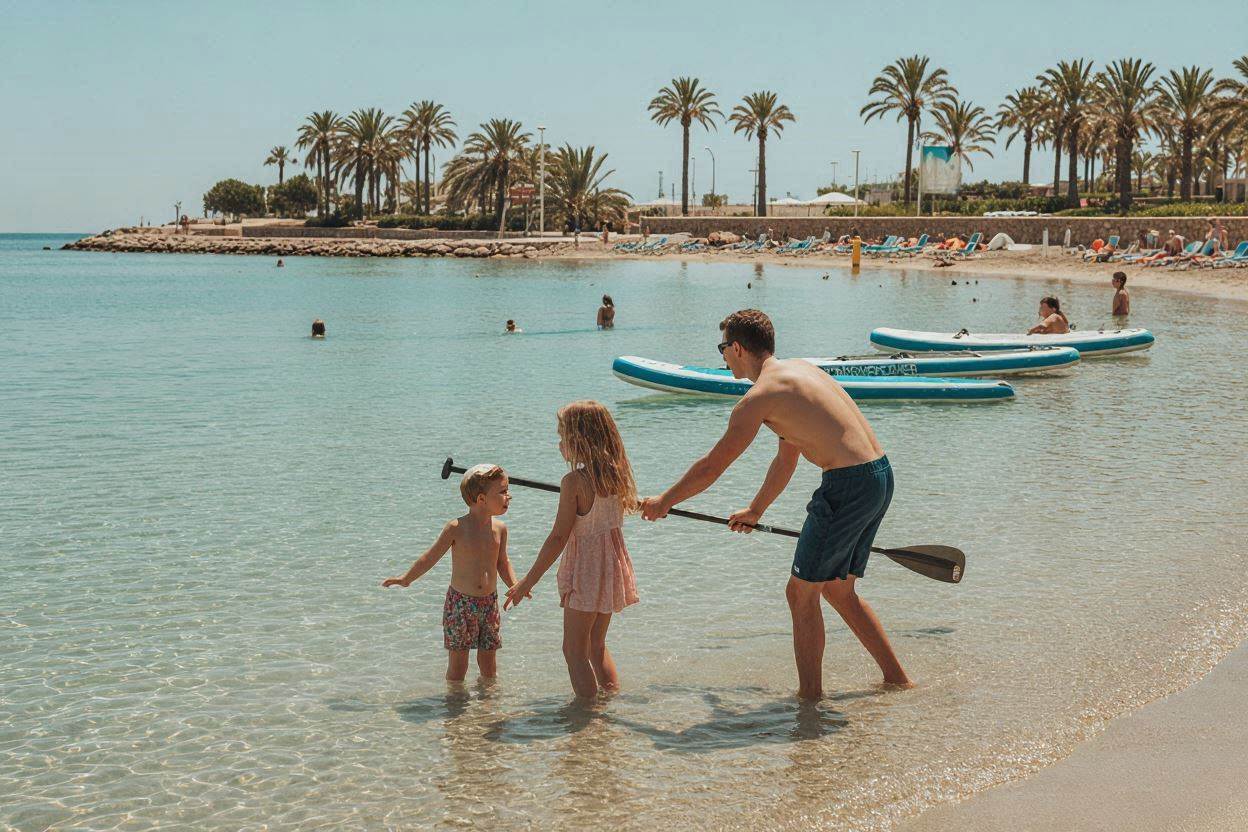
South of Valencia, Cullera unfurls a long, gentle bay that families have been trusting for generations. The water stays shallow far from shore, the promenade serves ice cream in seventeen flavors, and the mountain backdrop — the Muntanya de Cullera rising 250 meters behind the sand — makes you feel like you’ve stumbled onto a film set. It’s resort-level convenience without the resort-level pretension. The locals call it la playa de toda la vida — the beach of a lifetime — and they mean it literally: grandparents who swam here as children now bring their grandchildren to the same spot.
Best time: June-September (May and October for quieter sands) Nearest airport: VLC Valencia Get there without a car: Cercanias and regional trains toward Gandia, then local bus Perfect for: Families, calm-water swimmers, people who like infrastructure
3. Aiguablava, Begur — The Infinity-Pool Cove
Drop a pin on “Costa Brava” and this is likely what your imagination serves up: a sheltered bay painted in every shade of turquoise, framed by pine-covered cliffs, with water so still it doubles as a mirror. Aiguablava means “blue water” in Catalan, and it delivers on the promise with surgical precision. Accessibility ramps have been added recently, making it one of the few wild-feeling coves that welcomes everyone. The surrounding town of Begur is a castle-crowned medieval jewel that adds cultural weight to the coastal beauty — this isn’t just a beach, it’s a doorway into Emporda’s living history.
Best time: June-September (September for fewer people, same water) Nearest airport: GRO Girona (also BCN Barcelona) Get there without a car: Summer buses to Begur’s beaches; caminos de ronda coastal paths Perfect for: Families, snorkellers, those who need accessible facilities Know before you go: Arrive early — parking is limited and fills by 10am in July
4. Platja de Castell, Palamos — The Last Untouched Bay
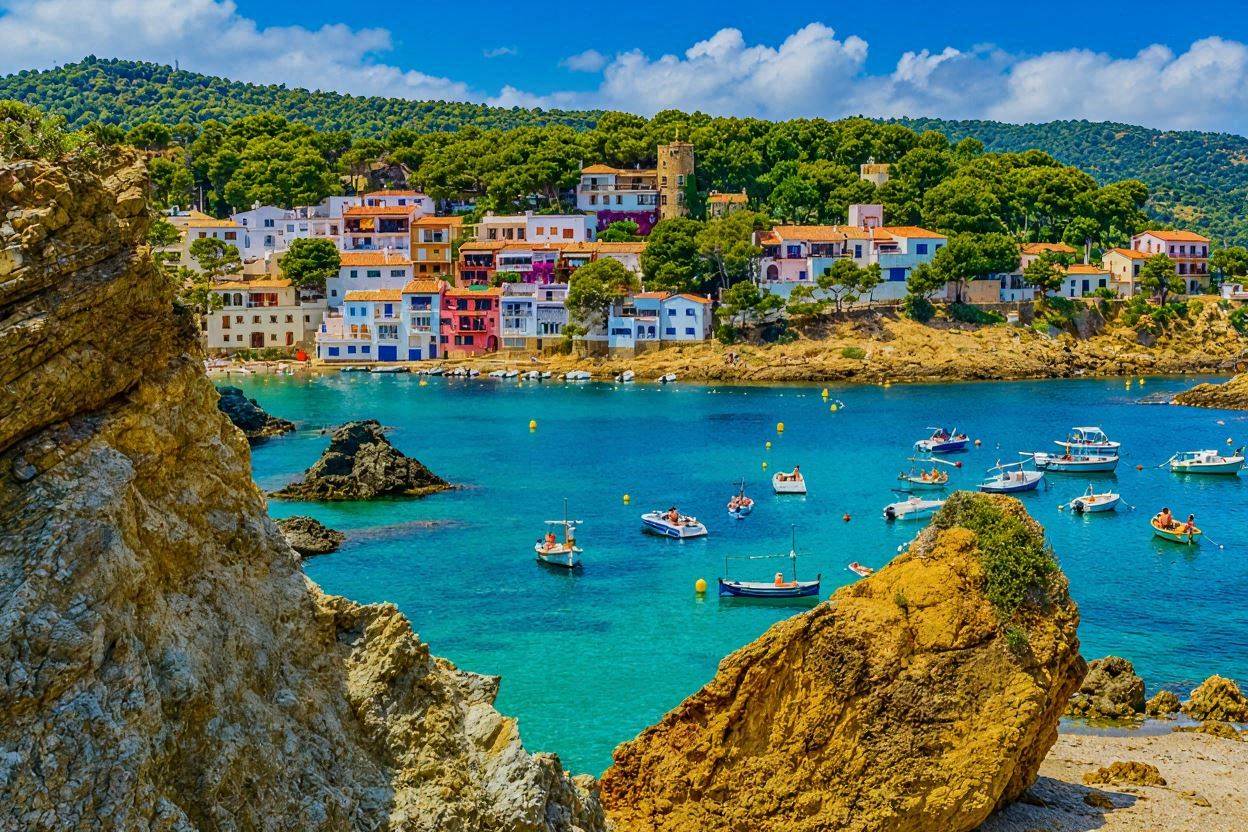
Most of the Costa Brava has been claimed by hotels, but Castell holds the line. No buildings on the first line. No beach clubs. Just sand, sea, and an archaeological site next door — the Iberian settlement of Castell — that reminds you this coast has been luring humans for over two millennia. It’s what the Mediterranean looked like before everyone “discovered” it. The beach curves in a perfect half-moon, backed by a protected dune system that has been zealously guarded from development. Walk to the southern end and you’ll find the ruined Iberian village, where you can stare at the same view the ancients did, through the same frame of pines.
Best time: June-September Nearest airport: GRO Girona (also BCN Barcelona) Get there without a car: Bus to Palamos, then walk following signs (or short taxi) Perfect for: Nature purists, quiet-beach seekers, photographers
5. Playa de los Genoveses, Cabo de Gata — Desert Meets Sea
A wide, shallow arc of sand backed by volcanic hills, with almost zero construction in sight — this is a natural park, and the rules are enforced. Genoveses is the poster child of Spain’s most arid coastline, where cacti grow steps from the shoreline and the water hits that surreal translucent green that only volcanic seabeds can produce. Nearby, the Cabo de Gata-Nijar Natural Park hides more wild coves — Playa San Pedro, backed by scrubland and the crumbling ruins of a 16th-century castle, reachable only on foot or by boat from Las Negras. The whole coast makes deep thumbprints between towering cliffs, while ravines plunge down to pristine sands and eroded lava rocks.
Best time: June-September (spring and autumn for hiking) Nearest airport: LEI Almeria (also AGP Malaga, MJV Murcia) Get there without a car: Bus to San Jose, then walk or short taxi; seasonal access restrictions apply Perfect for: Solitude seekers, hikers, anyone allergic to beach crowds
6. Playa de Bolonia, Tarifa — Where You Can See Africa
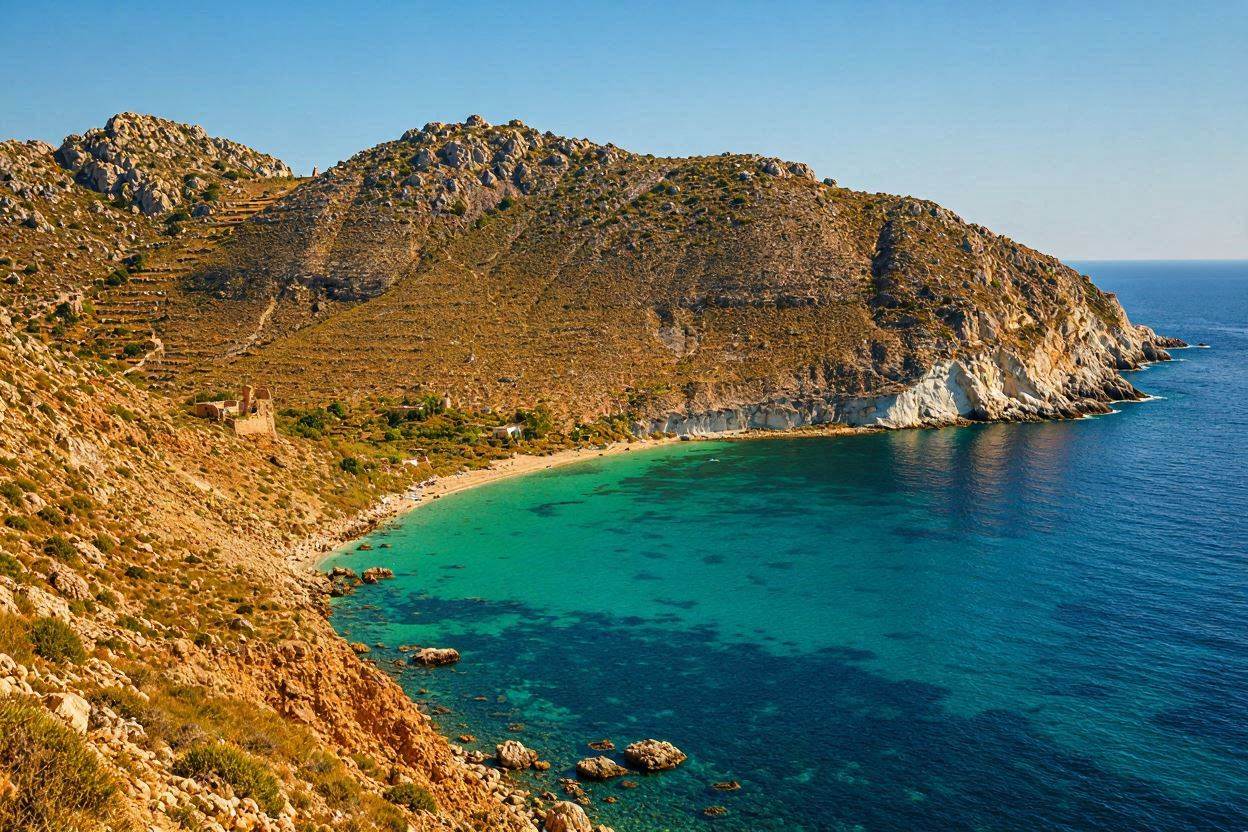
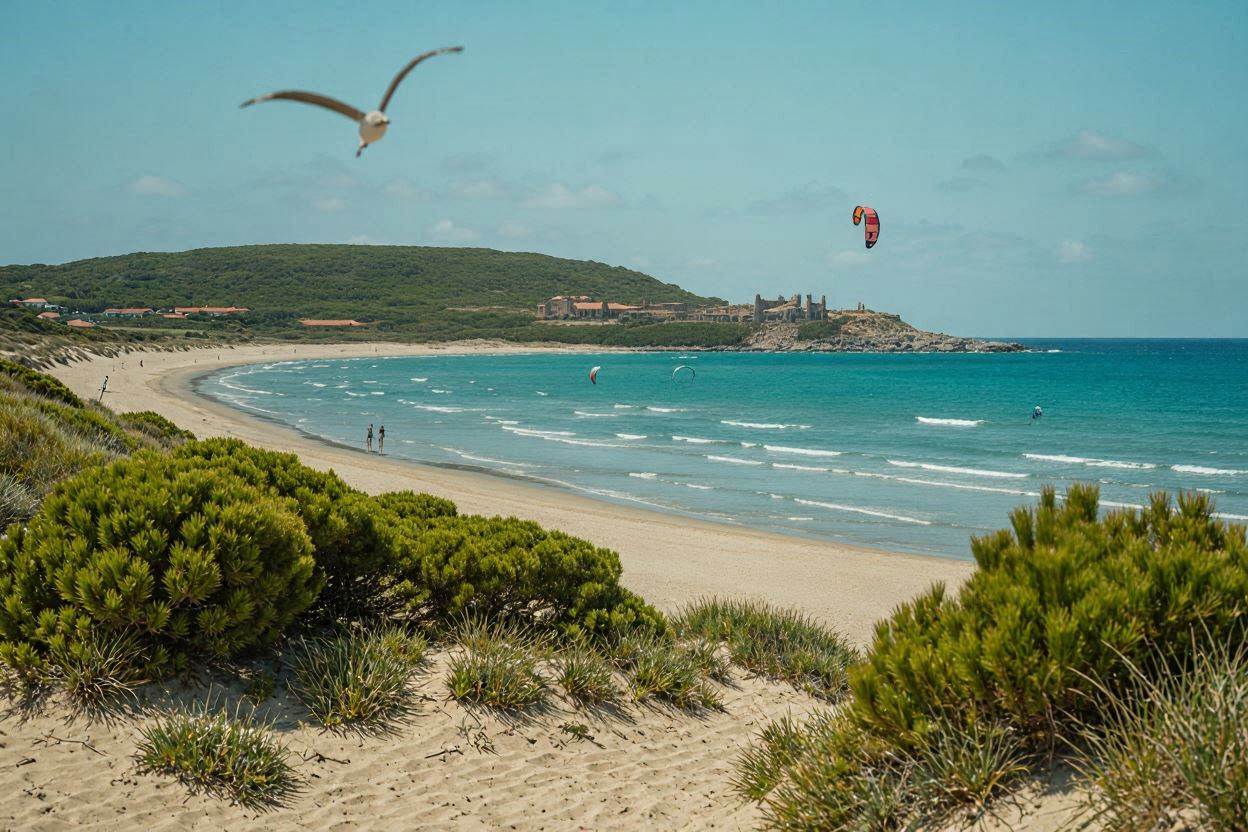
White sand, a massive dune system, and the ruins of Baelo Claudia — a Roman fish-salting city — sharing the same stretch of coast. On clear days, the Moroccan coastline is a solid silhouette across the Strait of Gibraltar. This vast, four-kilometer expanse of silk-smooth sand, huge dunes, and coastal pines will blow you away — figuratively, but perhaps almost literally too. When the easterly Levante wind blows, gusts ruffle the Atlantic and create big waves for surfers. The constant breeze makes it a hotspot for kitesurfing and windsurfing as well. Combine beach time with culture by exploring the Roman archaeological site, with the impressive remains of a theater, forum, thermal baths, and columned basilica. The views over to Morocco are sublime.
Best time: June-September (check wind forecasts — Levante can be fierce) Nearest airport: AGP Malaga, SVQ Seville Get there without a car: Bus to Tarifa, then local transfer or taxi Perfect for: Kite surfers, history buffs, long-walk lovers Know before you go: The dune is protected — no climbing off-path
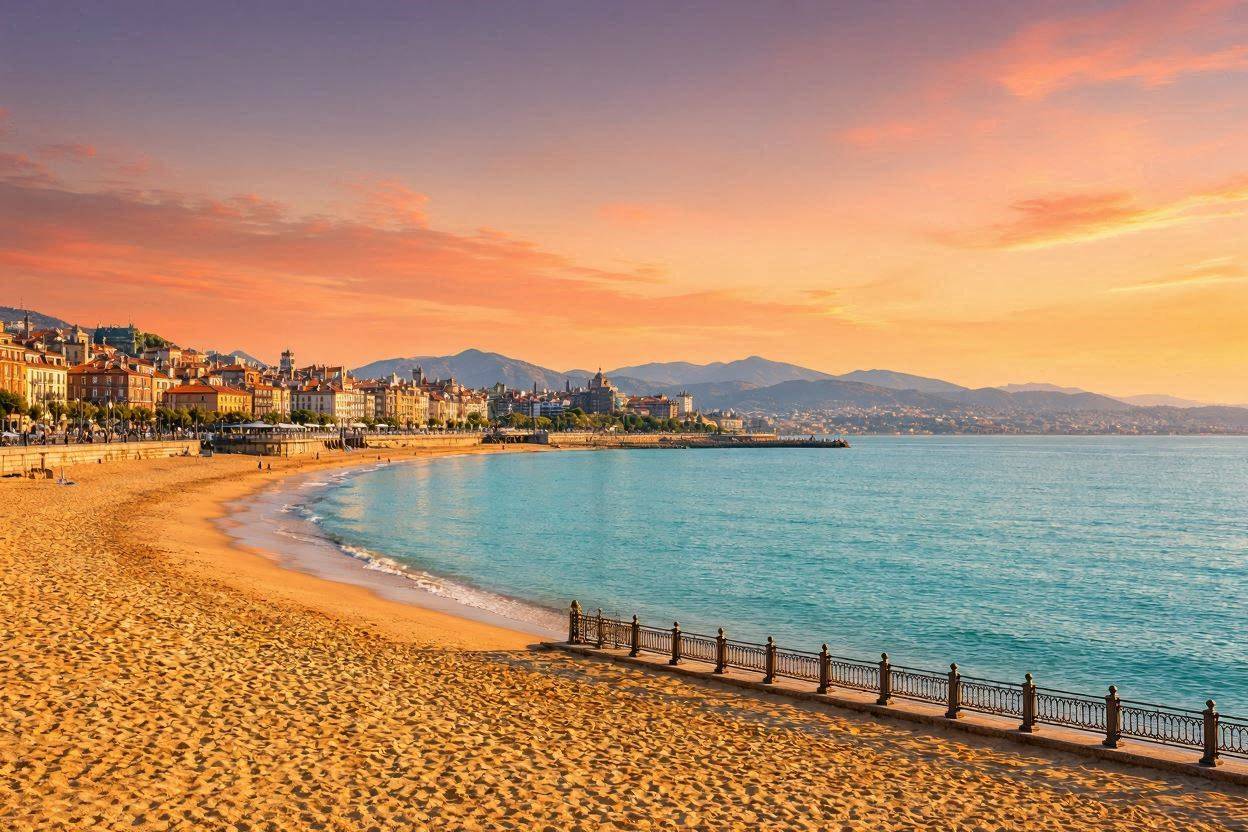
7. La Concha, San Sebastian — The Urban Beach That Set the Standard
If cities had beauty pageants for beaches, San Sebastian would retire the trophy. La Concha curves along a sheltered bay right in the city center — a magnificent, 1.6-kilometer-long smile of blonde sand that ranks among Europe’s grandest and most irresistible city beaches. Mountains frame either end and a promenade was practically designed for the evening paseo culture that defines Basque life. You swim. You eat pintxos. You swim again. This is not a vacation — it’s a lifestyle from which you briefly extract yourself to go home. San Sebastian is raved about far and wide for a food scene twinkling with Michelin stars, and its backdrop of gold-sand beaches and lush green hills also seduces. By night, lights glitter over the Bay of Biscay beyond.
Detour: Hop on a boat to the diminutive Isla de Santa Clara in the middle of La Concha Bay. At low tide, the island has its own tiny beach; at all times of day, you can scale forested paths to a lighthouse. Bring a picnic.
Best time: July-September (shoulder season for promenade walks) Nearest airport: EAS San Sebastian (also BIO Bilbao) Get there without a car: City transport from the center — you’re already here Perfect for: Families, city-break travelers, pintxo enthusiasts Know before you go: Water temps are Atlantic — invigorating, warm it is not
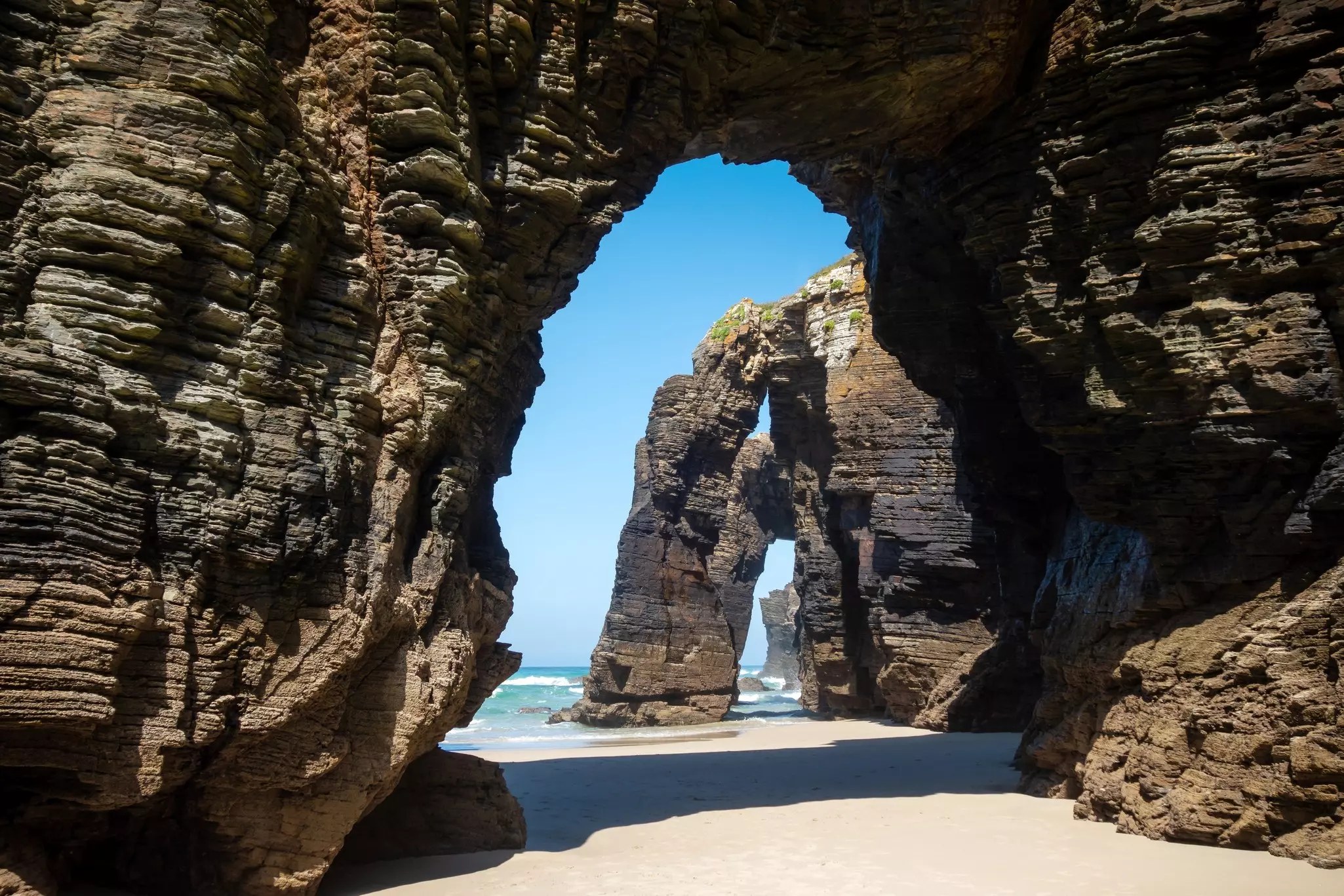
8. Praia as Catedrais
Stone arches. Grottoes. Vaults. This beach in Galicia doesn’t have a cathedral — it is one, carved by millennia of Atlantic tides. One of northern Spain’s most sensational strands, the 1.5-kilometer-long Cathedral Beach takes its name from the way wind and water have gnawed this rocky coastline into Gothic-style arches, towers, buttresses, and chambers. Walk through archways that would make Gaudi jealous, but only at low tide — when the long butterscotch sands are totally exposed. The rest of the time, the sea reclaims its sculpture gallery, which is exactly the dramatic flex you’d expect from Spain’s wildest coastline.
Best time: July-September (check tide tables — this is non-negotiable) Nearest airport: OVD Asturias, LCG A Coruna, SCQ Santiago Get there without a car: Train or bus to Ribadeo, then local transport Perfect for: Photographers, landscape lovers, tide-chart nerds Know before you go: Free permits required Easter week and July 1-September 30 — book online via the Xunta de Galicia website
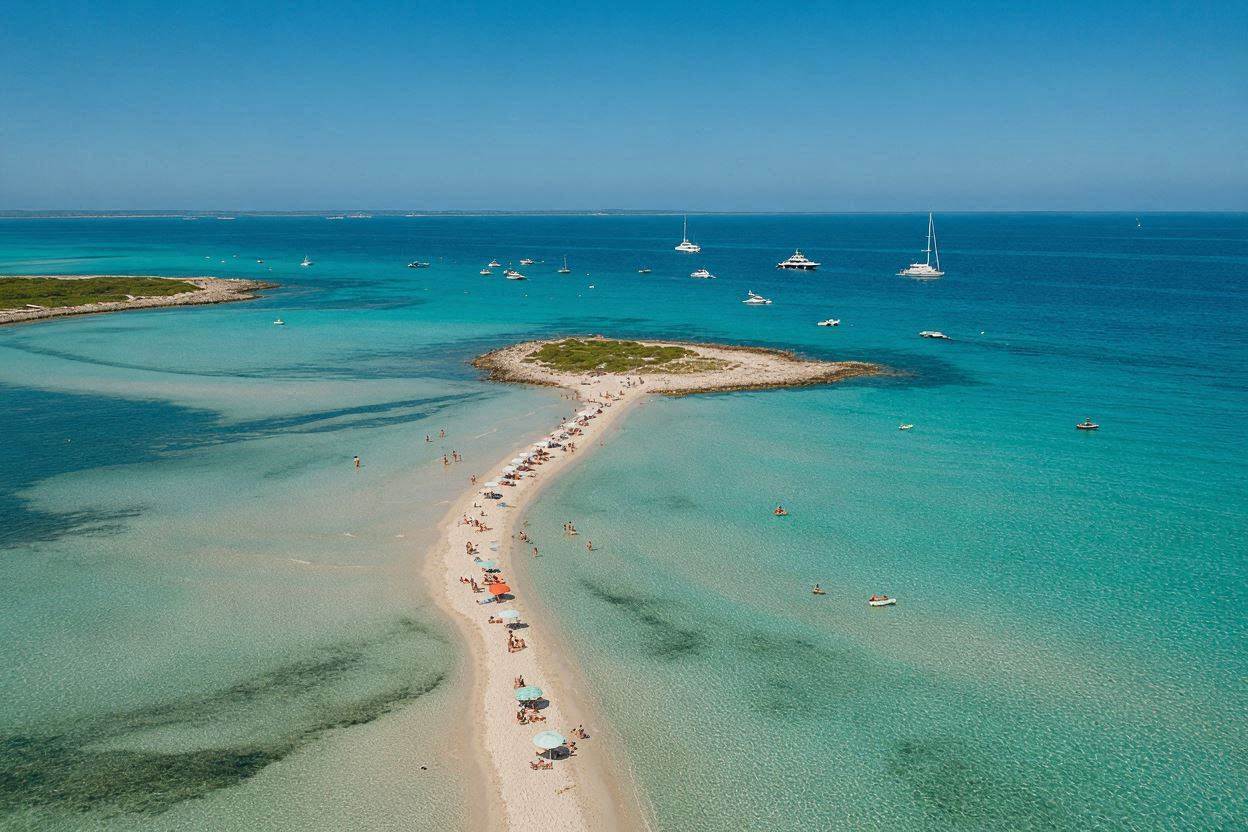
9. Ses Illetes, Formentera — The Water That Doesn’t Look Real
A long arc of sugar-white sand meeting the turquoise sea, Platja Illetes on Formentera is pinch-yourself beautiful — and only 30 minutes by ferry from neighboring Ibiza. The beach makes up the western section of the Trucador Peninsula; just offshore, you’ll spy two illetes (islets), Pouet and Rodona, which give the beach its name. White sand. Water the color of a Tiffany box. A protected natural park with no high-rises allowed. Despite being popular, the beach maintains a laid-back vibe thanks to local conservation efforts. Snorkelers and sailors love it for its calm sea, while nearby beach bars serve up fresh seafood and cocktails under the sun. Summer access is regulated — a good thing — and getting there requires a ferry, which is exactly the filter this beach needs.
Local tip: Dodge peak summer season, when Ibiza day trippers hog the sand space. Visit in late spring or early autumn instead.
Best time: June-September (May and October for fewer visitors) Nearest airport: IBZ Ibiza, then ferry to Formentera Get there without a car: Ferry Ibiza-La Savina, then bus, bike, or walk on the island Perfect for: Floaters, snorkellers, anyone who wants to believe the Med can look like this Know before you go: Summer parking and access are regulated — plan ahead
10. Cala Macarella, Menorca — Twin Coves, Twice the Magic
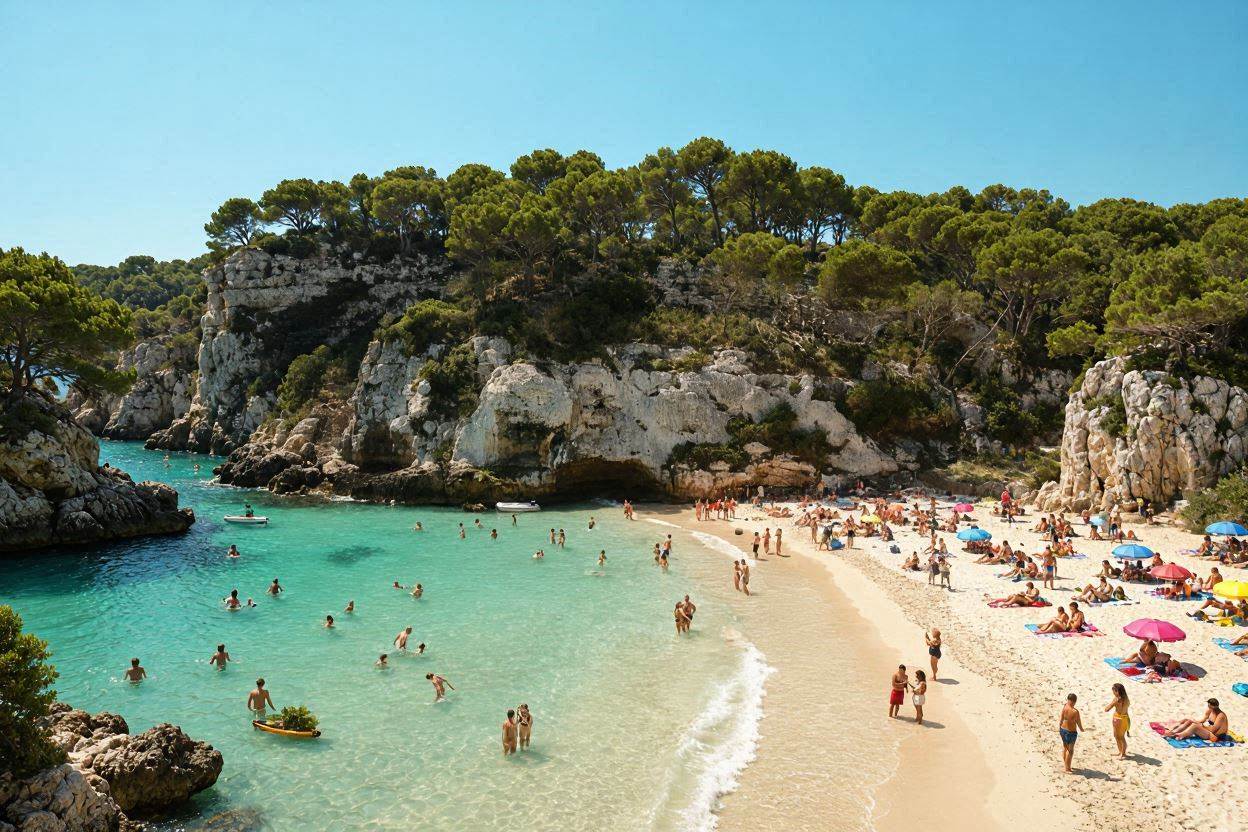
A tiny notch on the map on Menorca’s southwest coast, Cala Macarella makes first-time beachgoers swoon. Wedged among cliffs where fragrant pines and holm oaks grow, this perfect-looking half-moon beach boasts both fine white sand and crystal-clear water. Macarella and Macarelleta — two adjacent bays connected by a coastal path, each outdoing the other in the turquoise-and-white-cliff department. In summer, car access is restricted (the road literally closes), and a seasonal bus runs from Ciutadella. The result? Even in August, you can find a rock to call your own. The Cani de Cavalls trail brings hikers in from across the island — which is exactly how a Biosphere Reserve beach should be accessed.
Detour: If you think Cala Macarella is gorgeous, just wait until you lay eyes on Cala Macarelleta, reached by heading up and over the cliffs and through the pines.
Best time: June-September (June and September for comfort without crowds) Nearest airport: MAH Menorca Get there without a car: Seasonal bus L69 Ciutadella-Macarella (buy tickets online) Perfect for: Cove connoisseurs, trail walkers, cliff-jumpers
11. Las Teresitas
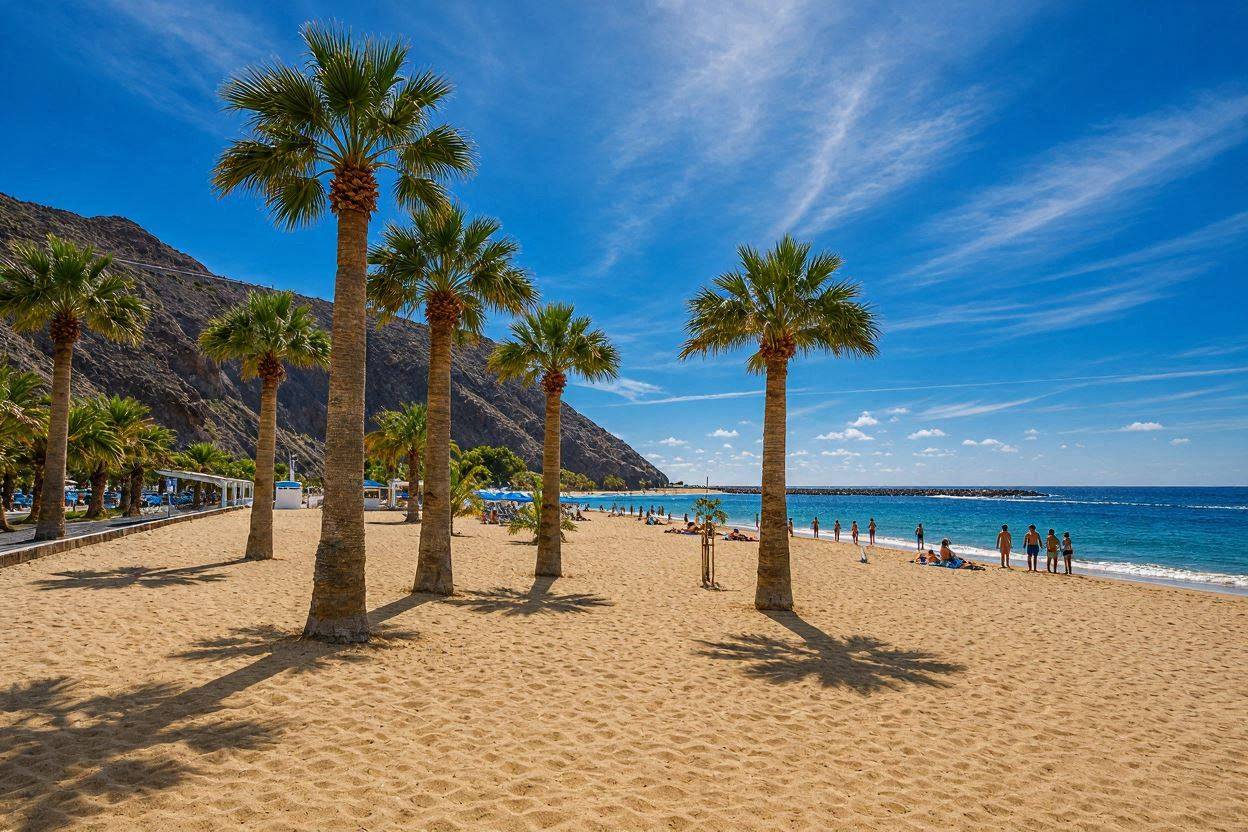
Things take a turn for the wild in Tenerife’s northeast, where waves crash against jagged cliffs and grottoes. Unlike most of the volcanic, black-sand beaches on the island, 1.6-kilometer-long Playa Las Teresitas dazzles with a sweeping arc of palm trees and golden sand shipped in from the Sahara. (Apparently, the sand had to be rigorously cleaned because of the red ants and scorpions that came along for the ride.) The Atlantic is choppy elsewhere, but thanks to a breakwater, it’s perfect for family swims here. And the backdrop captivates, with the laurel-forest-cloaked Anaga Mountains rising in the distance. Seven minutes from the island’s capital, Las Teresitas is the beach Tenerife’s locals claim for themselves on weekends. Year-round swimability gives this one a decisive edge when the rest of Europe is pulling on thermal layers.
Local tip: Close to capital Santa Cruz de Tenerife, Las Teresitas is popular for its chilled atmosphere and chiringuitos. El Caracol is a relaxed weekend haunt for ice-cold mojitos, tapas, and salsa beats.
Best time: Year-round (weekdays for fewer locals, weekends for the authentic experience) Nearest airport: TFN Tenerife North (also TFS Tenerife South) Get there without a car: TITSA city buses from Santa Cruz Perfect for: Families, calm-water devotees, winter escapees
12. Maspalomas
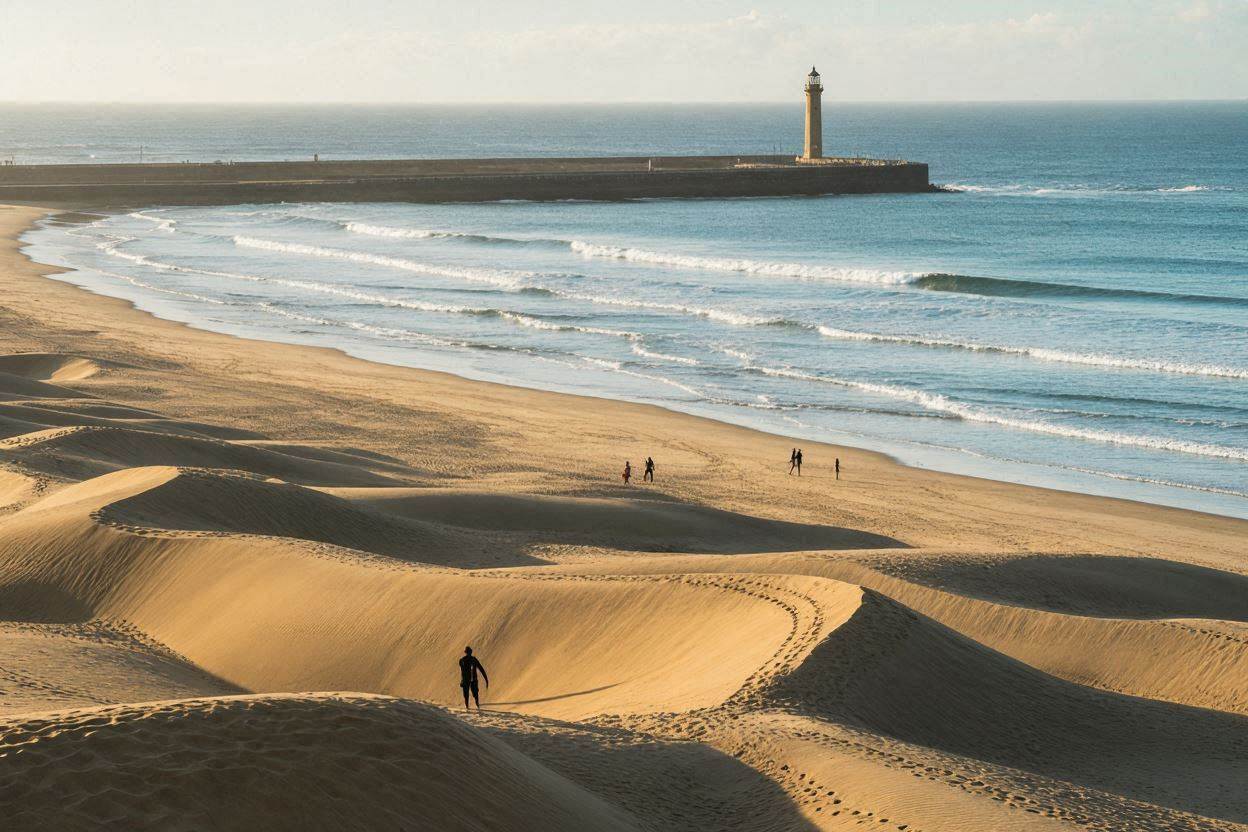
Imagine a slice of the Sahara that decided to migrate to the coast, parked itself next to a resort town, and brought a freshwater lagoon and a palm grove along for the ride. That’s Maspalomas. The dunes are a protected nature reserve — stay on marked paths, read the info boards, and resist the urge to roll down them (tempting, but the rangers have seen it all). This unique landscape feels more like the Sahara than Spain, with golden sands merging seamlessly into the sea. It’s a versatile destination — families enjoy the calm sections near the lighthouse, while surfers and naturists head further along the dunes. Nearby, the Maspalomas Lagoon offers a peaceful nature reserve teeming with birdlife. When Europe’s northern beaches are collecting frost, Maspalomas is collecting swimmers.
Best time: Year-round (winter is mild, summer is warm — it’s always beach season here) Nearest airport: LPA Gran Canaria Get there without a car: Frequent buses from the airport and resort areas Perfect for: Dune walkers, winter sun chasers, nature-respectful travelers Know before you go: The dunes are a protected reserve — stay on marked routes
At a Glance
| Beach | Region | Type | Best For | Airport |
|---|---|---|---|---|
| El Saler | Valencia | Nature/dunes | Quiet city escape | VLC |
| Cullera | Valencia | Family resort | Calm water, kids | VLC |
| Aiguablava | Costa Brava | Cove | Turquoise, snorkel | GRO/BCN |
| Platja de Castell | Costa Brava | Wild | Untouched nature | GRO/BCN |
| Los Genoveses | Cabo de Gata | Desert cove | Solitude, hiking | LEI/AGP |
| Bolonia | Andalucia Atlantic | Wild/dunes | Kitesurf, history | AGP/SVQ |
| La Concha | Basque Country | Urban | Pintxos + swim | EAS/BIO |
| Las Catedrales | Galicia | Rock formations | Photography, tides | OVD/LCG |
| Ses Illetes | Formentera | Caribbean-style | Float, relax | IBZ + ferry |
| Cala Macarella | Menorca | Twin coves | Hiking + coves | MAH |
| Las Teresitas | Tenerife | City beach | Year-round swim | TFN/TFS |
| Maspalomas | Gran Canaria | Dunes | Winter escape | LPA |
Getting There Without a Car
Most of these beaches are accessible by public transport:
- Valencia region: City buses and Cercanias trains cover El Saler and Cullera
- Costa Brava: Summer bus routes to Begur and Palamos; caminos de ronda for coastal walks
- Andalucia: Regional buses to Cabo de Gata and Tarifa; local transfers to the beaches
- Basque Country: San Sebastian’s city transport reaches La Concha directly
- Galicia: Trains and buses to Ribadeo; local taxis for the final stretch
- Balearics: Ferries + island buses; seasonal beach shuttles on Menorca
- Canaries: Regular TITSA and intercity buses serve both Tenerife and Gran Canaria beaches
Beach Rules Worth Knowing
- Protected dunes and reserves (El Saler, Bolonia, Maspalomas): Stay on boardwalks and marked paths — fines apply
- Las Catedrales permits: Free but mandatory during peak season (book online via the Xunta de Galicia website)
- Ses Illetes access: Regulated in summer — arrive early or book parking
- Cala Macarella: Car access restricted in summer — use the L69 shuttle bus
- All beaches in Spain: Public by law — no private beach can deny you passage along the shoreline
Spain’s Beach Culture: More Than Sand
What sets Spain apart from other beach destinations isn’t just the quantity or quality of its coastline — it’s the culture that surrounds it. The chiringuitos (beach bars) where mojitos are paired with sunsets that pop. The paseo (evening stroll) along the promenade, where the whole town comes out to see and be seen. The freshly caught seafood grilled at tiny tapas bars steps from the shore. The cliff-top villages so white they make you blink. This is a country that doesn’t just go to the beach — it lives it.
From the windswept dunes of Maspalomas to the crystalline lagoons of Formentera, from the Gothic arches of Las Catedrales to the urban elegance of La Concha, Spain’s coastline offers something for everyone. Whether you’re sipping sangria by the sea, hiking along wild cliffs, or watching the sunset over the Atlantic, one thing’s certain — Spain’s beaches will leave you dreaming of the next visit.