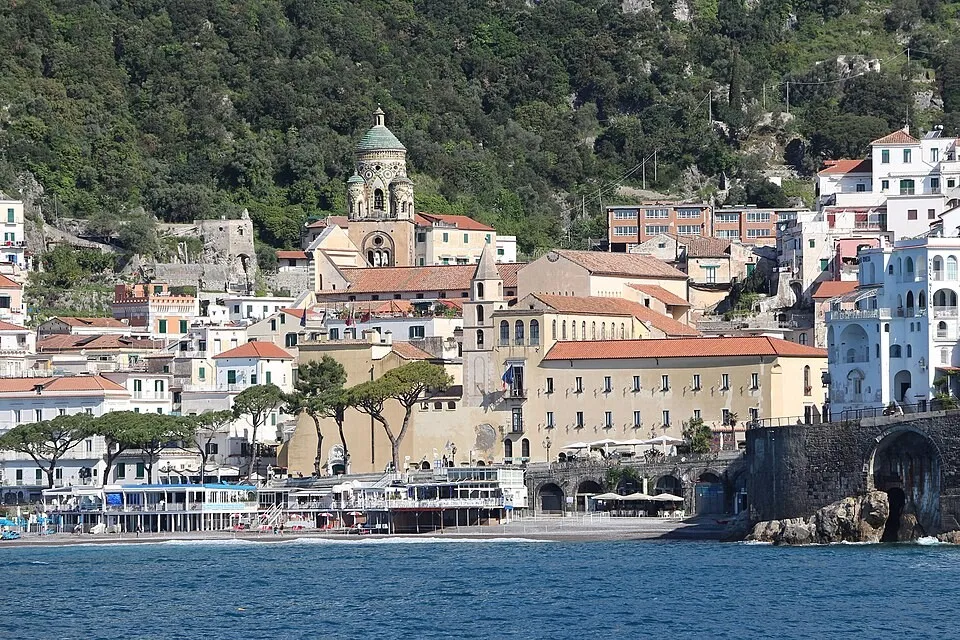
Italy’s coastline is a gallery of towns so beautiful they feel curated by some divine aesthete with an unlimited budget. Pastel houses tumble down volcanic cliffs. Harbours the colour of sapphires sit beneath medieval watchtowers. Lemon groves perfume the air with a sweetness that no candle company has ever successfully captured. We traced the boot’s edge — from the Ligurian cliffs of the north to the Puglian rocks of the south — to map the finest coastal villages the Mediterranean has to offer.
Quick Guide
- Most photographed: Positano, Cinque Terre, Portofino
- Most romantic: Ravello, Atrani, Riomaggiore
- Most dramatic cliffs: Polignano a Mare, Amalfi, Tropea
- Best for food: Sorrento, Monterosso, Amalfi
- Best for hiking: Cinque Terre, Ravello, Amalfi Coast Path
- Underrated: Atrani, Tropea, Puglia coast
Best Time to Visit
| Region | Best Months | Temp Range | Crowd Level |
|---|---|---|---|
| Amalfi Coast | May-Jun, Sep-Oct | 20-28C | Moderate in shoulder season |
| Cinque Terre | Apr-Jun, Sep-Oct | 18-26C | Avoid Jul-Aug at all costs |
| Ligurian Riviera | May-Sep | 22-30C | Portofino always busy |
| Puglia | May-Jun, Sep-Oct | 22-30C | Pleasant even in summer |
| Calabria (Tropea) | Jun-Sep | 25-33C | Italian holidays in August |
| Sardinia coast | Jun-Sep | 26-32C | Peak in August |
1. Amalfi - The Town That Launched a Thousand Postcards
Amalfi was once a maritime republic that rivalled Genoa and Venice. Today, it rivals only itself. The Duomo di Sant’Andrea rises from the main piazza like a wedding cake of Arab-Norman architecture, its striped facade gleaming against the blue. Inside, the Cloister of Paradise - built in 1220 for Amalfi’s noble families - feels like walking into a poem written in stone.
Wander the vertical streets. Every turn reveals a new absurdity: a ceramic shop squeezed beneath a 14th-century arch, a shrine to Saint Andrew tucked between a gelateria and a leather workshop, a garden of lemons the size of grapefruits growing on a terrace the width of a kitchen table. Amalfi is not a town you visite - it is a town that happens to you, one narrow alley at a time.
Must-see: Duomo di Sant’Andrea, Cloister of Paradise, Paper Museum Limoncello: Buy it here - Amalfi lemons produce the finest Stay: A cliffside hotel with a terrace overlooking the piazza
2. Positano - The Vertical Dream
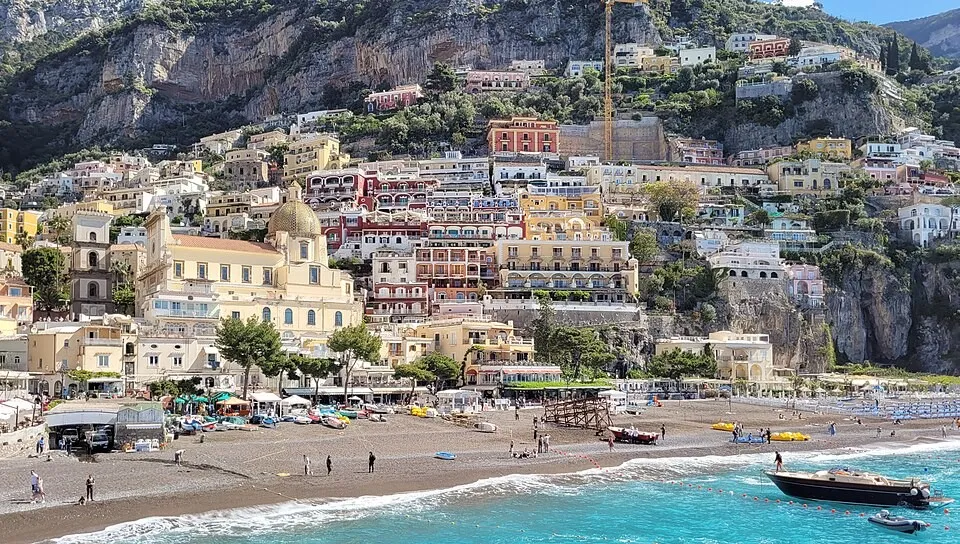
If Amalfi is the soul of the coast, Positano is its face - the one that launched a million Instagram posts and made John Steinbeck write, in a 1953 essay for Harper’s Bazaar, that “Positano is a dream place… It is not real when you are there and becomes beckoningly real after you have gone.” Steinbeck had it exactly right. The town works on you retroactively.
Houses painted in shades of peach, terracotta and sun-bleached pink cascade down the cliff face like a waterfall frozen mid-plunge. The Church of Santa Maria Assunta, with its majolica-tiled dome, provides the punctuation mark at the centre. Below, the Spiaggia Grande curves between the cliff and the sea, and the only way to reach it is down - hundreds of steps, past boutiques selling handmade sandals and linen dresses, through a maze where every wrong turn leads to a better view.
Iconic shot: From the upper road (SP219) at sunset Beach: Spiaggia Grande (main) or Fornillo (quieter) Buy: Handmade sandals, linen, ceramics
3. Ravello - Where Gods Come for the View
Ravello sits 350 metres above the sea, looking down on Amalfi and Positano with the composed detachment of a duchess at a village wedding. The views from Villa Rufolo and Villa Cimbrone are the kind that make sceptics believe in a creator - or at least in landscape architecture as a divine practise.
Villa Cimbrone’s Terrace of the Infinite is arguably the most photographed viewpoint in Italy. A row of marble busts frames the Gulf of Salerno, and the effect is so theatrical that Gore Vidal, who lived here for decades, called it “the most beautiful sight I have ever seen in my life.” In summer, the Ravello Festival fills the gardens with orchestral music performed on a stage suspended above the void. Wagner came here and wrote half of Parsifal. You may not compose an opera, but you will understand the impulse.
Terrace of the Infinite: Villa Cimbrone - arrive at opening to avoid queues Villa Rufolo: Wagner’s inspiration; now a concert venue Atmosphere: Cool, quiet, aristocratic - the antidote to Positano’s glamour
4. Atrani - The Secret Next Door
Atrani sits two minutes around the headland from Amalfi, but it may as well be on another planet. While Amalfi throngs with day-trippers, Atrani - the smallest municipality in southern Italy by area - retains the character of a working fishing village. Laundry hangs between buildings. Old men play cards in the piazza. The beach, tiny and perfect, is used by locals who would not dream of fighting for a square metre of sand in Amalfi.
The Church of San Salvatore de’ Birecto, where Amalfi’s doges were once crowned, anchors the upper town. The lower town is pure theatre: a narrow gorge between pastel buildings leads to the sea, like a set designed by a deity with impeccable taste. Come at dusk, when the light turns the facades gold, and you will understand why this little wedge of coast between Amalfi and Ravello is where Italians go when they want to remember what Italy used to be.
Best for: Escaping Amalfi’s crowds, authentic village life Beach: Small, free, uncrowded Walk: Path to Ravello through lemon terraces (45 minutes)
5. Cinque Terre - Five Villages, One Obsession
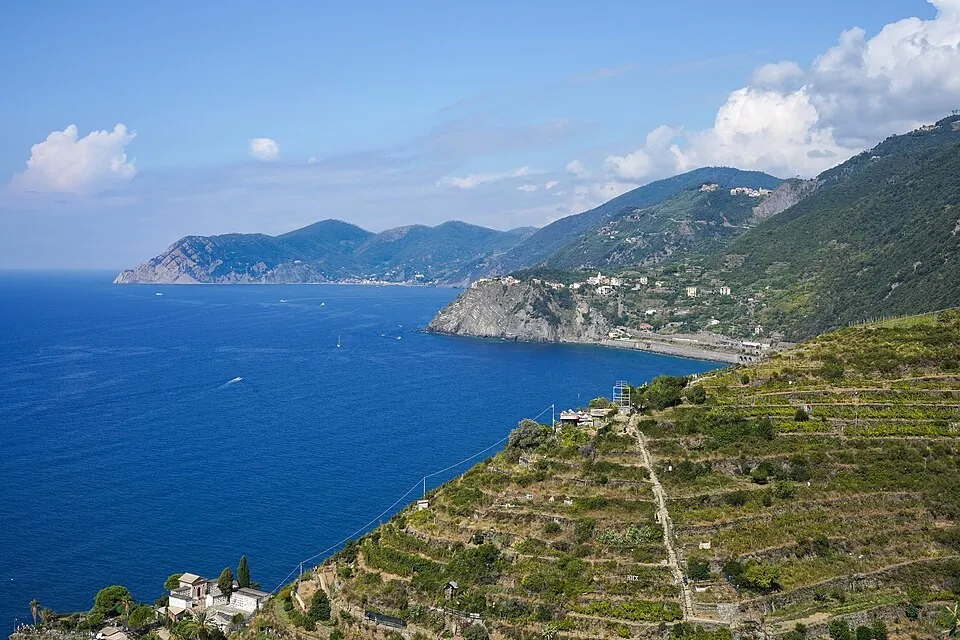
The Cinque Terre - five villages threaded along 18 kilometres of Ligurian cliff face - may be the most overphotographed stretch of coastline on Earth. The photos do not lie, but they only tell half the truth. What no image can convey is the physical effort of moving between these villages: 382 steps up from the station at Manarola, 350 more to reach the vineyard terrace above. The sea is always below, pulling your gaze and your centre of gravity.
Monterosso has the only real beach and the most relaxed atmosphere. Vernazza is the postcard - a natural harbour flanked by a Doria castle, with pastel buildings leaning against each other like old friends. Corniglia, the only village without sea access, perches on a promontory and requires 382 steps from the station (there is a bus, but where is the virtue in that). Manarola glows at sunset like a sunset of its own making. Riomaggiore, the southernmost, is where all the colours of the Cinque Terre are compressed into one vertical gorge.
Hiking: Sentiero Azzurro (blue trail) connects all five villages Best strategy: Start in Monterosso and walk south Wine: Sciacchetra - the local dessert wine, a revelation
6. Riomaggiore - The Southern Gateway
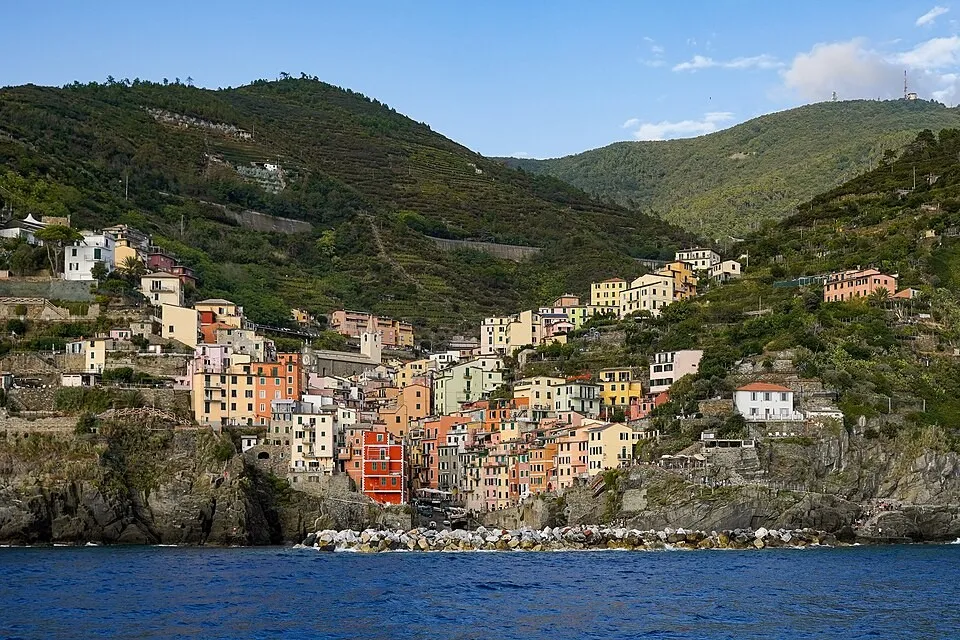
Riomaggiore deserves its own entry because it is the village most visitors underestimate. Wedged into a narrow ravine, its tall, narrow houses - each painted a slightly different shade of pink, orange and ochre - lean against each other along two main streets that converge at the tiny harbour. At sunset, the cliff walls turn the colour of terracotta, and the sea below shifts from navy to violet.
The Via dell’Amore (Lover’s Lane) used to connect Riomaggiore to Manarola along a cliffside path carved by lovers who had no other way to meet. After years of closure following landslides, sections are reopening. Even closed, the village itself rewards slow exploration: a tunnel leads from the main street to the harbour, where a tiny beach and a single restaurant serve the best fried anchovies in the Cinque Terre.
Best for: Sunset, photography, fried anchovies Walk: The village itself is the attraction
7. Monterosso al Mare - The Beach Among Cliffs
Monterosso is the most approachable of the Cinque Terre, which is both its strength and its vulnerability. It has a proper sandy beach, a wide promenade, and enough restaurants to sustain a small city. The old town, with its medieval towers and narrow caruggi (the Ligurian word for alleys), retains real character, while the new town offers a Riviera experience - complete with beach clubs and Aperol Spritz at sunset.
But climb above the town to the Convent of the Capuchin monks, and Monterosso’s wilder soul reveals itself. The convent’s terrace has perhaps the single finest view of any of the Cinque Terre: the entire crescent of coastline from Punta Mesco to Vernazza, laid out below like a geography lesson in how beauty is constructed from rock, sea and stubbornness.
Beach: Free sections and paid lidos Best view: Capuchin Convent terrace Specialty: Anchovies, focaccia, farinata (chickpea flatbread)
8. Portofino - The Pastiche That Works
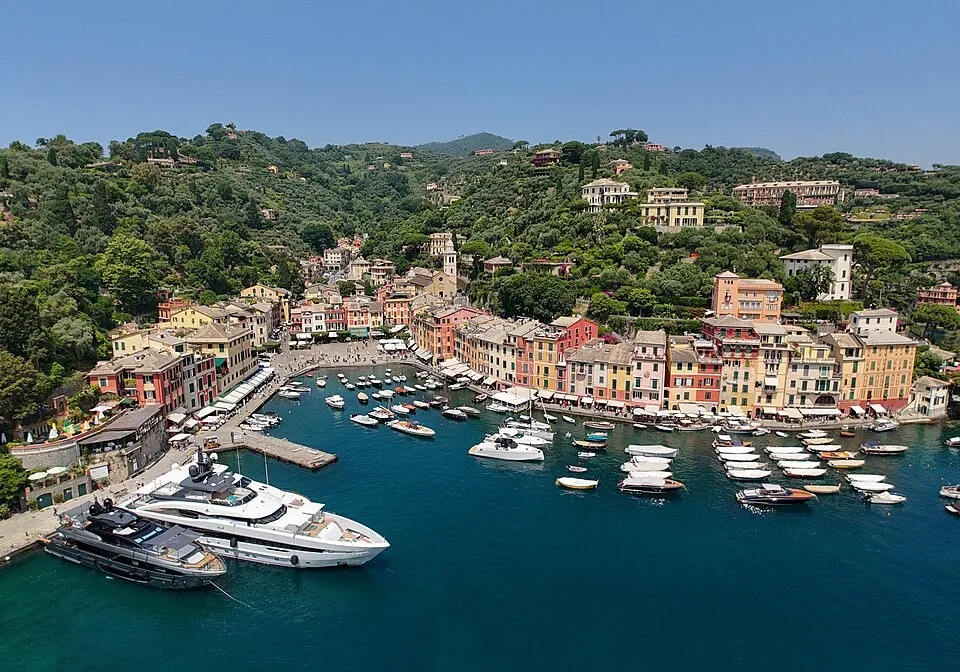
Portofino is absurd, and it knows it. A fishing village that became a playground for the 20th century’s richest and most gorgeous people - Bogart and Bacall, Elizabeth Taylor, the Agnellis, the Rothschilds - it synthesises natural beauty and cultivated glamour with an ease that would be offensive if it were not so visually persuasive.
The harbour is the colour of a sapphire in a jewellery shop. Candolim-coloured houses line the waterfront. A castle and a lighthouse frame the entrance. And above it all, the Church of San Giorgio perches on the promontory like a spiritual exclamation mark. The Piazzetta, despite being a shrine to luxury - Think Lamborghini showrooms next to 16th-century facades - somehow remains charming. The trick is to arrive by boat, so the full fairy-tella reveal of the harbour is your first impression.
Arrive by: Boat from Santa Margherita Ligure (5 minutes) Walk: To the lighthouse for the classic harbour view Dress code: Whatever costs the most
9. Sorrento - The Gateway Below Vesuvius
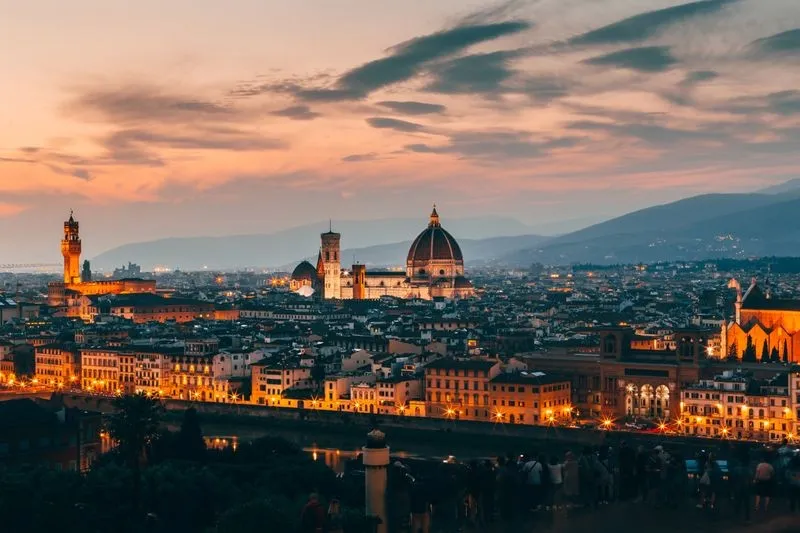
Sorrento is not technically on the Amalfi Coast - it sits on the Sorrentine Peninsula, facing the Bay of Naples with Vesuvius brooding on the opposite shore. But it is the gateway to everything south, and it earns its place in any coastal itinerary with one asset that no other town here can claim: the views from its cliffside gardens across the entire bay, from Vesuvius to Capri, are the widest and most dramatic on this entire coastline.
The old town is a maze of artisan workshops selling inlaid wood, coral jewellery and the lemon-infused everything for which Sorrento is known. The digestif limoncello was more or less invented here, and no other version - not even Amalfi’s - quite matches the intensity of Sorrento’s lemons. At night, the fishing harbour of Marina Grande becomes an outdoor restaurant where the catch of the day is grilled on open fires, and Vesuvius glows faintly across the water.
View: Villa Comunale gardens at sunset Buy: Inlaid wood (intarsio), limoncello Day trip: Ferry to Capri (20 minutes), bus to Amalfi (90 minutes)
10. Polignano a Mare - Puglia’s Cliff Diver
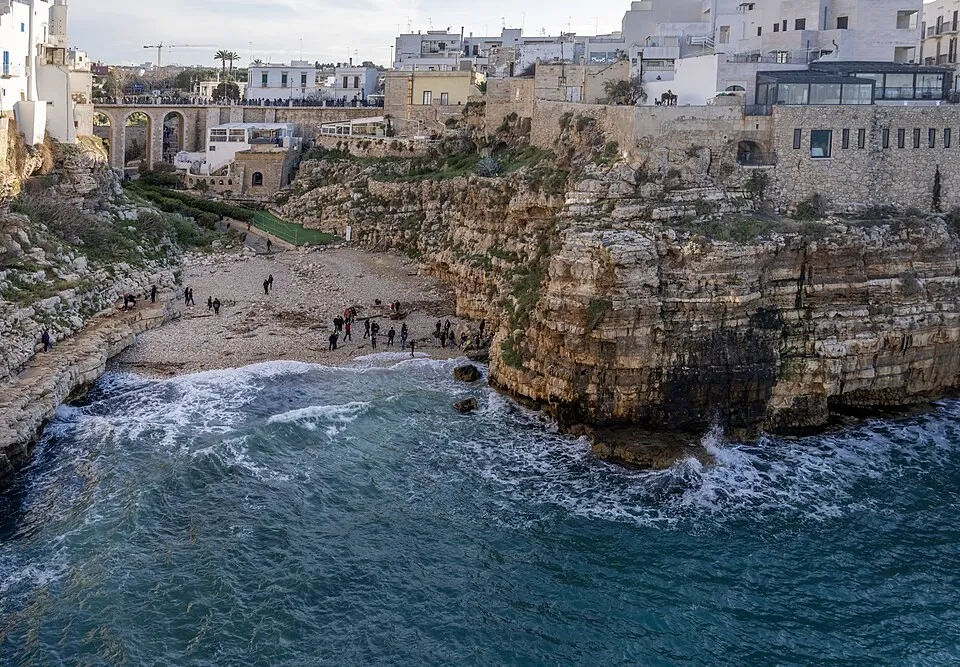
Puglia is the region the Italians kept for themselves, and Polignano a Mare is Puglia’s showpiece. The old town sits on a limestone promontory 30 metres above the Adriatic, with natural sea caves carved into its base and a tiny beach - Lama Monachile - squeezed between two cliff faces in a configuration so dramatic it looks like a film set.
The town has two personalities. At sunset, the terraces overlooking Lama Monachile become an open-air amphitheatre where locals and visitors gather to watch the light show. The more adventurous jump from the cliffs into the sea below - a tradition that dates back centuries and has been formalised into Red Bull Cliff Diving events. Behind the drama, the old town is pure Puglia: white-washed alleys, Arabian-influenced arches, and a poetry quote embedded in ceramic tiles on every other doorstep.
Iconic beach: Lama Monachile (tiny, arrive early) Diving: Cliffs are for experts only; watch from the terraces Food: Raw seafood at the old port
11. Tropea - Calabria’s Crown Jewel
If you want to see the Italy that travel magazines have not yet discovered, go to Tropea. Perched on a sandstone cliff above the Tyrrhenian Sea, it offers views that stop conversations mid-sentence. On a clear day, you can see the volcanic island of Stromboli smoking on the horizon - one of the world’s most active volcanoes, performing for an audience of oranges, onions and oleanders.
Below the town, the Church of Santa Maria dell’Isola sits on its own rocky island, connected to the mainland by a narrow causeway. The beach between the island and the town is long, white, and - for now - miraculously uncrowded by international standards. Tropea’s famous red onions, sweet enough to eat raw, find their way into every dish, and the local ‘nduja (spicy spreadable salami) is the kind of thing that makes vegetarians question their commitment.
View: Santa Maria dell’Isola from the cliff-top Beach: Below the old town - long, sandy, stunning Must-eat: Tropea red onions, ‘nduja, swordfish
At a Glance
| Town | Region | Vibe | Days |
|---|---|---|---|
| Amalfi | Campania | History + drama | 1-2 |
| Positano | Campania | Glamour + shopping | 1-2 |
| Ravello | Campania | Views + music | 0.5-1 |
| Atrani | Campania | Authentic + quiet | 0.5 |
| Cinque Terre | Liguria | Hiking + colour | 2-3 |
| Portofino | Liguria | Luxury + harbour | 0.5-1 |
| Sorrento | Campania | Gateway + gardens | 1-2 |
| Polignano a Mare | Puglia | Cliff diving + old town | 1 |
| Tropea | Calabria | Wild beauty + food | 1-2 |
Practical Tips
- Getting there: Fly to Naples (Amalfi Coast) or Pisa/Genoa (Cinque Terre); Bari for Puglia
- Transport: Ferries between Amalfi Coast towns; trains for Cinque Terre; rent a car for Puglia and Calabria
- Budget: Amalfi Coast and Portofino are the most expensive; Tropea and Atrani are the least
- Booking: Reserve restaurants in Positano and Portofino weeks ahead
- Hiking: Cinque Terre card includes trail access and trains; buy at any station
- What to pack: Comfortable shoes (the steps are endless), sunscreen, a camera with extra memory
- Language: English is spoken in major tourist areas; learn a few Italian phrases for the smaller villages