Las Vegas doesn’t have hotels — it has parallel universes you check into. You hand over your credit card at reception and the world outside ceases to exist. For three days, you live inside someone else’s fantasy of Rome, or Venice, or a Bellagio village, or a Wynn-era vision of organic luxury so complete it generates its own weather. The hotels on the Strip are not places to sleep. They are sovereign entertainments — cities unto themselves, each with its own cuisine, its own theater, its own interpretation of what it means to be alive at two in the morning in the middle of a desert.
Caesars Palace — The Empire That Never Fell
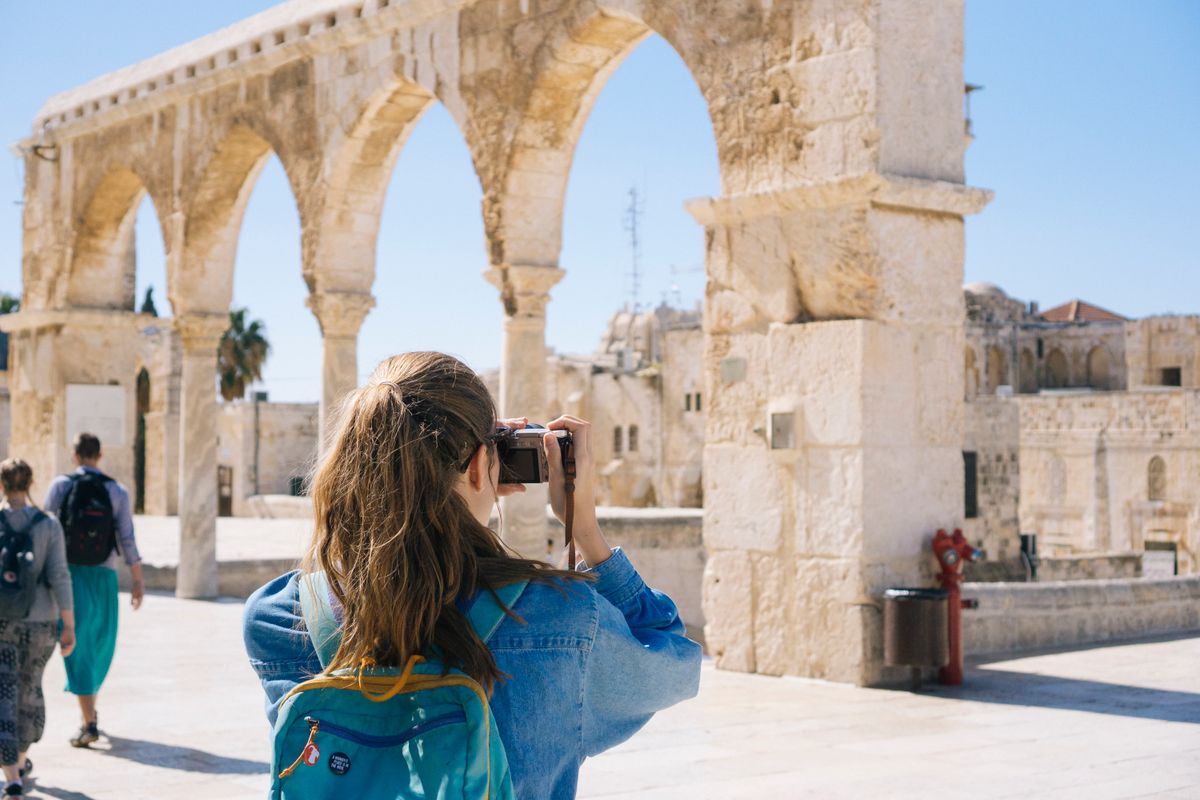
Caesars Palace is not a hotel. It is a declaration. Built in 1966 on a stretch of desert that would become the most famous four miles of asphalt in America, it arrived with marble columns, fountains, and a conviction that the Roman Empire had gotten the architecture right even if the civilization had eventually gotten the logistics wrong. Half a century later, it remains the Strip’s most complete self-contained universe — a place where you can check in on a Tuesday and not touch pavement again until Saturday.
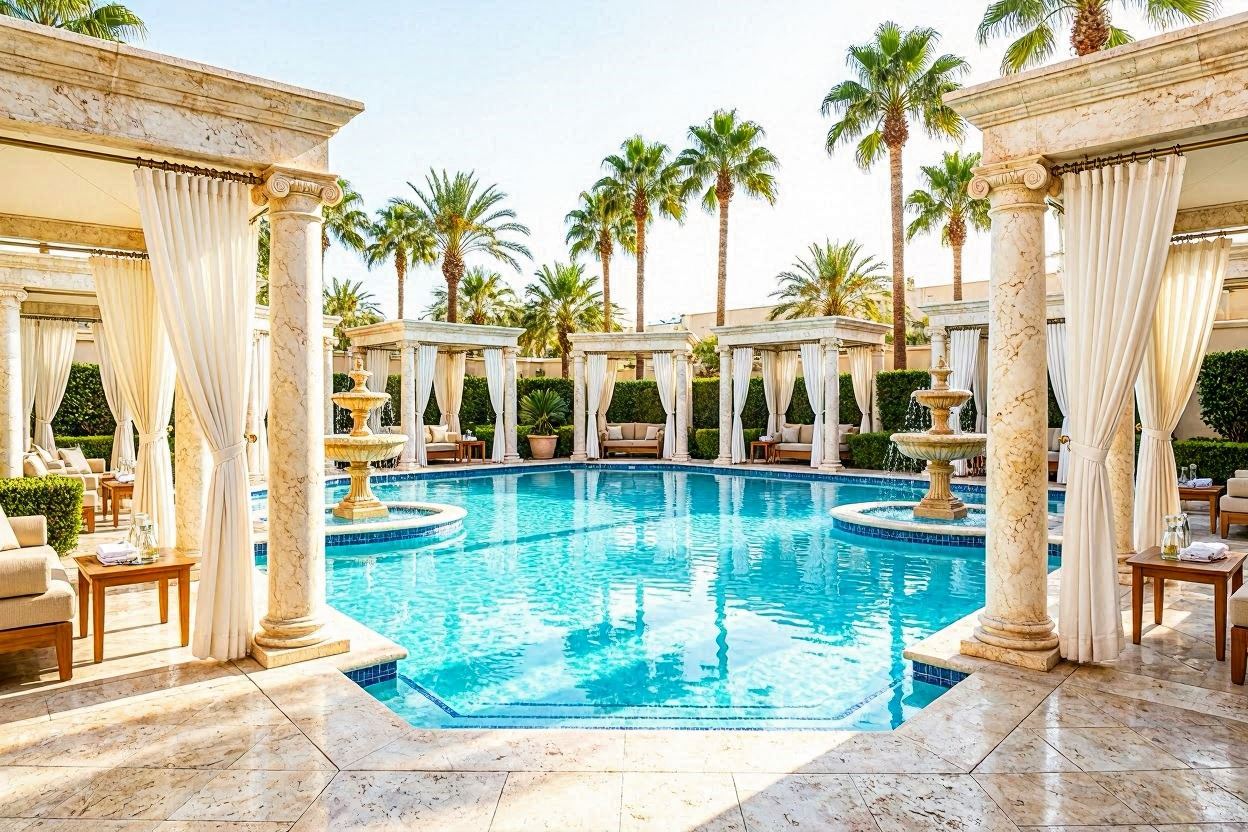
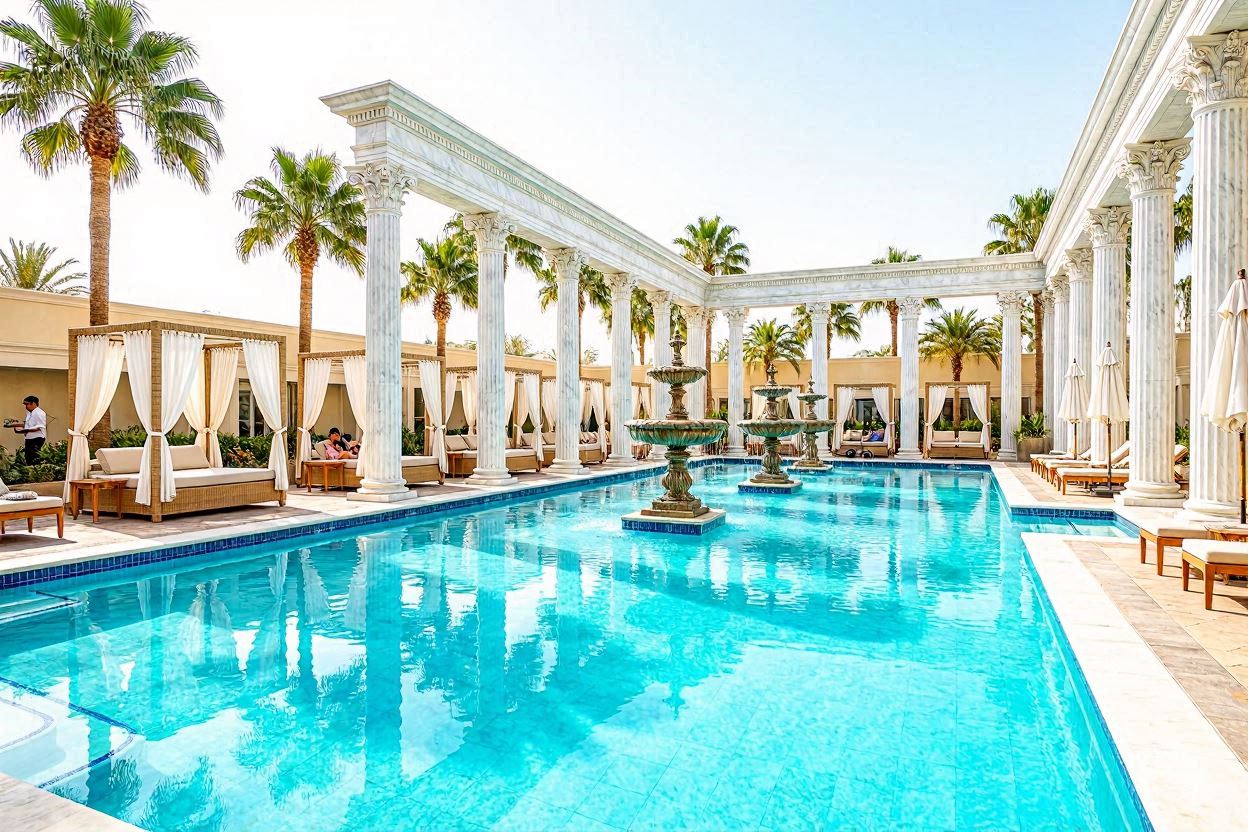
The Colosseum theater has hosted residencies by performers whose names alone justify the ticket price. The Garden of the Gods pool complex arranges cabanas and cocktails around water features that would satisfy a provincial governor. Qua Baths & Spa offers thermal baths and ice rooms — the rare wellness facility that understands the relationship between heat and desert. And then there are the one hundred and sixty shops, the restaurants commanding price points that would make a Manhattan sommelier flinch, and Omnia, the nightclub where the ceiling opens to reveal a chandelier that descends like a visitation.
The deeper truth of Caesars Palace is that every detail — from the cocktail you order at Caspians, the speakeasy hidden behind an unmarked wall, to the cigar you finish at Montecristo, to the French wine on the roof at Paris Chéri — has been engineered so that leaving the property feels less like a choice and more like an act of defiance. This is not a hotel you visit. It is a hotel that receives you.
The Bellagio — Interior as Grand Opera
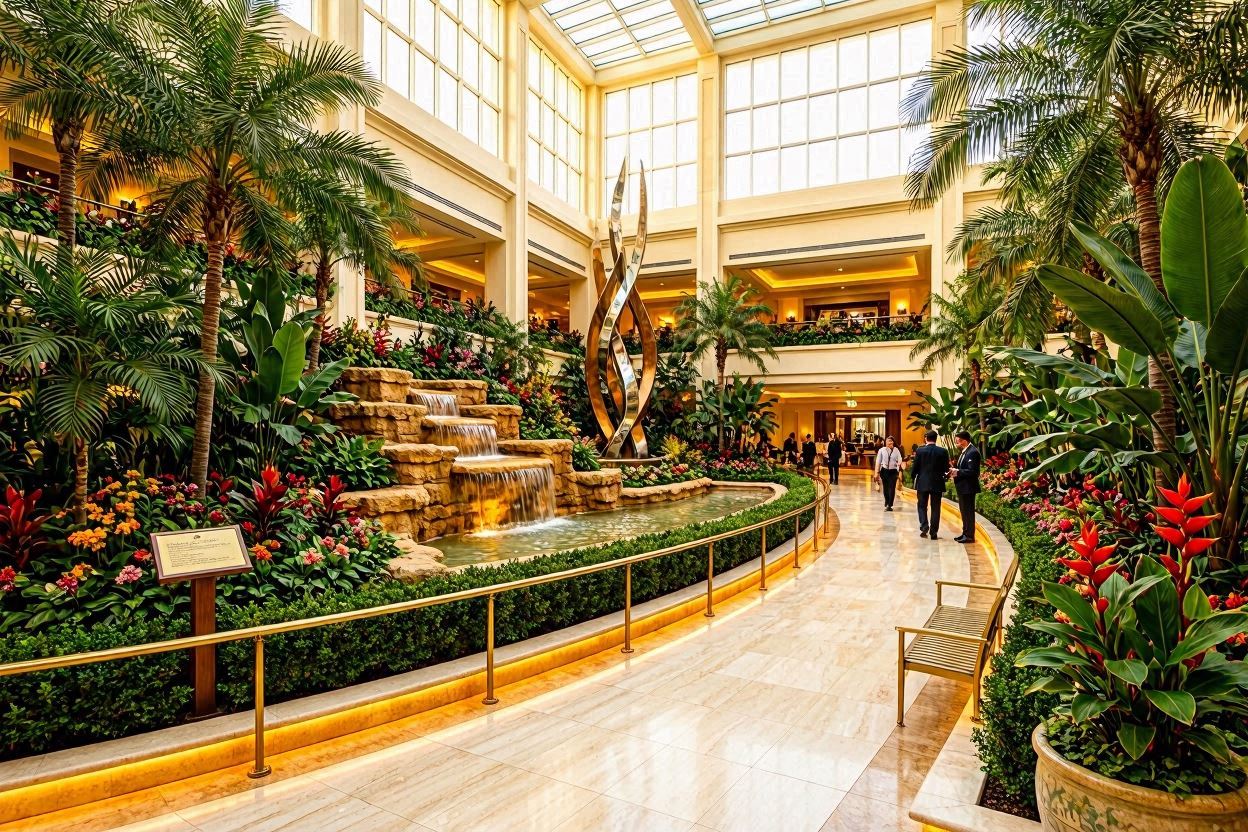
If Caesars asks you to live inside Rome, the Bellagio asks you to live inside an Italian villa that happens to contain a failing-water choreography visible from space. The Conservatory and Botanical Gardens — that vast, skylit chamber just past reception where seasonal floral installations rotate with the precision of a museum calendar — may be the single most photographed interior in the city. Each season brings a new universe of botanical architecture: cherry blossoms in spring, sunflowers in summer, harvest cornucopias in autumn, and winter tableaux that turn the space into a greenhouse in a snow globe.

The conservatory is free, which is itself a Las Vegas paradox — the most lavish interior on the Strip costs nothing to witness. It exists, like the fountains outside, as pure spectacle: proof that the house’s investment in beauty is the house’s investment in your willingness to stay. The Bellagio understands what other resorts are still learning: that the ultimate luxury is not the suite but the sensation — the feeling that you are standing inside something that required imagination, not merely capital.
The Venetian — A City Replicated Down to the Water
There is something both audacious and deeply sincere about building a Venice in the desert. The Venetian — and its sibling, The Palazzo — does not approximate the Italian city. It replicates it. Or at least replicates the version that exists in collective memory: the canals, the arched bridges, the gondolier in his striped shirt, the painted ceilings that make the indoor sky feel warmer than the real one outside.
The canal-level shops and restaurants form a labyrinth so convincing that you can lose your sense of direction entirely, emerging from a gelato shop to discover that it is somehow still twilight in a building where the sun has never shone. The suites — because at the Venetian, rooms are suites by definition — are the largest standard accommodations on the Strip, which is the hotel’s way of saying that even your private space is intended to feel like a residence, not a place between destinations.
Wynn and Encore — Organic Luxury as Ecosystem
Steve Wynn’s twin properties represent a different philosophy entirely. Where Caesars projects imperial monumentality and the Venetian projects cultural replication, Wynn and Encore project nature — or at least the indoor, climate-controlled, meticulously curated version of it. The atrium is a garden. The waterfall is a performances. The rotating carousel sculpture by Jeff Koons, installed in the atrium, reminds you that this is not a garden but a gallery — that the flowers and the art and the restaurant decor represent a single integrated aesthetic vision.
Dining at Wynn is an act of curation. The property gathers chefs like a museum gathers painters, and the result is a culinary district that exists entirely within a single building’s footprint. You do not go out to dinner. Dinner comes to you — or rather, dinner was always here, waiting for you, a reservation that was always meant to be kept.
The Cosmopolitan — The Strip’s Interior Design Thesis
Of all the Strip’s properties, the Cosmopolitan may be the one that most understands the relationship between architecture and desire. The Chandelier Bar — that three-story cascade of glass beads suspended in the lobby like a crystalline insect net — is not merely a bar but a thesis statement: this place was designed to be looked at, and you are part of the design. The terraces in every room, rare on the Strip, give you a private view of the city that makes you feel like a participant rather than a guest.
The Cosmo’s secret is scale. It is smaller than Caesars, more intimate than Bellagio, and uses that compactness to create a density of experience — restaurants, bars, clubs, art installations — that feels curated rather than overwhelming. The result is the Strip’s only truly modern hotel experience: one designed not in homage to some other place or era, but in conversation with now.
The Mob Museum — The City’s Other Origin Story
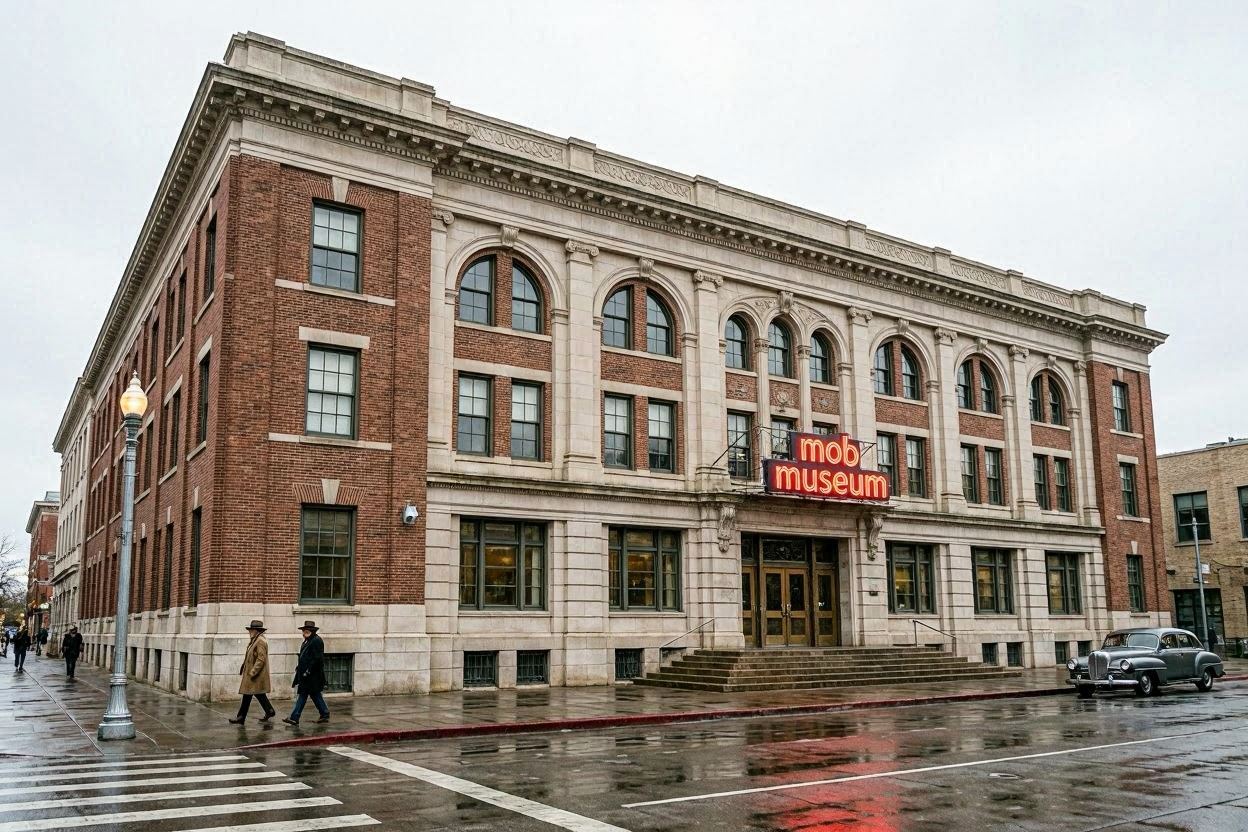
Step off the Strip and into downtown, and you discover that Las Vegas has a second founding narrative — one that involves syndicates, skimming operations, and the delicate interface between organized crime and municipal governance. The Mob Museum, housed in a former federal courthouse, tells this story with interactive exhibits, surveillance recordings, and a basement speakeasy that serves cocktails named after the era’s most enterprising criminals.
It is an essential counterpoint to the Strip’s polished mythology. The hotels above did not spring from imagination alone; they emerged from capital, and in this city’s early decades, that capital arrived through channels that the museum documents with unflinching specificity. To understand Las Vegas, you must understand both its architecture and its accounting.
Fremont Street — Before the Strip, There Was This
Before there was a Strip — before there were canals and fountains and observation wheels — there was Fremont Street: a five-block pedestrian canopy of LED brilliance covering the original downtown casino district. The old Vegas of Binion’s, the Golden Nugget, the Four Queens. The ceilings are lower here. The minimum bets are smaller. The cocktail waitresses have been doing this since the Reagan administration and they have opinions about your order.
This is not a nostalgic experience. It is a raw one. The SlotZilla zipline shoots visitors overhead. The Viva Vision light show turns the canopy into a screen as wide as five football fields. Street performers work the crowd with a directness that the Strip’s curated experiences deliberately avoid. Fremont Street is where Las Vegas goes when it wants to remember what it was before it became a destination — when it was still a town with a function rather than a spectacle with a zip code.
Off-Strip — The Desert Has Other Ideas
The brilliant thing about Las Vegas is that the moment you leave the air-conditioned fantasy of the Strip, the desert reasserts itself with startling speed. Seven Magic Mountains — Ugo Rondinone’s installation of neon-painted boulders stacked forty feet high in the desert south of the city — is half art piece, half hallucination, and entirely worth the twenty-minute drive. The Pinball Hall of Fame, farther south on the Strip, houses hundreds of playable vintage machines in a space that feels like 1983’s idea of an arcade. The Arts District, west of the Strip, has galleries, breweries, and restaurants that exist outside the resort ecosystem entirely.
These are not afterthoughts. They are reminders that Las Vegas exists in a specific place — the Mojave Desert, a landscape so extreme that building cities here requires an act of will that borders on the irrational. The off-Strip attractions carry that irrationality in a different register: not excess, but eccentricity. Not scale, but strangeness. They are the spaces where the city’s imagination escapes the gravity of its own mythology.
Seasonal Rhythms — When Vegas Becomes Something Else Entirely
The city reinvents itself with the calendar. New Year’s Eve brings three hundred thousand people to the Strip for a fireworks display launched simultaneously from seven rooftops — the only night when the hotels themselves become the pyrotechnics. EDC week in May transforms the Speedway into a cathedral of electronic music and LED. The National Finals Rodeo in December turns the entire city western — cowboy hats on the casino floor, boots in the champagne line, a cultural collision so specific it could only happen here.
These seasonal pulses matter because they reveal the hotels for what they truly are: not static architectures but living organisms that adapt to whatever energy moves through them. The same Caesars Palace that hosts Portuguese business travelers in February hosts ten-gallon-hatted cattlemen in December, and the building absorbs both equally, reflecting each back as a slightly amplified version of itself.
The Exit
You never really leave a Las Vegas hotel. You carry it with you — the particular quality of light in an atrium that has never seen the sun, the sound of a fountain choreographed to a melody you almost recognize, the conviction that somewhere behind that impossible wall of Slot machines there exists an even more impossible room. The hotels know this. They are designed for it. They are built so that departure is merely a pause between visits. Check out, fly home, resume your life. The parallel universe waits. It is patient. It is always on.