A bedroom should not merely be the room where you sleep. It should be the room that understands sleep — that has been engineered, layer by layer, to receive you at the end of a day and return you, somehow improved, to the next one. The modern luxury master bedroom is not a showroom. It is a private architecture of rest, where every surface, every shadow, every fabric has been chosen with the same deliberation a museum curates a wing. What follows is not a checklist. It is an exploration of the principles that separate a bedroom that costs a great deal from a bedroom that feels truly expensive.
The Foundations: Space, Furniture, and the Choreography of Light
Before color, before texture, before the first throw pillow is placed, a luxury bedroom is built on three invisible pillars — and if any one of them falters, no amount of velvet will save the room.
Layout and Space Planning. The bed is the gravitational center, and its placement against the longest wall creates a visual axis that brings order and balance. But layout in a luxury bedroom also involves the creation of zones — a sleeping area that commands quiet, a dressing area that functions as a private boutique, and a reading or lounge corner that serves as a space for morning coffee and midnight reflection. Zoning is not about physical separation; it is about the body’s awareness of different modes of being within the same room.
Furniture Selection. The bed is the centerpiece, and everything else is in dialogue. An upholstered headboard in linen or velvet brings softness and intimacy. A sleek wooden frame projects minimalism and confidence. Nightstands should be functional and sculptural — they are the bedside tables where a glass of water, a book, and a lamp coexist like objects in a still-life painting. The wardrobe must integrate so seamlessly into the room’s design language that it disappears as furniture and reappears as architecture.
Lighting. A single overhead fixture is the mark of an ordinary bedroom. A luxury bedroom thinks in layers: ambient light for general presence, task lighting for reading and dressing, accent lighting for artwork and textured walls. Warm-toned bulbs create the feeling of candlelight without the fire hazard. When paired with a smart lighting system, you can adjust color temperature throughout the day — cool brightness in the morning, amber warmth at dusk — until the room become a clock that tells time not in numbers but in mood.
The Art Wall: When a Bedroom Becomes a Gallery
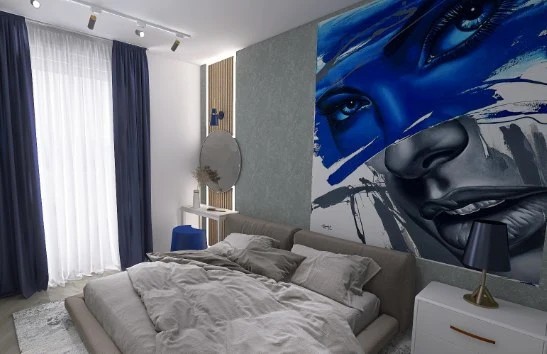
A photo wall or a single large-scale abstract painting can transform a bedroom from a place of function into a space of contemplation. The key is intentionality — a curated display of framed pieces that reflects your personal visual history, hung salon-style to create a sense of intimacy and depth. In a room with neutral walls, a photo wall provides the narrative; in a room with bold wallpaper, it provides contrast. Either way, it signals that this is not merely a room for sleeping but a room for thinking.
The Chandelier Principle: Light as Sculpture
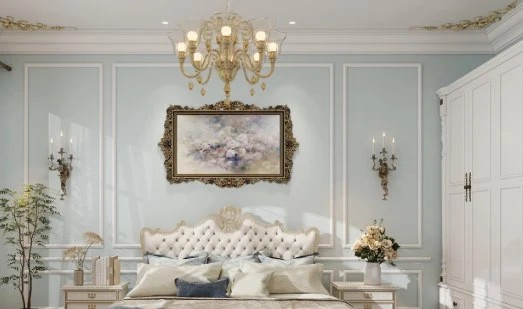
If your ceiling allows it, a vintage crystal chandelier does something no other lighting fixture can: it turns light into spectacle. The chandelier does not merely illuminate — it refracts, splitting white light into spectrum shards that dance across walls and ceiling. Paired with crystal sconces flanking the headboard, the effect is one of old-world glamour recontextualized for a modern interior. The message is clear: this room takes itself seriously.
Blue as Atmosphere: The Color of Deep Rest
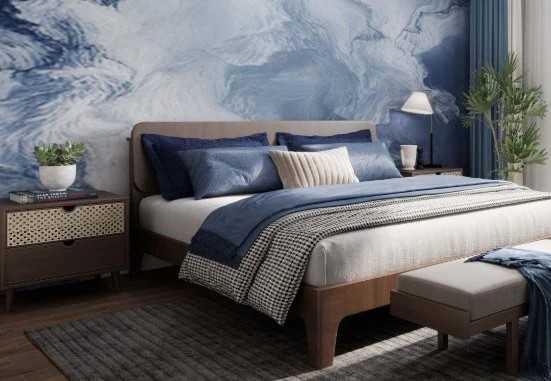
Of all the colors available to a bedroom designer, blue is the one that most directly signals calm. It carries the psychological weight of water, sky, and distance — the visual equivalent of a deep breath. The trick to using blue without creating a cold or sterile environment is layering: navy walls, indigo bedding, a rug that carries the same hue in a different saturation. When multiple shades of blue interact through different textures and patterns, the room gains depth rather than monotony.
Moroccan Temperament: Pattern as Warmth
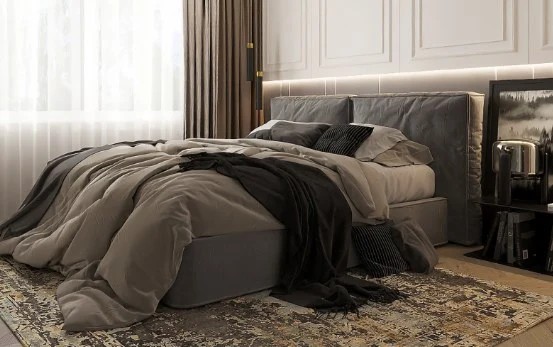
Moroccan design introduces a vocabulary of intricate geometric patterns, soft hues, and exotic texture that can make a bedroom feel like a riad in Marrakech. The approach works best when anchored by a single statement piece — a vintage rug, a carved wooden screen, a lamp with pierced metalwork — rather than layering pattern on pattern. Restraint is what keeps exotic influence from becoming pastiche.
The Textile Layer: Softness as Architecture
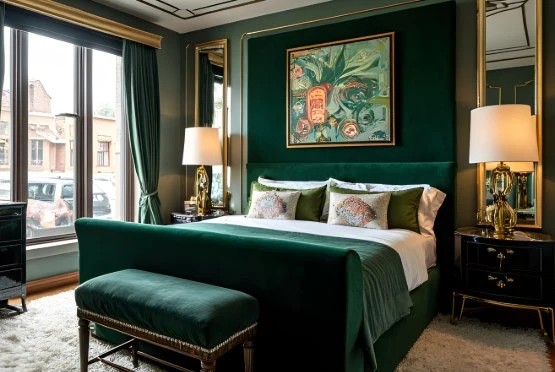
Luxury in a bedroom is tactile before it is visual. The skin knows before the eye does. Plush velvet throw pillows, silky smooth sheets with high thread counts, a soft area rug that greets bare feet in the morning — these are the elements that make a room feel expensive not because they look expensive but because they feel expensive. The material vocabulary of a true luxury bedroom includes linen, silk, velvet, wool, and cashmere, each contributing a different texture to a composition that engages the body, not just the gaze. A velvet bench at the foot of the bed, for instance, introduces hotel-suite opulence without a single architectural change.
Draped Romance: Bed Curtains and the Architecture of Intimacy
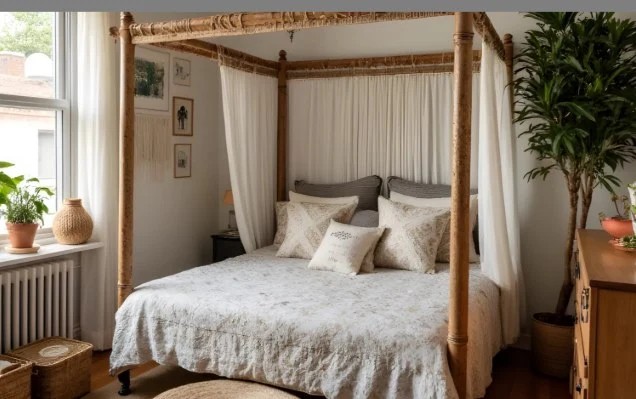
There is something deeply human about the impulse to drape fabric around a bed — to create a canopy, a cocoon, a tent within a room. Cascading, ethereal bed drapes turn the bed into a stage and the bedroom into a theater of rest. The fabric can be sheer and weightless, catching light like a veil, or heavier and more structured, framing the bed like a proscenium. Either way, the effect is one of enclosed intimacy — a small, private world within the larger private world of the bedroom itself.
The Textured Room: When Surface Becomes Story
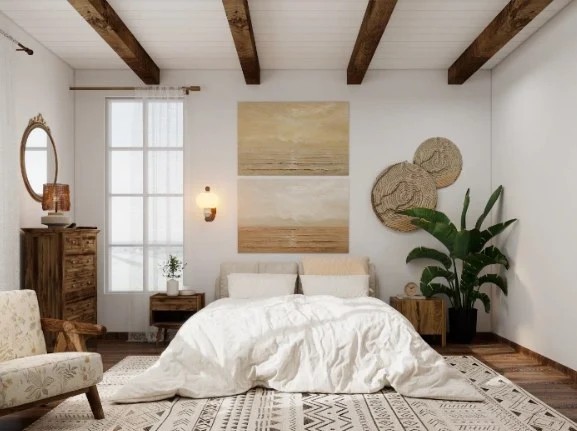
Texture is the dimension that separates a flat rendering from a lived-in room. A white vaulted ceiling with exposed beams draws the eye upward and adds architecturalgravitas. Textured wallpaper, natural stone accent walls, wall paneling — each introduces a tactile language that reads as expensive because it requires intention to install. In a room where the color palette is restrained, texture becomes the primary vehicle for visual interest. The goal is not to show one material but to compose several — wood, stone, fabric, metal — so that each one speaks in a different register but they all sing in the same key.
The Black-and-White Edit: Restraint as a Design Statement
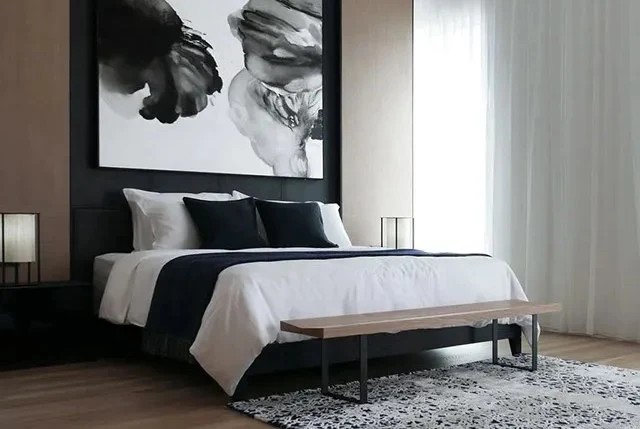
A black-and-white bedroom is a declaration of confidence. It says: I do not need color to make this room interesting. The key to executing this palette without sterility is contrast — true black against true white, not the muddy gray that emerges from timid mixing. A black accent wall, white bedding, a black-and-white patterned rug, and metallic accents in brushed brass or chrome create a look that reads as editorial and intentional. Avoid gray — it is the enemy of this palette, introducing ambiguity where clarity should reign.
Botanical Motifs: The Room That Breathes
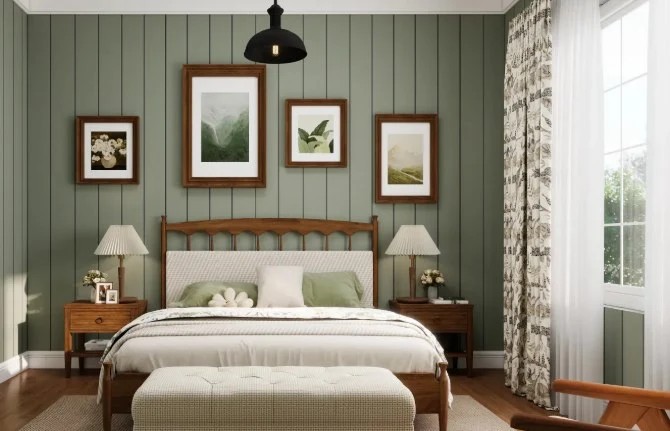
A bedroom that engages with the natural world — through botanical print bedding, curtains with leaf patterns, a green accent chair, or actual plants — taps into something deeper than aesthetic preference. It connects the room to the circadian rhythm of the body, reminding the senses that rest is part of a larger cycle. Soft furnishings featuring botanical motifs create a serene and peaceful atmosphere, while living plants add oxygen, humidity, and the quiet companionship of growing things. The result is a bedroom that feels less decorated and more cultivated.
The Plush Foundation: Soft Bedding and the Ritual of Rest

The final layer of a luxury bedroom — the one the body actually touches — is also the most consequential. High-end bedding is the difference between sleeping in a bedroom and sleeping in a hotel suite. Crisp white sheets with a high thread count, a duvet that is light yet insulating, pillows arranged in a deliberate hierarchy of firmness and size — these are not indulgences but fundamentals. A set of white pillows, layered with one or two decorative throw pillows in a contrasting texture, creates the visual warmth of a professionally made bed. A soft blanket folded at the foot adds both warmth and the promise of comfort.
Designing for the Senses, Not the Camera
The most common mistake in modern bedroom design is optimizing for the photograph rather than the body. A room that looks stunning on a screen but feels sterile, acoustically flat, and thermally uncomfortable in person has failed — no matter how many likes it collects. A true luxury master bedroom is designed for the senses the camera cannot capture: the hush of acoustic insulation, the thermal comfort of layered textiles, the way a room smells when fresh flowers sit on the nightstand and cedar lines the closet. It is, ultimately, a room that understands its purpose — to receive you at your most vulnerable and return you, restored, to the world outside.