Reading time: 7 minutes
There is a colour that has been quietly waiting in the wings for a decade, patient and sun-warmed, while we all painted our walls grey. It sat in clay pots on windowsills, in the rooftops of Mediterranean villages, in the crumbling brick of old factory walls — always present, never centre stage. That colour is terracotta, and in 2026 it has finally stepped into the spotlight.
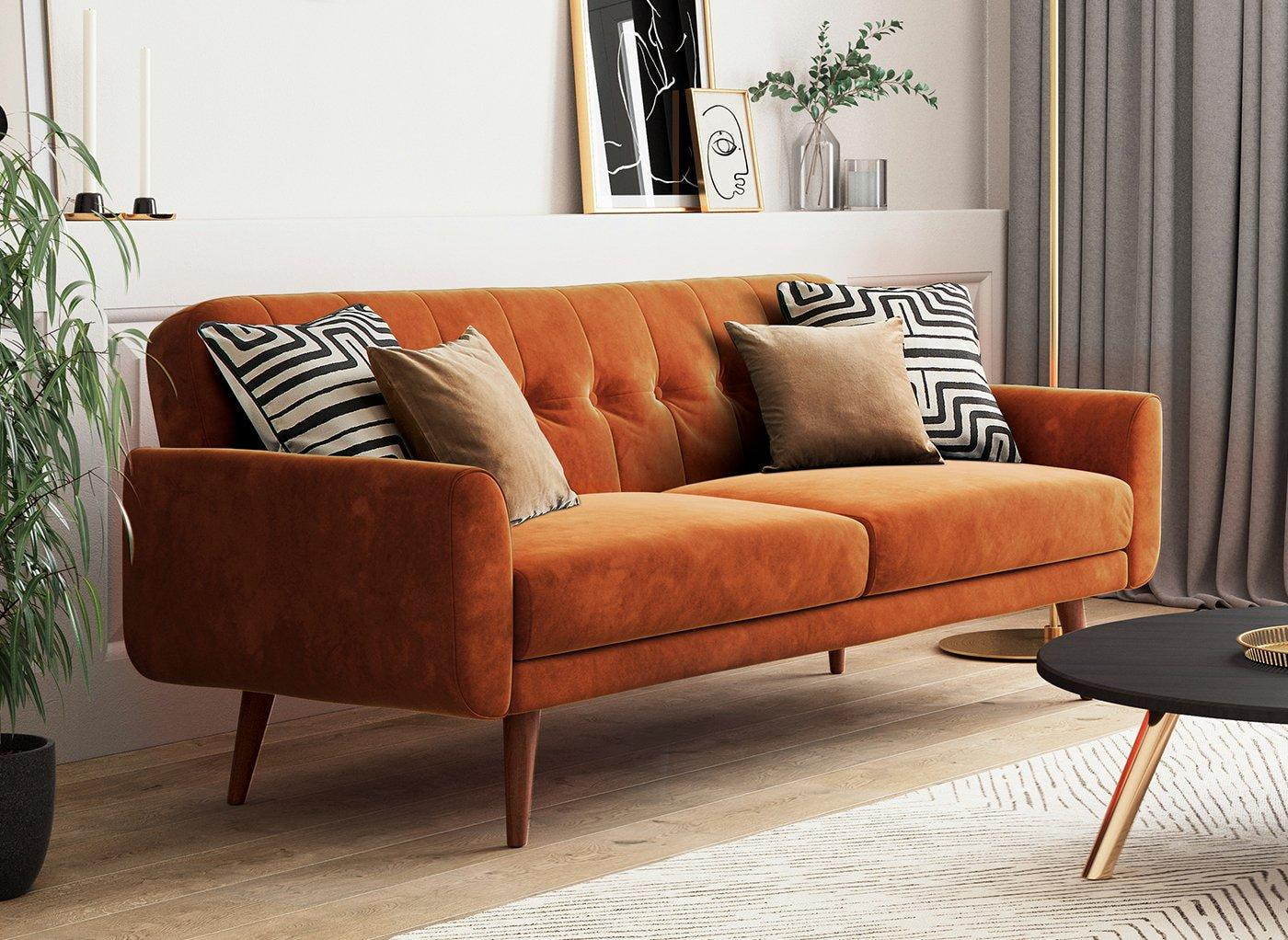
The shift away from grey has been building for years. Exhausted by cool, sterile interiors that could belong to anyone, homeowners and designers began reaching for tones with character and temperature. Coffee browns found their moment, mocha walls replaced charcoal, caramel leathers pushed out grey sectionals. Terracotta — sun-baked clay brought indoors — represents the fullest expression of this movement. It is not just warm. It is ancient, emotional, and utterly human.
What Is Terracotta, Really?
The word itself comes from the Italian terra cotta — literally “baked earth.” It is the colour of fired clay, of red orange and brown mixed together in proportions that vary as widely as the earth itself. Some terracottas lean toward burnt sienna — dark, saturated, almost brick-like. Others drift toward a lighter, salmon-adjacent warmth, earthy but airy. There is a rust-toned variant that feels like oxidised iron, and a softer, almost peach-tinged variation that reads as gentle rather than dramatic.
What unites them all is their natural origin. Unlike synthetic colours that feel invented, terracotta feels discovered. It carries the memory of the earth it came from — the mineral depth, the organic imperfection, the sense that the surface has a history. This matters enormously in 2026, when authenticity is the defining demand across interiors. People want materials and colours that age, that patinate, that grow more interesting with time. Terracotta does all of this — and also happens to make a room feel like it belongs to a person who cooks, reads, and actually lives there.
The Exit From Grey
Grey dominated interiors for well over a decade, and it earned its place. Cool greys opened up small spaces, anchored bold accent colours, and projected a certain modernity. But somewhere around 2024, it started feeling exhausted. The same grey walls, the same grey sofas, the same inert, characterless surfaces — interiors that could have been pulled from a catalogue page and dropped into any city, belonging to no one.
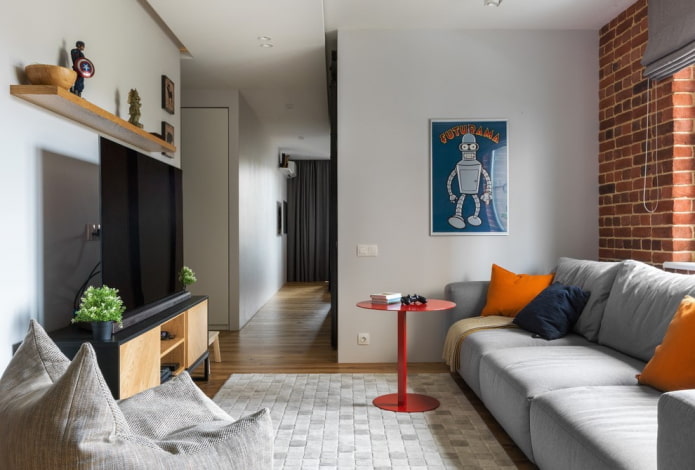
Terracotta is the answer to that fatigue. Where grey recedes and flattens, terracotta advances and warms. Where grey reads as impersonal, terracotta reads as intimate. It does not scream for attention the way a bright orange or a saturated red might — it settles into a room like sunlight settling on a stone floor at five in the afternoon. You notice it not because it is loud, but because it makes you feel something. In a culture increasingly starved for warmth — physical, emotional, visual — this matters.
How to Use Terracotta Without Overdoing It
The most common mistake with terracotta is treating it like a neutral. It is not. It is a colour with presence, and it rewards restraint. Use it as an accent — not as the entire palette — and it will transform a room.
Terracotta on Walls
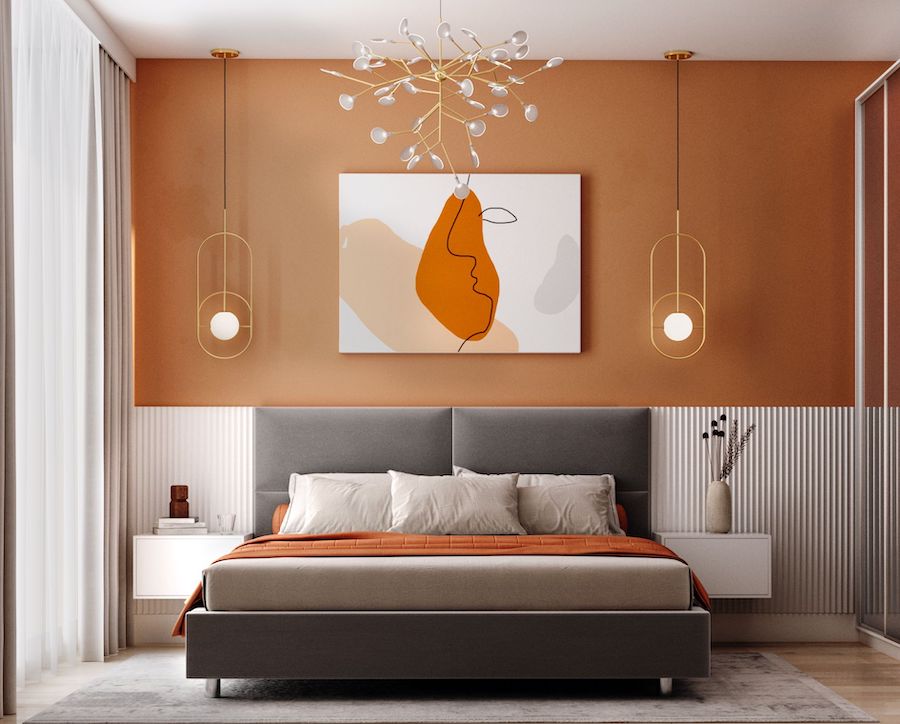
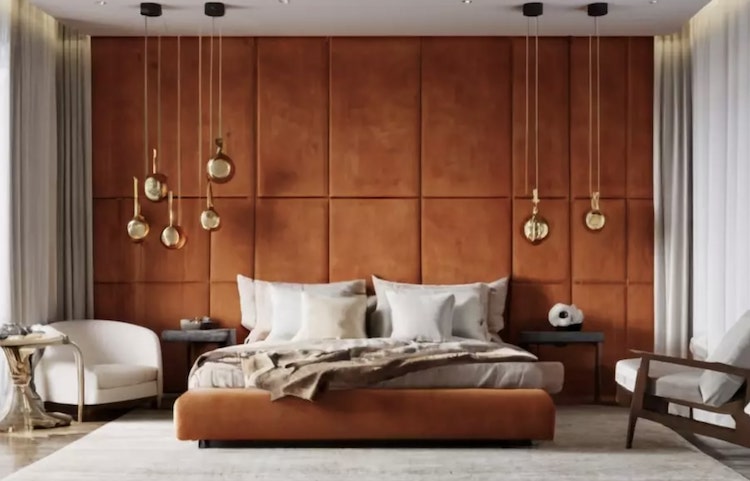
An accent wall in terracotta is the simplest way to introduce the colour, and it works in almost any room. In a bedroom, the wall behind the headboard is a natural canvas — the warm tone flanks you as you fall asleep and greets you with energy in the morning. In a living room, a single terracotta wall anchors the furniture and gives the eye a place to land.
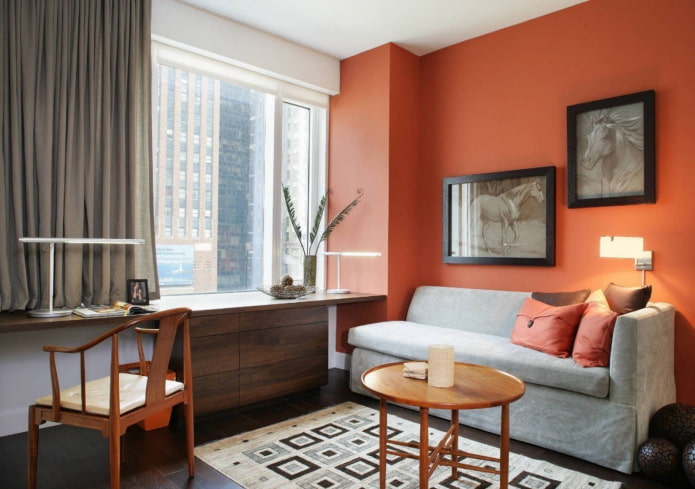
For those hesitant about commitment, lighter terracotta tones read almost as warm neutrals — closer to a baked salmon than a fired brick — and can cover larger surfaces without overwhelming. Dark, saturated terracottas are best reserved for smaller areas: a powder room, a reading nook, the interior of a shelving unit.
Real or imitated brickwork is another avenue. Exposed terracotta brick — whether original or faux — brings texture, history, and a sense of craftsmanship that paint alone cannot replicate. In 2026, this kind of tactile surface is exactly what interiors are reaching for.
Terracotta on Floors
Terracotta floor tiles are less common than painted walls, which is precisely why they feel special. There is a generous selection of ceramic and porcelain tiles in terracotta tones, from glossy sealed finishes to matte, raw surfaces that look freshly cut from the kiln.
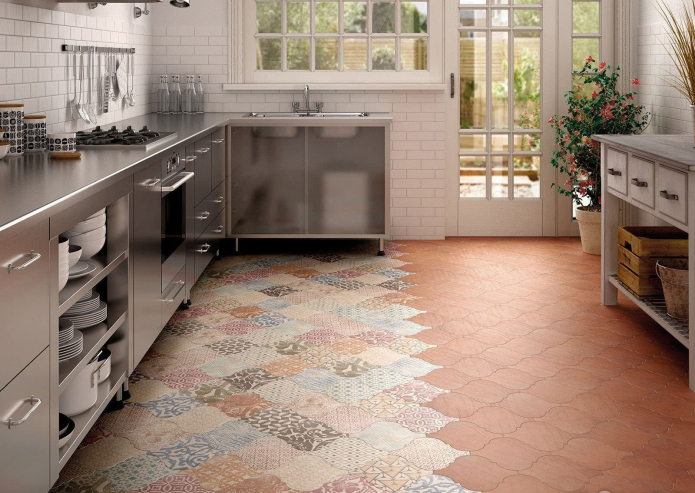
The rule of thumb: a terracotta floor should be slightly darker than the walls, but not so dark that it reads as heavy. It grounds a room — especially a kitchen or hallway — the way a rug would, but with permanence and architectural weight. Pair it with cream or off-white walls and the effect is Mediterranean without being costumed.
Terracotta in Furniture
A terracotta sofa is the quintessential statement piece of 2026. It demands nothing else from the room — everything around it can be quietly neutral, and the space will still feel intentional and alive. The beauty of choosing terracotta for upholstery is the range of textures available: dark tones come alive in velvet and bouclé, while lighter shades sing in linen and cotton.
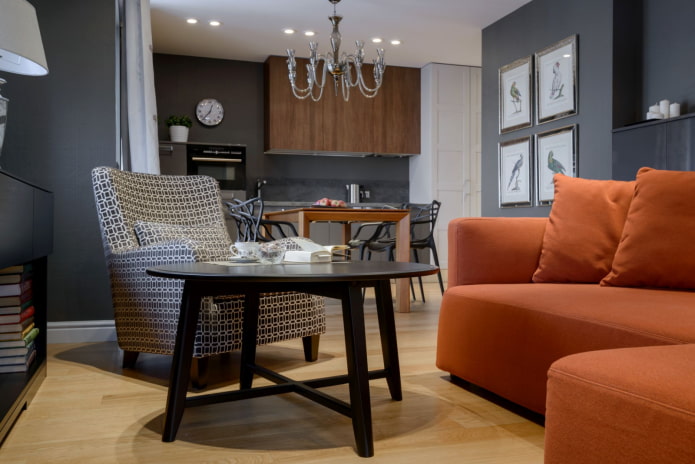
Beyond sofas, terracotta works beautifully in dining chairs, armchairs, and even headboards. A terracotta-upholstered headboard in a muted bedroom is the kind of detail that makes a space feel curated rather than decorated — quiet luxury without the price tag of a full renovation.
For those wanting only a whisper of the colour, case furniture — a sideboard, a chest of drawers, a cabinet — offers a contained hit without requiring a broader commitment. In a dining room, a single terracotta cabinet against a light wall is enough to shift the entire mood.
Terracotta in Textiles and Decor
The lightest touch of all: cushions, throws, curtains, rugs, and ceramics. Terracotta is a natural pairing with greenery — a terracotta planter beside a leafy fig tree is a cliché for a reason. Cushions in terracotta linen on a grey sofa instantly warm the space without redecorating.
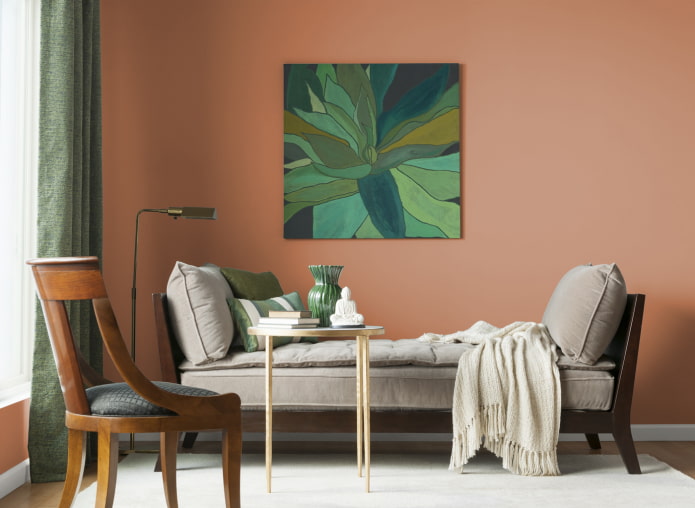
Curtains in terracotta need a neutral wall behind them to truly sing — white, cream, or pale grey — so the fabric becomes the event. And a terracotta lampshade casts the kind of warm, amber glow that makes any room feel like it is holding you.
The Best Colour Pairings for Terracotta
Terracotta is a warm colour, which means it pairs most naturally with other earthy, organic tones. It thrives in company rather than in isolation.
Terracotta + Cream or Off-White. The classic duet. Warm whites and soft beiges let terracotta’s depth come forward without competing. This pairing feels fresh and spacious — the terracotta reads as an accent, the cream as breathing room.
Terracotta + Deep Green. Olive, sage, eucalyptus, even deep forest — green and terracotta share a natural origin, and together they create a palette that feels literally like a garden. This is perhaps the most biophilic combination in interior design, and it reads as serene rather than busy.
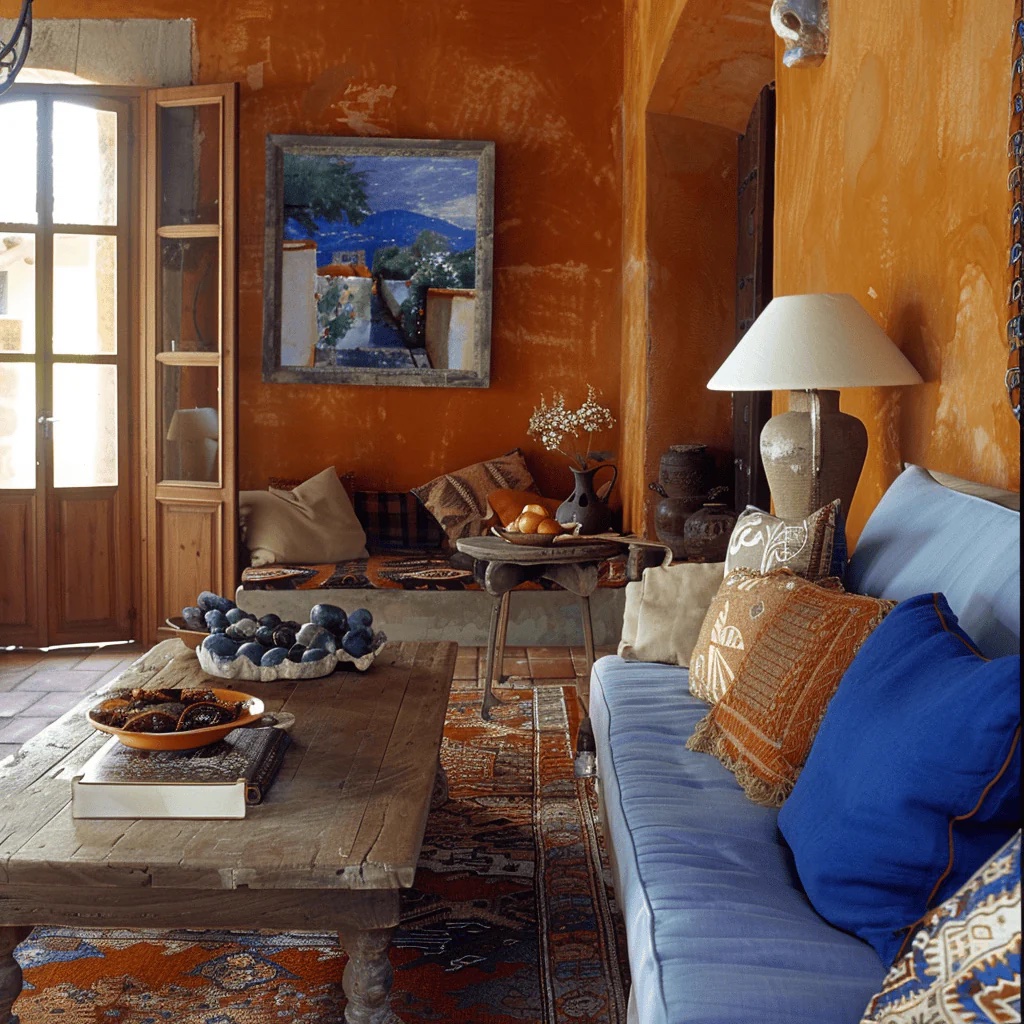
Terracotta + Blue. The boldest pairing. Blue and terracotta sit opposite each other on the colour wheel, and the contrast is electric — cool blue tempers warm terracotta, while terracotta gives life to a cold blue. Used with confidence, this pairing is memorable and chic. Used timidly, it feels confused. The rule: match intensity — dark navy with deep terracotta, pale blue with light salmon-terracotta.
Terracotta + Black or Graphite. For drama. Saturated terracotta walls with black furniture create an interior that feels like a film still — moody, intentional, sophisticated. This is not for every room, but in a dining room or a study, it is transformative.
Terracotta + Grey. Yes — grey is not banished, merely demoted. A cool grey wall with terracotta accessories is a retrained, modern pairing that bridges the old decade and the new.
How Terracotta Feels in Different Rooms
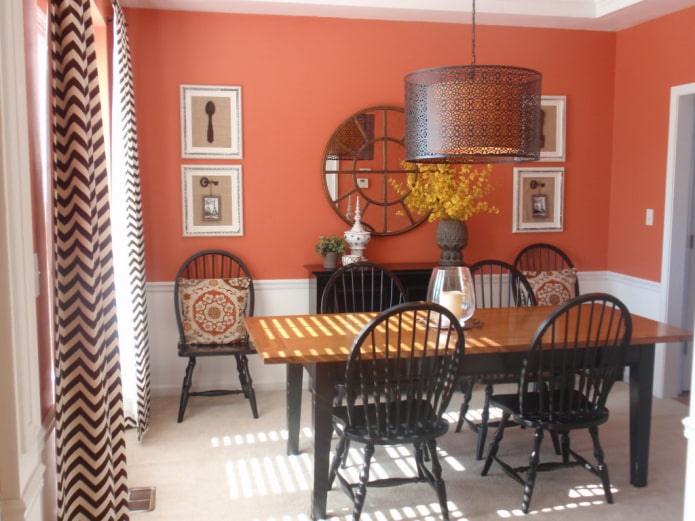
Living rooms benefit most from a terracotta sofa or accent wall — it draws people in, encourages conversation, and warms a space that might otherwise feel formal. Bedrooms come alive with a terracotta headboard or a single accent wall behind the bed — the colour is cocooning without being heavy, and it flatters both morning and evening light. Kitchens are the natural home of terracotta — not only on walls and tiles but in the associative power of fired clay, which carries the memory of cooking and craft. Hallways and entryways benefit from terracotta flooring — it sets a warm tone from the first step inside.
The Philosophy Behind the Trend
What terracotta speaks to, beyond its aesthetic appeal, is the larger shift in how we think about home. For a decade, interiors were designed to photograph well — to look good on screens and in feeds. In 2026, they are being designed to feel good. To be warm when you walk in from the cold. To be soft when the world is hard. To remind you that you live in a body, on the earth, and that your home is not a showroom but a sanctuary.
Terracotta — sun-baked clay brought indoors — does all of this. It is the colour of the ground we walk on, the pots our grandmothers cooked in, the rooftops of the places we escape to on holiday. It carries memory. It carries heat. And in a year that has decisively turned its back on cold, anonymous greys, it is exactly the colour we need.